

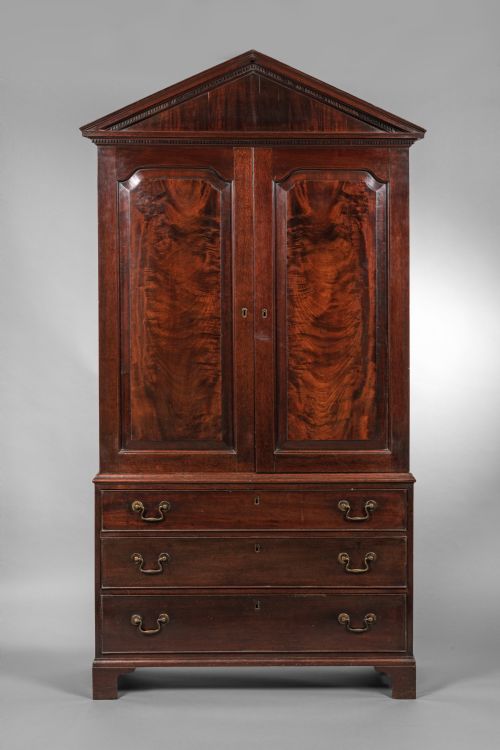
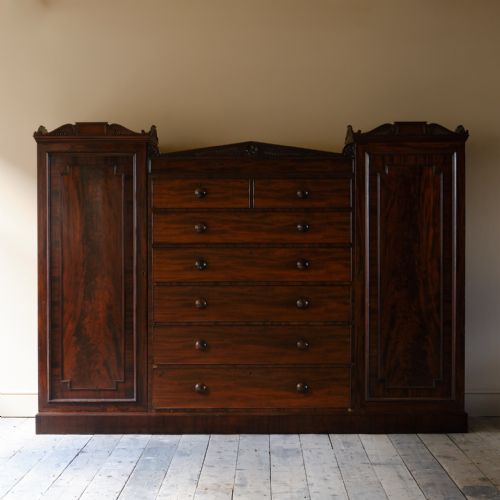
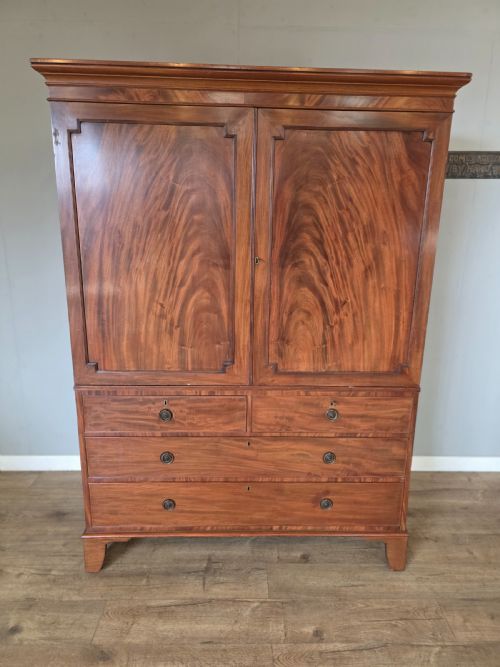

Georgian Flame Mahogany Armoire
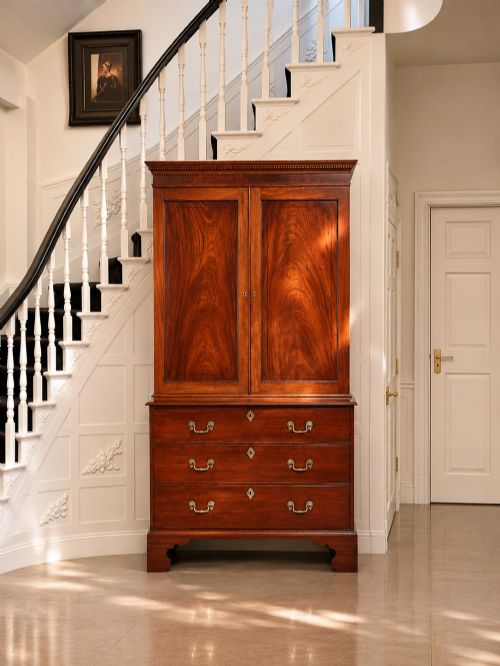
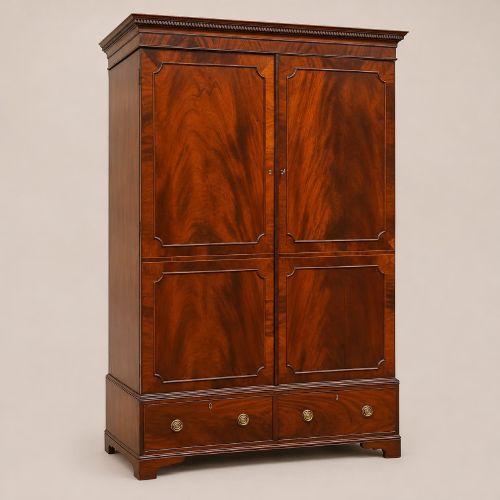
A georgian flame mahogany armoire brings striking timber grain and generous storage to a traditional bedroom.
Georgian Flame Mahogany Armoire
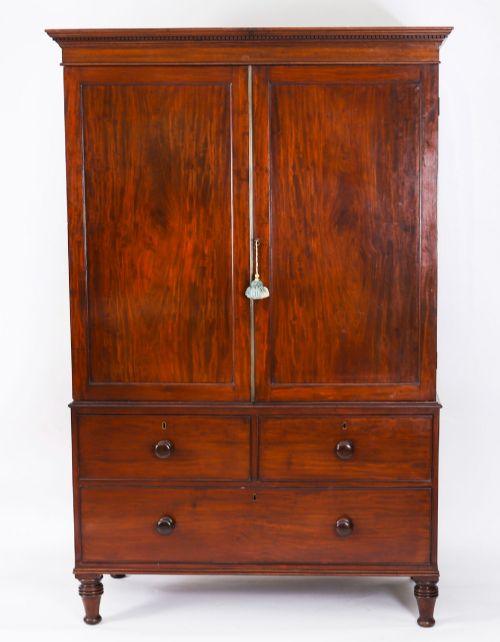
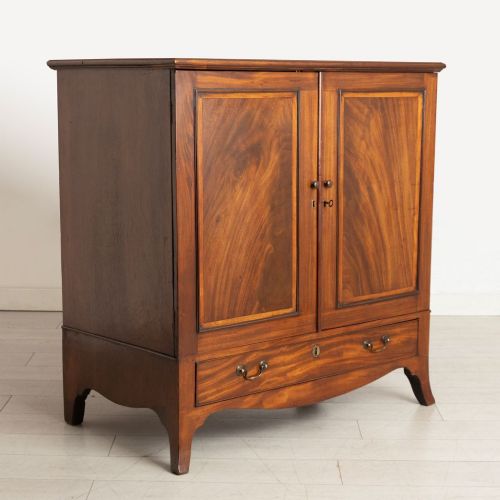
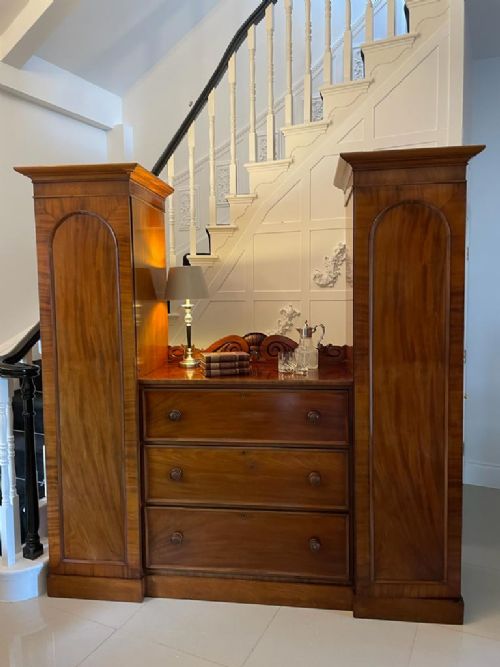
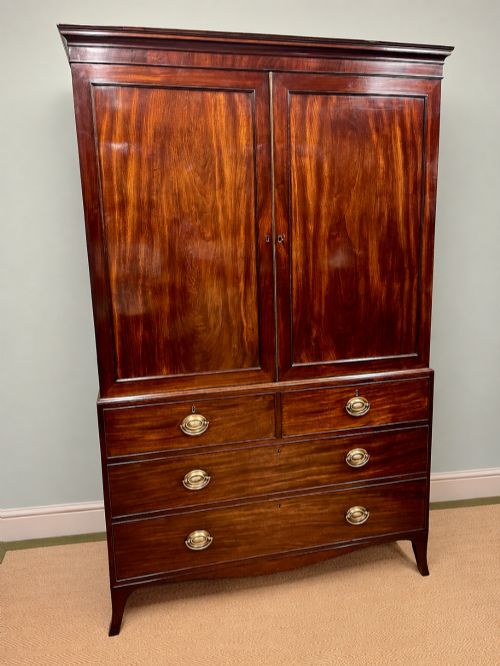
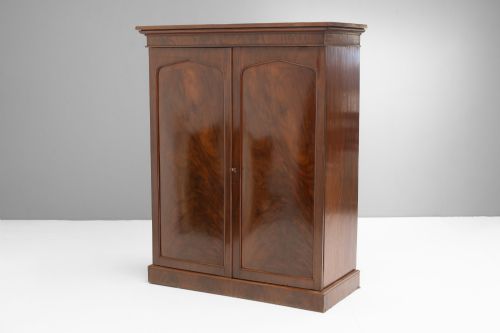
Buyers seeking a georgian flame mahogany armoire will encounter large storage furniture originating primarily from the eighteenth and nineteenth centuries, often catalogued under forms such as linen presses, wardrobes and cupboards. These pieces combine deep cabinetry with hanging space or sliding trays behind panelled doors.
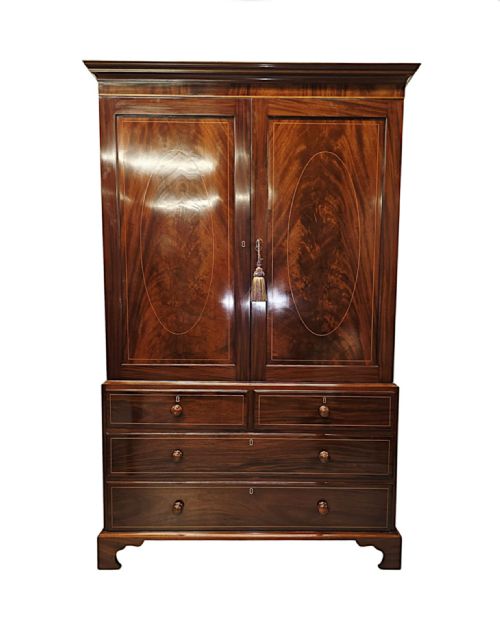
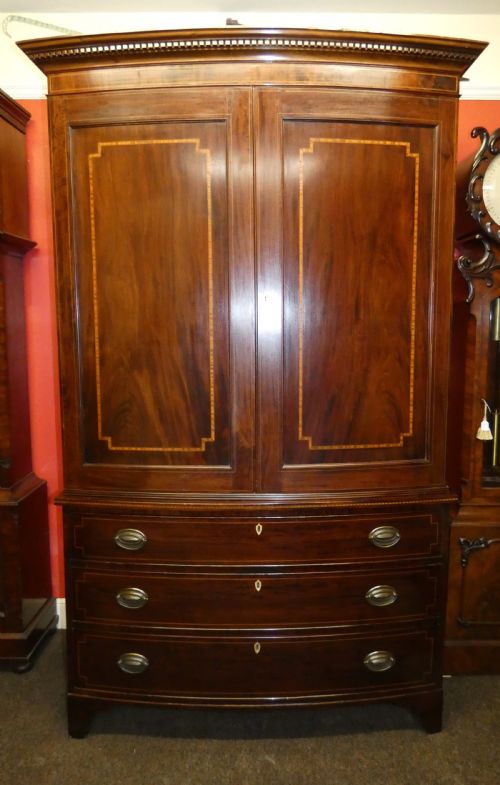
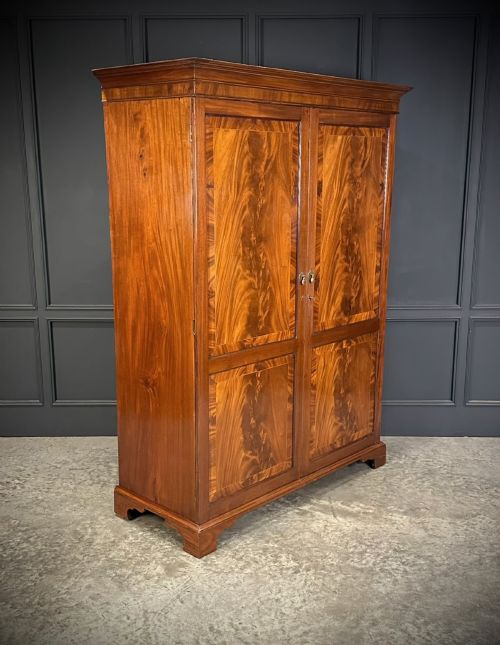
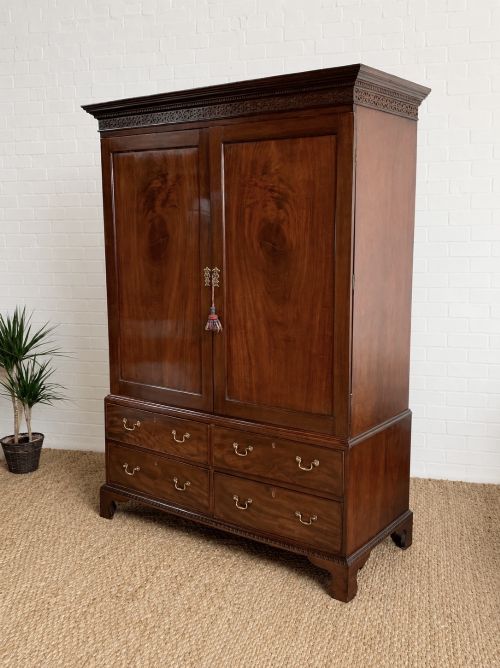
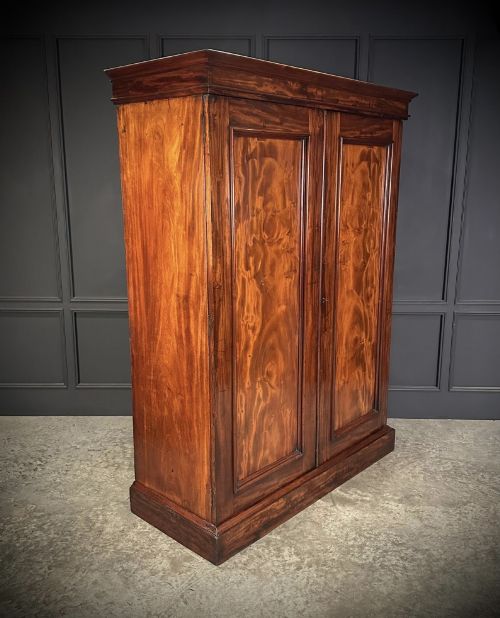
The versions most commonly met on this page span Georgian, Regency and William IV periods, frequently displaying the characteristic rich figuring of flame mahogany veneers alongside solid mahogany construction. Many examples incorporate chest bases with multiple drawers beneath the upper press section.
Materials and construction techniques
Cabinetmakers utilised dense tropical mahogany timbers, often selecting highly figured flame or curl veneer for the primary display surfaces to create swirling, light-reflective grain patterns. Secondary structural elements such as drawer linings and carcases frequently incorporate oak.
Inlay and stringing details in contrasting timbers like boxwood and satinwood are applied to drawer fronts and cornices, while brass hardware secures doors and drawers. Skilled joinery aligns the grain symmetrically across wide double doors.
Georgian Flame Mahogany Armoire Retail Price Guide 2026
Typical asking prices for georgian flame mahogany armoire among the pieces listed under this phrase on Sellingantiques today, from the lower quarter to the upper quarter. They describe what is for sale here now, not the wider market.
Secondary timbers recorded in the construction of these cabinets include oak, boxwood and satinwood used for decorative stringing.
Distinctions in quality and execution
The distinction between standard cabinetwork and the finest examples lies in the selection of the veneer and the subtlety of the carved or inlaid details, such as blind fretwork cornices and crossbanded borders. Superior pieces maintain crispness in architectural mouldings and feature well-figured timber matched symmetrically across panels.
Internal configuration also separates basic storage from masterworks, with better pieces retaining original sliding trays, linen slides and well-fitted drawer divisions inside the upper cabinet rather than later modifications.
Thomas Chippendale·Wilkinson & Son
The Georgian Flame Mahogany Armoire Glossary
- Flame mahogany
- A veneer cut from the fork of the mahogany tree, producing a distinctive, flame-like ripple effect across the surface.
- Linen press
- A large wardrobe-like cabinet traditionally used for storing folded linen in sliding internal trays above a chest of drawers.
- Compactum
- A large fitted wardrobe featuring a combination of hanging space, shelves and internal drawers within a single carcass.
- Blind fretwork
- Carved decorative openwork glued to a solid background so that the pattern appears pierced without cutting through the wood.
- Breakfront
- A cabinet design where the central section projects forward from the flanking outer cupboards or drawers.
Georgian Flame Mahogany Armoire: Frequently Asked Questions
How do I tell a linen press from a wardrobe?
A linen press traditionally encloses internal sliding trays behind its upper doors, whereas a wardrobe provides vertical hanging space for garments.
Many antique presses have been converted internally by removing the trays to insert a modern hanging rail.
Where should I place a large armoire?
These substantial pieces require a bedroom or dressing room with adequate wall space and sufficient ceiling height to accommodate heavy cornices.
Ensure the room has stable humidity levels to protect the mahogany veneer from drying out or splitting.
How do I identify a George III piece?
George III furniture typically exhibits restrained classical proportions, often incorporating bracket feet, dental cornices and subtle stringing inlay.
Cabinets from this era frequently utilise solid mahogany alongside carefully matched flame veneers on primary surfaces.
What is the best way to clean flame mahogany?
Dust the timber regularly with a soft, dry cloth and apply a quality beeswax periodically to nourish the grain and maintain the lustre.
Avoid placing the cabinet in direct sunlight, which can fade the rich reddish-brown tones of the mahogany over time.