
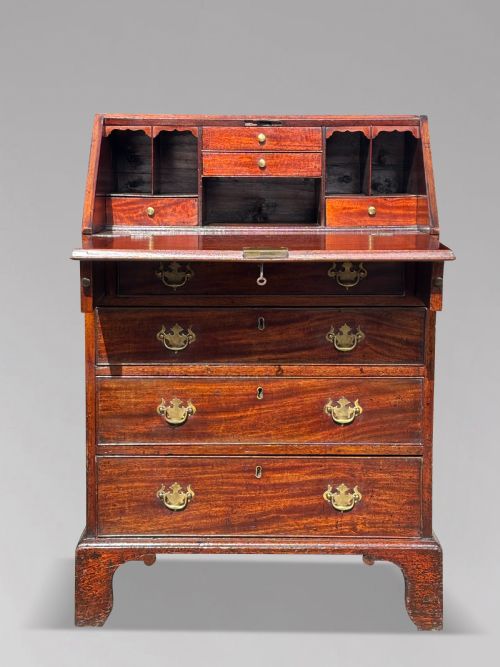


Georgian Fitted Interior Bureau
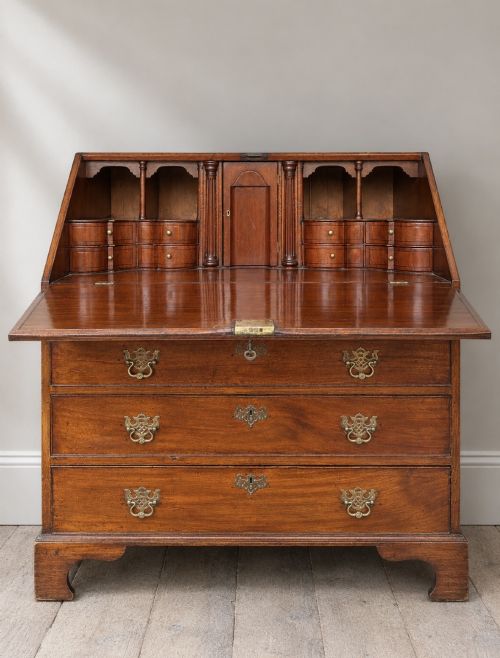
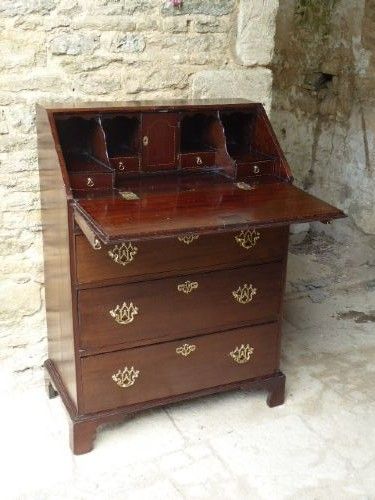
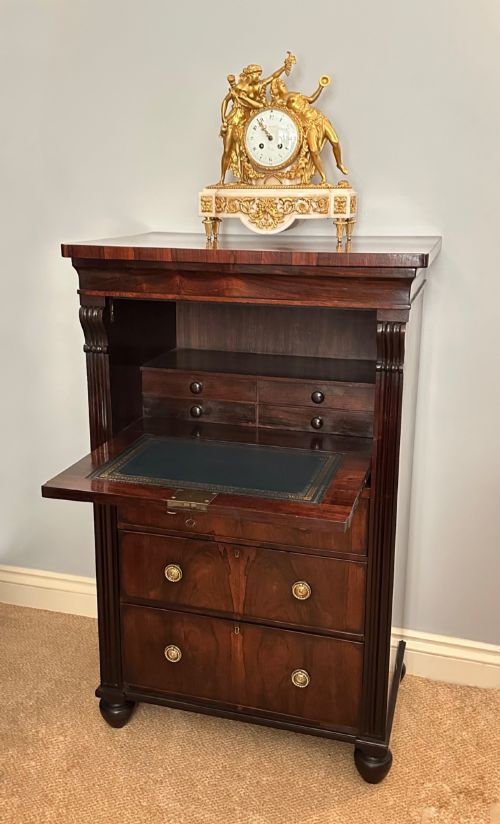
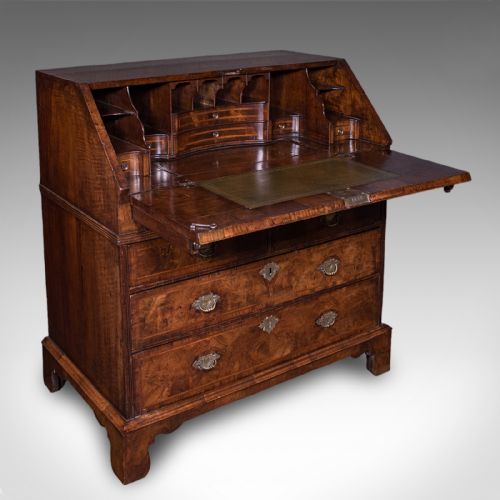
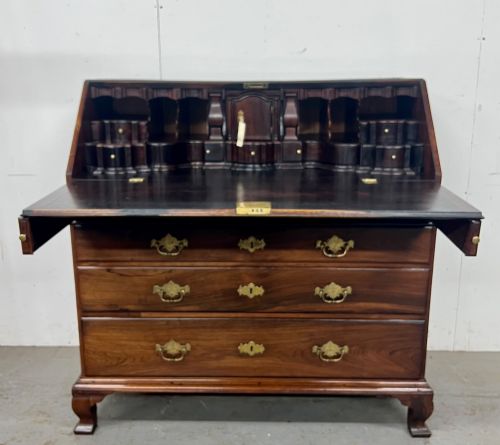
A georgian fitted interior bureau combines a practical writing desk with hidden drawers, pigeonholes and secret compartments behind a drop-down fall front.
Georgian Fitted Interior Bureau
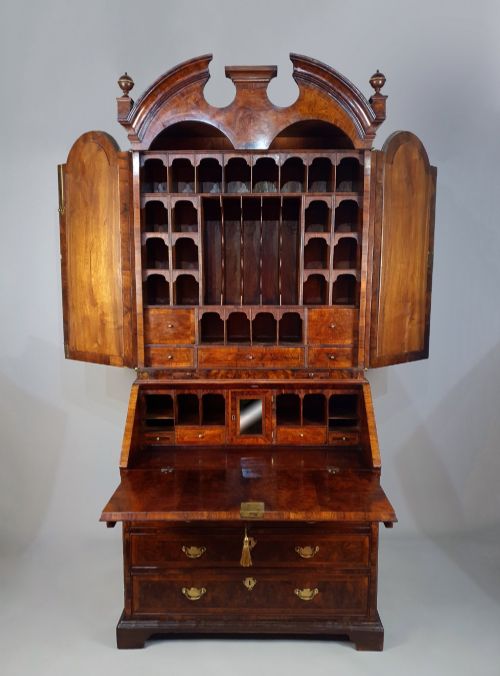
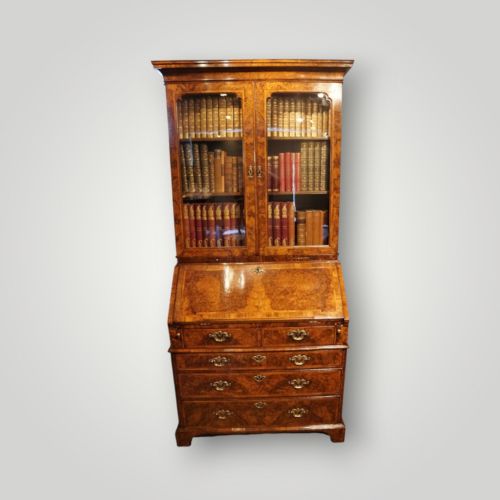
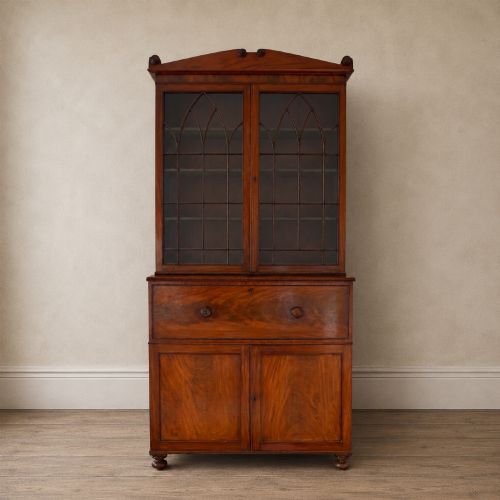
A georgian fitted interior bureau is a writing cabinet designed for correspondence and document storage, typically featuring a fall-front desk that conceals a complex interior of small drawers and pigeonholes. The selection on this page spans from early eighteenth-century Queen Anne and George I walnut examples to George III mahogany pieces, Regency secretaire bookcases, and later nineteenth-century adaptations.
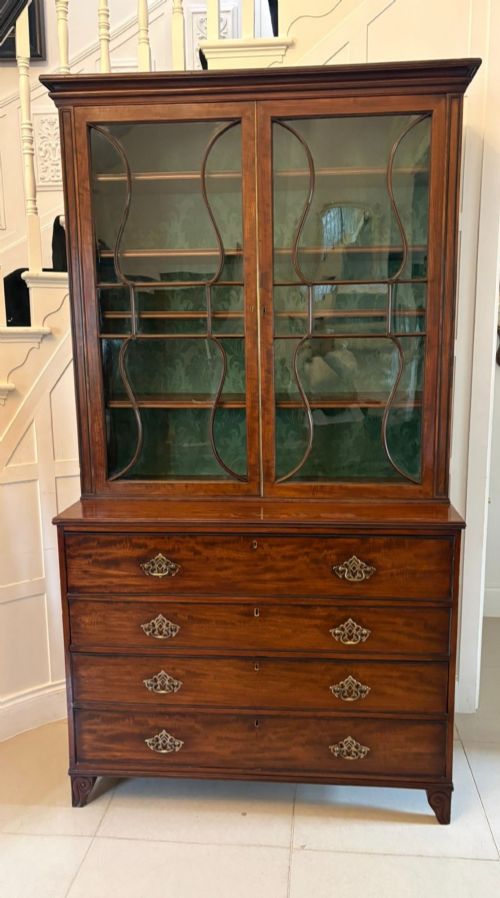
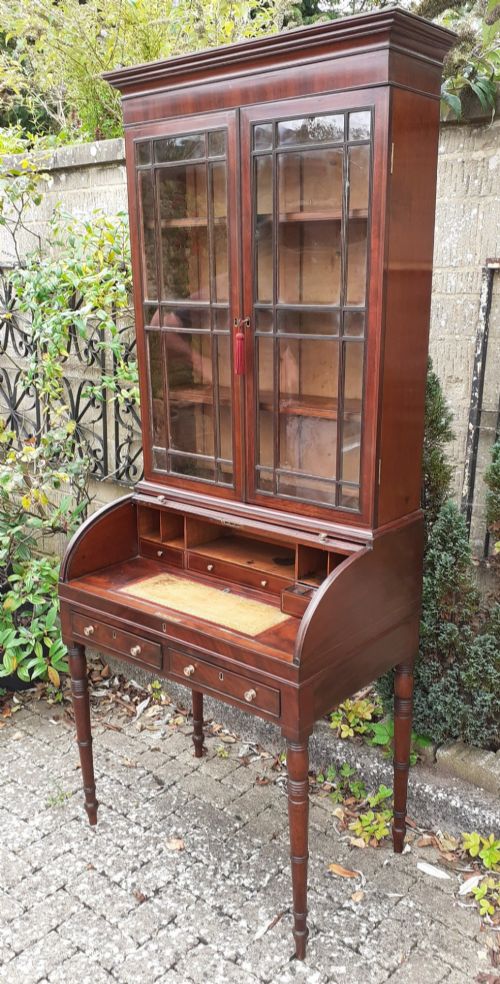
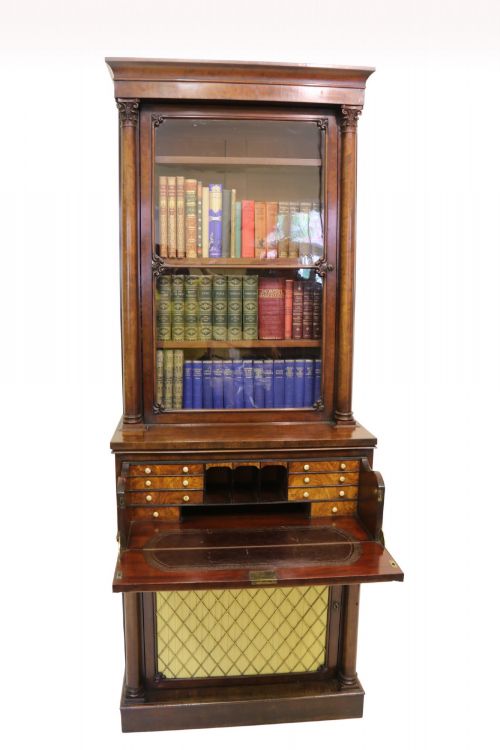
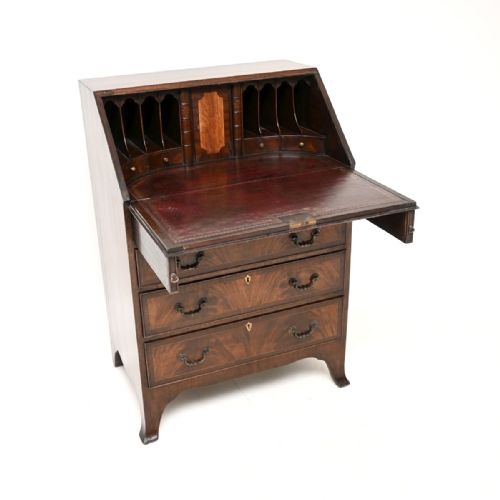
The most common formats you encounter here are freestanding mahogany or oak bureaux and taller bureau bookcases with glazed or mirrored upper doors. These pieces originate primarily from Georgian and Regency eras, though you will also find occasional twentieth-century reproductions built in earlier styles.
Makers and cabinet-makers utilised various forms ranging from compact writing cabinets to large secretaire bookcases with candle slides and bracket feet. The fundamental architecture remains consistent: a sloping fall front that drops to form a writing surface above lower chest drawers.
How They Were Made
Cabinet-makers constructed these items using solid timbers and decorative veneers such as mahogany, walnut, burr walnut, rosewood, oak and satinwood. Drawer linings were frequently fashioned from oak or secondary softwoods, while brass handles, escutcheons and hinges provided functional and decorative hardware.
The interior compartments required intricate joinery, creating miniature banks of drawers, secret sliding panels, and central locking cupboards within the desk section. Exterior surfaces often displayed figured wood grain, cross-banding or inlay work to highlight the natural patterns of the timber.
Listings feature woods including mahogany, burr walnut, rosewood, oak, satinwood and mulberry across Georgian, Regency and Queen Anne styles.
What Varies in Quality
Quality rests upon the sophistication of the internal layout and the selection of timber veneers used across the fall front and drawer fronts. Pieces featuring finely figured mahogany, burr walnut or detailed satinwood inlay demonstrate superior craftsmanship compared to plain surfaces.
The complexity of the fitted interior dictates the grade of the piece, with secret compartments, shaped pigeonholes and central doors showing the maker's skill. Structural integrity is evident in the execution of dovetail joints on oak-lined drawers and the retention of original brass hardware and bracket or ogee feet.
Tudor & Burrey·Gillows of Lancaster
The Georgian Fitted Interior Bureau Glossary
- Fall Front
- The hinged writing flap that pulls down to reveal the fitted interior and provides a desktop surface. When closed, it conceals all the internal compartments.
- Secretaire
- A piece of furniture containing a drawer or compartment configured for writing, often pulling out or dropping down rather than opening via a traditional fall front.
- Pigeonhole
- A small, open compartment within the fitted interior used for sorting letters and papers. These are frequently arched or tiered in better examples.
- Candle Slide
- A pull-out wooden board mounted beneath the upper bookcase doors to hold candlesticks for illumination. They slide flush into the cabinet frame when not in use.
- Bracket Feet
- Corner supports beneath the lower case of a bureau, typically shaped in an ogee or simple architectural profile. They lift the heavy timber body off the floor.
Georgian Fitted Interior Bureau: Frequently Asked Questions
What is inside a bureau?
A georgian fitted interior bureau contains an arrangement of small drawers, pigeonholes and central compartments designed for organising letters and valuables. These internal sections are revealed when the sloping fall front is lowered.
Many examples include secret compartments or sliding panels that hide behind the stationary drawers. These miniature architectural spaces represent the most detailed woodworking on the piece.
How do I date a bureau?
Dating relies on timber choice, hardware style, and construction methods visible in the drawers and carcase. Walnut and burr walnut dominate pieces from the early eighteenth century, while mahogany becomes standard through the Georgian period.
Secondary woods like oak in the drawer linings and the profile of the bracket feet help narrow down the decade. Later nineteenth-century versions and twentieth-century reproductions often repeat these earlier forms with different internal secondary timbers.
Where were they used?
These items served as functional writing desks in private studies, libraries and withdrawing rooms of large houses. Their dual purpose allowed owners to write letters and store confidential papers securely behind locked doors.
The upper bookcase versions held prized libraries behind glazed or mirrored panels, keeping volumes dust-free while displaying collections to visitors.
Can I use a bureau as a desk?
The drop-down fall front provides a functional writing surface supported by lopers or the lowered flap itself. The height matches traditional seated writing desks.
Modern users should check the depth and height of the writing bed to ensure comfortable daily use. The internal pigeonholes remain practical for holding modern stationery and small items.