
Georgian Figured Walnut Chest
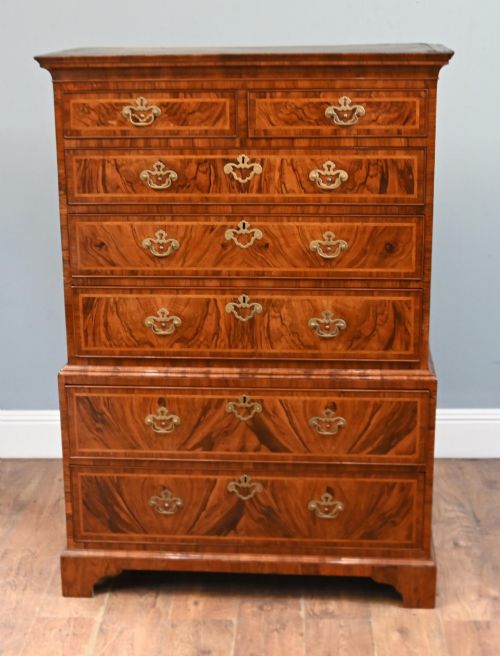
A georgian figured walnut chest combines deep swirling wood grain with the restrained proportions of the eighteenth century.
Georgian Figured Walnut Chest
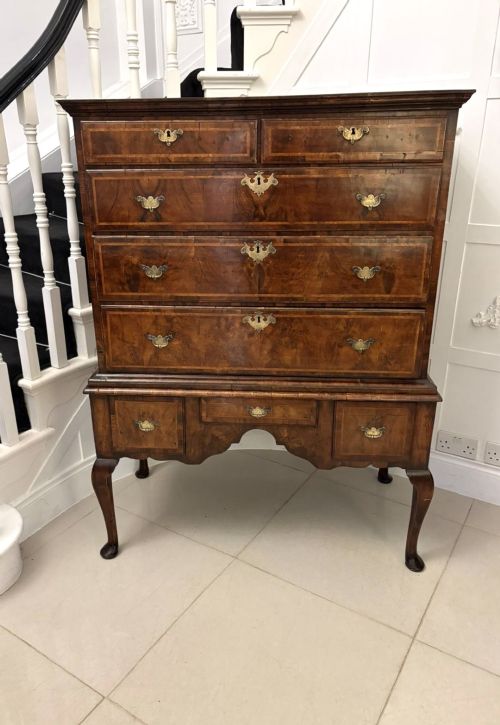
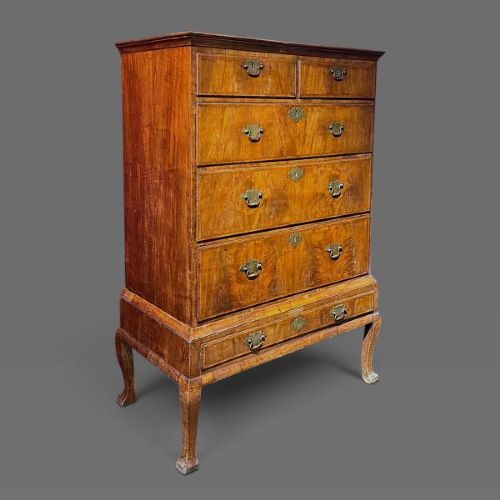
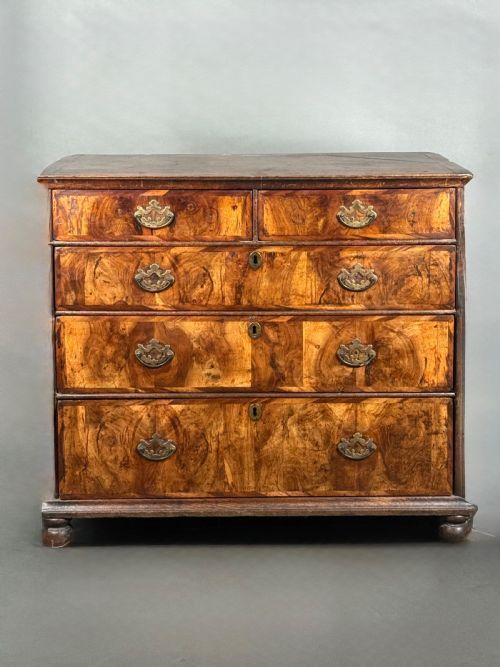
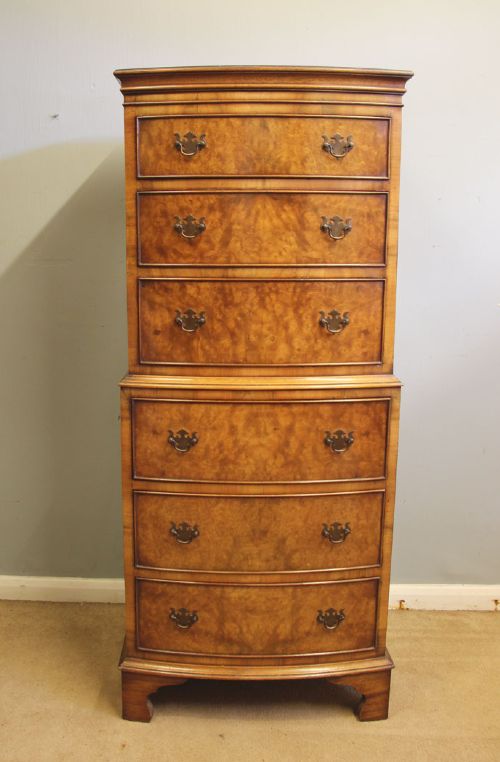
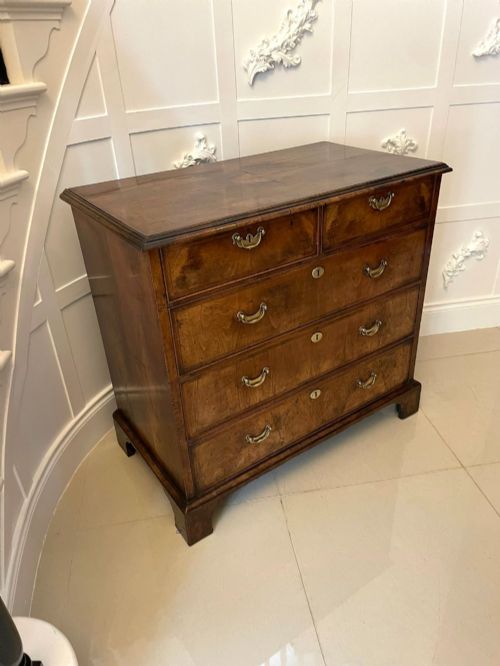
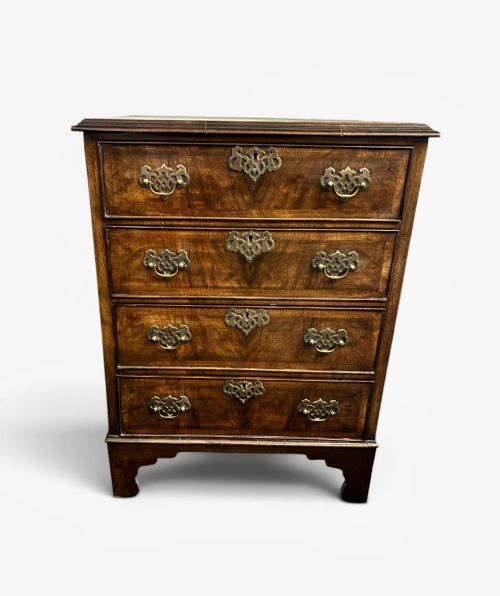
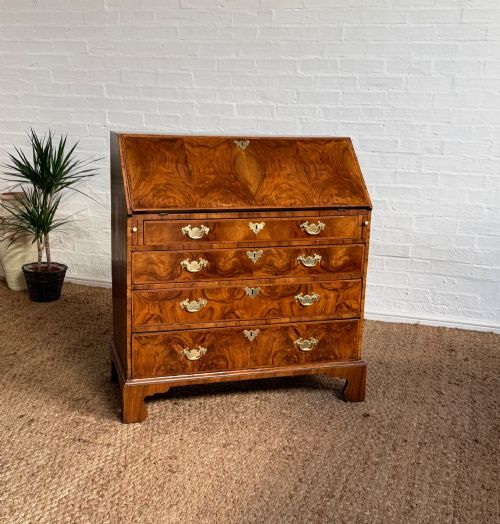
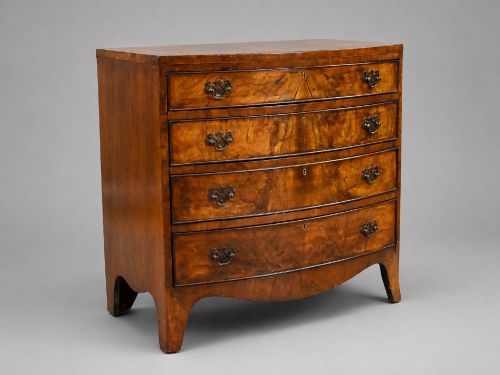
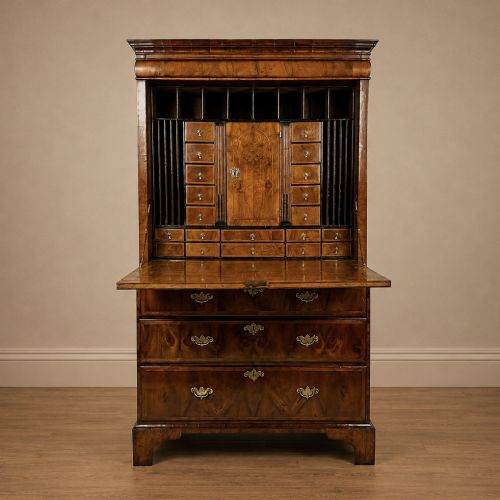
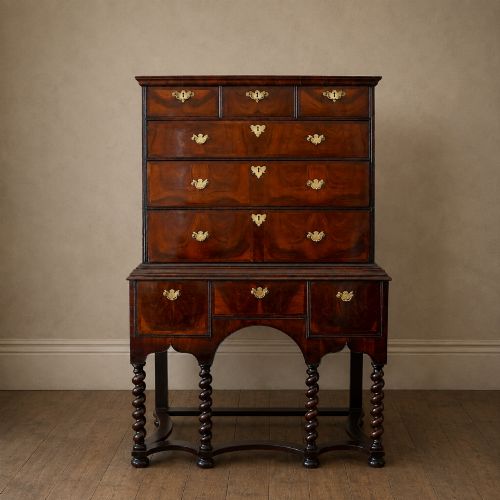
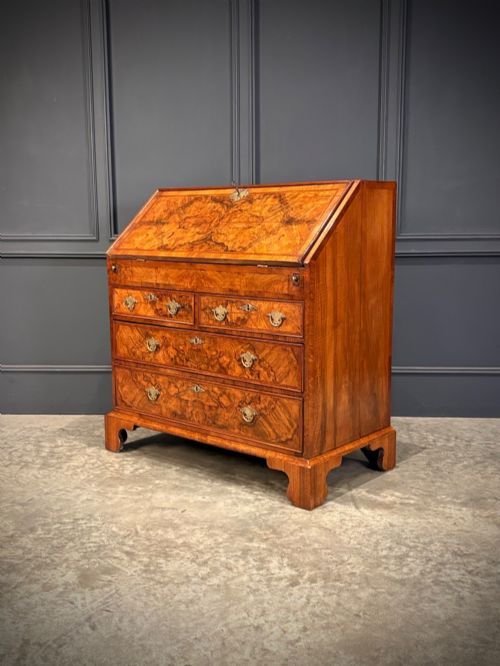
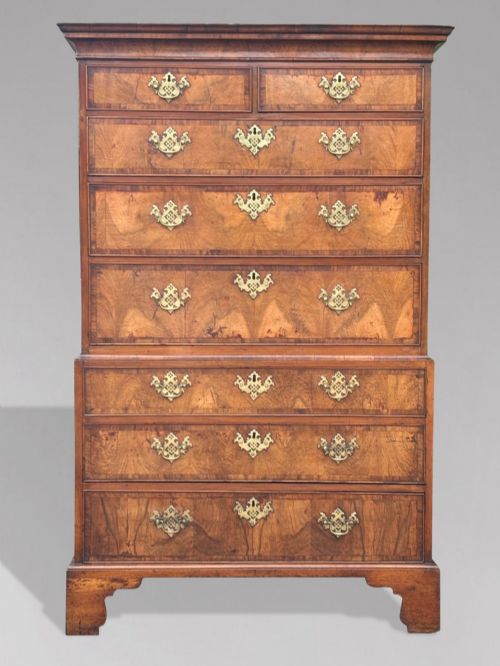
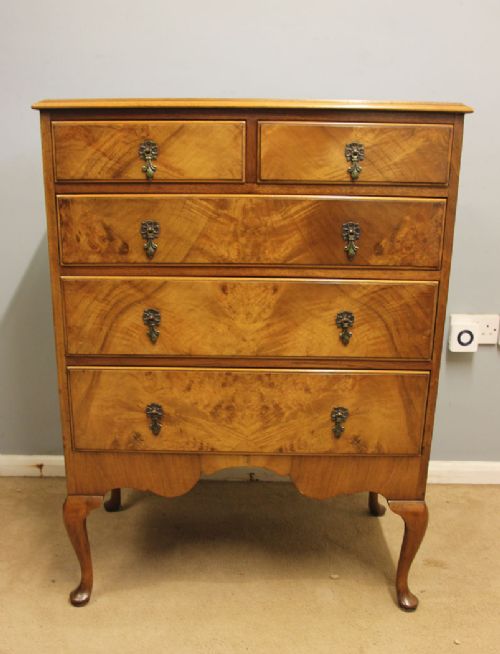
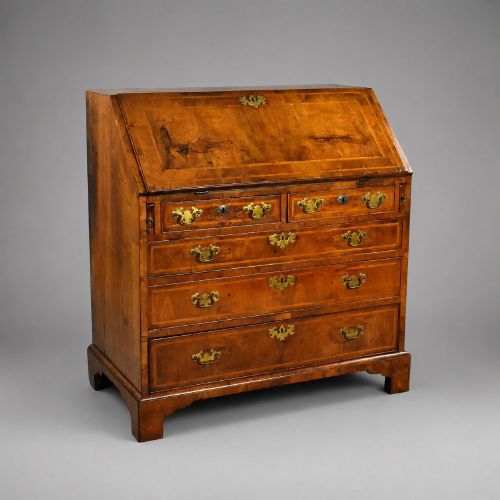
A georgian figured walnut chest typically takes the form of a chest of drawers, a bureau, or a raised cabinet resting on a stand. These pieces showcase the rich grain patterns of walnut timber, often enhanced by burr figuring or contrasting cross-banding.
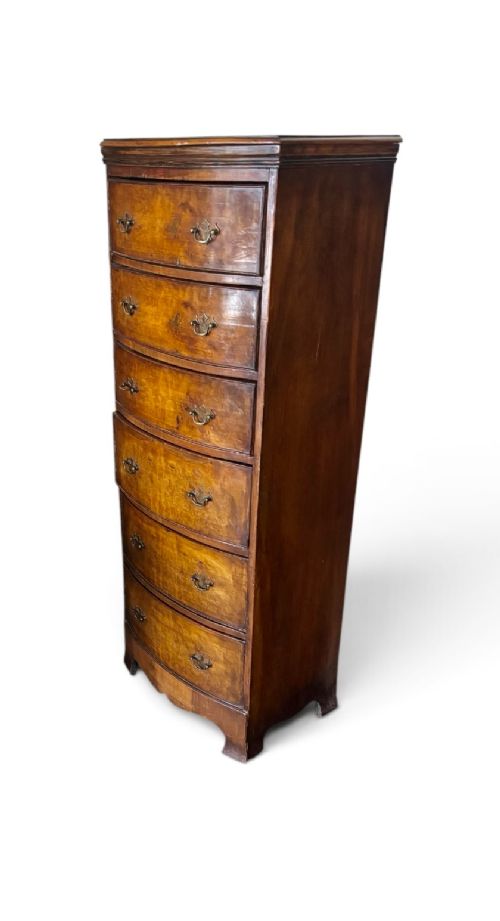
The selection ranges from early eighteenth-century examples originating in the reigns of Queen Anne, George I, and George II to later revival pieces produced across the nineteenth and twentieth centuries. Buyers frequently encounter standard drawer configurations alongside more complex tallboys, chests on chests, and kneehole desks.
Early period items display traditional craftsmanship with oak-lined drawer carcases and hand-cut dovetails. Later twentieth-century interpretations replicate these classic eighteenth-century proportions and aesthetic details.
Materials and construction
Cabinet makers utilised thin veneers of figured walnut and burr walnut laid over solid foundational timbers such as oak and pine. This technique allowed workshops to arrange symmetrical grain patterns across drawer fronts and table tops.
Surface decoration frequently incorporated feather banding and cross-banding in contrasting timber, secured with natural animal glues. Brass hardware, including teardrop handles, escutcheons, and plate locks, completed the assembly of each piece.
Miniature examples stand at a mere twenty centimetres high, offering all the grandeur of a full-scale chest on a tiny desk.
Distinctions in quality
The standard of a georgian figured walnut chest rests upon the selection and symmetry of the veneer grain across the primary surfaces. Finer pieces demonstrate careful book-matching where the natural patterns mirror each other precisely.
Construction integrity distinguishes workshop output, particularly in the thickness of the walnut timber and the neatness of the hand-cut dovetails inside the drawer carcases. Original brass furniture and undisturbed surface patination elevate the standing of an individual item.
The Georgian Figured Walnut Chest Glossary
- Burr walnut
- A specialised timber harvested from growths on walnut trees, yielding intricate swirling patterns and dark knots. It was frequently applied as veneer to prominent surfaces.
- Cross-banding
- A decorative border technique where strips of veneer are laid perpendicular to the main grain direction. This frames the drawer fronts and top panels.
- Chest on chest
- A tall storage unit comprising two separate carcases stacked vertically, offering substantial drawer space while maintaining a compact floor footprint.
- Escutcheon
- A protective brass plate fitted around a keyhole to prevent the surrounding timber from wearing down through regular use.
- Tallboy
- A tall chest of drawers or chest on chest raised on legs or a base. It maximises vertical storage capacity in smaller rooms.
Georgian Figured Walnut Chest: Frequently Asked Questions
How do I identify a genuine period piece?
Examine the internal construction methods, looking for hand-cut dovetails and solid oak drawer linings rather than modern fixings.
Check the timber for natural fading and patination that develops over centuries of exposure and gentle polishing.
Where should I place this in my home?
These chests suit bedrooms, hallways, or living spaces where their rich wood tones can complement both traditional and modern interiors.
Keep them away from direct sunlight and heat sources to prevent the walnut veneers from drying out or splitting.
How do I care for figured walnut surfaces?
Dust the exterior regularly with a soft, dry cloth and apply a traditional beeswax polish sparingly to maintain the sheen.
Avoid silicone-based sprays, as these can penetrate old finishes and degrade the underlying veneer over time.