


Georgian Fiddle Pattern Silver
Georgian fiddle pattern silver combines utilitarian heft with graceful shoulders, offering a tactile piece of domestic history for the modern table.
Georgian Fiddle Pattern Silver
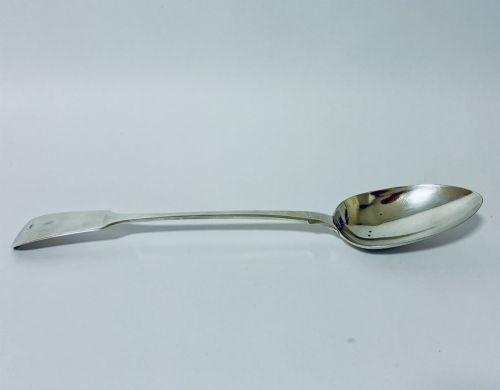
Georgian fiddle pattern silver encompasses a range of flatware and serving utensils characterised by their distinctively shaped stems, widening towards a shouldersed terminal. The pieces on this page span the Georgian, Regency, and early Victorian periods, capturing the domestic silver production of the era.
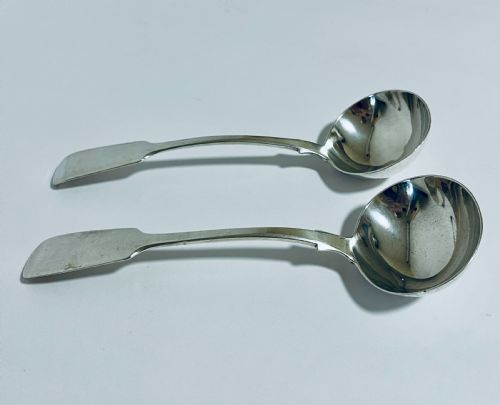
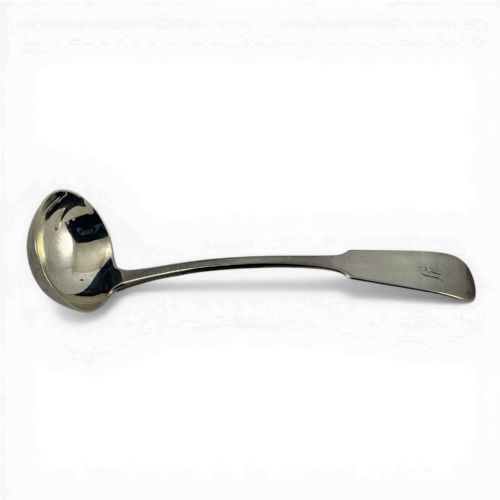
Buyers will encounter various forms ranging from standard tablespoons and dessert spoons to larger serving pieces such as soup ladles, basting spoons, and fish slices. Scottish provincial and Irish examples frequently appear alongside London-hallmarked items, showing distinct regional variations in maker's marks and town marks.
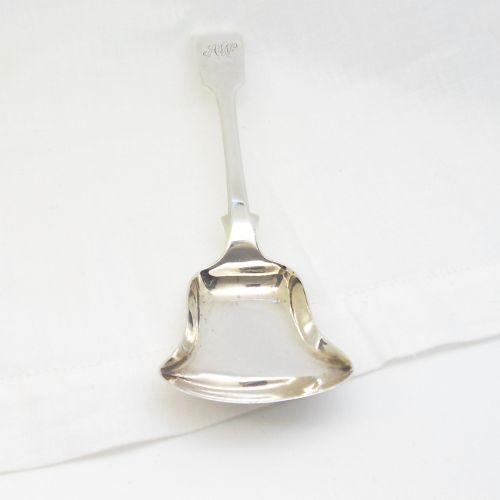
Specialist items such as caddy spoons, spice sifter spoons, mustard spoons, and stilton cheese scoops also surface within this category. These smaller utensils often display the same fiddle handle design scaled down to fit their specific culinary purposes.
Making the silver
Silversmiths forged these items from sterling silver, hammering and shaping the metal to achieve the characteristic balanced weight and strong shoulders of the fiddle outline. Double struck variants feature the pattern impressed on both sides of the handle, requiring careful alignment during manufacture.
Makers applied functional elements appropriate to each object type, piercing blades for fish slices or perforating bowls for spice sifters and sugar shovels. Engraved family crests and initials were frequently added by skilled hands after the initial forging and hallmarking stages.
Object forms span large soup ladles and fish slices down to miniature mustard spoons, caddy spoons, and spice sifters.
Assessing quality
Quality rests upon the crispness of the fiddle shoulders and the retention of original gauge and weight, as heavy daily use through the centuries can wear down the metal. Examples with well-defined crests, legible hallmarks, and balanced proportions command greater appreciation.
Regional provenance and maker attribution heavily influence the character of a piece, with provincial Scottish and Irish pieces often displaying distinct regional marks that interest collectors. Matched sets and multi-piece groupings demonstrate a higher level of historical preservation than individual stray items.
John Walton·William Ferguson·Jamieson and Naughton·Edward Power
The Georgian Fiddle Pattern Silver Glossary
- Fiddle pattern
- A flatware design featuring a stem that straightens towards a widened shoulder before flaring into a square or arched terminal. This style dominated British silver production during the early nineteenth century.
- Basting spoon
- A large serving spoon used in food preparation for scooping and pouring juices over roasting meat. These are notably heavier and longer than standard table spoons.
- Provincial silver
- Items made, assayed, or retailed outside of the major official assay offices such as London. Scottish provincial towns like Elgin, Inverness, and Arbroath produced distinctive local styles.
- Fish slice
- A flat, often pierced or engraved serving utensil designed for lifting portions of fish at the dining table. They frequently feature wide blades attached to fiddle pattern handles.
- Hallmark
- A series of official marks stamped on precious metals to guarantee purity, origin year, and maker. These stamps provide the primary evidence for dating Georgian silver.
Georgian Fiddle Pattern Silver: Frequently Asked Questions
How do I date my fiddle pattern silver?
Dating relies upon reading the stamped hallmarks, which include date letters and assay office symbols indicating the year and location of manufacture.
Additional clues come from the style of any engraved family crests and the specific regional town marks stamped by provincial makers.
What is the difference between a basting spoon and a tablespoon?
Basting spoons are substantially larger and heavier, designed specifically for culinary tasks in the kitchen or large-scale serving at the dining table.
Standard tablespoons are smaller in scale and were intended for individual place settings or general serving duties.
How should I clean antique silver?
Gentle washing in warm soapy water with a soft cloth removes everyday residue without harming the aged surface or softening engraved details.
Harsh abrasive dips and excessive polishing should be avoided to preserve the original metal thickness and historic patina.