


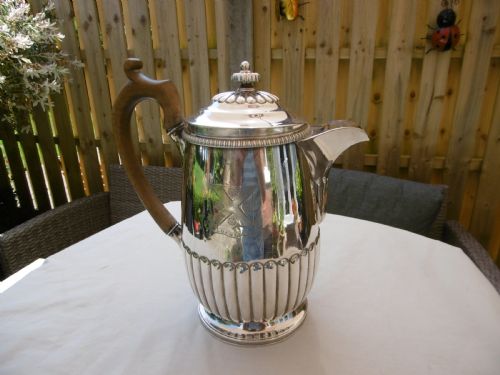


Georgian Engraved Silver Jug
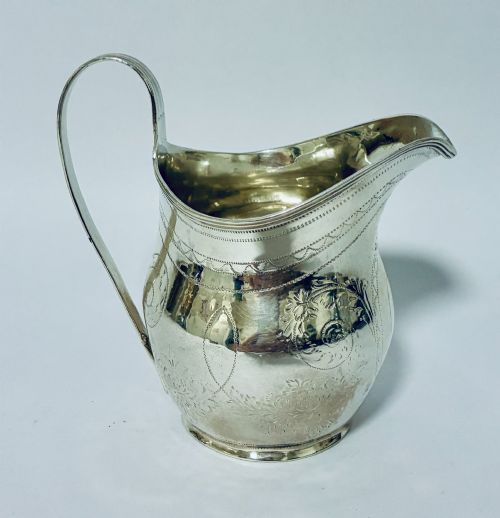
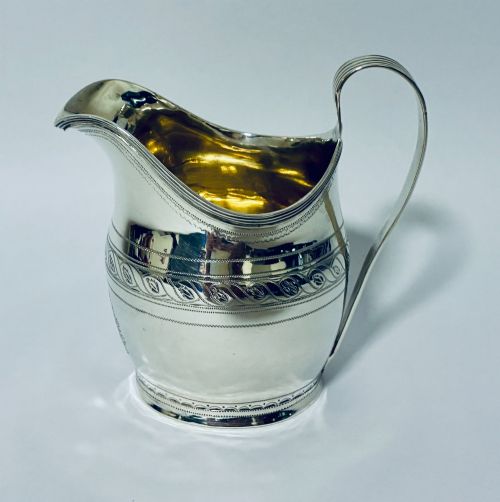
Georgian engraved silver jug examples combine crisp hand-cut bright-cut patterns with substantial sterling silver or Old Sheffield Plate, offering timeless elegance for collectors.
Georgian Engraved Silver Jug
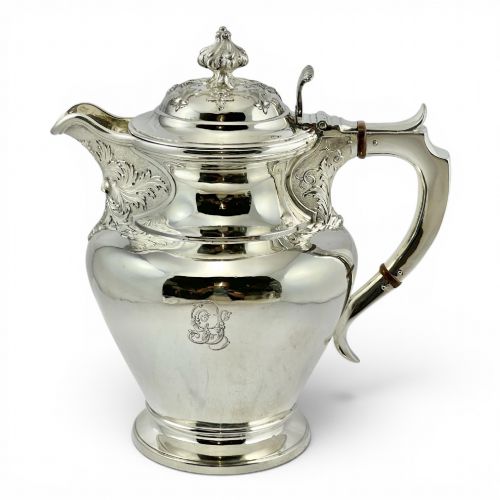
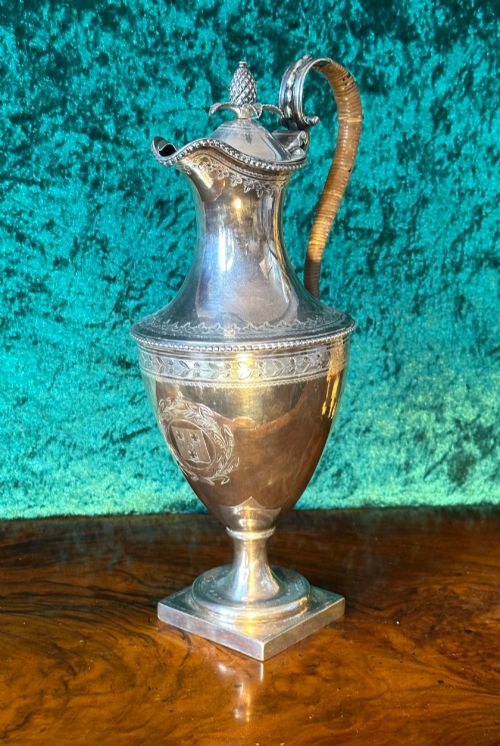
Makers and provincial silversmiths shaped these vessels during the eighteenth and nineteenth centuries, incorporating neoclassical styles and bright cut engraving. Buyers encounter various utilitarian forms, from small milk jugs to large coffee pots and communion vessels, reflecting the period's diverse silverwork.
How they were made
Silversmiths utilised sterling silver and Old Sheffield Plate, fusing silver and copper together for plated items, whilst incorporating wooden handles on specific coffee and water pots. Craftspeople applied hand-cut bright-cut engraving directly onto the metal surface to create geometric and floral decorative borders.
Workshops employed hammering, soldering, and casting techniques to form the bodies, spouts, and feet of ewers and jugs. Guild marks, provincial touchmarks, and crests were stamped into the base or side of the sterling items during manufacture.
Listings feature items from the Georgian, Regency, and William IV periods, constructed in sterling silver, Old Sheffield Plate, copper, and wood.
What varies in quality
The precision and depth of the bright-cut engraving distinguish finer examples from simpler provincial work, showing the hand of a skilled engraver. Crispness of the maker marks and the preservation of the original crest or monogram also elevate the standing of a piece.
The weight of the sterling silver or the retention of the silver layer over the copper core in Old Sheffield Plate determines the durability and physical presence of the vessel. Well-balanced proportions in handles, spouts, and bodies reflect superior period design and manufacturing standards.
Matthew Boulton·John Emes·Peter & Ann Bateman
The Georgian Engraved Silver Jug Glossary
- Bright-cut engraving
- A technique using faceted angled cuts to create sparkling geometric and floral patterns on silver surfaces. This method was widely utilised during the Georgian period to decorate cream jugs and ewers.
- Old Sheffield Plate
- An early fusing process where a thin sheet of silver is fused to a thicker copper base. It appears on nineteenth-century jugs and coffee pots.
- Sterling silver
- A silver alloy containing a fixed proportion of pure silver and other metals to ensure durability. Most Georgian domestic hollowware utilised this standard.
- Ewer
- A large jug with a wide spout and a looped handle, traditionally used for holding water or wine. Regency examples often display neoclassical styling.
- Provincial silver
- Silverware manufactured outside of London, bearing marks from regional assay offices such as Edinburgh. These items display distinctive local design traits.
Georgian Engraved Silver Jug: Frequently Asked Questions
How do I clean an old silver jug?
Use a soft cloth and a specialised silver polish designed for antique items, avoiding harsh abrasive materials that can damage the thin metal or plating.
Take care around engraved areas where polish can accumulate, and rinse the piece thoroughly with warm water after cleaning to preserve the finish.
Are these jugs safe for daily use?
Whilst sterling silver and Old Sheffield Plate vessels remain physically robust, frequent use can wear down thin antique silver layers and delicate handles.
Many collectors prefer to display them as decorative items or utilise them gently for special occasions to protect the historical surface.
How can I tell sterling from plated pieces?
Examine the vessel for hallmarks indicating sterling standard, such as a lion passant and city marks, which confirm solid silver construction.
Old Sheffield Plate items often reveal a faint line of copper along the cut rims or edges where the base metal shows beneath the silver layer.
What periods do these pieces cover?
The selection spans the Georgian era, encompassing George III, Regency, and William IV periods reaching into the nineteenth century.
Stylistic shifts from simple neoclassical forms to heavier Victorian ecclesiastical designs appear across the different manufacturing dates.