

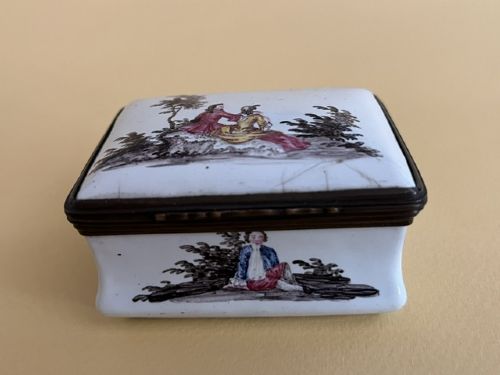


Georgian Enamelled Pill Box
These georgian enamelled pill box pieces are charming pocket-sized containers, offering a glimpse into eighteenth-century social life and meticulous craftsmanship.
Georgian Enamelled Pill Box
When searching for a georgian enamelled pill box, buyers encounter small, hinged containers historically used for cosmetics, patches, or tobacco. The selection leans heavily towards eighteenth-century pieces originating from Bilston and South Staffordshire, often taking rectangular or oval forms.
Many examples feature hand-painted lid scenes, inscriptions, or novelty shapes like animals, designed to fit into a waistcoat pocket or small purse. While catalogued under various names such as patch boxes, snuff boxes, and bonbonnieres, they share a distinct vitreous enamel finish over metal bases.
Materials and construction
These items were constructed using copper or brass bases, shaped to form the body and hinged lid of the box. Artisans applied powdered glass pastes to the metal surfaces, firing them in kilns to achieve a smooth, glossy enamel coating.
Once the base enamel layer set, painters applied detailed miniature scenes, sentiments, or portraits using metallic oxide pigments before a final low-temperature firing. Gilt metal mounts and tiny brass hinges completed the closure, securing the lid tightly to the body.
Georgian Enamelled Pill Box Retail Price Guide 2026
Typical asking prices for georgian enamelled pill box among the pieces listed under this phrase on Sellingantiques today, from the lower quarter to the upper quarter. They describe what is for sale here now, not the wider market.
Assessing quality
The precision of the metal mounts and the alignment of the hinge also distinguish superior specimens from simpler work. Well-made boxes retain their original gilding on the brass rims and close firmly without misalignment between lid and base.
Bilston·South Staffordshire·Staffordshire
The Georgian Enamelled Pill Box Glossary
- Patch box
- A small container originally used to hold cosmetic patches made of silk or velvet. These were fashionable additions to an eighteenth-century dressing routine.
- Vinaigrette
- A small hinged box featuring an internal pierced grille holding a sponge soaked in aromatic vinegar. They were carried to counter unpleasant odours in crowded public spaces.
- Bonbonniere
- A decorative container intended to hold sweetmeats or sugarplums. They often take whimsical or novelty shapes.
- Enamel
- A glassy substance fused to a metal substrate through high-temperature firing. It provides a durable, colourful decorative surface.
- Gilt metal
- Metal overlaid with a thin layer of gold or gold-coloured wash. It frames the enamel panels on these small boxes.
Georgian Enamelled Pill Box: Frequently Asked Questions
What were patch boxes used for?
Georgian society used these small containers to store small silk or velvet patches worn on the face. These patches often concealed blemishes or displayed fashionable shapes.
Over time, owners also repurposed them to hold pills, snuff, or other small personal items kept in pockets or reticules.
How do I care for antique enamel boxes?
Keep these delicate containers away from direct sunlight, high humidity, and sudden temperature shifts. Enamel can craze or crack if exposed to thermal shock.
Clean them only with a soft, dry cloth and avoid using chemical polishes or water on the painted surfaces.
Are these boxes made of solid gold?
The vast majority of these pieces utilise copper or brass bases covered in glass enamel, often finished with gilt metal mounts. Solid gold versions are exceptionally uncommon.
Most surviving examples rely on the skill of the enamel painter rather than precious metal weight for their value.
How can I tell an 18th-century box from later copies?
Eighteenth-century pieces typically show hand-hammered copper bases, irregular enamel pooling near the rims, and hand-painted details with soft oxide colours. Later nineteenth-century revivals often feature more mechanical regularity.
Examine the hinges and interior construction closely, as Georgian makers employed distinct assembly techniques for their brass mounts.