

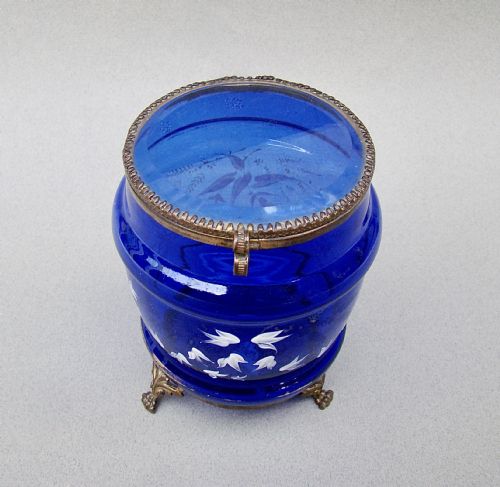


Cobalt Blue Trinket Box
A cobalt blue trinket box is a small, richly coloured container for keepsakes and dressing table items, sought after for its striking depth of colour and decorative metal mounts.
Cobalt Blue Trinket Box
A cobalt blue trinket box encompasses small containers, dressing table jars, jewellery caskets, and patch boxes made across the eighteenth, nineteenth, and early twentieth centuries. These objects served to hold small personal belongings, pins, and cosmetics on dressing tables and desks.
French nineteenth-century examples in glass and porcelain dominate the pieces seen here, often featuring gilt metal, ormolu, or brass mounts. English stoneware and enamel pieces from the Georgian and Victorian periods also appear alongside Japanese Imari wares.
How they were made
Makers utilised rich cobalt pigments in glass, porcelain, and enamel to achieve the characteristic deep blue ground colour seen across these items. Porcelain bodies were shaped and fired before receiving hand-painted detailing and gilt highlights.
Metal mounts in ormolu, gilt metal, and gold leaf were meticulously fitted to glass and porcelain vessels, creating hinged lids and secured rims that required precise metalworking skills.
Cobalt Blue Trinket Box Retail Price Guide 2026
Typical asking prices for cobalt blue trinket box among the pieces listed under this phrase on Sellingantiques today, from the lower quarter to the upper quarter. They describe what is for sale here now, not the wider market.
Several boxes feature tiny interior mirrors originally intended for checking the placement of a silk beauty patch.
What varies in quality
The fineness of the hand-painted decoration and the crispness of the gilt detailing dictate the upper tier of these pieces. Hand-painted floral motifs and precise gold leaf application distinguish finer studio work from simpler production wares.
The weight and finish of the metal mounts, such as cast ormolu versus basic gilt metal, mark the distinction between high-end dressing table pieces and standard domestic items.
Wedgwood·Limoges·Sevres·Mary Gregory
The Cobalt Blue Trinket Box Glossary
- Ormolu
- Gilt bronze or brass mounts applied to furniture and decorative objects. This technique was widely used on nineteenth-century French boxes to frame glass and porcelain panels.
- Jasperware
- A type of fine stoneware developed by Wedgwood, typically featuring contrasting white moulded reliefs applied to a coloured clay body. Blue jasper dip variations appear frequently among English nineteenth-century boxes.
- Patch box
- A small container designed to hold cosmetic patches worn on the face during the eighteenth century. Georgian examples in enamel and porcelain often incorporated interior mirrors.
- Imari
- A style of Japanese export ceramics characterised by a palette of cobalt blue, iron red, and gold. Pieces bearing this influence show distinctive patterned designs.
- Enamel
- A glassy substance fused to a metal base through firing. Bilston and South Staffordshire boxes utilise this technique for smooth, brightly coloured surfaces.
Cobalt Blue Trinket Box: Frequently Asked Questions
What were cobalt blue trinket boxes used for?
These small containers stored intimate personal items such as rings, pins, and cosmetic patches on dressing tables.
They also functioned as decorative objects in their own right, displayed on mantelpieces and cabinets to showcase rich colour and craftsmanship.
How do I care for antique glass and porcelain boxes?
Dust them gently with a soft, dry cloth and avoid using chemical cleaning agents that might damage the gilt detailing or enamel surfaces.
Keep them away from direct sunlight and extreme temperature changes to protect the integrity of the metal mounts and glass bodies.
How can I tell a French nineteenth-century box from an English one?
French pieces often combine deep cobalt glass or porcelain with ornate ormolu mounts and French Rococo Revival styling.
English equivalents frequently rely on stoneware bodies like blue jasper or feature smooth enamel work associated with Staffordshire workshops.
What is the difference between a patch box and a trinket box?
Patch boxes are typically smaller, shallower containers specifically made in the eighteenth century to hold small fabric beauty patches.
Trinket boxes and jewellery caskets generally offer deeper storage capacity for rings, brooches, and small dressing table accessories.