

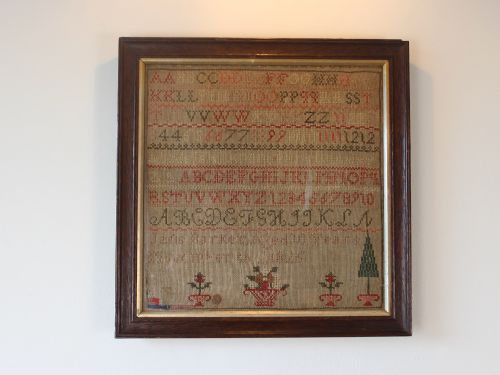


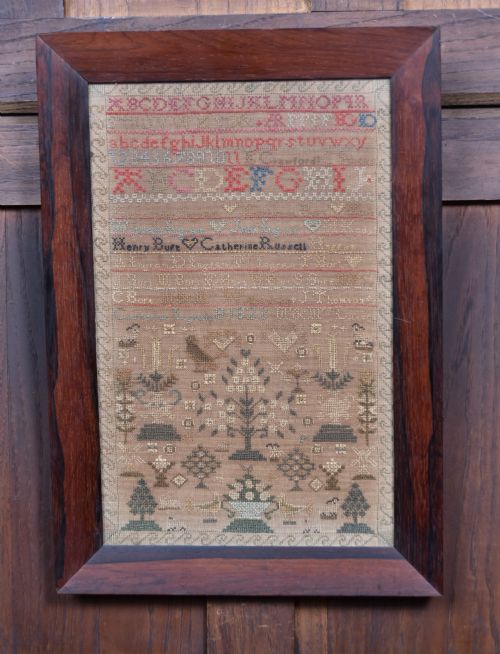


Georgian Embroidery Picture
A georgian embroidery picture brings domestic handwork from past centuries onto the wall, offering painted silk and needlework framed for display.
Georgian Embroidery Picture
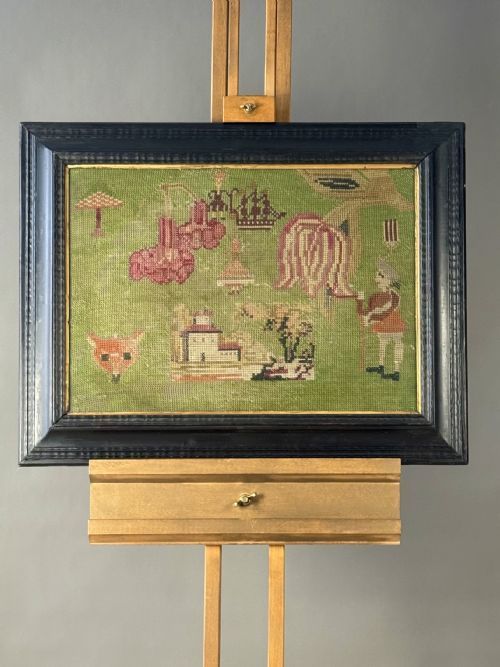
A georgian embroidery picture encompasses needlework panels, samplers, and textile art framed for interior hanging. Examples range from pastoral farming scenes and literary tales to alphabets and maps worked by hand.
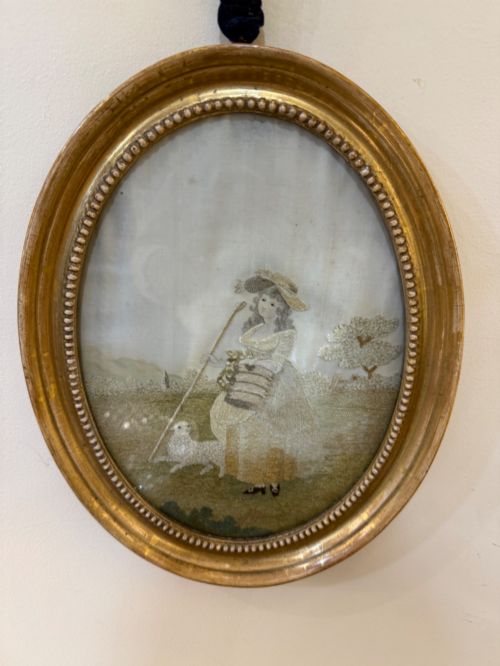
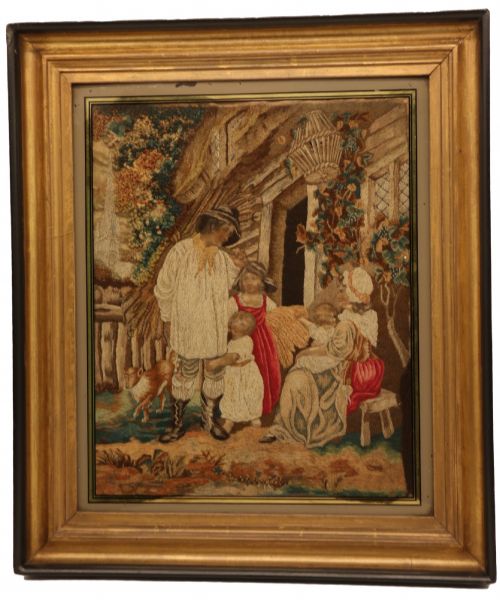
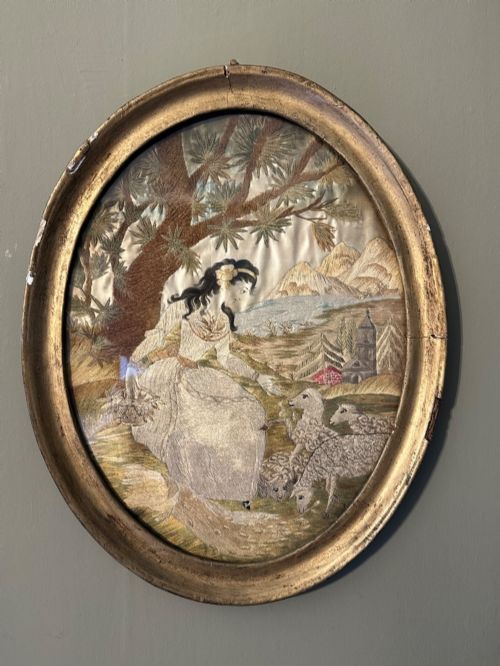
The pieces on this page span the eighteenth and nineteenth centuries, taking forms such as oval woolwork, long stitch compositions, and Berlin silk work. Many retain their original surrounds, including water-gilded wood and verre églomisé glass frames.
Makers include young stitchers such as Mary Mason and Susan Mary Williams, alongside anonymous hands producing professional pastoral, theatrical, and religious subjects. The category includes both intimate individual panels and matched pairs.
How They Were Made
Makers constructed these works using silk, wool, and linen grounds stitched with silk floss and crewel wool. Painters sometimes added hand-painted details directly onto the silk background before the needlework commenced.
Framing utilised giltwood, gold leaf, and specialised mezzotint black glass with verre églomisé borders to protect the delicate textiles. These surrounds often date to the original period of production.
Current listings feature eighteenth and nineteenth-century works incorporating silk thread, wool, giltwood frames, and verre églomisé glass.
What Varies in Quality
The preservation of the original period frame, whether water-gilded oval wood or black glass, elevates the integrity of the piece. Matching pairs demonstrate a higher degree of original intent and survival.
The Georgian Embroidery Picture Glossary
- Berlin silk work
- A type of coloured embroidery worked on canvas from printed point-paper charts that became popular in the nineteenth century. This technique allowed for complex pictorial designs with shaded wools and silks.
- Verre églomisé
- A process of applying cold gilding and painting on the reverse side of glass to create a decorative border. It often appears on frames housing Regency and Georgian needlework pictures.
- Crewel work
- Embroidery executed with two-ply wool yarn on a linen or cotton twill ground. It appears in early pieces depicting naturalistic or flowing floral motifs.
- Needlework sampler
- A piece of fabric embroidered with various alphabets, numerals, and motifs to demonstrate a stitcher's skill. Schoolgirls often signed and dated these works alongside their age.
- Long stitch
- An embroidery stitch where straight stitches span varying lengths across the ground fabric to build up pictorial forms. This method creates smooth colour gradations in silk pictures.
Georgian Embroidery Picture: Frequently Asked Questions
How were these pictures displayed?
These textiles were framed behind glass in giltwood or black glass surrounds to protect them from dust and light. They hung in domestic parlours as testaments to household accomplishment and taste.
Today, they require similar placement away from direct sunlight to preserve the fugitive colours of the silk and wool threads.
What subjects appear on these textiles?
Makers stitched pastoral farming scenes, literary narratives from sources like Jack and the Beanstalk, religious subjects, and theatrical characters. Alphabet samplers and maps also feature frequently among the surviving pieces.
Some works incorporate hand-painted silk sections combined with detailed needlework to render figures in gardens or portraits of children.
How do I date a needlework picture?
Dates often appear directly on samplers alongside the maker's name and age, providing a clear point of origin. Stylistic clues in the costumes, framing materials, and stitching techniques help narrow down undated pieces.
Eighteenth-century examples tend toward pastoral or classical compositions, while nineteenth-century works frequently employ Berlin wool work or feature literary and theatrical themes.
Are original frames important?
Original water-gilded wood frames and verre églomisé glass panels significantly enhance the historical context of a textile. They indicate that the piece has remained intact since its initial creation and display.
Inspect the rebate and backing boards to ensure the frame and embroidery belong together from the period.