


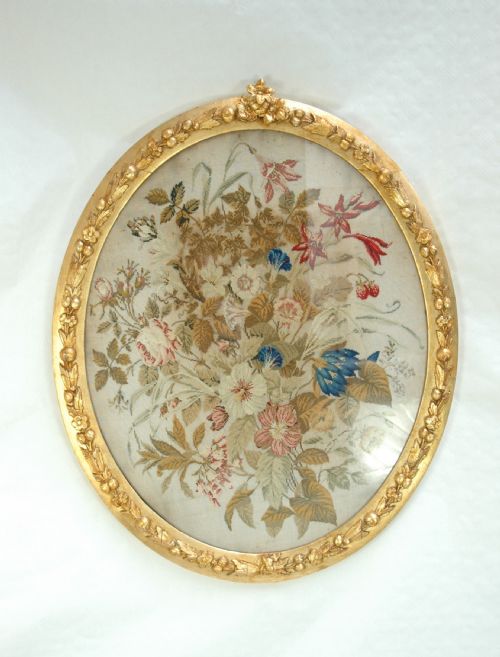

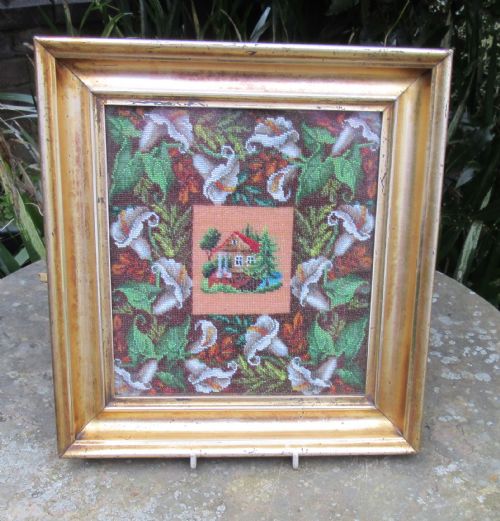

Botanical Needlework Picture
A botanical needlework picture brings the quiet detail of flora and fauna straight to the wall.
Botanical Needlework Picture
A botanical needlework picture is a framed textile piece depicting natural subjects such as plants, flowers, or birds, often worked on canvas, linen, or silk.
The examples gathered here span from the eighteenth century through the nineteenth century, including works from Georgian and Victorian periods as well as Chinese and American origins.
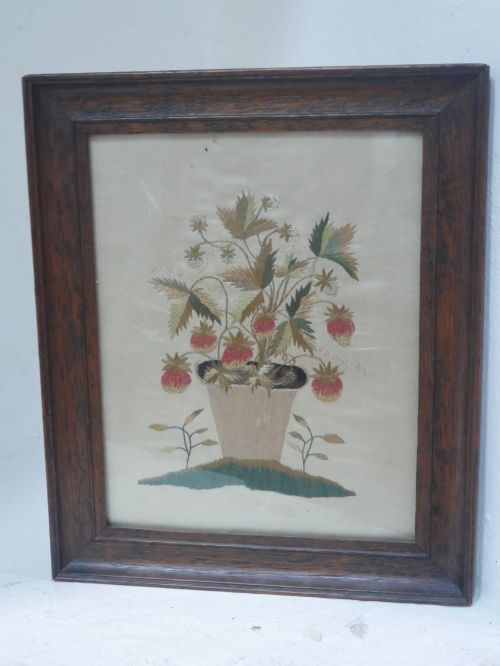
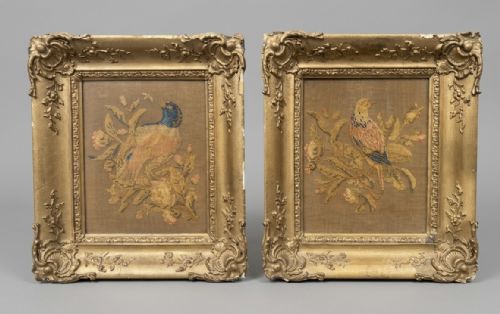
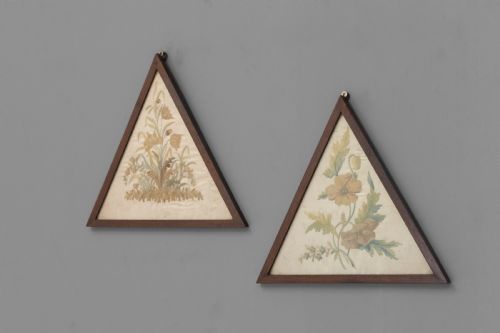
Buyers frequently encounter framed wall art that ranges from single floral studies and pots of strawberries to pairs of birds and garden ducks set within giltwood or wood frames.
Materials and construction
These works rely on textiles like silk, wool, linen, and canvas as the foundation for detailed threadwork and embroidery.
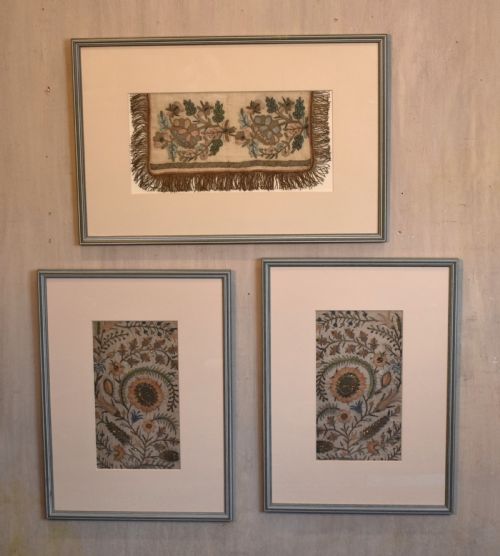
Many pieces incorporate fine beadwork or are preserved behind glass within timber frames, including gilt wood and giltwood moulding.
Materials across the listings include silk, wool, linen, canvas, and glass, housed within wood and giltwood frames.
Distinctions in quality
Quality rests upon the precision of the stitching and the realism captured in the depiction of flora and fauna.
The preservation of the underlying fabric and the originality of the framing contribute significantly to the standing of each piece.
The Botanical Needlework Picture Glossary
- Needlework
- A piece of decorative artwork created by stitching yarn or thread onto a textile ground such as canvas or linen. This forms the primary medium for historical wall art.
- Giltwood
- Wood that has been treated with a thin layer of gold leaf or gilt finish. It is commonly found on the frames surrounding antique textile pictures.
- Canvas
- A heavy woven fabric used as a sturdy foundation for embroidery and tapestry work. It provides durability for intricate thread patterns.
- Beadwork
- Decorative work created by sewing small beads onto a fabric backing to form patterns or pictures. It appears in specific nineteenth-century American pieces.
Botanical Needlework Picture: Frequently Asked Questions
How should I hang a needlework picture?
Keep textile art away from direct sunlight to protect silk, wool, and linen threads from fading over time.
Ensure the room maintains stable humidity levels to preserve both the fabric ground and the original wooden frame.
What periods do these pictures come from?
The pieces span multiple centuries, with examples originating from the eighteenth and nineteenth centuries.
Stylistic influences range from Georgian and Victorian botanical designs to Chinese and American regional traditions.
Are these works always framed?
Almost all examples are presented as framed wall art, utilising gilt wood, giltwood, or standard timber frames.
Glazing is frequently employed to protect the delicate textile surface from dust and handling.
What subjects appear in these works?
Common motifs include botanical studies, garden birds, mandarin ducks, and potted fruit such as strawberries.
Designs vary from English country house aesthetics to French chateau and Victorian rococo revival styles.