


Georgian Ebonised Chair
A georgian ebonised chair brings dark, dramatic polish and classical lines into a room, offering both striking visual contrast and historic seating.
Georgian Ebonised Chair
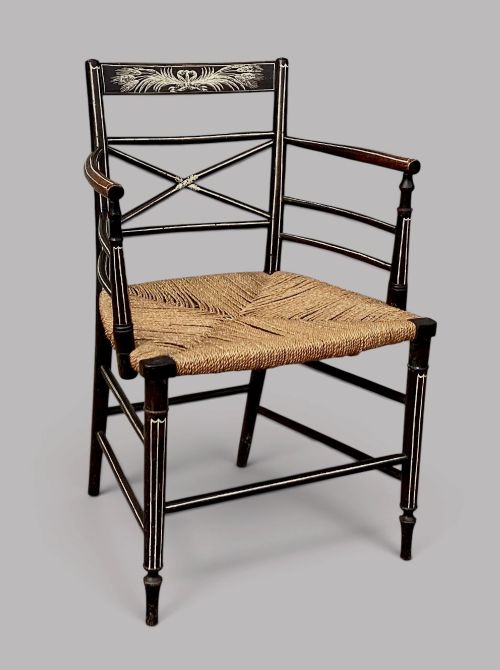
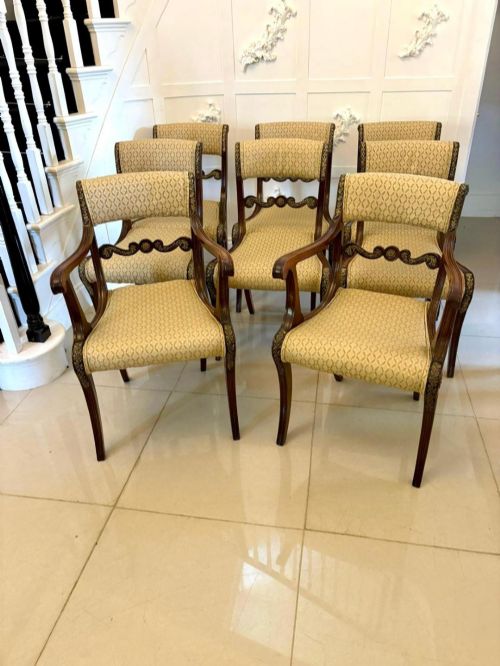
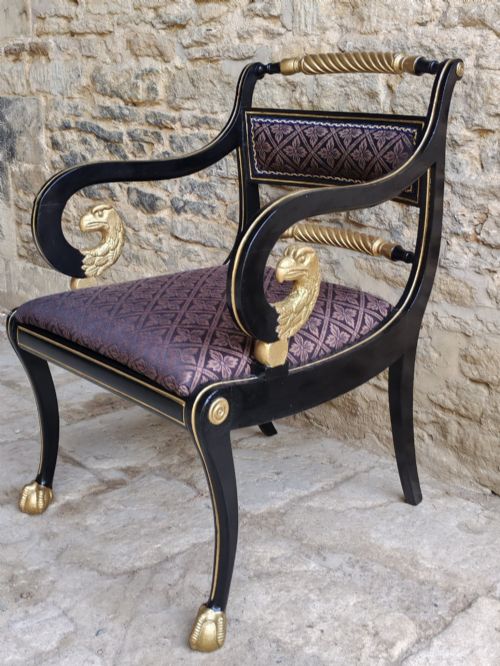
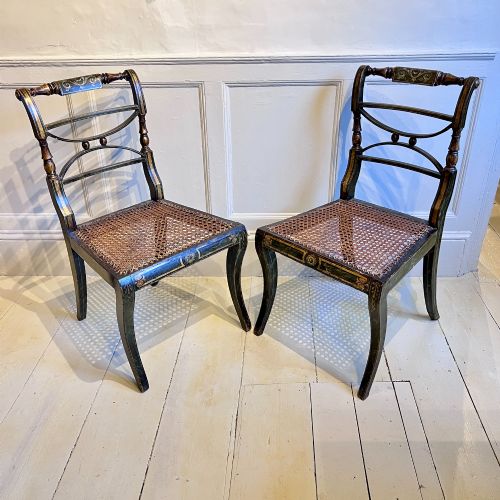
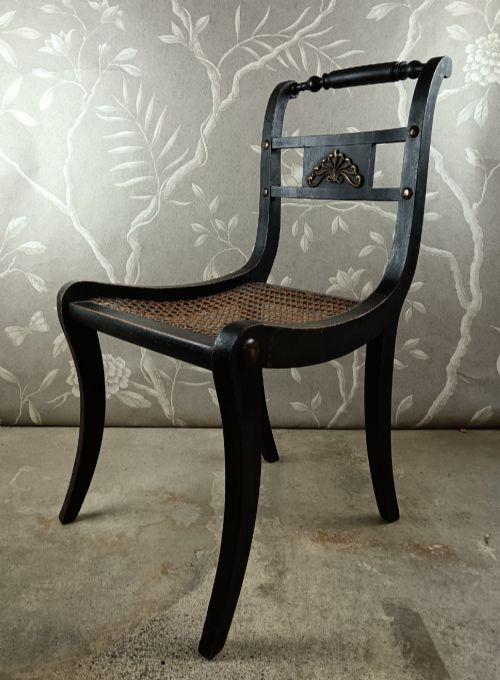
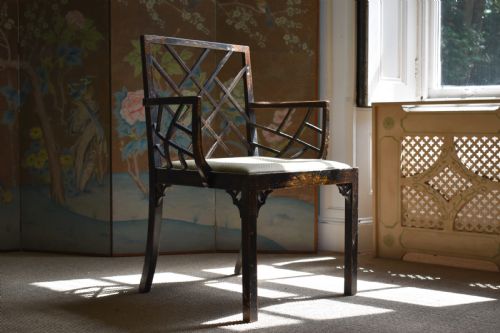
When searching for a georgian ebonised chair, collectors encounter a focused selection of seating predominantly rooted in the Regency period alongside 18th century and later interpretations. The forms on this page span armchairs, side chairs, and library chairs, often featuring caned seats, sabre legs, or faux bamboo turnings.
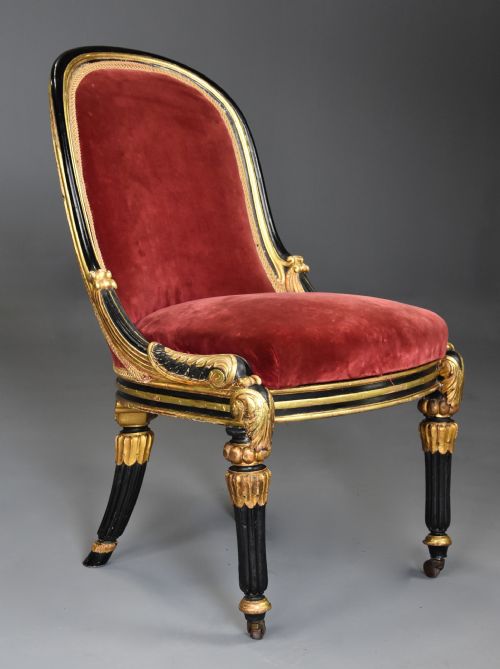
The most typical examples met here include Regency ebonised side chairs and armchairs from around 1820, alongside painted and parcel gilt variants. Pieces range from grand dining sets to individual library and country chairs, reflecting both formal urban workshops and vernacular traditions.
Materials and construction methods
These chairs rely on woods such as mahogany and beech finished with ebonised surfaces, sometimes highlighted with paint, parcel gilt, or decorative faux bamboo turnings. Craftspeople integrated cane panels into seat frames, alongside traditional joinery seen in Windsor and vernacular turned models.
Additional detailing incorporates brass mounts and fabric upholstery, contrasting dark finished timbers with woven cane or soft texturing to define the seat structure.
Listings for a georgian ebonised chair span the Regency and 18th Century periods, incorporating materials such as cane, brass, and parcel gilt.
Judging quality and character
The distinction between standard seating and exhibition quality items lies in the precision of the woodwork and the retention of original decorative elements such as parcel gilding or painted motifs.
The Georgian Ebonised Chair Glossary
- Ebonised Wood
- Timber treated with a dark stain or finish to imitate ebony. This dark surface creates a sharp, formal silhouette.
- Cane
- Woven rattan material used for seats and backs. It provides a lightweight, resilient surface popular in Regency seating.
- Sabre Leg
- A concave curving leg that tapers towards the foot. This form is typical of Regency seating design.
- Faux Bamboo
- Wood turned and carved to resemble natural bamboo stalks. It reflects an interest in exotic, Chinoiserie aesthetics.
Georgian Ebonised Chair: Frequently Asked Questions
How do I care for ebonised wood?
Dust gently with a soft, dry cloth and avoid harsh chemical cleaners that might strip the dark finish.
Keep the chair away from direct sunlight and excessive heat sources to protect the wood and any integrated cane work from drying out.
Are these chairs comfortable for daily use?
Many examples feature original cane seats that offer a degree of spring, though some owners add loose squab cushions for extra comfort.
Dining and library chairs from this era are designed with upright postures suited for formal sitting rather than lounging.
How can I identify a Regency period piece?
Look for classical revival elements such as sabre legs, rope-backs, and faux bamboo turnings which date around 1820.
Construction details and timber choices like mahogany beneath the ebonising further help distinguish authentic period pieces from later revivals.
What is the difference between an armchair and a side chair?
Armchairs feature structural armrests integrated into the frame, making them suitable as desk, library, or occasional chairs.
Side chairs lack arms, allowing them to be tucked neatly around a dining table or placed compactly against a wall.