


Gilt Ebonised Slipper Chair
These gilt ebonised slipper chairs combine dark timber surfaces with bright metallic highlights to offer low seating designed for nineteenth-century bedrooms and parlours.
Gilt Ebonised Slipper Chair
A gilt ebonised slipper chair is a low-seated chair designed originally for dressing rooms and bedrooms, allowing women to change footwear with ease. The examples found here span the nineteenth century, including the Victorian era, the Regency period, and the Aesthetic Movement.
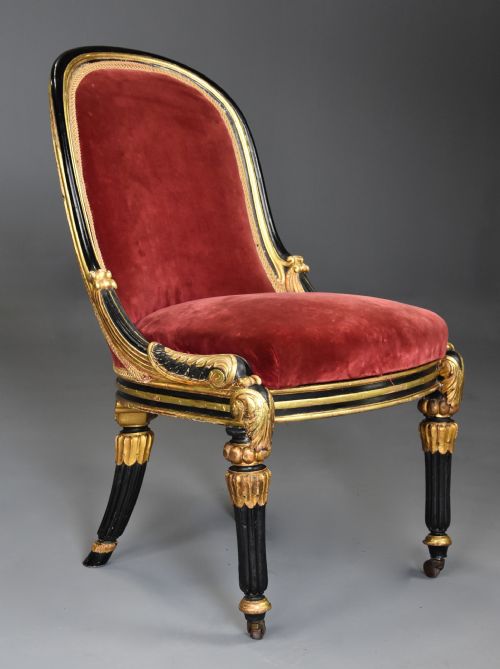
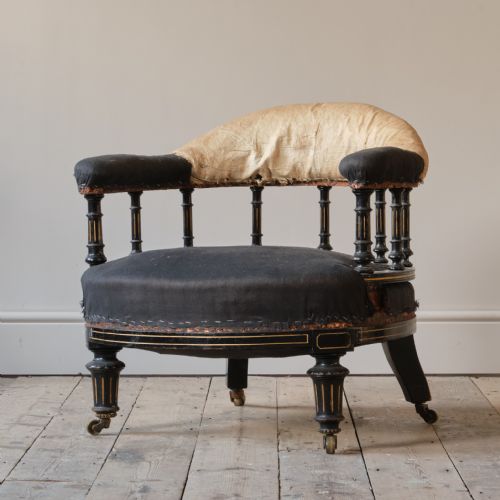
Most pieces on this page take the form of nursing chairs, bedroom chairs, and side chairs, alongside occasional pairs and child chairs. Makers applied ebonised wood finishes combined with gilt or gold leaf, frequently pairing the dark frames with velvet, fabric, or cane seats.
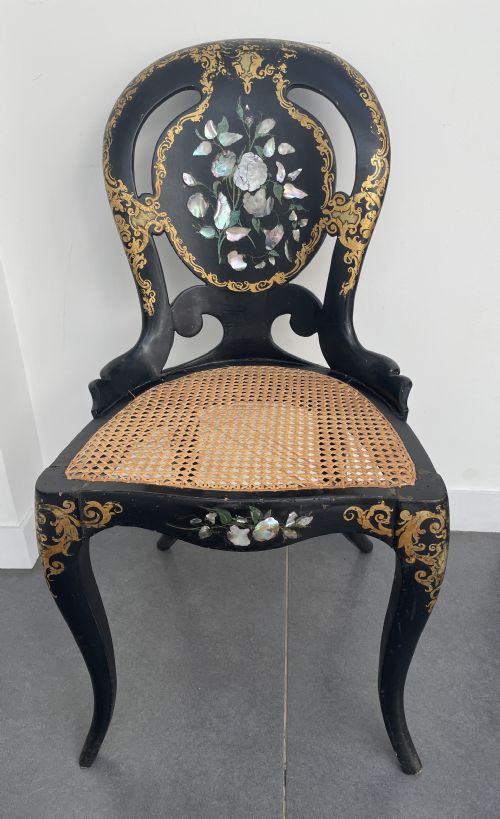
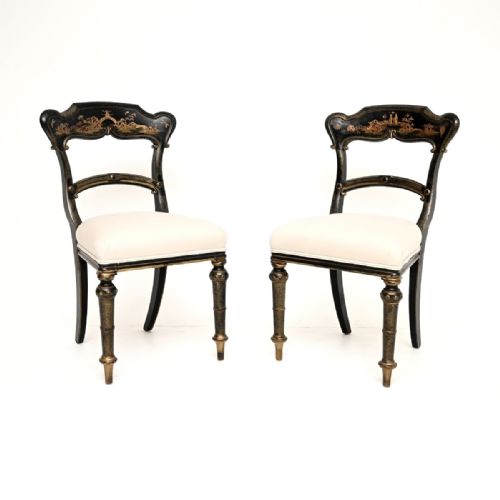
Variations in these pieces include inlaid mother of pearl, lacquered chinoiserie details, and open armchair or tub chair configurations. The archived records confirm curvaceous Victorian parcel gilt forms alongside straight-legged 1870 and 1880 variants.
How they were made
Craftsmen built these chairs from timber treated to imitate ebony, producing a dense black ebonised wood finish that set off applied gilt and gold leaf highlights. This dark surface treatment provided a stark contrast to metallic decoration and detailed surface ornamentation.
Makers embellished the frames using mother of pearl inlay and lacquered chinoiserie motifs, particularly during the Victorian and Aesthetic periods. Upholstery materials such as velvet and standard fabric were combined with cane panels and brass fittings across the various side and nursing chair designs.
Several chairs feature mother of pearl inlay that catches the bedroom candlelight just as intended in eighteen-eighty.
What varies in quality
The standard of a gilt ebonised slipper chair depends on the crispness of its gilt highlights and the preservation of its ebonised wood finish. Pieces featuring detailed mother of pearl inlay or hand-painted lacquered chinoiserie sit higher in the hierarchy than plain frames.
Structural complexity also dictates worth, separating simple side chairs from curvaceous nursing chairs, tub chairs, and open armchairs with sophisticated nineteenth-century joinery. The inclusion of matching pairs further distinguishes more ambitious workshop production from individual bedroom chairs.
Gillows
The Gilt Ebonised Slipper Chair Glossary
- Ebonised wood
- Timber treated with stain or paint to imitate ebony. This dark finish was popular during the nineteenth century for furniture requiring a formal black appearance.
- Gilt
- Application of gold leaf or gold paint to a surface. It highlights carved details and contrasts sharply with ebonised timber.
- Nursing chair
- A low-seated Victorian chair designed for comfort. These pieces allowed women to sit close to the fire or nurse infants.
- Aesthetic Movement
- A nineteenth-century design style emphasising visual beauty over narrative content. It influenced furniture with ebonised finishes and gilt decoration.
- Chinoiserie
- European interpretation of Chinese artistic traditions. Lacquered examples on this page show this decorative technique applied to Victorian side chairs.
Gilt Ebonised Slipper Chair: Frequently Asked Questions
What is a slipper chair?
A slipper chair is a low-seated upholstered chair designed for nineteenth-century bedrooms and dressing rooms. It allowed sitters to dress and put on footwear comfortably.
Most variants on this page date from the Victorian period and the Aesthetic Movement, featuring ebonised wood frames and upholstered seats.
How do I date an ebonised chair?
Dating relies on stylistic clues such as the presence of Aesthetic Movement motifs, Regency proportions, or Victorian lacquered chinoiserie. Materials like mother of pearl inlay also point to specific decades.
Comparing structural forms against documented nineteenth-century side and nursing chair designs helps establish the correct period.
Where were these chairs used?
These chairs were primarily used in private domestic spaces such as bedrooms, nurseries, and dressing rooms. Their low profile suited personal grooming and nursing.
They also appeared in Victorian parlours, particularly when executed as pairs or open armchairs with gilt highlights.
How do I clean ebonised wood?
Cleaning ebonised wood requires a soft, dry cloth to remove dust without disturbing the dark finish or gilt highlights. Moisture and harsh cleaning agents can damage the underlying surface treatment.
Preserving the original nineteenth-century polish ensures the contrast between the black timber and gold leaf remains sharp.