


Georgian Earthenware Meat Dish
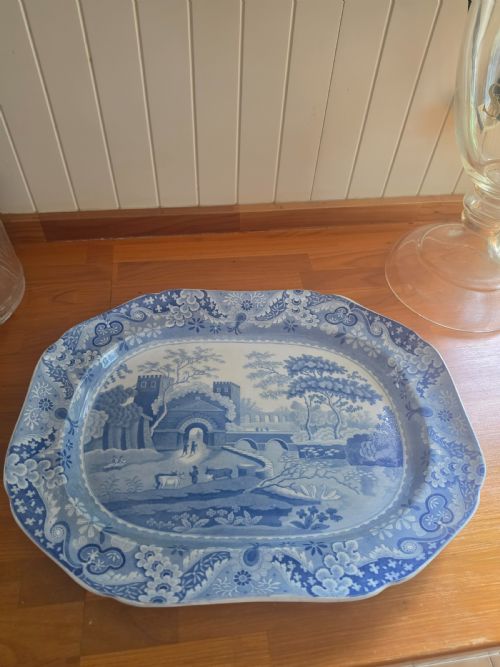
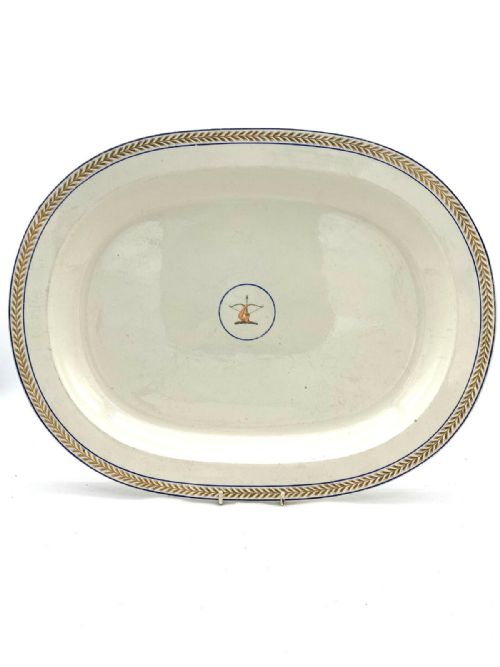
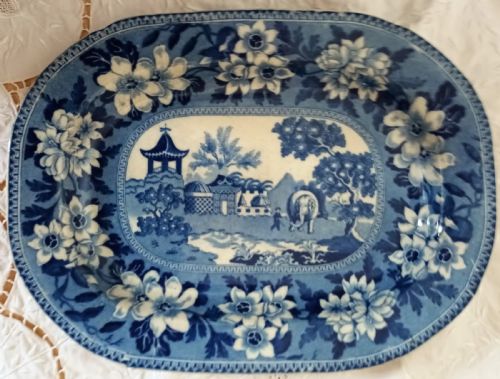
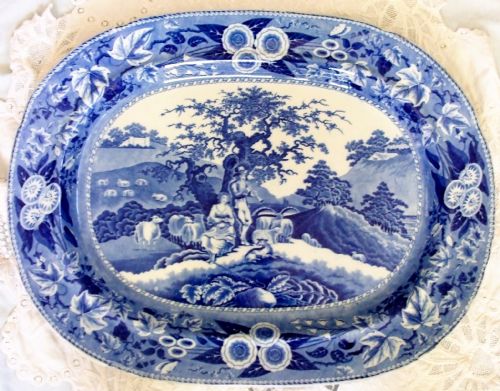
A Georgian earthenware meat dish is a heavy ceramic platter designed for joint service, combining bold blue and white transfer prints with durable local clay body utility.
Georgian Earthenware Meat Dish
A georgian earthenware meat dish serves as the robust centrepiece of a traditional dining table, designed specifically for presenting large joints of roasted meat. When exploring a georgian earthenware meat dish, buyers encounter substantial serving platters shaped in large ovals with deep wells to catch juices. These pieces originate predominantly from the late eighteenth century through the early decades of the nineteenth century.
The selection here encompasses various regional potteries working within the Georgian and Regency styles, showcasing distinct transfer-printed imagery. Common forms include large serving platters, some equipped with integrated drainers and dedicated gravy wells for functional practicality. Most examples rely on tin-glazed or refined creamware and pearlware bodies decorated with cobalt pigment.
Materials and production methods
Potters shaped these serving vessels using local earthenware clays, which were then refined into lighter bodies such as creamware and pearlware. These bodies provided a smooth, pale canvas suited to receiving intricate ceramic glazes.
Decoration relied heavily on cobalt pigment applied through transfer printing techniques, pressing engraved copper plates onto tissue paper to transfer pictorial scenes onto the biscuit fired ceramic. A final transparent ceramic glaze was applied over the print before the vessel underwent a high temperature kiln firing.
The listings span the late eighteenth and early nineteenth centuries, featuring creamware, pearlware, and cobalt transfer-printed earthenware from Staffordshire potteries.
Assessing quality in early serving ware
Quality rests primarily in the crispness and registration of the blue and white transfer print, distinguishing deeply detailed architectural or pictorial scenes from smudged impressions. The clarity of the cobalt pigment against the underlying creamware or pearlware body dictates visual success.
The weight and balance of the earthenware platter, alongside the survival of integrated elements like drainers and gravy wells, mark the distinction between standard utilitarian items and ambitious production pieces intended for grand dining rooms.
Spode·Wedgwood·John Rogers and Son·Thomas Lakin·Don Pottery·Minton·Elkin Knight and Bridgwood
The Georgian Earthenware Meat Dish Glossary
- Creamware
- A refined light-coloured earthenware developed in Staffordshire during the eighteenth century. Its warm hue provided a smooth base for early transfer-printed decoration.
- Pearlware
- An improved earthenware body featuring a slight bluish tint in the glaze to mimic the whiteness of Chinese export porcelain. It became the dominant substrate for blue and white transfer-printed pottery.
- Transfer printing
- A decoration technique where an engraved copper plate transfers an ink design onto paper, which is then impressed onto the ceramic body. This method allowed for complex pictorial scenes to be replicated rapidly.
- Gravy well
- A sunken channel or recess moulded into the surface of a meat dish to collect juices during carving. It represents a practical innovation in dining table accessories.
Georgian Earthenware Meat Dish: Frequently Asked Questions
Can I use these platters for serving food?
While structurally sound, antique earthenware often exhibits crazing and absorption risks that make modern dishwasher use unwise.
Gentle hand washing in warm water preserves the historic ceramic glaze and cobalt transfer print.
What patterns appear most often?
Scenic landscapes, architectural ruins, and narrative subjects like maritime battles or pastoral shepherds dominate the decorative repertoire.
Armorial crests and topographical views of castles also appear on higher-status commissions.
How do I distinguish creamware from pearlware?
Creamware displays a warm, butterscotch or ivory tone in the underlying clay body and transparent glaze.
Pearlware exhibits a cooler, slightly bluish pooling of the glaze around foot rims and crevices to imitate porcelain.