

Ceramic Blue Transferware Dish
A ceramic blue transferware dish brings crisp cobalt decoration and nineteenth-century narrative scenes directly to the table.
Ceramic Blue Transferware Dish
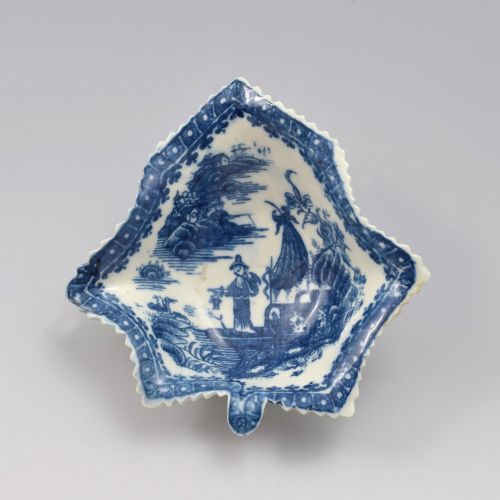
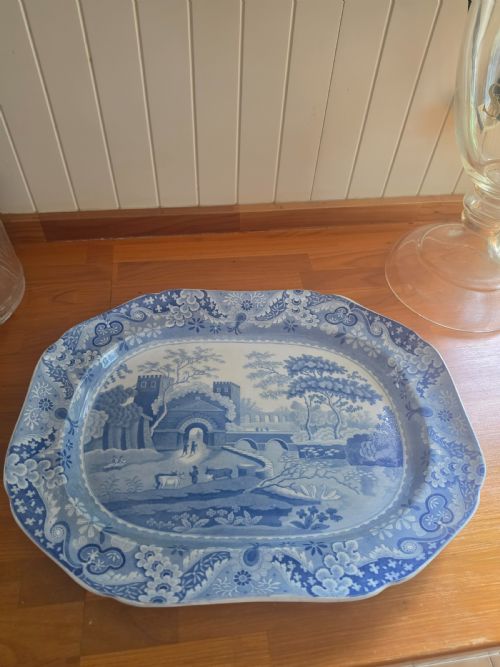
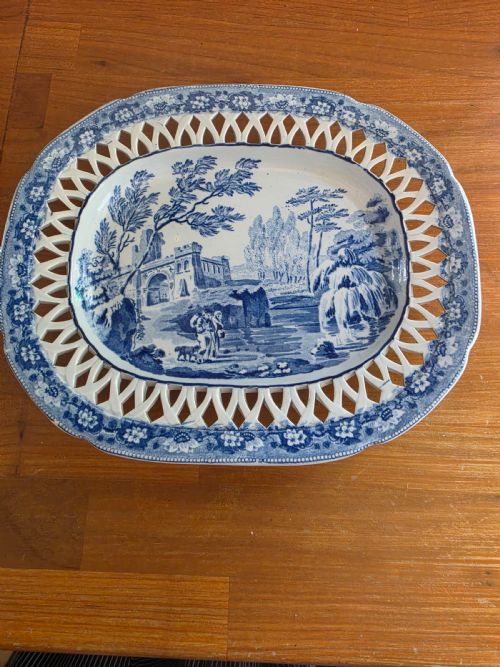
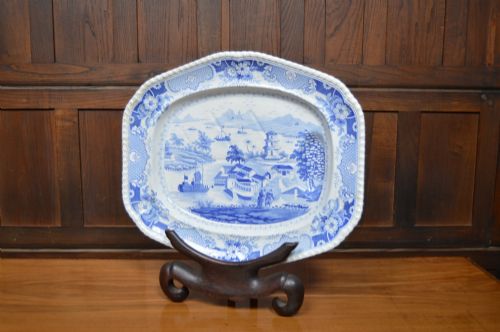
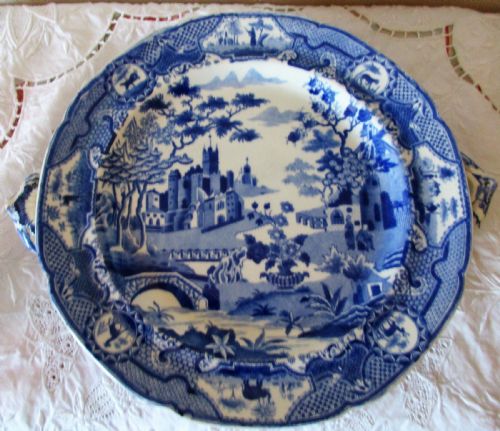
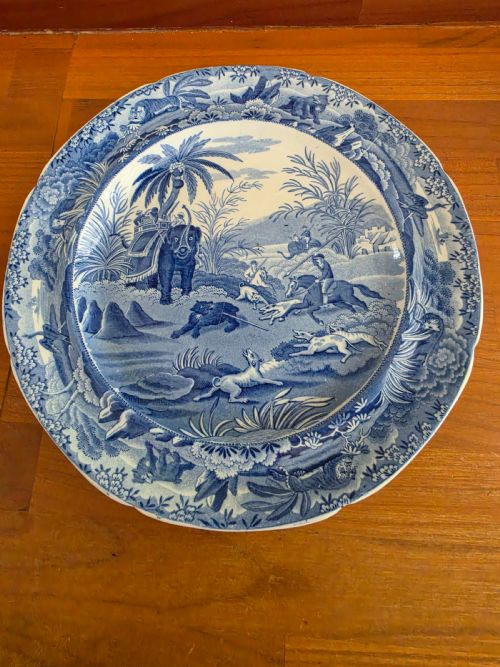
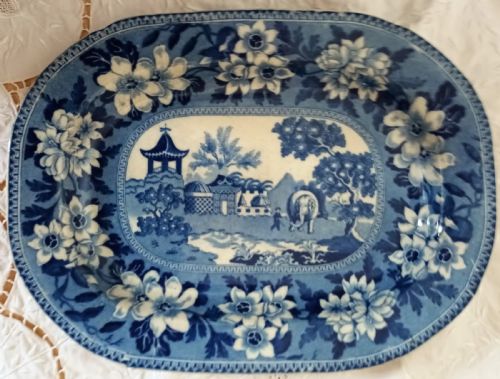
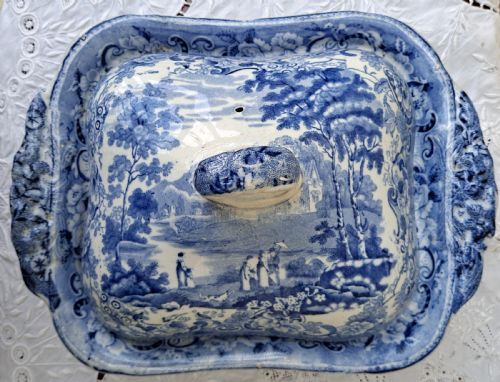
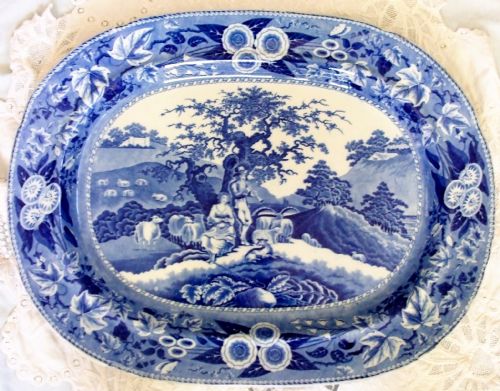
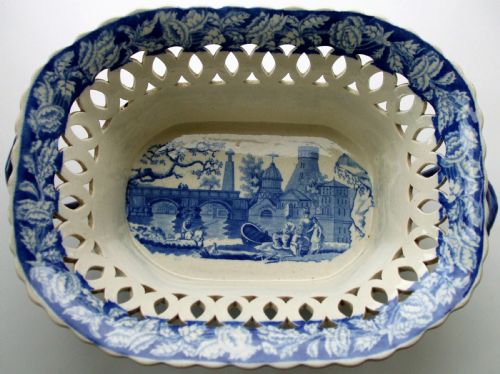
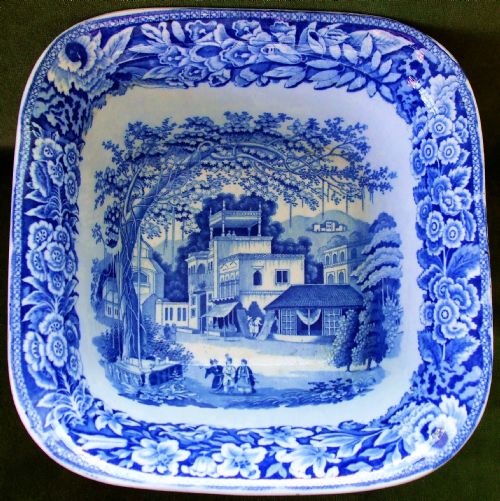
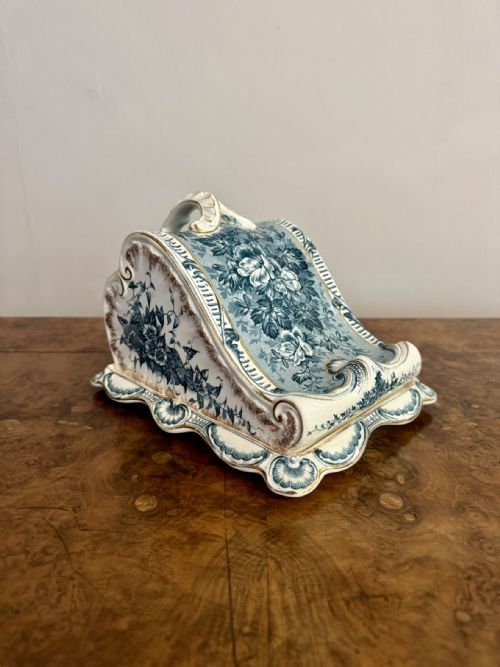
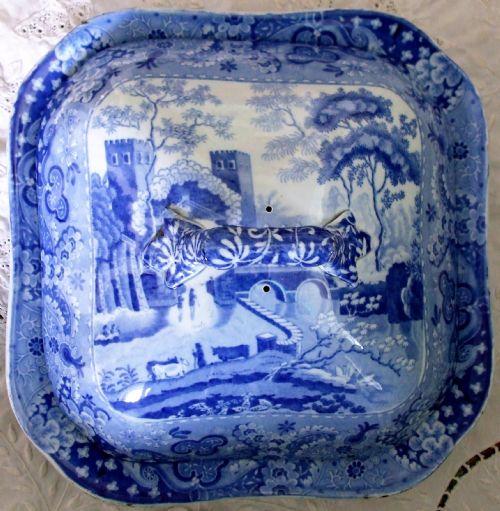
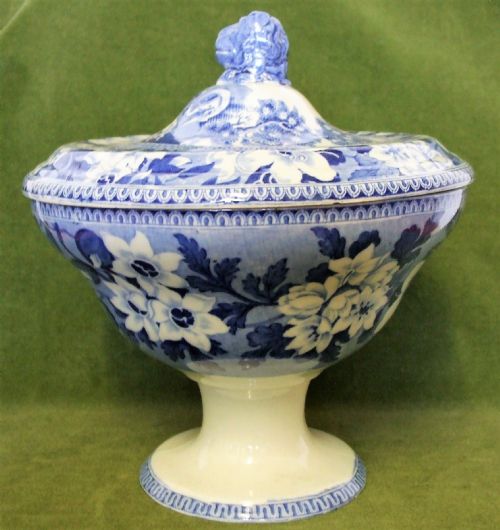
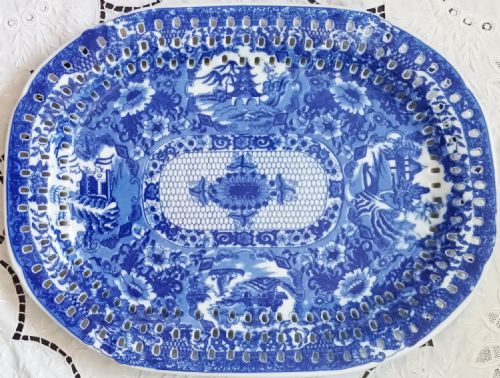
A ceramic blue transferware dish encompasses a wide variety of serving platters, meat plates, tureens, and decorative bowls originating primarily from nineteenth-century English potteries. These items served functional roles in historic dining rooms, carrying heavy joints of meat, vegetables, or pickles while displaying detailed pictorial scenes printed in deep cobalt pigment.
The most common examples encountered on this page date from the Georgian and Victorian periods, heavily featuring earthenware, pearlware, and soft-paste porcelain. Forms range from large meat platters with draining wells to smaller pierced fruit dishes and lidded tureens, reflecting the structured dining habits of the era.
How they were made
Potters produced these objects by first shaping earthenware, pearlware, or porcelain into the desired dish or platter form before an initial firing. Artisans then transferred engraved copperplate designs onto tissue paper using cobalt pigment, pressing the damp paper firmly onto the ceramic biscuit body to absorb the ink.
Following the transfer process, workers applied a transparent ceramic glaze over the printed design and fired the piece a second time to fuse the glaze and fix the blue pigment permanently. Certain examples received additional hand-painted details or gilt highlights over the glaze to elevate the finished appearance.
Listings feature earthenware, pearlware, and soft-paste porcelain across nineteenth-century Georgian and Victorian periods.
What varies in quality
The clarity and registration of the transferred design distinguish finer plates and platters from standard production pieces. Superior items display crisp, sharp lines in the printed landscape or narrative without blurring, smudging, or overlapping at the edges of the pattern.
The sophistication of the ceramic body and the depth of the glaze further separate the range. Early pearlware bodies with a faint blueish tint and finely potted porcelain pickle dishes represent higher manufacturing ambition than plain commercial earthenware.
Spode·Davenport·John Rogers And Son·James Wallace And Co·J And R Clews·J And R Riley·Minton·Doulton Burslem·John Ridgway·Copeland And Garrett
The Ceramic Blue Transferware Dish Glossary
- Transferware
- Ceramic pottery decorated by transferring a printed design from an engraved copper plate onto the clay body via tissue paper. This mechanised process allowed complex pictorial scenes to be produced consistently on large scales.
- Pearlware
- A refined type of earthenware developed in the late eighteenth century featuring a thin glaze with a slight bluish tinge. The glaze formula helped mask the natural cream colour of the underlying clay to mimic Chinese porcelain.
- Cobalt Pigment
- A metallic oxide used to create the deep blue colour seen in nineteenth-century underglaze printing. It withstands high kiln temperatures without losing its distinct hue.
- Soft-paste Porcelain
- A ceramic composition made from white clay and glass frit, fired at lower temperatures than hard-paste porcelain. Early pickle dishes and small trays often utilised this material.
- Tureen
- A deep covered vessel designed for serving soups, vegetables, or sauces at the dining table. Many examples include matching ladles and decorative stands.
Ceramic Blue Transferware Dish: Frequently Asked Questions
What is ceramic blue transferware?
Ceramic blue transferware refers to pottery decorated using an engraved copperplate printing method with cobalt blue pigment. The technique transferred intricate landscapes, architectural views, and narrative scenes onto everyday dining vessels.
Potteries across England utilised this method extensively throughout the Georgian and Victorian eras, producing durable earthenware and porcelain items for domestic use.
How were these dishes used originally?
These dishes fulfilled practical dining requirements in nineteenth-century households, holding large joints of meat, vegetables, soups, and pickles. Platters often featured recessed wells and channels to catch juices during carving.
Larger tureens and chargers formed the centrepiece of formal dining services, designed to be passed around the table or displayed on sideboards.
How do I identify the period?
Dating relies heavily on ceramic body composition, maker marks stamped into the paste, and the style of the printed border. Pearlware bodies and specific romantic landscape titles generally point to the early nineteenth century.
Later Victorian pieces often display heavier earthenware bodies and registration marks that provide exact production dates or years.
How should I display them?
Platters and plates mount securely on walls using specialist plate hangers or stand upright on plate rails within cabinets. Their detailed blue and white scenes contrast effectively against neutral walls.
Lidded tureens and bowls sit well as standalone decorative centerpieces on dining tables, sideboards, or open shelving.