

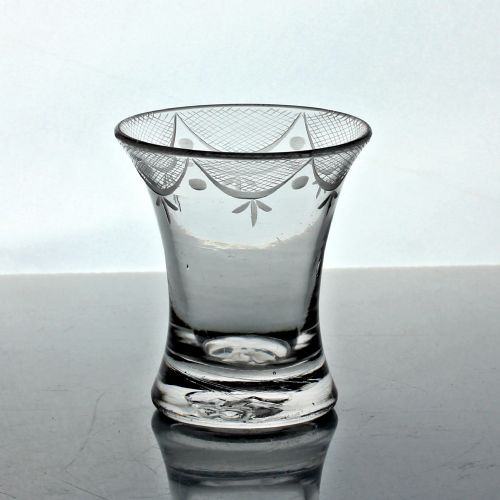

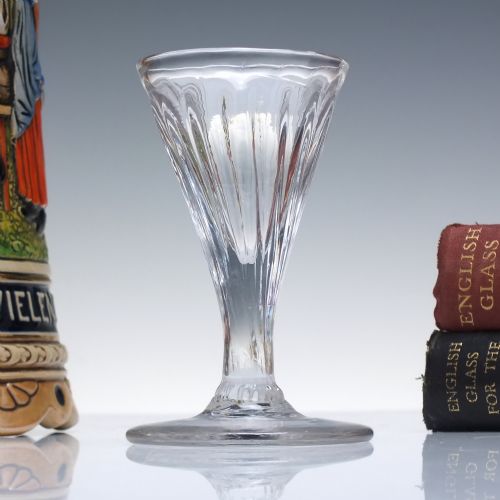


Georgian Dram Glasses
Georgian dram glasses are small, robust vessels designed for neat spirits, offering a tactile connection to eighteenth-century drinking habits.
Georgian Dram Glasses
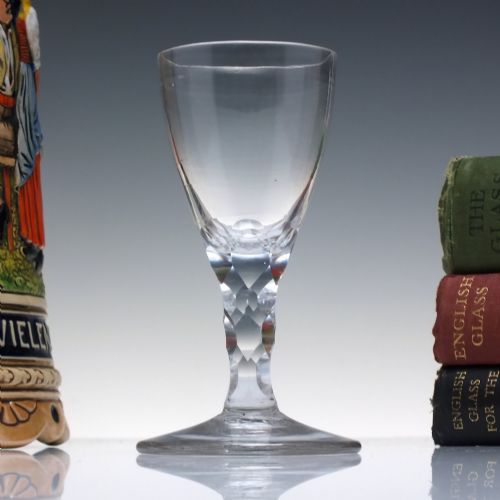
When you search for georgian dram glasses, you encounter compact drinking vessels produced during the eighteenth and early nineteenth centuries. These pieces typically served spirits like gin, whisky, or cordials, requiring a small capacity rather than the generous proportions of modern stemware.
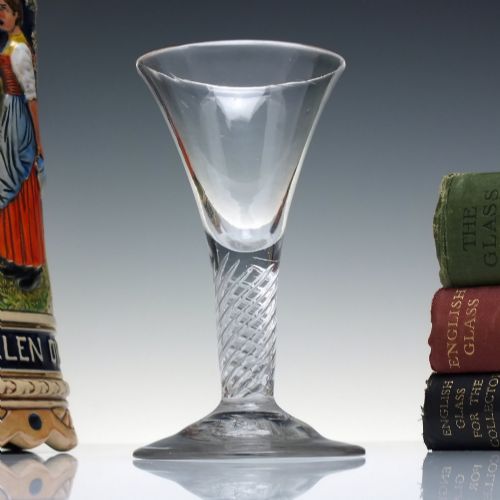
The versions most frequently met on this page date from the seventeen-forties through to eighteen-twenty, spanning periods labelled as Georgian and the eighteenth century. Their forms encompass baluster stems, pedestal stems, and ribbed or cut bowls designed for everyday consumption or toasts.
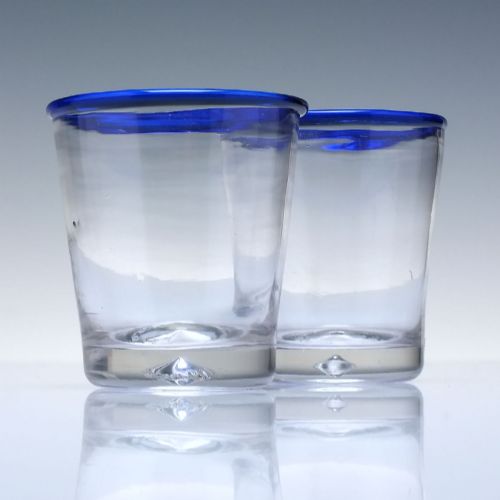
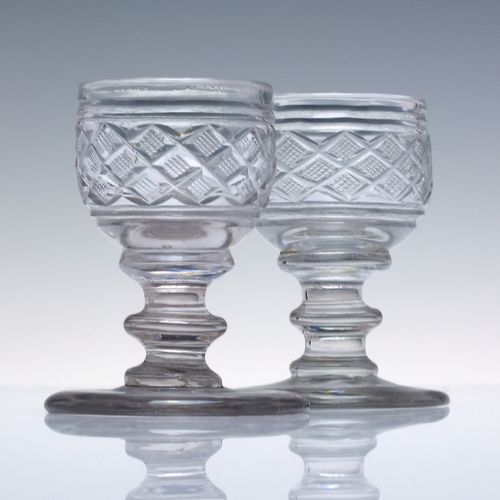
Most examples originate from English workshops utilising clear lead glass, though variations include coloured glass, Anglo-Irish cutting, and folded feet. Their survival in varied states demonstrates the robust nature of lead crystal produced during this era.
Materials and construction
These vessels are fashioned from lead glass and flint glass, materials prized for their brilliance, weight, and capacity to hold deep wheel-engraving or moulding. Master glassblowers shaped the metal by hand, often incorporating a folded foot to reinforce the rim at the base.
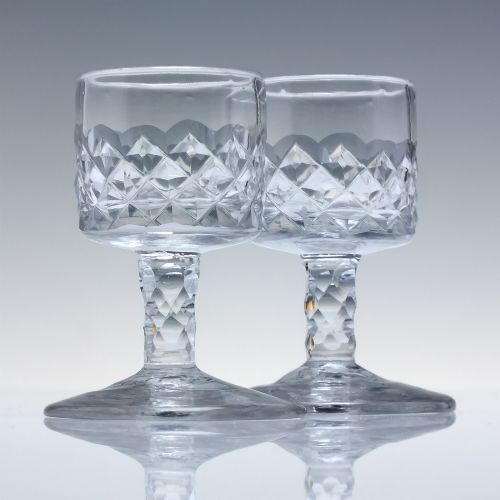
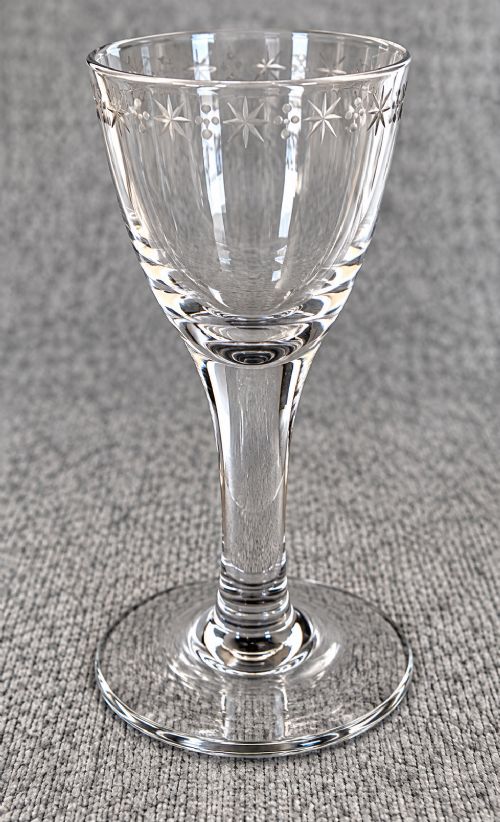
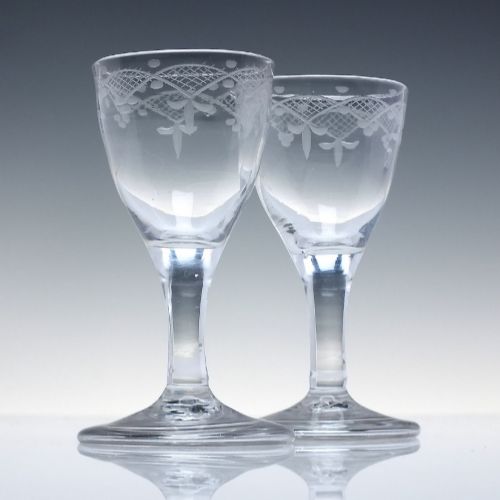
Techniques visible across the inventory include rib moulding, basal bubbles within the stem, and surface etching or engraving showing swags and tails. Anglo-Irish pieces introduce heavier geometric cutting, reflecting changing decorative preferences into the nineteenth century.
Georgian Dram Glasses Retail Price Guide 2026
Typical asking prices for georgian dram glasses among the pieces listed under this phrase on Sellingantiques today, from the lower quarter to the upper quarter. They describe what is for sale here now, not the wider market.
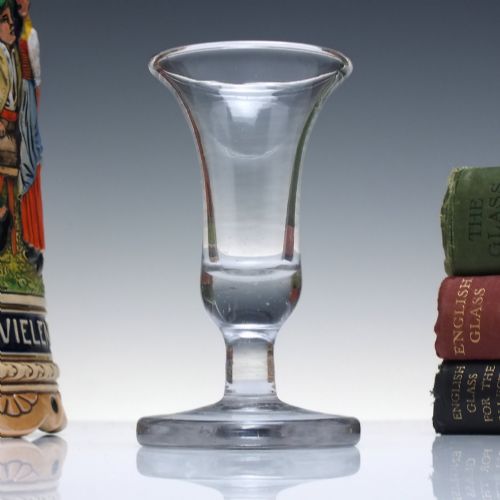
Some toastmaster glasses feature deceptive bowls that trick drinkers into believing they are holding a full measure during spirited toasts.
Factors determining quality
Quality in these drinking vessels rests upon the proportion of the form, the clarity of the metal, and the crispness of any engraved or cut ornamentation. A well-balanced baluster stem with a heavy foot displays superior craftsmanship compared to a plain, hastily blown vessel.
The sophistication of the decoration further elevates a piece, distinguishing simple utility glasses from finely engraved specimens with detailed floral swags or crisp rib moulding.
The Georgian Dram Glasses Glossary
- Baluster stem
- A thick, swelling stem form derived from architectural balusters, popular on early eighteenth-century drinking vessels. This heavy form provides stability and a satisfying weight in the hand.
- Folded foot
- A glass foot where the outer rim is tucked underneath to create a thickened, rounded edge. This technique adds durability to the base of the stemware.
- Rib moulded
- A decorative effect created by blowing molten glass into a ribbed dip-mould before expanding and twisting the vessel. It produces tactile vertical or spiral ridges on the bowl.
- Deceptive bowl
- A solid or heavily thickened lower bowl that drastically reduces the internal liquid capacity. Glasses of this type often served a role in historical toasts and drinking games.
- Lead crystal
- A dense glass composition incorporating lead oxide that increases refractive index and workability. It allows for deeper cutting and a resonant ring when struck.
Georgian Dram Glasses: Frequently Asked Questions
What were georgian dram glasses used for?
These vessels were designed specifically for consuming neat spirits such as whisky, gin, or cordials in small quantities. Their restricted capacity suited the potent alcoholic strengths of eighteenth-century spirits.
Beyond domestic use, certain forms participated in communal toasts, drinking clubs, and tavern culture, where their sturdy build endured frequent handling.
How do you date georgian dram glasses?
Dating relies upon stylistic markers such as stem construction, metal composition, and decorative techniques. Early pieces often feature heavy baluster stems and folded feet, while later examples show Anglo-Irish cutting or lighter pedestal forms.
Changes in glass technology and prevailing decorative fashions during the eighteenth and early nineteenth centuries help narrow the period of manufacture.
Are these glasses safe to use today?
While these items are historic works of art and collectible antiques, lead glass is stable for occasional use with cold liquids. Modern dishwasher heat and harsh detergents should be avoided to protect the historic metal.
Hand washing in lukewarm water preserves the clarity and surface finish of eighteenth-century glass.