

Georgian Dish Top Table
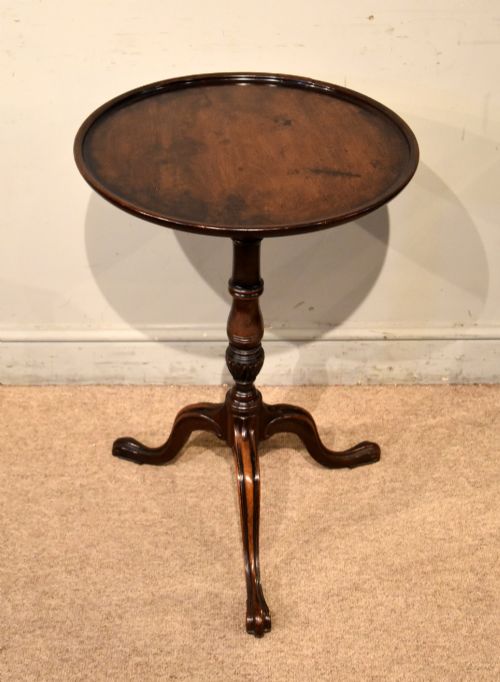
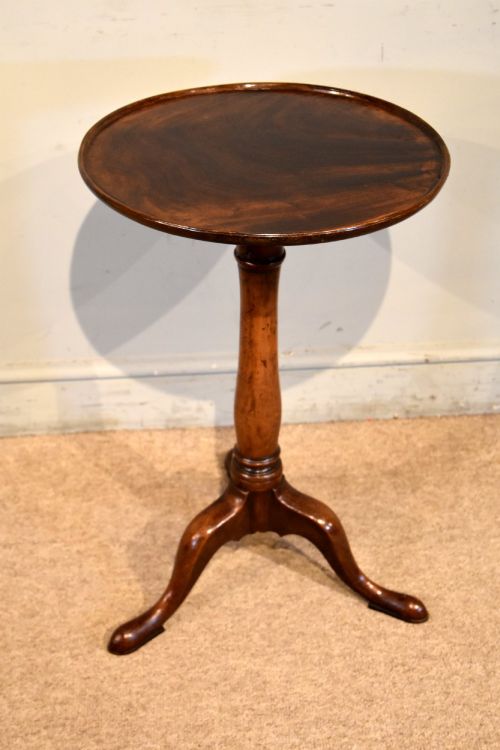
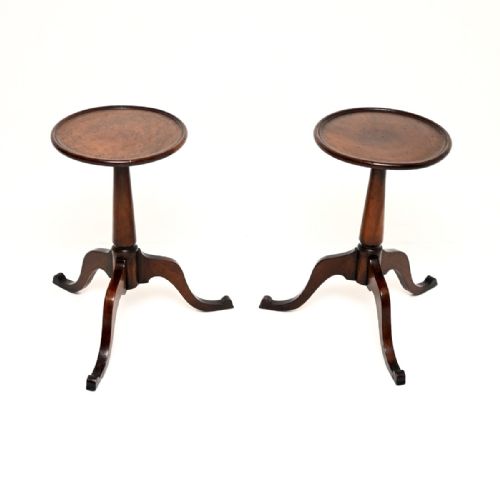
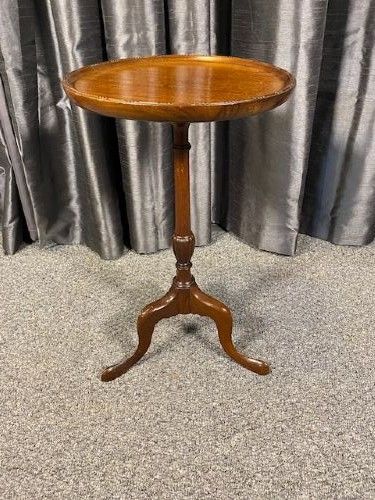
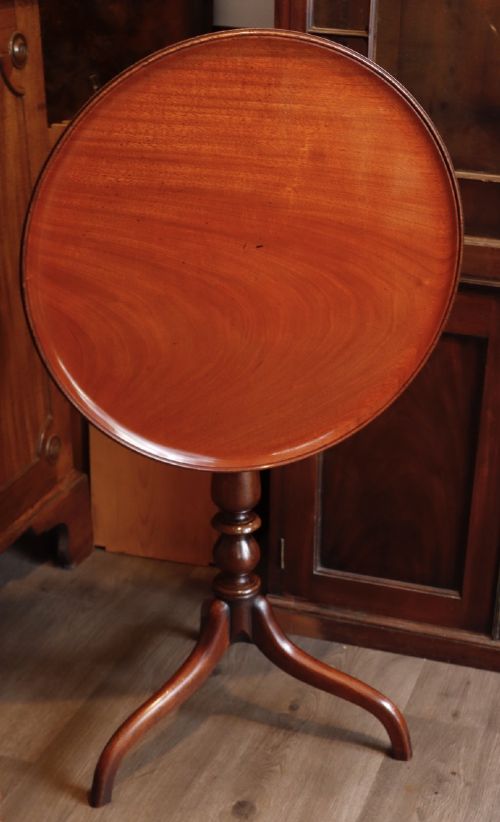
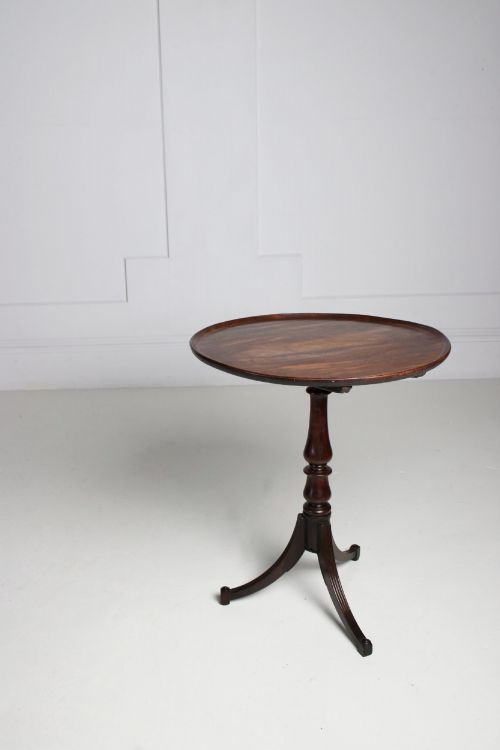
A georgian dish top table brings tactile presence to a room, offering a raised circular edge turned from solid timber.
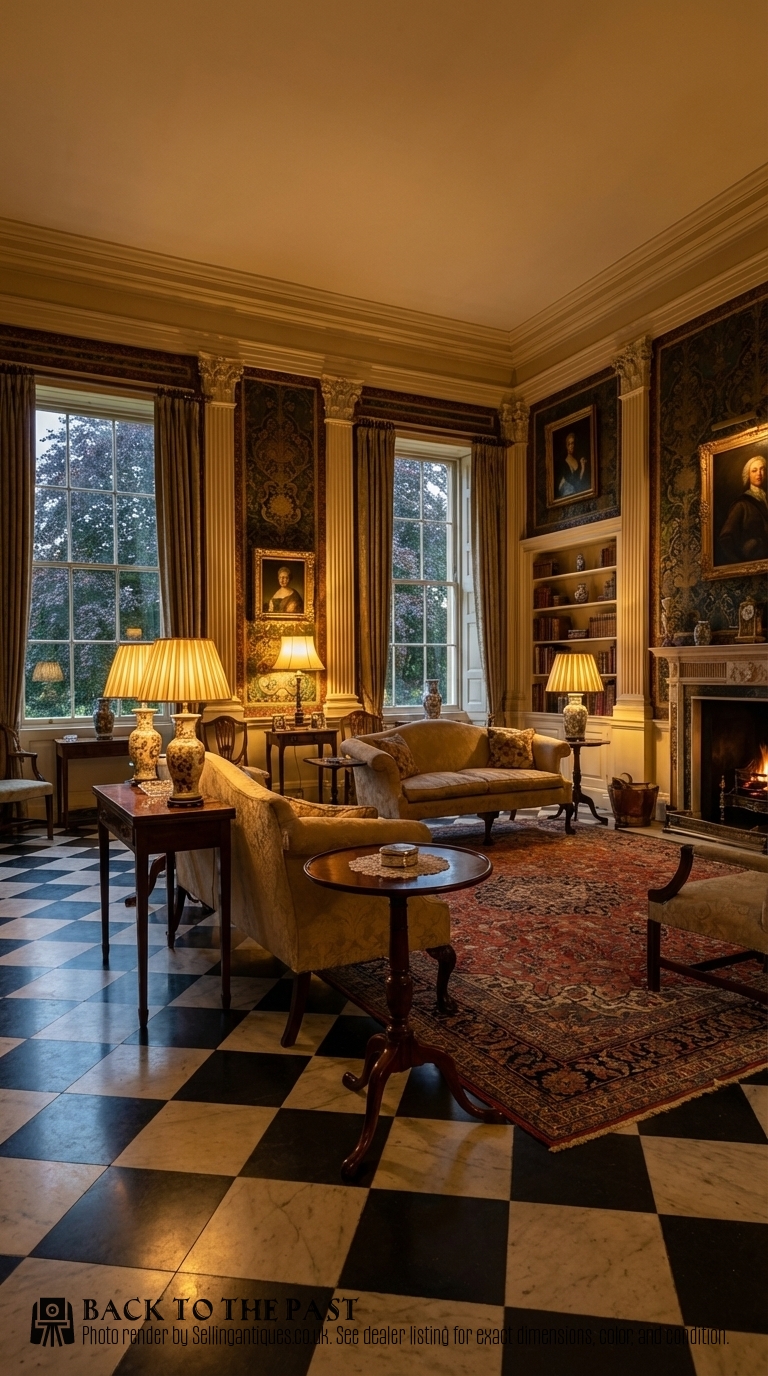
Georgian Dish Top Table
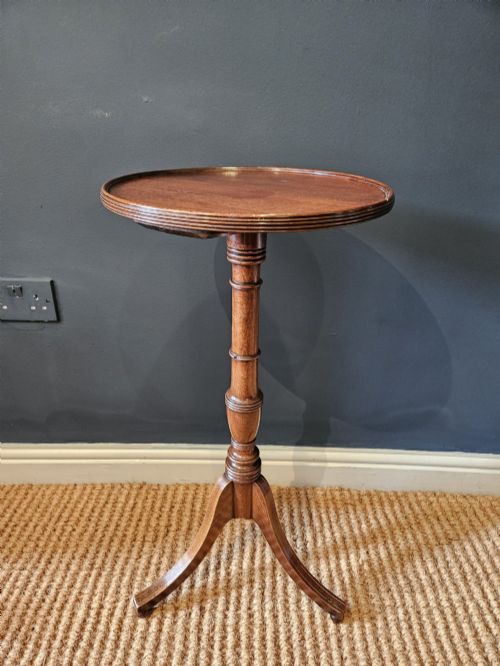
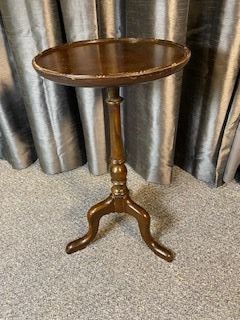
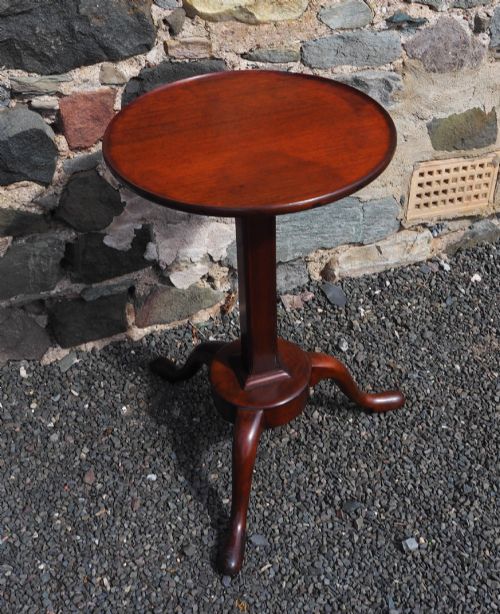
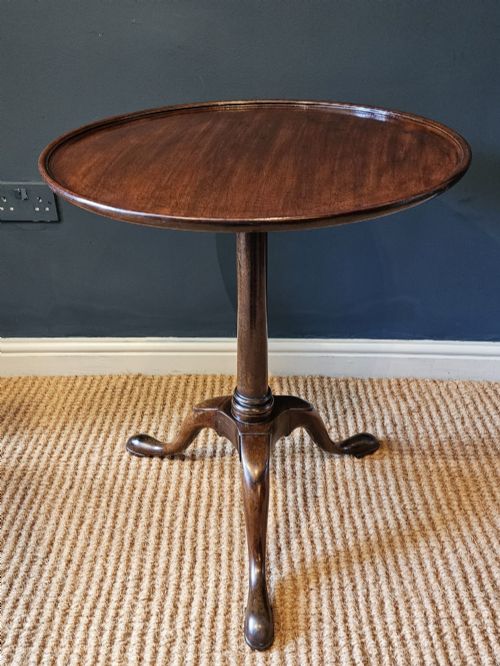
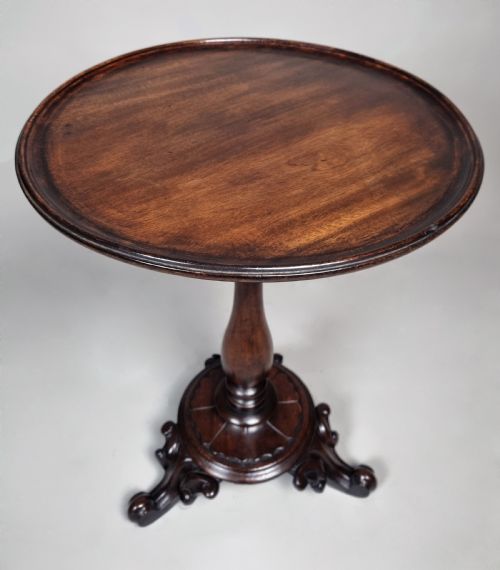
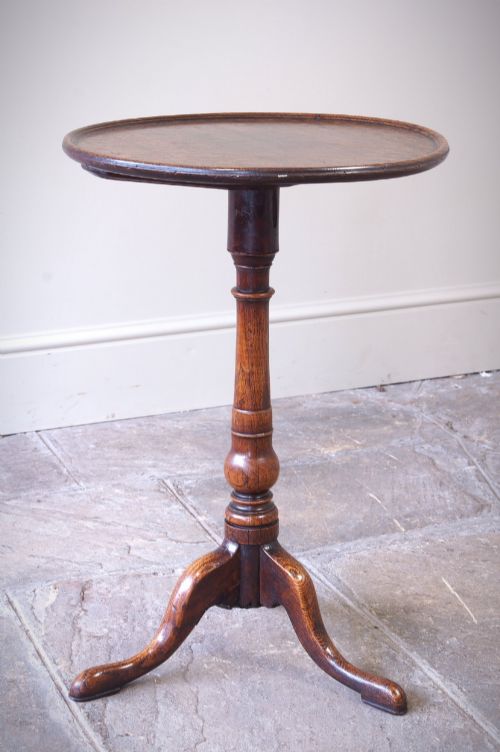
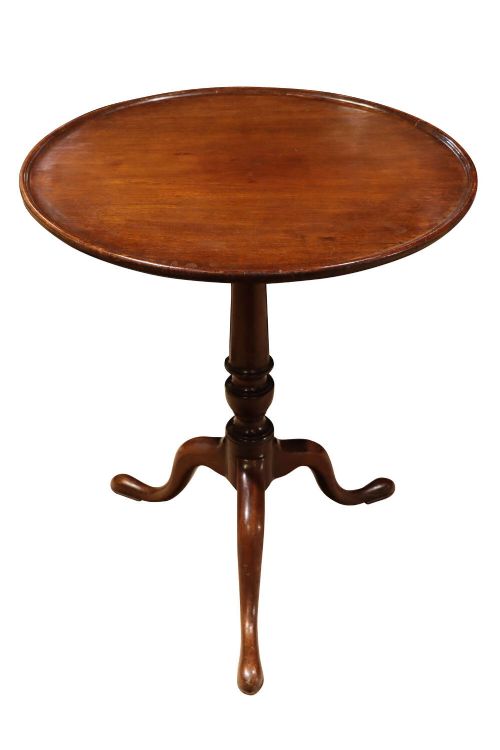
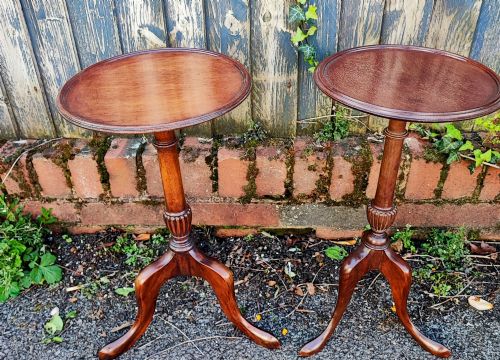
A georgian dish top table is a compact form designed for intimate domestic uses such as holding a candle, serving tea, or supporting a wine glass. The defining characteristic is the circular top with a raised moulded rim carved directly from the solid wood plank, or built up to prevent items from sliding off.
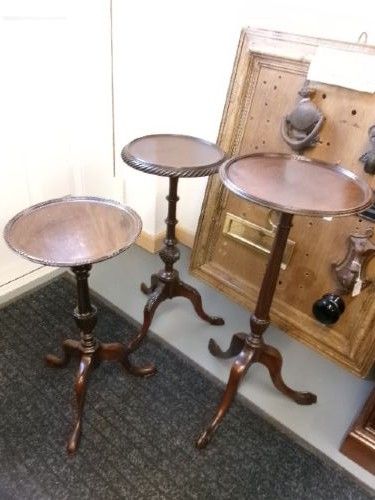
Most examples found in these records belong to the tripod configuration, resting on a central turned pedestal supported by three arched legs. They appear frequently in mahogany, oak, and walnut, spanning periods from the eighteenth century into the nineteenth century with later revivals in the Edwardian era.
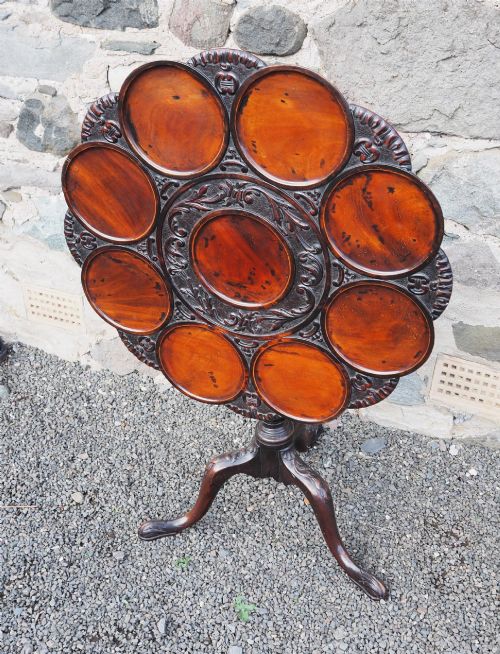
Buyers encounter variations that include snap-top or tilt-top mechanisms allowing the surface to fold vertically when not in use, alongside fixed-top variants and specialised forms like kettle stands and candlestands.

Materials and construction
Cabinetmakers constructed these tables primarily using dense hardwoods, with mahogany being the dominant choice alongside figured walnut, oak, and occasional satinwood or rosewood accents. The timber was selected for grain pattern and stability, particularly for the single-plank dished tops.
The pedestal and tripod base required sophisticated joinery, often incorporating birdcage mechanisms that allowed the top to revolve and tilt. Legs were shaped into cabriole or slender straight profiles, terminating in pad feet or spade feet.
Georgian Dish Top Table Retail Price Guide 2026
Typical asking prices for georgian dish top table among the pieces listed under this phrase on Sellingantiques today, from the lower quarter to the upper quarter. They describe what is for sale here now, not the wider market.
Many tables retain subtle carpenter marks hidden beneath the birdcage, left by makers aligning the revolving pivot.
Distinctions in quality
Quality rests in the crispness of the turning on the central pillar and the harmony of proportions between the top and the supporting legs. Superior pieces demonstrate exceptional timber selection, such as richly figured mahogany or red walnut with deep natural patination.
The execution of the dished top itself reveals the maker's hand, requiring precise concave profiling around the perimeter without thinning the centre excessively. Original tilt-top mechanisms and intact birdcage blocks further elevate the standing of a piece.
Gillows
The Georgian Dish Top Table Glossary
- Dish top
- A circular table surface with a raised, concave rim turned from the solid wood to secure small items. This feature helps prevent porcelain and glassware from sliding off.
- Snap top
- A table mechanism utilising a spring catch or block that allows the top to lock in a horizontal position or tilt vertically. It enabled easy storage against a wall when the room was cleared.
- Birdcage
- A revolving wooden framework fitted beneath the table top that connects to the central pillar. It permits the surface to both rotate and tilt.
- Tripod base
- A support structure comprising three spreading legs radiating from a central column. This design ensures stability on uneven historical floorboards.
- Kettle stand
- A small, diminutive table intended for holding a tea kettle near the hearth. These pieces share the raised rim and tripod form of larger occasional tables.
Georgian Dish Top Table: Frequently Asked Questions
What was a georgian dish top table used for?
These tables served flexible domestic purposes in sitting rooms and parlours. They held tea services, wine glasses, or reading materials close to seating.
Smaller variants functioned as candlestands or kettle stands near the fireplace, easily moved where light or heat was required.
Are these tables suitable for daily use?
Their compact size and sturdy tripod construction make them practical beside chairs or sofas. The raised edge provides security for modern drinks and decorative objects.
Care should be taken with historical polish and dry antique timbers when placing them in heated rooms.
How can I tell the period?
Dating relies on timber choice, turning styles, and leg profiles. Eighteenth-century examples often feature rich mahogany with elegant cabriole legs and pad feet.
Later nineteenth-century and Edwardian pieces show different turning details and occasional use of inlay or rosewood.