




Georgian Dining Table Ends
These georgian dining table ends offer modular versatility, letting you configure independent console sections into grand dining layouts.
Georgian Dining Table Ends
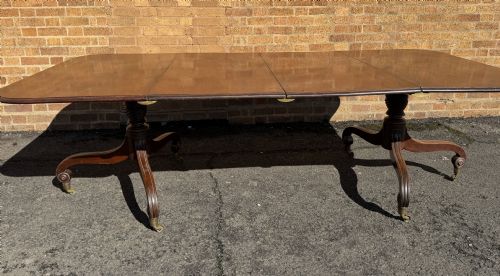
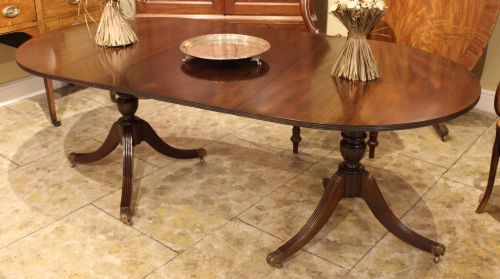
When you search for georgian dining table ends, you encounter versatile sections designed to be joined with leaves or separated into console and demi-lune tables. The pieces on this page span the Georgian, Regency, and George IV periods, appearing alongside later revivals.
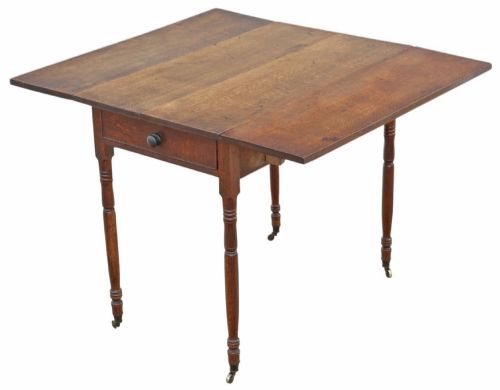
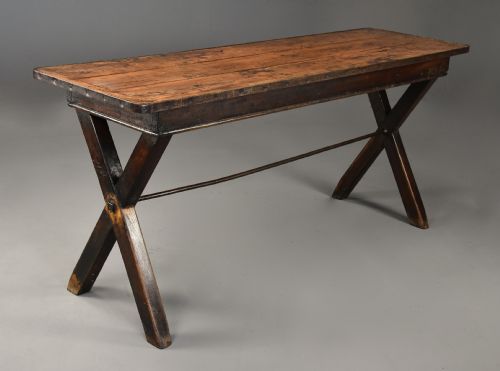
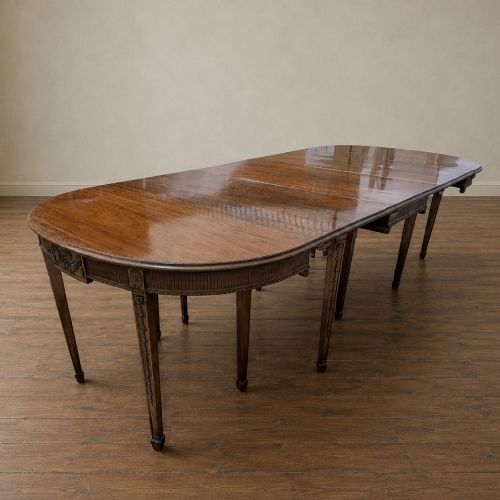
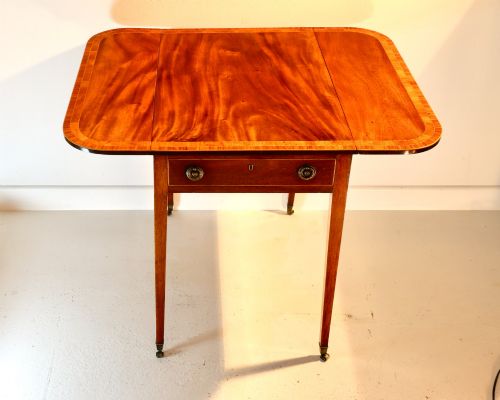
You are most likely to meet mahogany D-end and demi-lune sections, alongside drop-leaf pembroke tables and tavern tables with trestle ends. These modular formats allowed dining rooms to adapt from intimate settings to large banquets by inserting central leaves.
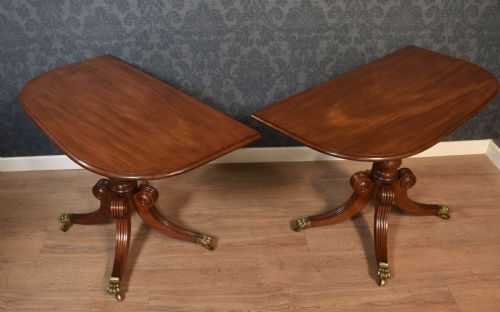
Many survivors function equally well as pair of console tables against a wall or united as a single extending dining table. The construction reflects a period when furniture adaptability was essential for entertaining.
Materials and construction
Cabinetmakers utilised dense timbers like mahogany, oak, and sycamore, frequently enhancing surfaces with satinwood inlay and brass fittings. These materials provided the structural strength required for frequent reconfiguration and heavy daily use.
Joinery techniques included secure drop-leaf mechanisms, solid pillar supports, and stable D-shaped frames designed to align flush with additional dining leaves. The surfaces developed a rich patina over centuries through consistent polishing with wax.
Includes a silver marrow scoop, proving that Georgian dining involved specialised cutlery for every conceivable luxury.
Assessing quality in table ends
The distinction between standard examples and the finest pieces rests on timber selection, figure consistency, and the precision of the joining mechanisms. Superior tables exhibit well-matched mahogany grains across separate sections and robust, original underframes.
Subtleties in edge moulding, the quality of satinwood inlay, and the retention of original brass clips or rule joints indicate superior workshop production. Tables attributed to notable makers display a higher degree of crispness in carved details and superior structural integrity.
Gillows·Waring and Gillow·Robert Adam
The Georgian Dining Table Ends Glossary
- D-End
- A table end shaped in the semi-circular profile of a capital letter D. This configuration allowed multiple sections to abut cleanly when extended with leaves.
- Demi-Lune
- A half-moon table designed to sit flat against a wall as a console. Pairs of these tables could be pulled out and combined to form a circular dining surface.
- Pembroke Table
- A small table with hinged flaps on either side supported by folding brackets. It served versatile domestic roles for breakfast, writing, or tea.
- Trestle Ended
- A form where the top is supported by feet connected to upright pillars rather than four independent corner legs. This style provided extra legroom for diners.
- Patina
- The deep, lustrous surface sheen developed on wood over decades of handling and polishing. It serves as a visual indicator of age and careful maintenance.
Georgian Dining Table Ends: Frequently Asked Questions
How do I join separate table ends together?
Most modular tables utilise brass clips, table alignment pegs, or hook-and-eye fasteners fitted beneath the leaves. These mechanisms secure the separate D-ends and middle sections into a stable dining surface.
When separating the table for use as console tables, simply release the internal catches and remove any central leaves. Storing leaves flat prevents warping and maintains proper alignment for future assembly.
Can I use D-end tables as sideboards?
Demi-lune and D-end sections function exceptionally well as console tables placed against dining room or hallway walls. Their shallow depth preserves floor space while providing a surface for lamps or decorative objects.
Pairing two matching console tables allows you to push them together when extra dining capacity is required. This dual-purpose design was a primary reason for their original commission.
How do I identify the wood used in these tables?
Mahogany is the dominant timber, recognised by its reddish-brown tone and interlocking grain patterns. Oak and sycamore appear in utilitarian or earlier formats, displaying distinctive medullary rays or paler hues.
Satinwood inlay appears as a contrasting blonde wood used for decorative stringing or bandings. Close visual inspection under good lighting reveals the natural grain structure beneath historic wax finishes.
What is the difference between George III and Regency styles?
George III pieces typically exhibit classical proportions with straight tapered legs and subtle mahogany grain emphasis. The styling aligns with Neoclassical design principles popular through the late eighteenth century. N Regency furniture often incorporates bolder pillar supports, sabre legs, brass reeded details, and heavier pedestals reflecting early nineteenth-century tastes. Both periods share high standards of cabinetmaking using dense native and imported hardwoods.
How should I care for an antique mahogany tabletop?
Maintain the finish by applying natural beeswax polish sparingly and buffing with a soft cloth to preserve the patina. Avoid placing tables near direct heat sources or strong sunlight to prevent timber shrinkage and fading.
Use protective mats under hot dishes or damp glassware to safeguard the polished surface from moisture rings. Regular gentle dusting prevents abrasive particle accumulation.