
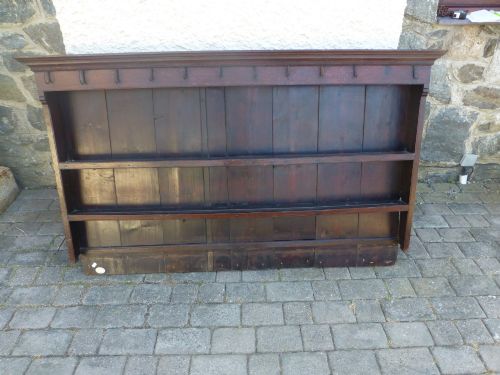
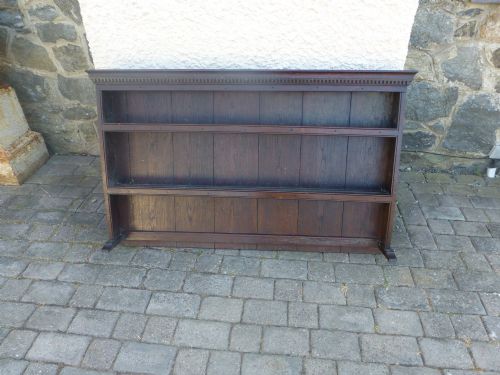
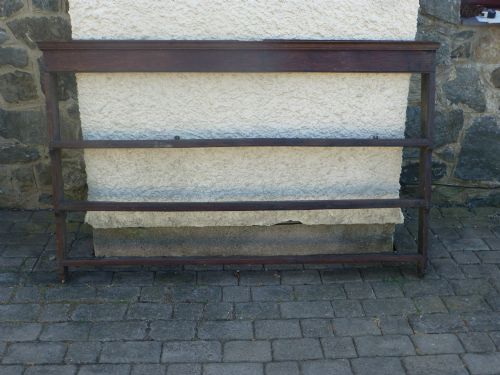
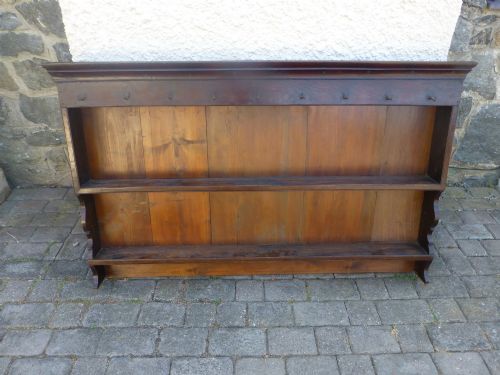
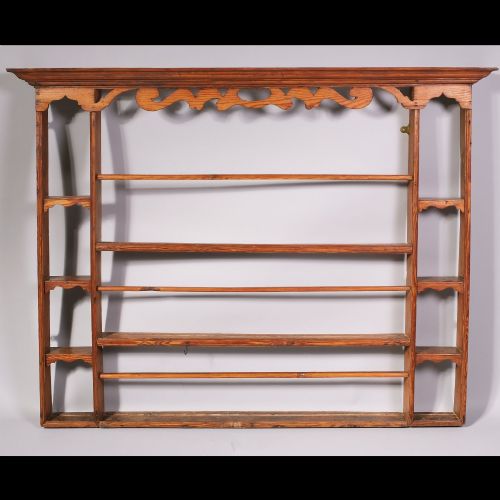
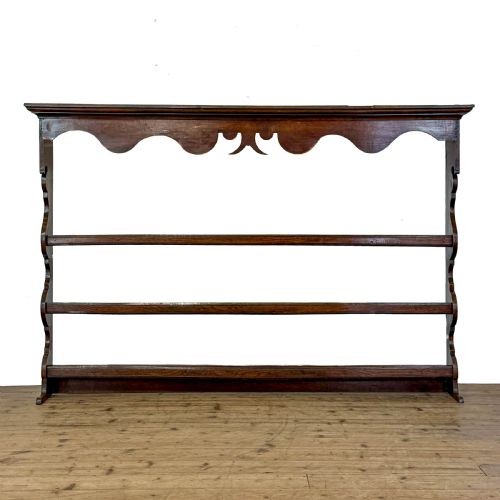


Georgian Delft Rack
A georgian delft rack is a wall-hung or dresser-mounted timber display for ceramic plates, bringing functional eighteenth-century country storage into modern kitchens.
Georgian Delft Rack
A georgian delft rack is an open wooden shelving unit designed to display plates and tableware against a wall or atop a base dresser. These pieces belong predominantly to the eighteenth century, spanning periods from the early 1700s through the George III era.
Buyers are most likely to encounter oak and pine constructions, ranging from simple hanging plate rails to larger architectural wall racks finished with fretwork or columns. While many pieces originate from English country workshops, vernacular variations include Welsh examples designed for specific domestic spaces.
The form exists both as a standalone wall-mounted rack and as the upper section detached or integrated with a dresser. Dating ranges from approximately 1740 to the end of the Georgian period, alongside occasional later stylistic revivals from around 1900.
How they were made
Makers constructed these racks primarily using native timber, with oak and pine forming the structural framework and shelving. Iron and brass fittings appear locally for hanging, joining, or decorative support.
Joinery methods relied on traditional pegged and panelled construction suited to country workshops. Surfaces were sometimes left in bare timber or finished with original painted treatments, particularly on pine examples.
Listings feature oak and pine timbers alongside decorative elements such as Corinthian columns and fretwork.
What varies in quality
Quality separates through timber selection and the presence of decorative details such as fretwork, column supports, or carved elements. Plain vernacular pine shelves contrast with finely figured oak architectural racks.
Originality of surface finish and structural integrity define the upper tier of pieces. Racks retaining early painted surfaces or original hanging brackets command greater interest than heavily restored examples.
The Georgian Delft Rack Glossary
- Delft rack
- An open wooden shelving unit made to display ceramic plates and dishes. These racks are typically hung on a wall or mounted on top of a base dresser.
- Fretwork
- Openwork ornamentation cut into thin timber boards using a fretsaw. This decorative technique appears on the friezes and pelmets of finer Georgian racks.
- Corinthian column
- A classical architectural column featuring ornate, bell-shaped capitals decorated with acanthus leaves. Such details elevate country furniture toward high-style Georgian design.
- Dresser
- A piece of furniture combining lower storage cupboards or drawers with an upper plate rack. Many racks survive separated from their original base dressers.
- George III
- The period of British history spanning from 1760 to 1820. Furniture from this era often exhibits refined proportions and classical architectural influence.
Georgian Delft Rack: Frequently Asked Questions
What is a delft rack?
A delft rack is an open wooden shelving fixture designed to hold ceramic plates upright against a wall. They served functional storage roles in eighteenth-century kitchens.
Today, these racks provide practical open display space for tableware in contemporary domestic settings.
How were these racks used?
Households used these shelves to display ceramic plates, platters, and earthenware safely within reach. Grooved plate rails kept dishes from sliding forward.
They functioned as both utility storage and decorative display in country dining spaces.
Are pine and oak both period materials?
Pine and oak were both widely utilised by eighteenth-century country cabinetmakers. Oak provided sturdy framing for heavy structural racks.
Pine served as a lighter alternative and frequently received painted surface finishes.
How do I date a rack?
Dating relies on timber characteristics, construction joints, and decorative details like fretwork or column styles. Pieces often date from roughly 1740 to 1800 based on Georgian design conventions.
Later revival pieces from around 1900 emulate these earlier eighteenth-century proportions.
Can these racks hang on walls?
Most of these racks are designed as hanging wall units secured through backboards or mounting brackets. Some heavier examples originally sat upon base dressers.
Proper wall anchoring is essential due to the weight of solid oak timber.