


Georgian Cross Stitch
Georgian cross stitch samplers are detailed needlework panels recording alphabets, prayers and morals, offering a tangible link to domestic life in the eighteenth and nineteenth centuries.
Georgian Cross Stitch
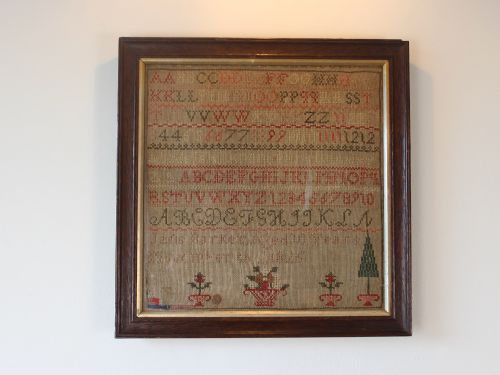
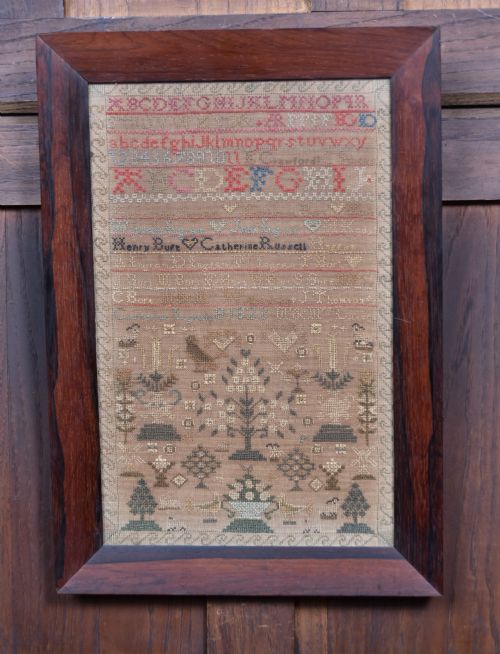
When you search for georgian cross stitch, you encounter textile wall art and needlework samplers spanning the eighteenth and nineteenth centuries. These works include alphabets, religious texts such as the Lord's Prayer and the Commandments, and moral verses worked by young makers.
The pieces on this page are most commonly nineteenth century and Georgian examples, often framed for display. Many record the name and age of the maker, alongside specific dates or school locations, preserving personal histories in thread.
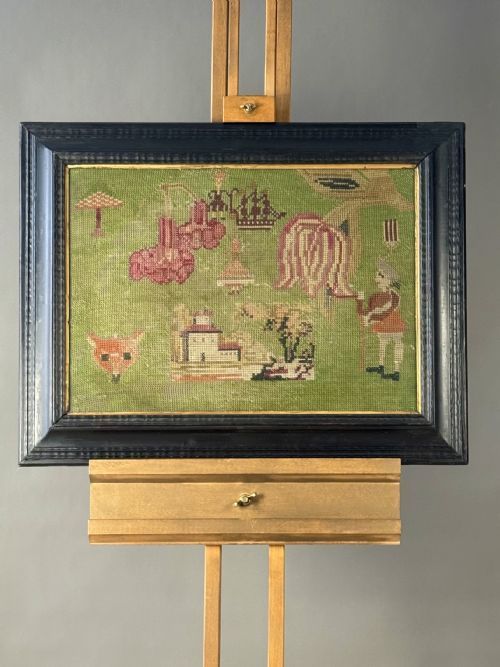
Object types vary from simple alphabet exercises to complex pictorial panels. Works originate from English and Scottish makers, utilising traditional stitches on woven foundations to create lasting records of domestic education.
Materials and Technique
These textiles rely on linen as a foundation fabric, providing an even grid suitable for counting threads. Makers worked upon this ground using silk thread, wool and standard thread to build up letters, borders and pictorial motifs.
Execution involved precise needlework stitches, principally cross stitch and related counting techniques, requiring steady hands and careful planning. Completed works were frequently mounted in wood frames, often protected behind glass to preserve the delicate fibres.
Current listings feature materials including linen, glass, wood, thread and wool across the 18th century, Georgian and Victorian periods.
Factors of Quality
Quality in these textiles rests upon the regularity of the stitching and the complexity of the composition. Finer works display uniform tension across the linen ground, creating crisp lettering and well-proportioned decorative borders.
The inclusion of detailed textual content, such as complete prayers, poetic verses, or named schools, elevates the historical interest of a piece. Condition also plays a role, with well-preserved silk and wool threads retaining more of their original visual impact.
The Georgian Cross Stitch Glossary
- Sampler
- A piece of needlework produced as a demonstration or test of skill in various stitches. These panels frequently feature alphabets, numbers and moral sentiments.
- Linen
- A strong, durable textile woven from flax fibres. It serves as the traditional ground fabric for needlework samplers due to its visible weave.
- Alphabet Sampler
- A specific form of needlework focusing primarily on rows of letters in various scripts. Makers used these to practise lettering before attempting complex verses.
- Needlepoint
- A type of canvas work where yarn is stitched through a stiff open-weave canvas. It creates a dense, durable surface quite distinct from fine linen embroidery.
Georgian Cross Stitch: Frequently Asked Questions
How old are these samplers?
The pieces span the eighteenth and nineteenth centuries, encompassing the Georgian and Victorian eras.
Dates are frequently stitched directly into the fabric by the original maker, alongside names and ages.
What materials were used?
Makers stitched using silk thread, wool and standard thread upon a woven linen ground.
Completed panels were commonly set into wood frames, occasionally protected behind glass.
What do the texts mean?
The texts typically comprise alphabets, numerical sequences, and moral or religious verses.
Examples range from the Lord's Prayer and the Commandments to specific educational verses and school names.
How should I display them?
These framed textiles suit placement on interior walls away from direct sunlight.
Keeping them behind glass helps protect the fragile silk and wool threads from dust and environmental wear.