
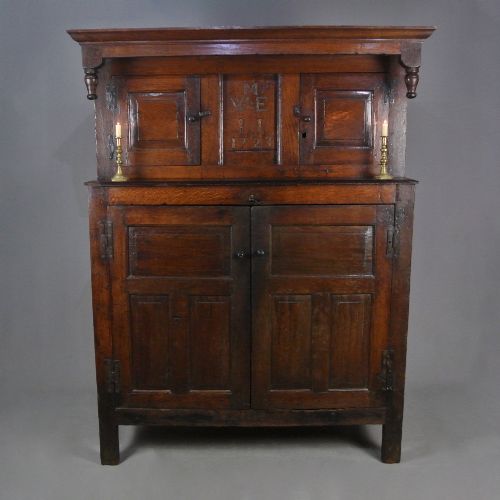
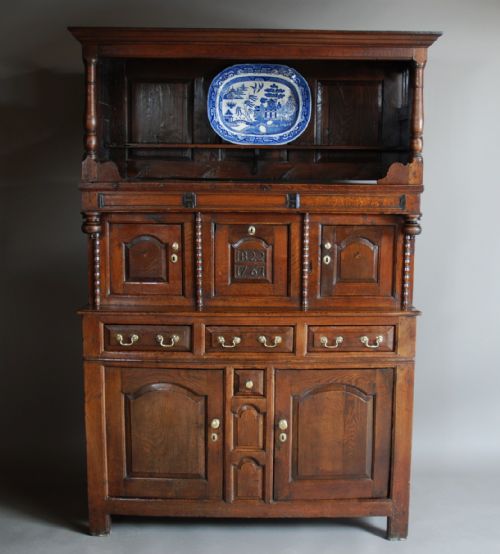
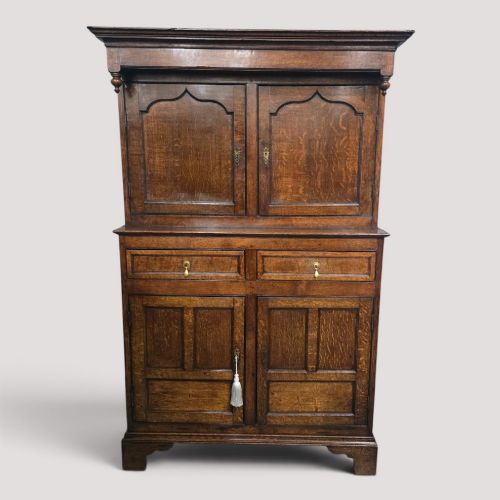
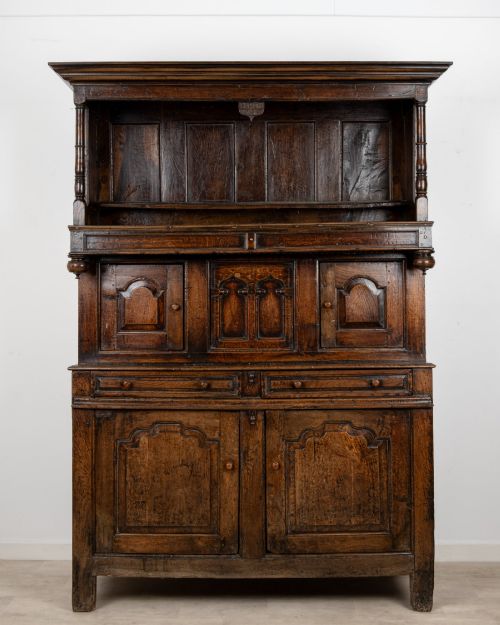





Georgian Court Cupboard
A georgian court cupboard brings substantial country craftsmanship and timeless timber presence into a modern home.
Georgian Court Cupboard
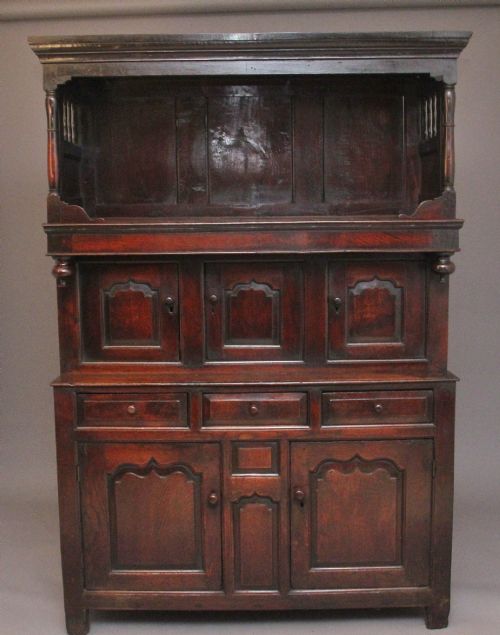
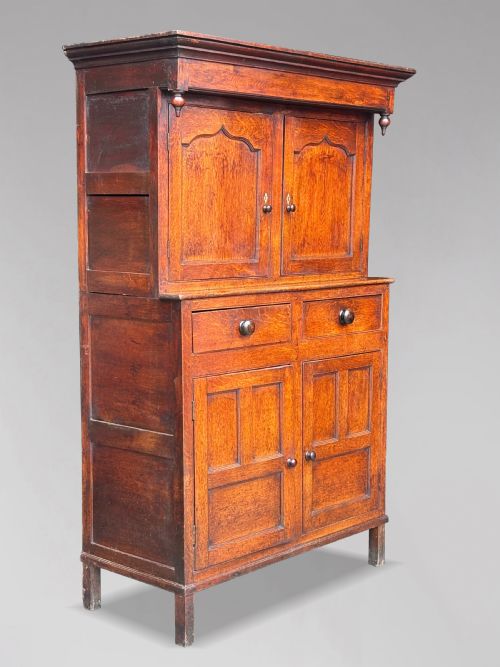
When you search for a georgian court cupboard, you encounter robust storage furniture rooted in vernacular traditions, most frequently seen in regional Welsh forms such as the deuddarn and tridarn. These architectural pieces divide into stacked sections, providing enclosed upper and lower storage alongside display tiers.
The selections span the seventeenth, eighteenth, and nineteenth centuries, capturing vernacular country styles alongside formal Georgian cabinet-making. Oak dominates the inventory, complemented by occasional elm and yew wood variations.
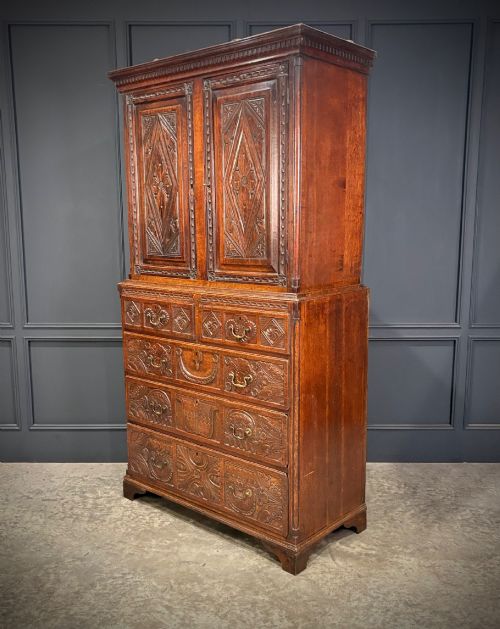
Buyers frequently encounter regional Welsh variants displaying local carving traditions, geometric panels, and dated inscriptions. These forms serve as impressive focal points for dining rooms and hallways while offering deep, practical storage.
What Varies in Quality
The depth of timber patination and surface colour largely dictate the visual appeal of each piece, distinguishing honest vernacular age from over-restored finishes. Original iron or brass hardware and untouched boarded backs elevate the architectural integrity of the cupboard.
Proportion and regional carving detail separate standard regional pieces from exceptional dated examples, particularly those originating from specific areas like Snowdonia. The complexity of the tripartite structure, such as an intact tridarn canopy, significantly influences the overall character.
Early makers occasionally carved their initials and wedding years directly into the frieze rails, leaving love notes in solid oak.
The Georgian Court Cupboard Glossary
- Cwpwrdd deuddarn
- A traditional Welsh two-section cupboard featuring upper and lower enclosed cabinet spaces.
- Cwpwrdd tridarn
- A tripartite Welsh cupboard consisting of three stacked sections, often including an open middle display tier beneath a canopy.
- Tridarn
- An alternative term for a three-piece stacked cupboard originating from rural British vernacular traditions.
- Press cupboard
- A large storage furniture form designed for linens and household goods, featuring panelled doors enclosing interior shelving.
- Patina
- The deep, lustrous surface sheen developed on hardwood furniture through decades of handling, polishing, and oxidation.
Georgian Court Cupboard: Frequently Asked Questions
What is a georgian court cupboard used for?
These large storage pieces traditionally stored household linens, dry foods, and tableware in country houses and farmsteads. Today, they function as substantial storage cupboards and display cabinets in reception rooms.
Their deep interior shelving accommodates modern dining ware, books, and collections while anchoring a room with historical timber character.
How do I identify a welsh deuddarn?
A deuddarn is characterised by its two-part stacked construction, separating an upper cabinet from a deeper base section. They frequently display panelled doors and regional geometric carving.
Examining the interior timbers and panel construction helps distinguish these regional Welsh forms from standard English regional cupboards.
What wood are these cupboards made from?
The majority of these pieces utilise solid native oak, reflecting the dominant timber used by country joiners and vernacular cabinet-makers. Elm and yew also appear in regional variants.
Inspect the grain and board widths on the side panels and interior shelves to understand the timber selection.
How do I care for antique oak furniture?
Maintain antique timber by applying traditional beeswax periodically to nourish the dry oak and preserve the surface sheen. Avoid placing cupboards near direct heat sources or in fluctuating humidity.
Dust regularly with a soft, dry cloth to protect the historic patinated finish from accumulation.
Are these cupboards modular?
Most court cupboards and tridarns are built in stacked sections to facilitate transport and placement within historic homes. The upper tiers rest upon the lower carcase without complex mechanical fasteners.
This modular construction allows for safer relocation of heavy regional furniture across different rooms.