


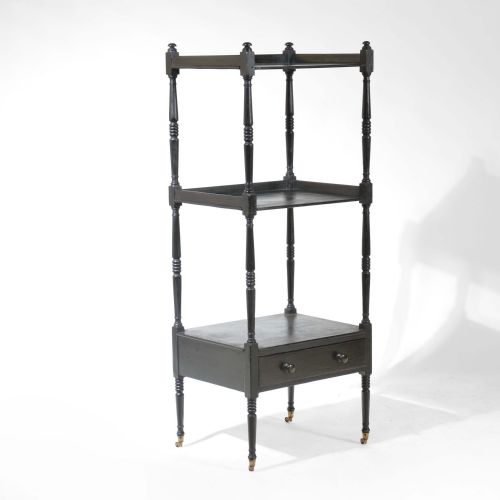


Georgian Corner Shelves
Georgian corner shelves make the most of an empty room angle, offering tiered display or storage in handsome mahogany or oak.
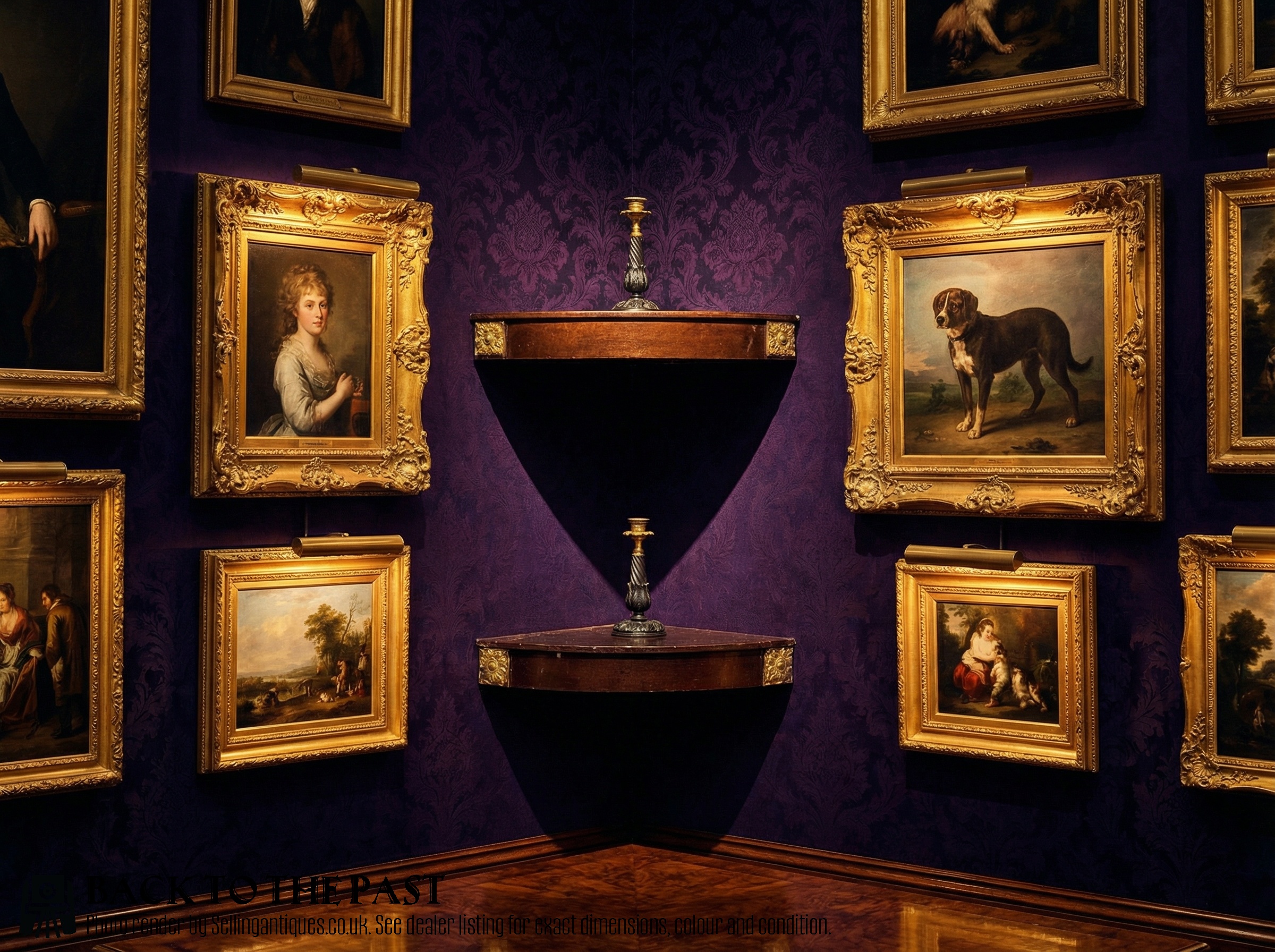
Georgian Corner Shelves
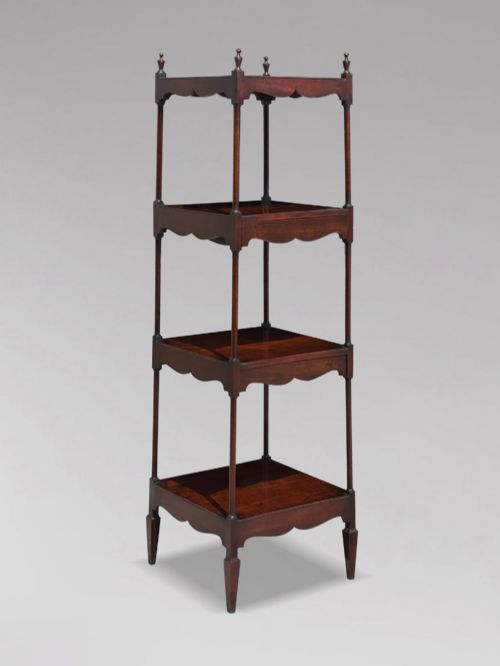
When you search for georgian corner shelves, you enter a category of multi-tiered wooden furniture designed to fit neatly into domestic room angles. These pieces range from open bookcases and hanging cupboards to tiered etageres and washstands originating across the eighteenth and nineteenth centuries.
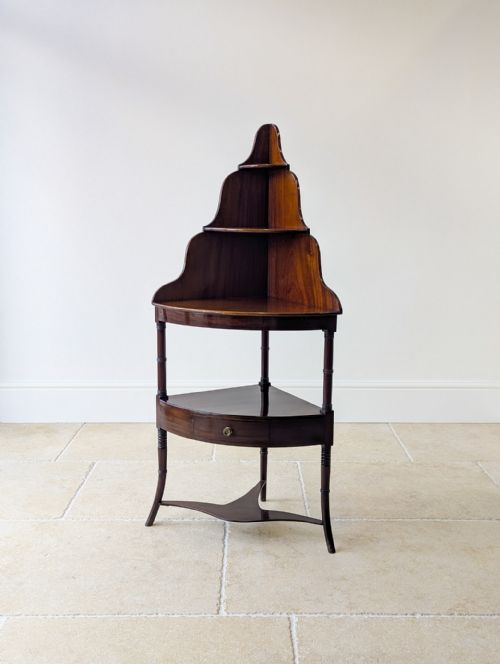
The version you are most likely to meet on this page is constructed from mahogany, often featuring graduated open shelves or enclosed lower cupboards with panelled doors. Makers during the Georgian and Regency periods built these tiered stands to utilise awkward spaces while displaying ceramics or holding books.
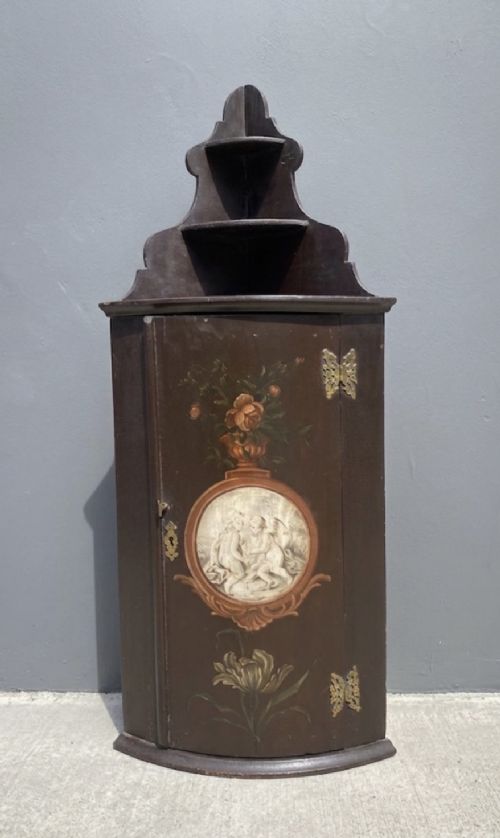
Alongside standard floor-standing units, the listings include wall-hanging varieties and pieces finished with paint, gold leaf, or boxwood inlay. The overarching form remains consistent in its geometry, designed specifically to lock into a ninety-degree wall junction.
How they were made
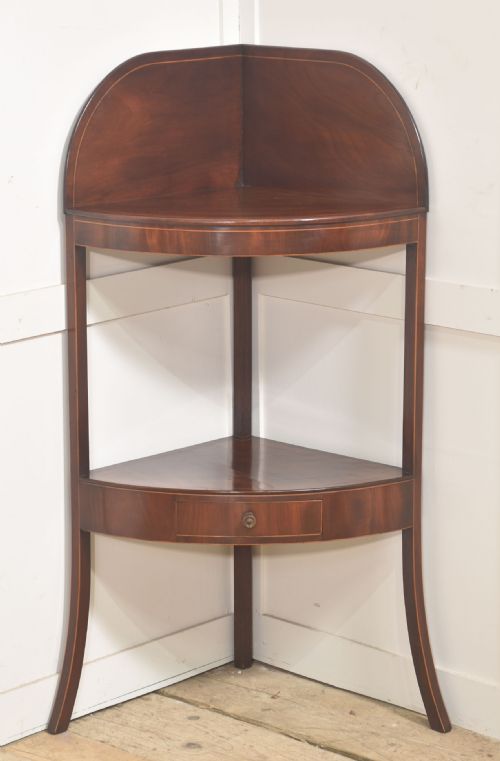
Cabinet makers relied primarily on solid mahogany and oak for structural stability, frequently employing fine veneers on curved or bow-fronted surfaces. Timber selection governed how well the shelves handled weight, particularly in multi-tiered etageres and corner washstands.
Decorative detailing involved contrasting stringing in boxwood, hand-applied paint, and occasional gilded accents to highlight architectural mouldings. Joinery techniques such as dovetailed drawers and pegged frames ensured these angular units remained rigid over centuries of use.
Listings span the Georgian, Regency, and Edwardian eras, predominantly featuring mahogany alongside oak, pine, and maple.
What varies in quality
The calibre of a piece depends heavily on the choice of timber and the crispness of any carved or inlaid details. Finer examples display carefully matched grain patterns across curved doors and well-proportioned tiers that taper gracefully toward the top.
Construction methods also set standards apart, with superior items showing tight joints, original brass hardware, and unaltered secondary woods. Pieces that retain their original rich surface patination command closer attention from collectors than those stripped and refinished in modern workshops.
Gillows
The Georgian Corner Shelves Glossary
- Etagere
- A movable set of open shelves used for displaying small objects or books. These tiered stands appear frequently in mahogany during the Regency period.
- Whatnot
- An open piece of furniture with multiple tiers supported by upright posts. It serves a similar display function to a corner shelf.
- Bow front
- A convex curved front section that projects outward from the corner frame. This shaping appears often on cabinets and washstands.
- Tambour
- A flexible sliding shutter formed from narrow strips of wood glued to canvas. It conceals storage compartments in hanging or floor-standing cupboards.
- Stringing
- A thin inlay of contrasting wood used to create linear borders on panels and tabletops. Boxwood provides the pale contrast against dark mahogany.
Georgian Corner Shelves: Frequently Asked Questions
Where did people put corner shelves?
These units found homes in parlours, bedrooms, and dining rooms where floor space was at a premium. Their right-angled backs allowed them to anchor securely into room corners without obstructing walkways.
Hanging versions fastened directly to wall studs above tables or washbasins, while taller tiered stands rested firmly on the floorboards.
How do I spot a Regency piece?
Regency items often display bolder architectural lines, sometimes incorporating brass mounts, ebony details, or classical proportions influenced by contemporary taste.
Look for characteristics like tapering uprights, octagonal shelves, or decorated marble tops that distinguish these nineteenth-century items from earlier Georgian designs.
Were these always meant for books?
While many served as open bookcases or display units for ceramics, others functioned as washstands with fitted basins and lower cupboards.
Their versatile architecture meant owners could adapt them for storage, writing accessories, or decorative ornaments depending on the room.
Are painted finishes period correct?
Painted and gilded wooden surfaces appear across the eighteenth and nineteenth centuries, often complementing interior decorative schemes of the era.
These finishes range from simple dark ebonising to elaborate polychrome decoration on pine and hardwood cabinets.