

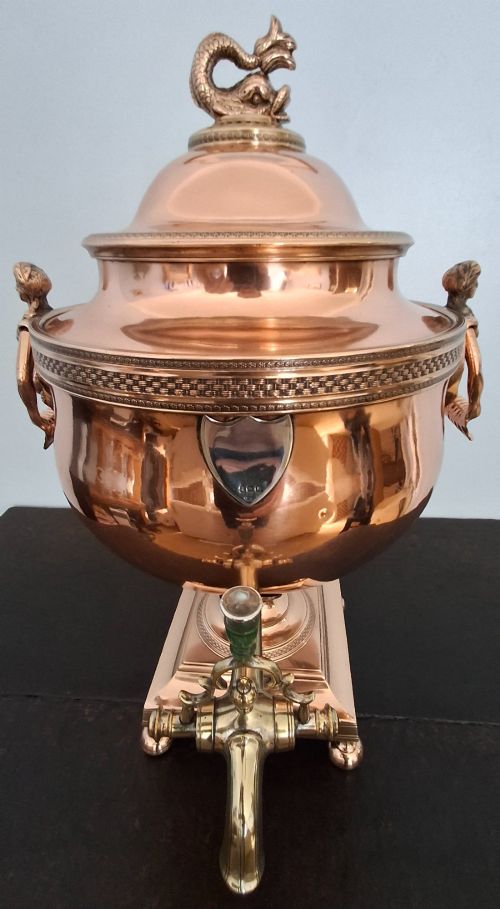
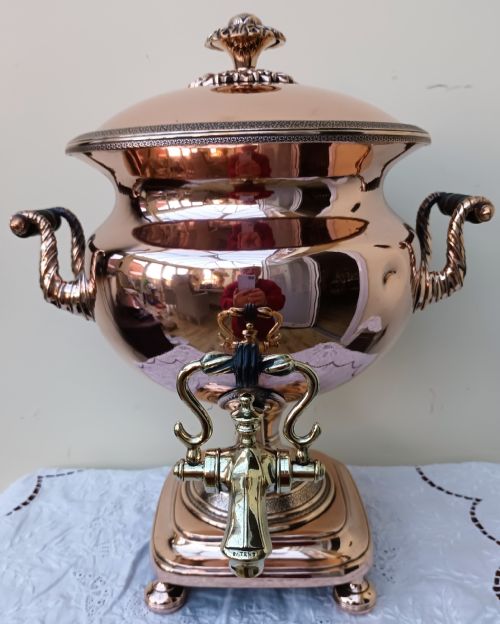


Georgian Copper Samovar Urn
A georgian copper samovar urn brings unmistakable warmth and heavy metal presence to a room, offering the classic centerpiece for historic hospitality.
Georgian Copper Samovar Urn
When you search for a georgian copper samovar urn, you are looking at substantial vessels designed to heat and dispense water for tea in domestic spaces during the Georgian, Regency, and nineteenth-century periods. These pieces take the form of tea urns, water urns, and samovars, constructed primarily in England during the height of formal tea drinking.
The versions you are most likely to meet on this page date from around eighteen hundred through the wider nineteenth century, spanning George III and Regency styles. They combine functional water storage with decorative presence, often retaining their original internal heating tubes and taps.
Makers produced these vessels to sit proudly on sideboards and tea tables, utilising heavy metals that held heat effectively. Their forms range from classical classical urn profiles to ornate, detailed bodies supported on robust feet.
How they were made
Craftsmen shaped heavy sheets of copper into deep, graceful vessel bodies, often hammering the seams together or utilising cast elements for structural strength. These copper surfaces frequently paired with contrasting metals to highlight handles, spouts, and finials.
Makers incorporated brass, bell metal, bronze, and bronzed copper for decorative mounts and functional hardware like taps and handles. Small details such as bone insulation pieces and ebonised wood knobs protected fingers from hot metal during use.
Georgian Copper Samovar Urn Retail Price Guide 2026
Typical asking prices for georgian copper samovar urn among the pieces listed under this phrase on Sellingantiques today, from the lower quarter to the upper quarter. They describe what is for sale here now, not the wider market.
Listings on this site span the Georgian and Regency periods, featuring copper, brass, bell metal, and ebonised wood.
What varies in quality
Quality rests heavily on the integrity of the original fittings and the weight of the metal utilised in the body and base. Examples retaining their internal heating components and original taps stand apart from altered or incomplete vessels.
The refinement of the casting in handles, feet, and spouts separates standard production from superior pieces. Ornate George III work demonstrates sharper detailing and more harmonious proportions than simpler utility vessels.
The Georgian Copper Samovar Urn Glossary
- Samovar
- A heated metal urn traditionally used to boil water for tea. These vessels typically feature an internal central tube for hot coals or a heating iron.
- Tea Urn
- A large decorative vessel designed to hold and dispense hot water for tea service. They mirror the classical vase shapes popular in eighteenth-century interior design.
- Bell Metal
- A hard alloy used for casting bells and durable vessel hardware. It provides a resonant quality and a slightly darker metallic tone than standard brass.
- Bronzed Copper
- Copper treated with a chemical finish to simulate the appearance of bronze. This technique added depth and a dark, uniform tone to the metal surface.
- Ebonised Wood
- Timber stained or treated to imitate ebony. Makers utilised this dark wood for insulating knobs and handles on hot water vessels.
Georgian Copper Samovar Urn: Frequently Asked Questions
How were these urns used historically?
These vessels stood on sideboards or tea tables in wealthy homes to supply hot water continuously throughout formal tea services.
Servants placed hot coals or heated iron cylinders into the central internal tube to bring the water to temperature and keep it hot.
How do I identify a Regency period piece?
Regency pieces often display sharper classical influences, drawing inspiration from ancient Greek and Roman vessel shapes.
Look for refined bronzed copper finishes, strict geometric proportions, and restrained decorative mounts rather than heavy ornamentation.
How do I live with a copper samovar?
Place the vessel on a stable, dry surface where its warm metallic tones and historical presence can be appreciated as a decorative focal point.
Avoid aggressive cleaning that strips the aged surface patina, preferring gentle dusting to preserve the historic character of the copper and brass.