

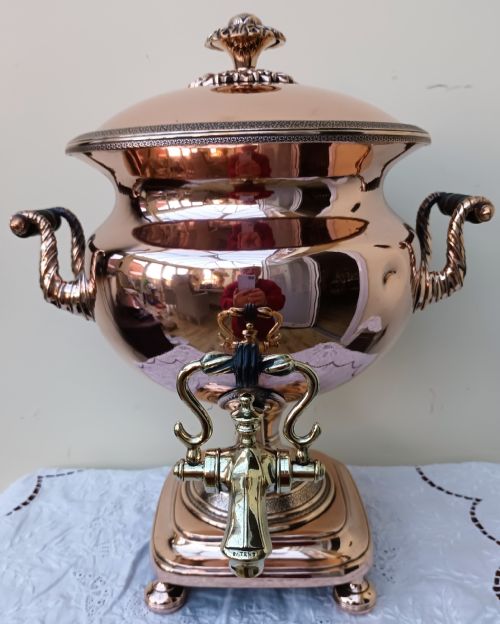


Vintage Copper Samovar Urn
These vintage copper samovar urn vessels bring stately presence and historic warmth to any room, offering a centrepiece of functional metalwork.
Vintage Copper Samovar Urn
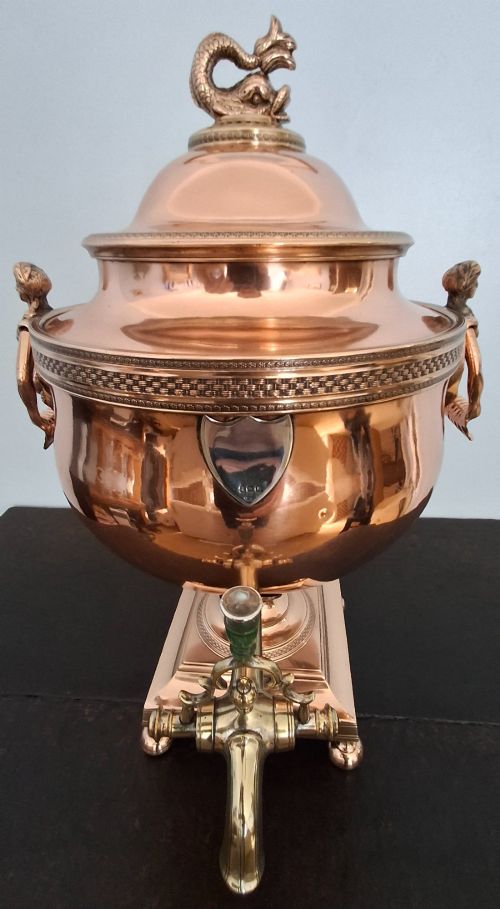
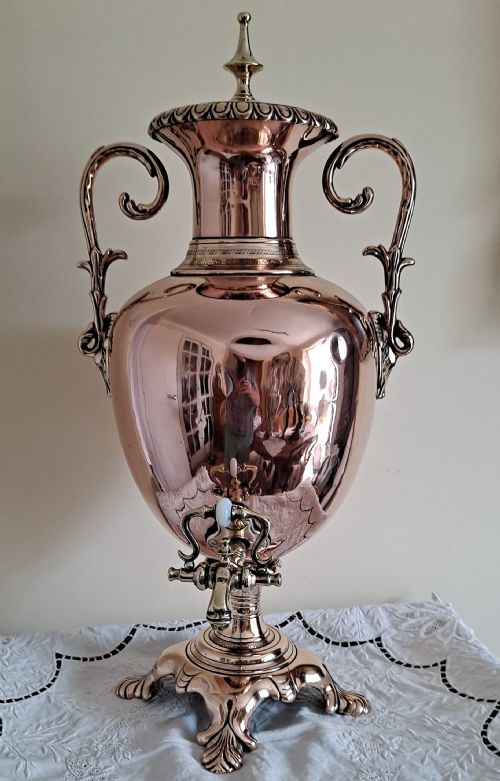
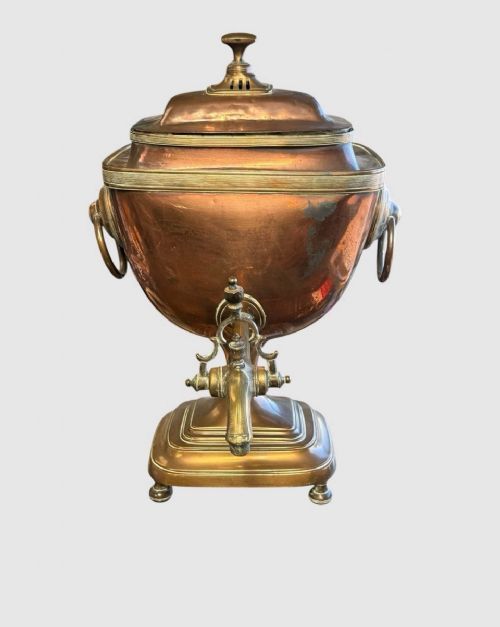
A vintage copper samovar urn is a commanding vessel designed for heating water, most frequently encountered in Victorian and Regency iterations on this page. These pieces date from the nineteenth century, including specific years such as 1800, 1850, 1860, and 1880.
The primary forms listed are tea urns and samovars, which combine practical beverage preparation with sculptural presence. English origins dominate the selection, spanning Georgian, George III, Regency, and Victorian stylistic periods.
Buyers seeking these objects encounter vessels configured specifically as tea urns and kettles. The historic domestic role of these items places them squarely at the heart of nineteenth-century hospitality.
Materials and construction methods
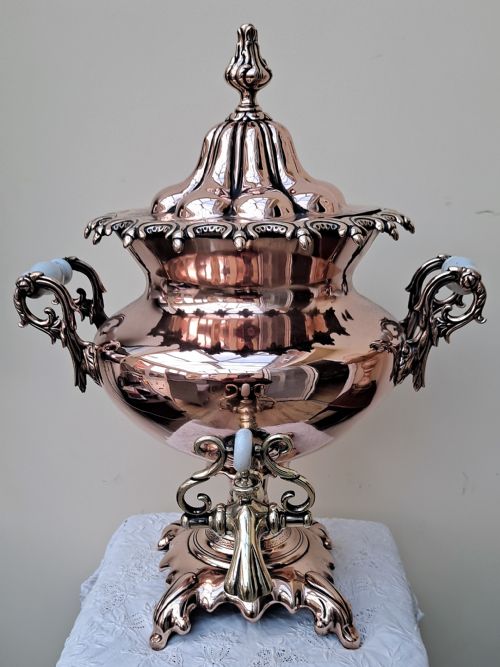
Construction relies heavily on sheet copper, frequently paired with contrasting brass for handles, spigots, and mounts. Additional detailing incorporates wood, ebonised wood, bone, and ceramic elements.
Makers utilised bronzed copper finishes on specific Regency examples to achieve a darker, patinated metallic surface. Metalworking techniques of the period involved skilled hammering, seaming, and casting to produce these large vessels.
Vintage Copper Samovar Urn Retail Price Guide 2026
Typical asking prices for vintage copper samovar urn among the pieces listed under this phrase on Sellingantiques today, from the lower quarter to the upper quarter. They describe what is for sale here now, not the wider market.
Object forms on this page concentrate entirely on tea urns, kettles, and samovars of English origin.
Factors determining quality
The sophistication of the ornamentation separates standard utility vessels from high-end examples, particularly in George III and Regency pieces. Ornate casting on handles, spigots, and bases indicates superior workshop output.
The integration of secondary materials such as bone, ceramic, and ebonised wood elevates the refinement of the object. Heavier gauge copper and complete fittings denote better manufacturing standards.
The Vintage Copper Samovar Urn Glossary
- Samovar
- A heated metal container traditionally used to heat and boil water in Russia and throughout European households. These vessels typically feature an internal central tube for heating elements.
- Tea Urn
- A large urn-shaped vessel designed for dispensing hot tea at formal gatherings. They stand on elevated bases equipped with spigots for pouring.
- Regency
- An English design period spanning from 1795 to 1837 characterised by classical revival motifs and refined proportions. Pieces from this era often display restrained elegance.
- Ebonised Wood
- Timber treated with a finish to resemble ebony, providing a dark contrast to the warm copper body. It frequently appears on handles and insulators.
Vintage Copper Samovar Urn: Frequently Asked Questions
How do I date a samovar?
Dating relies on stylistic markers associated with periods like Regency, George III, and Victorian eras. Design motifs and material combinations provide clues to the decade of origin.
Specific years mentioned in listings help anchor pieces to broader historical spans.
Where were these urns made?
The listings point primarily to English manufacture across the nineteenth century. Workshops in England produced these for domestic and formal hospitality.
Regional British styles evolved through the Georgian and Victorian periods.
How should I display a samovar?
These large vessels function well as focal points on sideboards, tables, or dedicated stands. Their warm metallic tones complement both traditional and eclectic interiors.
Positioning them away from moisture preserves the copper and brass surfaces.