

Georgian Console Card Table
When you search for a georgian console card table, you look for a dual-purpose piece built to transform from a slender wall console into a fully spread gaming surface.
Georgian Console Card Table
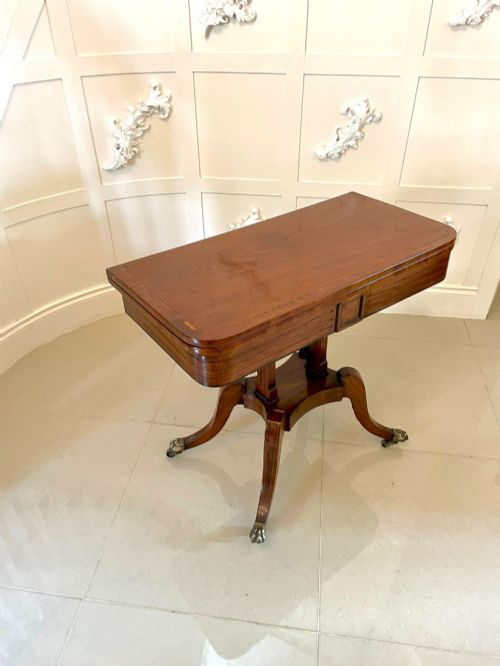
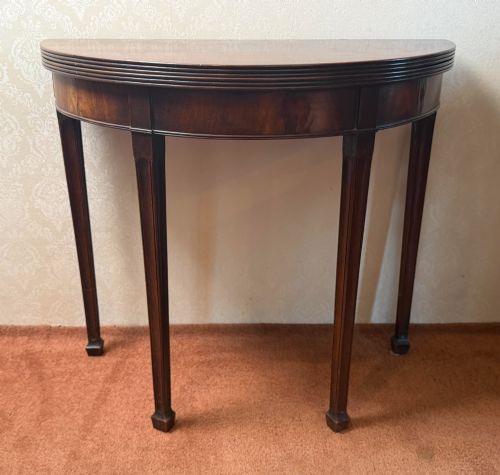
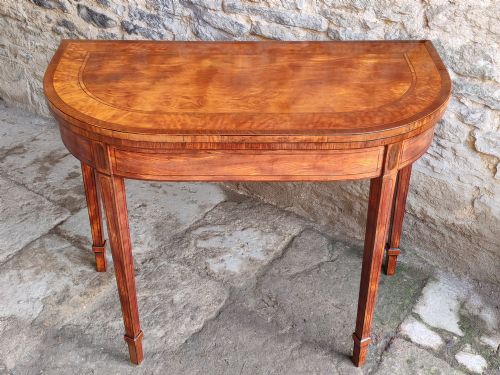
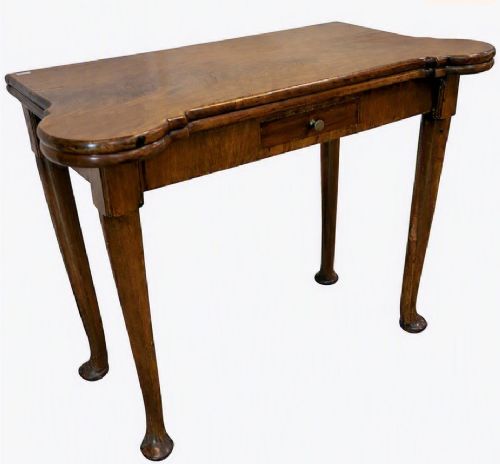
A georgian console card table combines the wall-anchored profile of a side console with the folding top of a games table. Most examples seen here date from the eighteenth and nineteenth centuries, spanning George III, Regency, and William IV periods.
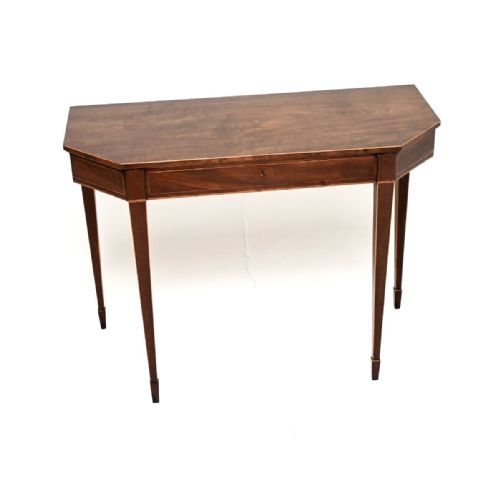
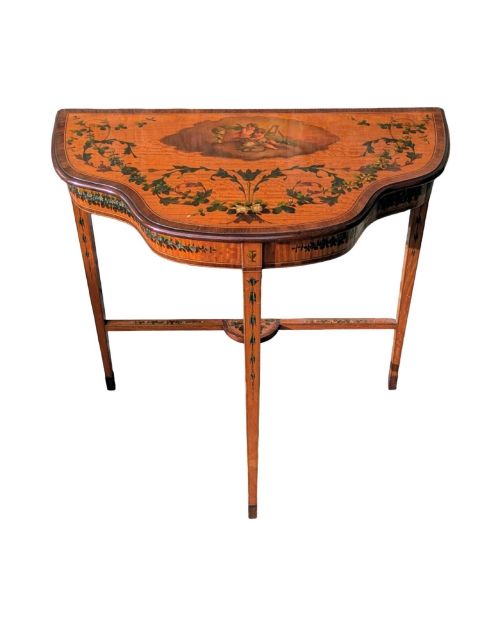
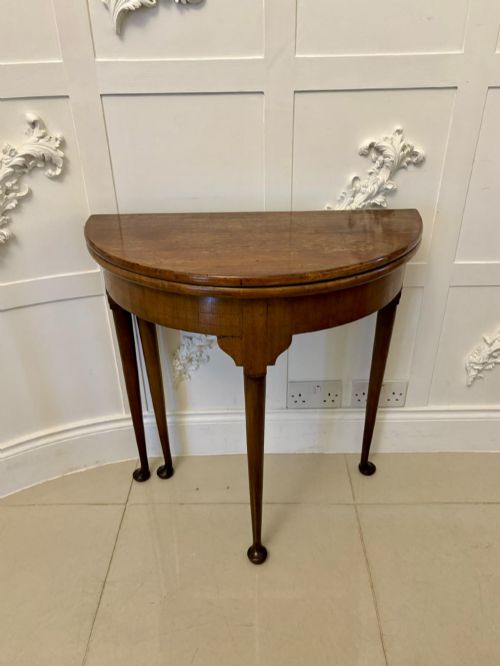
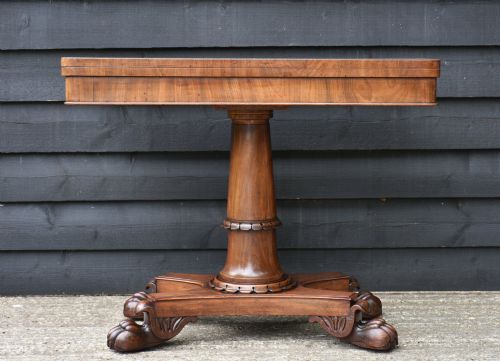
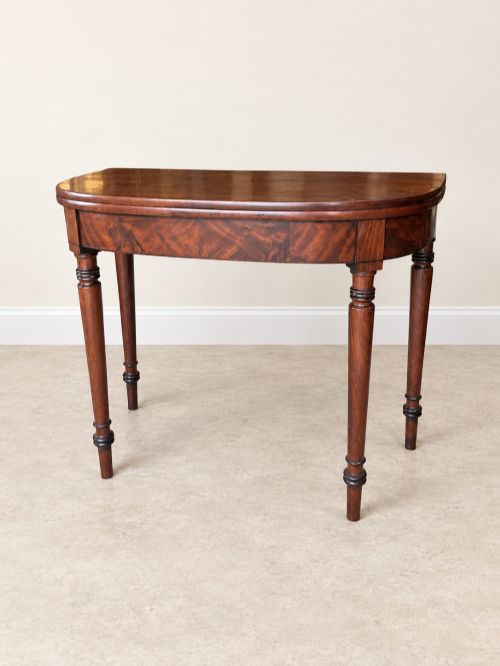
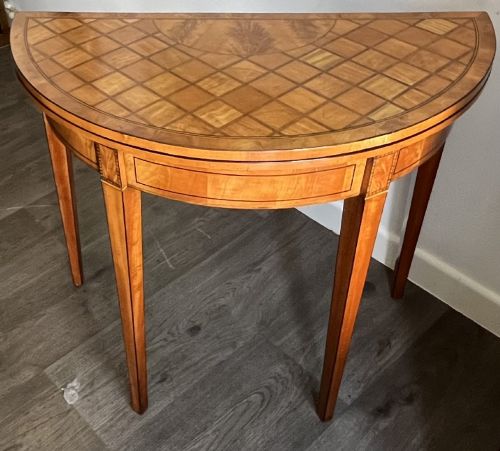
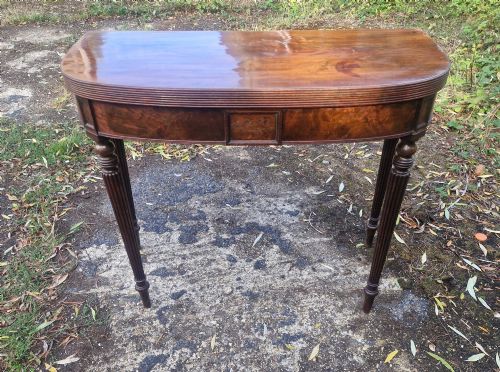
The dominant forms are rectangular, demi-lune, and serpentine, designed to sit neatly against a drawing room wall when closed. Opening the hinged top reveals a baize-lined playing surface, frequently accompanied by small corner pockets for counters or coinage.
How They Were Made
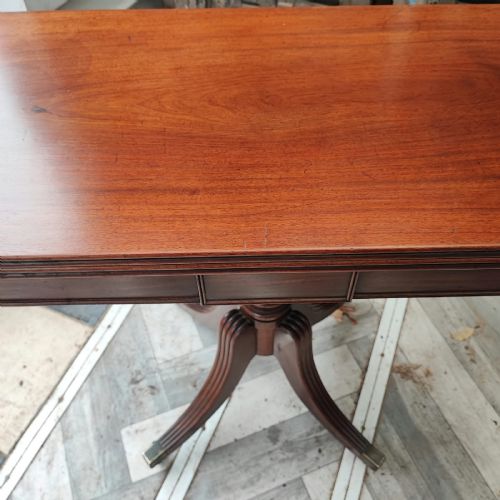
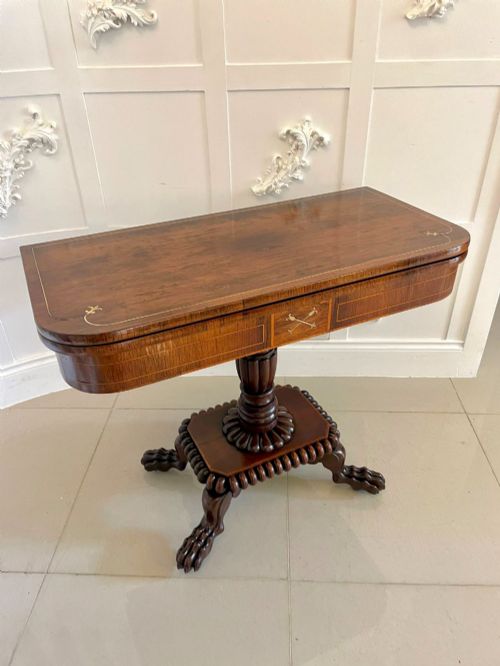
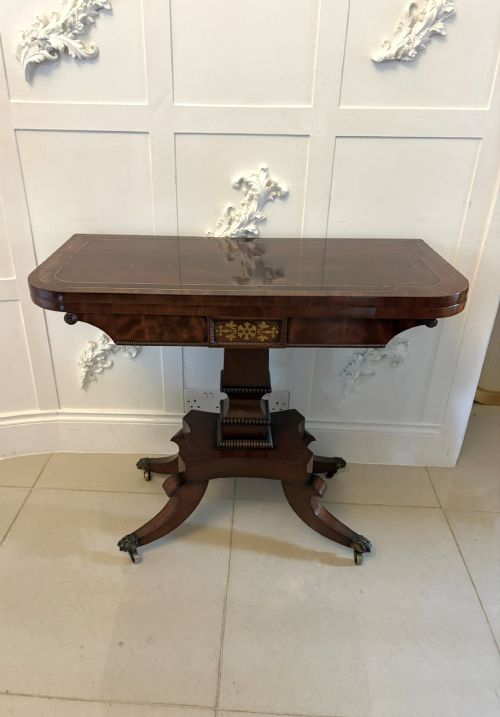
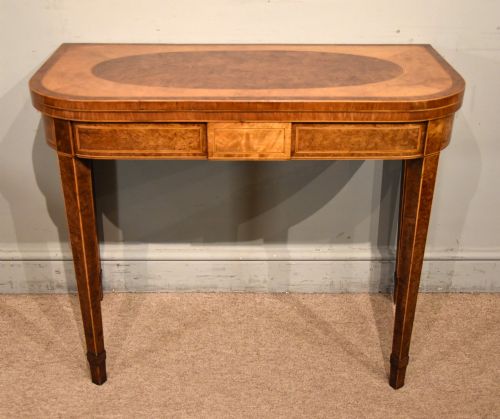
Cabinetmakers constructed these tables primarily from solid mahogany and rosewood, often applying veneers such as flame mahogany, burr yew, and satinwood to the primary surfaces. Crossbanding in contrasting timbers frames the tops, while delicate boxwood stringing defines the edges and legs.
Concertina actions and pivoting rear legs provide the structural support necessary when the heavy folding top opens. Brass inlay, carved foliage, and sabre legs appear on Regency iterations, adding weight and stability to the framework.
Listings feature mahogany, rosewood, satinwood, and walnut timbers across eighteenth and nineteenth-century forms.
What Varies in Quality
The refinement of the timber selection dictates the distinction between standard workshops and master cabinetmakers. Rich figure in flame mahogany and crisp execution of satinwood inlay distinguish the finer specimens from simpler variants.
Joinery execution around the hinge mechanism and the alignment of the folding leaves reveal the maker's hand. Original patination and depth of colour on the polished surfaces separate untouched examples from later restorations.
Giles Grendey·Gillows
The Georgian Console Card Table Glossary
- Demi-lune
- A half-moon shape used for table tops and console forms. This profile allows the piece to sit flush against a wall when closed.
- Concertina action
- An expanding frame mechanism that allows all four legs to move outward when the table top unfolds. It provides balanced support without a single swinging rear leg.
- Crossbanding
- A strip of veneer applied perpendicularly to the grain of the main surface. It forms a decorative border around the edge of the table top.
- Serpentine
- A gently undulating curved line forming the front edge of a table top. This contour requires precise hand-shaping by the cabinetmaker.
- Patina
- The surface sheen and depth developed through age and handling. Original polish accumulates this quality over generations of use.
Georgian Console Card Table: Frequently Asked Questions
How do you open a card table?
The hinged top folds back like a book to reveal the interior playing surface. On concertina and swing-leg designs, the supporting frame or rear leg moves outward simultaneously to bear the weight of the open leaf.
Care must be taken to lift the top cleanly before pivoting the support leg to avoid straining the original hinge pivots.
Where were these tables placed?
These pieces stood against drawing room or parlour walls when closed as console or side tables. During evening gatherings, they moved into the centre of the room for card games or tea service.
Their dual function made them essential for formal entertaining in smaller Georgian and Regency interiors.
How do I tell George III from Regency tables?
George III pieces often feature straight tapered legs, restrained mahogany veneers, and subtle stringing. Regency examples introduce rosewood timbers, brass inlay, sabre legs, and bolder geometric contrasts.
Cabinetmaking transitions from rectilinear architectural forms toward classical revival motifs around the turn of the nineteenth century.
What is the green cloth for?
The baize or wool cloth provided a soft, non-slip surface for dealing cards and stacking gaming counters. It also protected polished wooden surfaces from the friction of play.
Many surviving tables retain their original textiles or feature sympathetic period-appropriate replacements.