
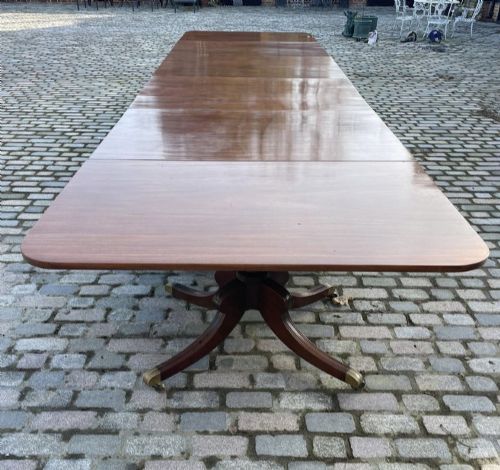
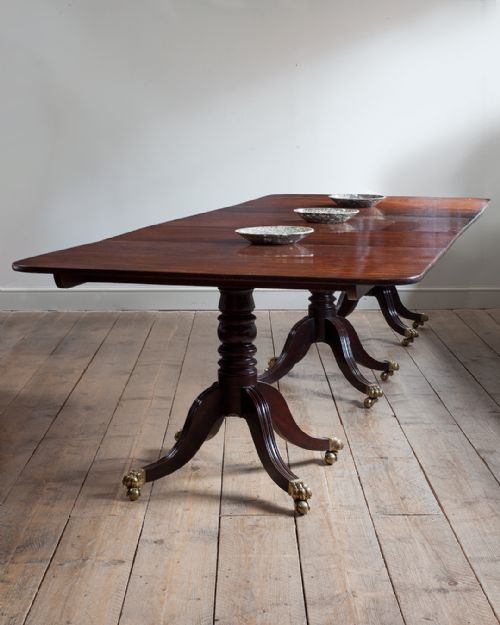
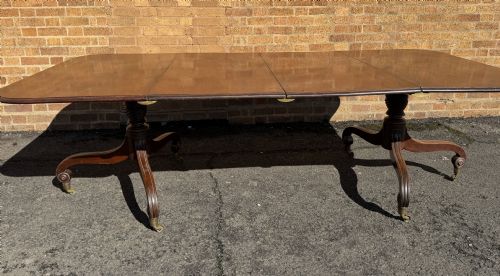
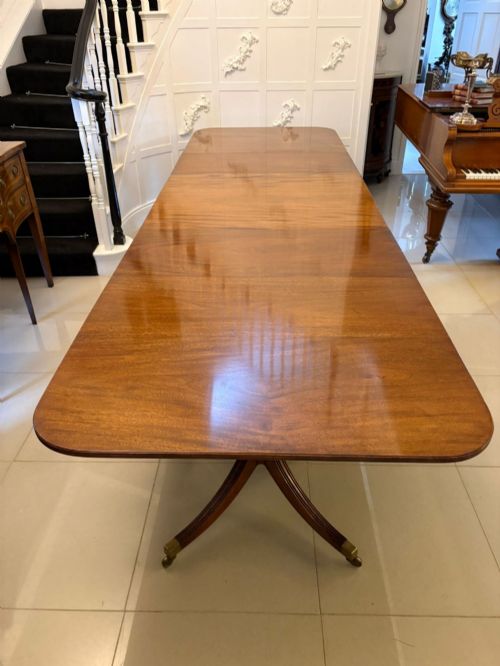
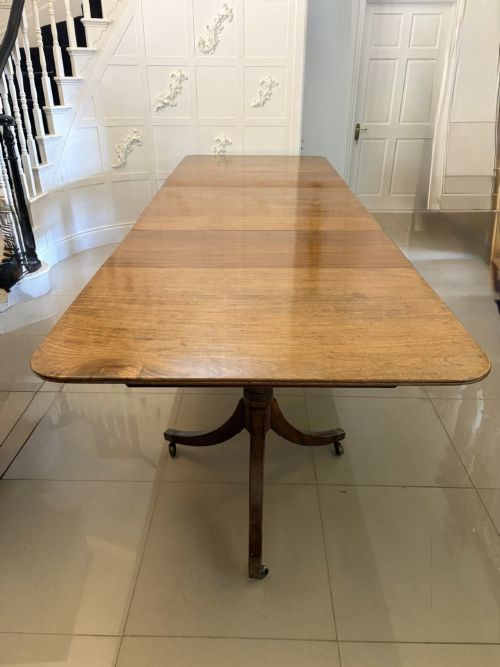

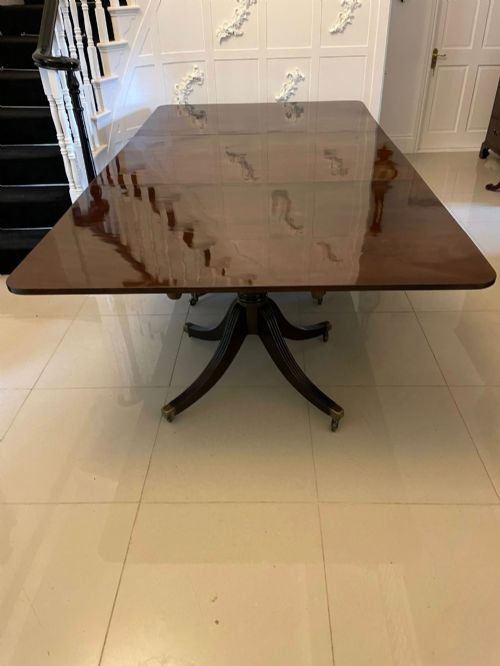
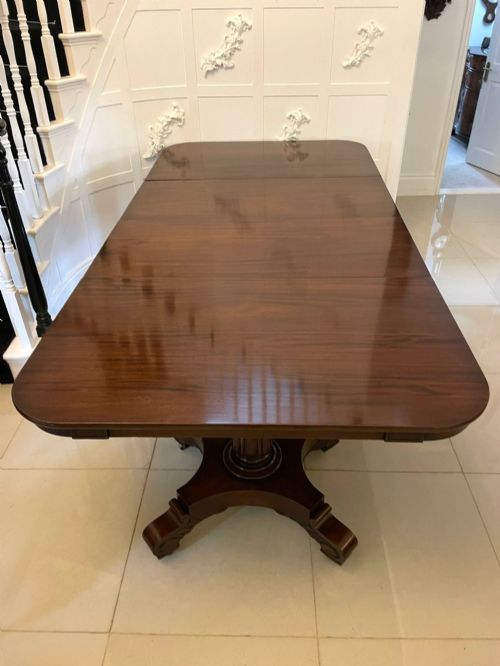
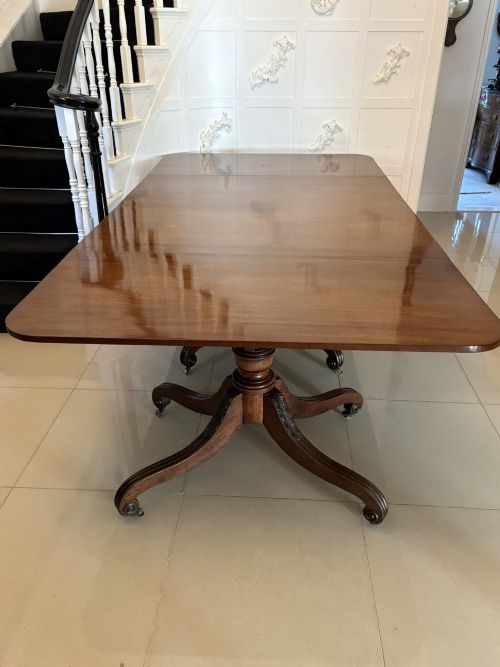
Georgian Conference Table
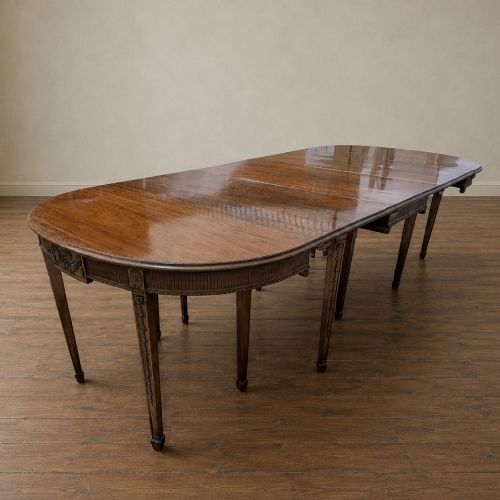
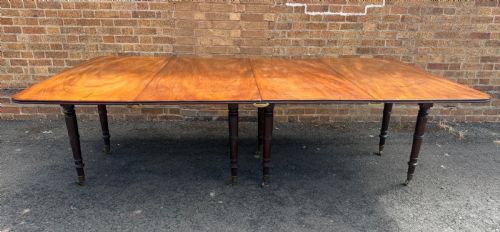
A georgian conference table provides an expansive surface for meetings or dining, built with sectional pedestals to adjust seating capacity.
Georgian Conference Table
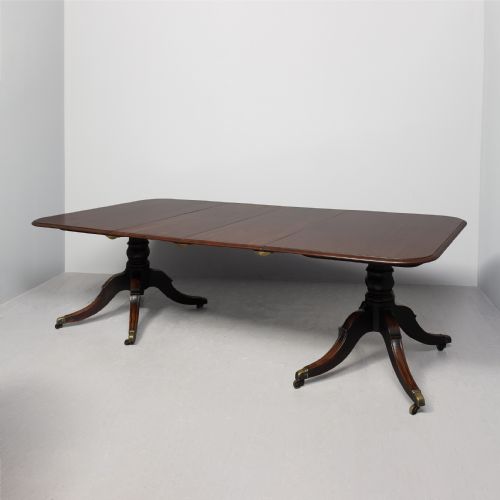
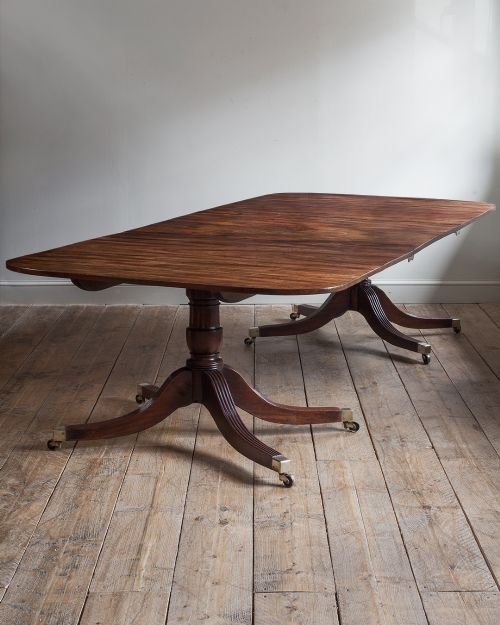
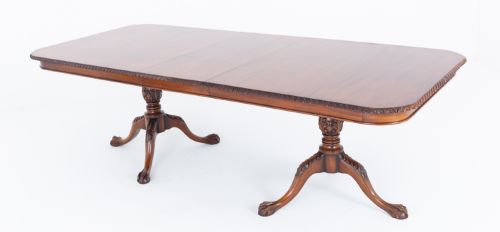
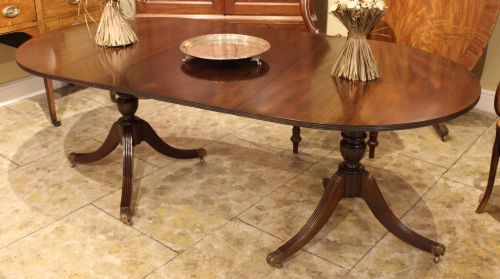
A georgian conference table typically takes the form of a sectional dining table supported by two, three, or more pedestals with removable leaves. These pieces originate predominantly from the Georgian, Regency, and George III periods, though later revivals also appear.
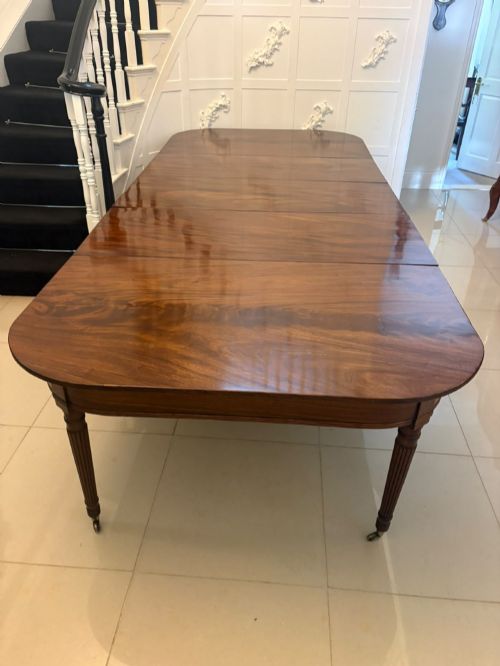
Most examples encountered on this page function as large extending tables designed to seat upwards of ten to twenty-eight people. The construction allows the table to adapt in length depending on the number of leaves inserted into the centre.
Materials and Construction
Makers built these tables primarily from solid and figured mahogany, including Cuban mahogany and plum pudding varieties, paired with brass castors on the pedestal feet. The timber selection often displays rich grain patterns across the top surface and the extending leaves.
Support systems rely on robust timber pillars, sometimes numbering up to six, which carry the weight of the extended leaves and provide stability across large spans.
Object types catalogued on this page consist entirely of extending dining tables.
Craftsmanship and Proportion
The distinction between tiers of quality rests on the selection of timber, such as highly figured flame mahogany veneers versus standard stock, and the precision of the joinery in the pedestals. Superior pieces maintain balanced proportions and smooth extending mechanisms even at maximum length.
Refinement in the carving of the legs, the quality of the brass fittings, and the seamless matching of grain across multiple leaves elevate certain examples above standard utilitarian workshop output.
Gillows·Robert Adam
The Georgian Conference Table Glossary
- Pedestal
- A central columnar support resting on splayed legs, usually fitted with brass castors. These allow multi-pillar tables to distribute weight evenly.
- Leaf
- A removable section of timber inserted into the centre of an extending table to increase its overall length. Extra leaves enable the table to accommodate large gatherings.
- Cuban Mahogany
- A dense, dark timber prized for its rich grain and heavy figure, frequently utilised in high-status furniture of the eighteenth and nineteenth centuries.
- D-End
- A table end shaped in the form of a semicircle, which can be detached or pushed against another section to form a rectangular dining or conference layout.
Georgian Conference Table: Frequently Asked Questions
How do multi-pillar tables extend?
Multi-pillar tables utilise modular sections joined together with wooden pins or clips, allowing removable leaves to drop into the centre.
Additional pedestals beneath the table provide stable weight distribution when the surface is pulled out to its full capacity.
What timber was used for these tables?
Cabinet makers relied heavily on mahogany, including figured, Cuban, and plum pudding varieties, valued for durability and rich grain patterns.
Brass hardware such as toe castors frequently accompanied these timbers to assist movement across floors.
How many people can these tables seat?
Seating capacity varies widely based on the number of pedestals and inserted leaves, ranging from modest ten-seater formats up to extensive twenty-eight-seater configurations.
The inclusion of multiple removable leaves permits the length to adjust according to room dimensions and gathering sizes.
How do I identify a Regency period table?
Regency tables often display restrained classical lines, pedestal bases with reeded legs, and dark mahogany surfaces influenced by neoclassical design.
Proportions remain balanced, and construction details align with early nineteenth-century cabinet making practices.