

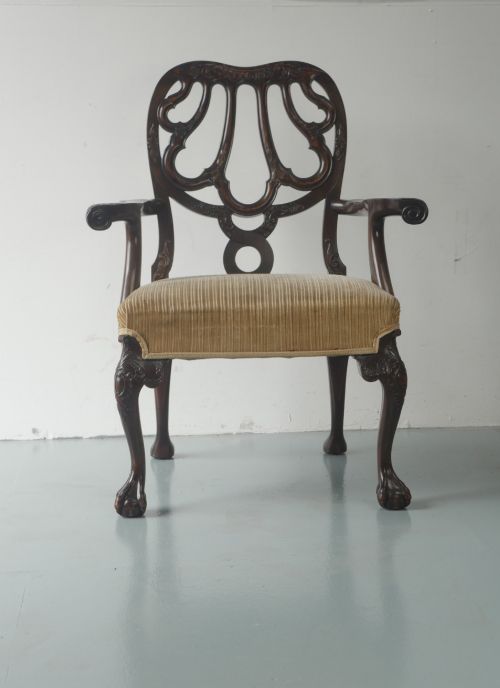
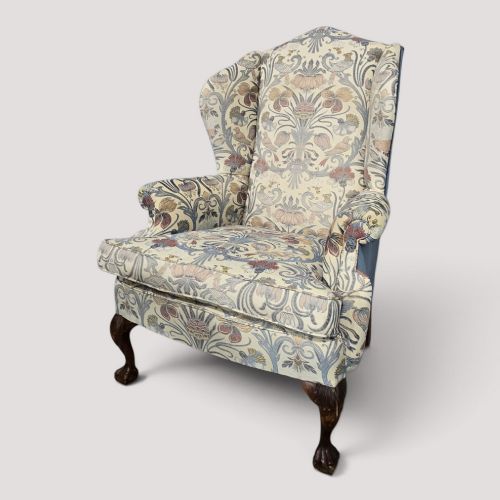
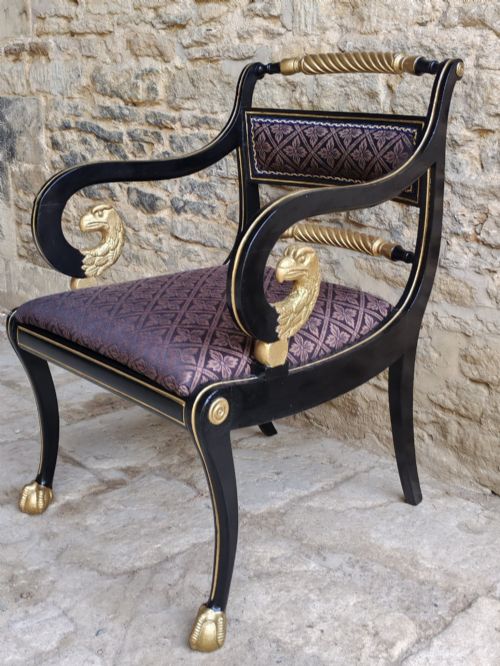
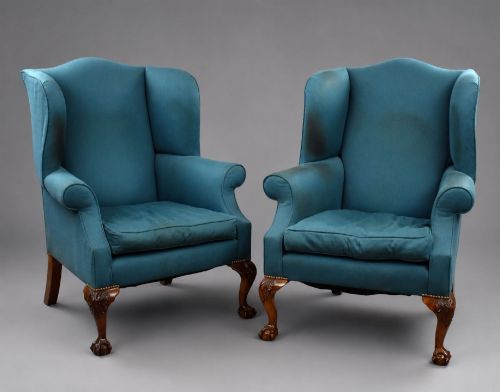
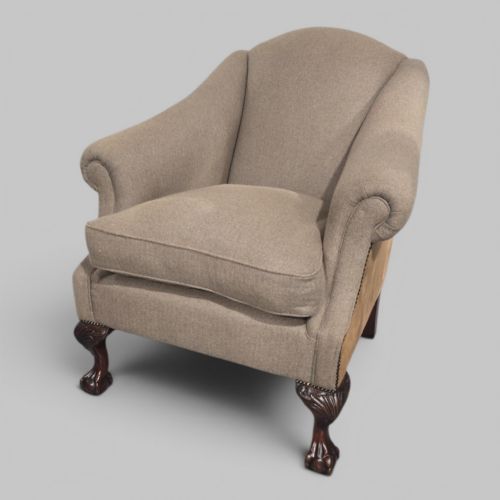


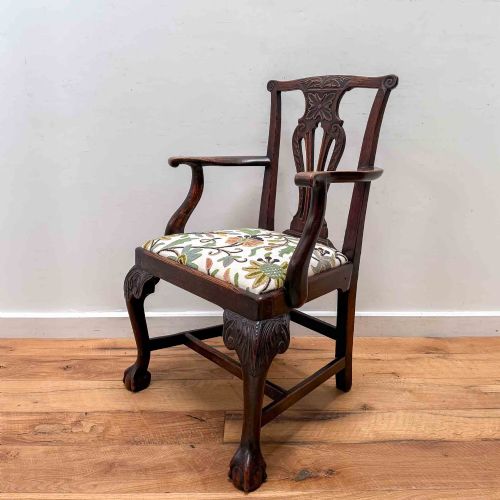


Georgian Claw Foot Armchair
A georgian claw foot armchair brings substantial timber and carved detail to a room, offering both presence and historical character.
Georgian Claw Foot Armchair
A georgian claw foot armchair combines formal seating with distinct carved terminals at the base of the legs, often taking the form of a ball gripped by talon digits. Buyers encounter genuine eighteenth-century examples alongside later revival pieces produced in the nineteenth and early twentieth centuries.
The selection ranges from large library chairs and wing backs designed for fireside comfort to dining chairs and open carvers suitable for a hall or study. Mahogany is the primary timber across these forms, though walnut, oak, and Chinese export hardwood also appear in the record.
Many listings show specific stylistic influences, particularly Chippendale proportions and Regency lines, reflecting the enduring popularity of these classic silhouettes. Revival pieces from Edwardian and later decades capture the same carved ambition as their earlier counterparts.
Construction and Materials
Makers shaped these chairs from dense hardwoods, predominantly mahogany, relying on traditional joinery to support the weight and stress placed on the frame. Timber selection determined how sharply the wood carver could render the intricate claw and ball terminals.
Upholstered elements utilise traditional stuffing methods beneath top layers of fabric, leather, or crewel work. Brass accents occasionally appear on castors or decorative hardware supporting the feet of Regency and library models.
Georgian Claw Foot Armchair Retail Price Guide 2026
Typical asking prices for georgian claw foot armchair among the pieces listed under this phrase on Sellingantiques today, from the lower quarter to the upper quarter. They describe what is for sale here now, not the wider market.
The furniture styles represented include Chippendale, Regency, and various revival interpretations produced in the nineteenth and early twentieth centuries.
Assessing Quality
The crispness and depth of the hand carving on the knees and feet dictate the aesthetic standard of a georgian claw foot armchair. Superior examples display confident, undercut talons and well-proportioned splats, whereas lesser pieces show shallower, mechanical carving.
The integrity of the timber frame and the weight of the mahogany distinguish workshop pieces made for prominent commissions from standard commercial production. Original framing timber without excessive replacement holds greater interest for collectors.
George Bullock·George Smith
The Georgian Claw Foot Armchair Glossary
- Claw and ball
- A carved furniture foot depicting a bird's talon gripping a spherical ball. This motif gained widespread popularity during the eighteenth century.
- Library chair
- A substantial armchair designed for reading rooms, typically featuring upholstered arms and a high back for comfort. These pieces often incorporate mahogany frames and generous proportions.
- Carver chair
- An open armchair, frequently made as part of a dining set to sit at the head of a table. They match simpler side chairs but include armrests.
- Chinese export hardwood
- Timber furniture produced in China specifically for Western markets, often featuring eccentric or hybrid decorative motifs. These pieces date across various centuries and utilise dense local woods.
- Wing back
- An armchair featuring protective side panels attached to the backrest to deflect draughts. Early versions were heavily padded for fireside use.
Georgian Claw Foot Armchair: Frequently Asked Questions
Are these armchairs comfortable for daily use?
Many of these chairs offer deep seats and supportive backrests, particularly library and wing back variants designed for extended sitting. Their ergonomics depend largely on the internal stuffing and the angle of the rake.
Buyers intending to use them daily should check the seat height and upholstery condition. Modern placement often benefits from professional conservation of the underlying webbing.
How do I distinguish an eighteenth-century chair from a revival piece?
Eighteenth-century examples display timber oxidation, hand-cut joinery marks, and wear patterns consistent with extended age. Revival pieces from the Edwardian era or the nineteenth century often feature machine-assisted elements and different secondary woods.
Examining the underside of the frame and the construction of the seat rails reveals the working methods of the period. Revival makers frequently copied earlier proportions closely, making material analysis essential.
What is the difference between a library chair and a dining chair?
Library chairs are built for solitary comfort, featuring wider proportions, upholstered armrests, and heavier frames suitable for reading spaces. Dining chairs are narrower and designed to fit neatly beneath a table.
Carver chairs bridge this gap by offering armrests on a dining scale. They function well as occasional seating in living areas or studies.
How should I care for antique mahogany furniture?
Keep wooden frames away from direct heat sources and rapid humidity changes to prevent timber splitting or joint loosening. Regular dusting with a dry cloth maintains the finish without building up residue.
Leather and fabric upholstery require specialised cleaning appropriate to their specific textile type. Periodic checks of the joints ensure the frame remains stable under normal weight.