
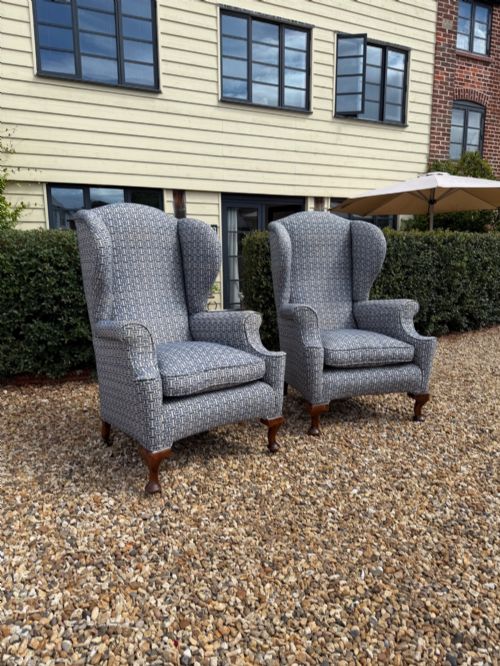
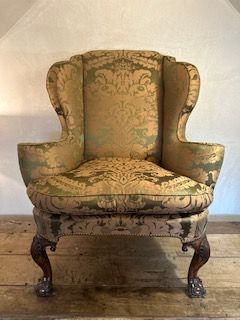
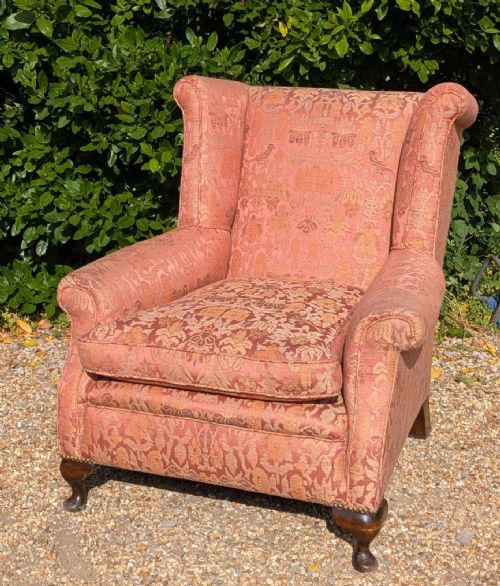
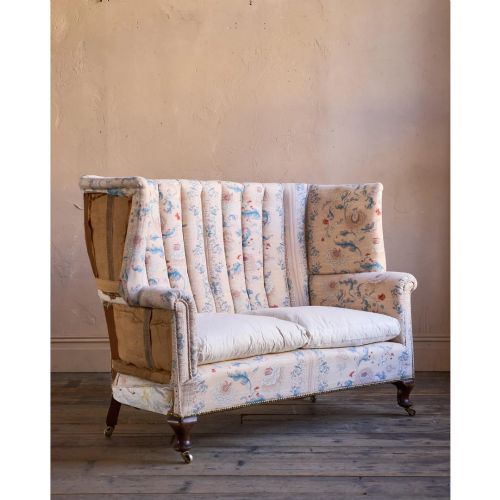
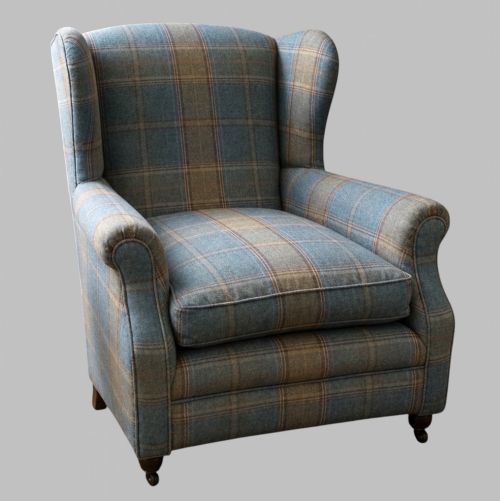


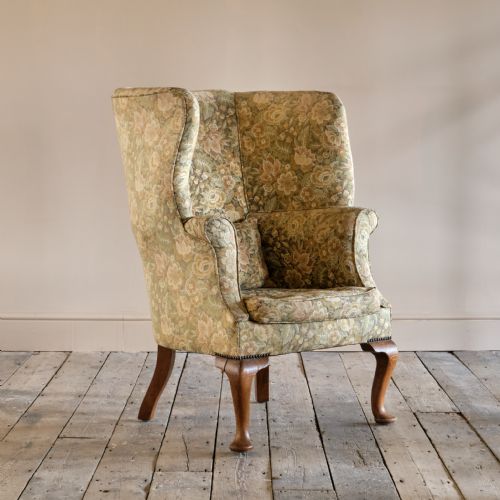


Patterned Wingback Chair
A patterned wingback chair brings draught-excluding comfort and striking textile depth to a room, offering centuries of seating design.
Patterned Wingback Chair
A patterned wingback chair combines traditional high-sided upholstery with decorative textiles across centuries of design, spanning 18th Century origins to Edwardian and 1920s interpretations.
The selections on this page range from compact barrel-backed armchairs to expansive high-back library seats and occasional sofas.
Revival aesthetics predominate, with Queen Anne style, Georgian proportions, and Arts and Crafts simplicity appearing alongside Victorian robust forms.
Materials and construction
Frames rely on sturdy timbers including mahogany, walnut, oak, and hardwood, providing robust structural integrity beneath the upholstery.
Upholstery incorporates traditional textile variations such as tapestry fabric, tartan wool, and printed cotton, supported by brass details and feather fillings.
The sheltering wings were originally designed to trap heat from the fire and keep drafts away from the ears of the sitter.
Craftsmanship and distinction
Distinction rests on the harmony between the timber frame proportions and the precision of the textile pattern alignment across the wings and arms.
Superior examples demonstrate careful joinery in woods like walnut and mahogany, paired with dense feather filling that maintains structural shape.
Whytock & Reid·Howard & Sons·William Morris
The Patterned Wingback Chair Glossary
- Wingback
- An upholstered armchair featuring protective side panels designed to shield the sitter from draughts. These wings frame the backrest and flow down into the armrests.
- Barrel back
- A seating form where the backrest curves continuously into enclosed arms in a semi-circular shape. This style wraps closely around the occupant for added warmth.
- Bergère
- An enclosed armchair with exposed wooden framing and woven cane or upholstered panels. The style originates from French furniture design adapted into British seating.
- Claw and ball
- A carved furniture foot depicting a bird talon clutching a spherical orb. This motif is frequently found on 18th Century and revival cabriole legs.
Patterned Wingback Chair: Frequently Asked Questions
What is a patterned wingback chair?
A patterned wingback chair is an upholstered seat featuring protective side panels and decorative fabric. These chairs combine historical seating forms with patterned textiles.
They function as statement pieces while retaining the traditional high-sided design intended to block room draughts.
How do I date a wingback chair?
Dating relies on examining the timber frame construction beneath the upholstery and the stylistic proportions of the legs. Earlier pieces often display walnut or mahogany frames with specific revival motifs.
Comparing the stretchers, wood turning, and upholstery style helps differentiate 18th Century originals from Edwardian revivals.
Where should I place a wingback chair?
These chairs suit studies, libraries, and living rooms where their high backs create a distinct seating enclosure. They work effectively beside fireplaces or reading corners.
Their substantial profiles mean they often anchor a room layout as focal seating.
What fabrics are used on these chairs?
Upholstery materials range from traditional tapestry fabrics and wool plaids to printed cottons and heavy textiles. Many pieces feature patterned cloths chosen during period manufacture or later restoration.
Textiles vary from muted plaids to botanical prints depending on the specific revival style.