

Georgian Cheval Glass Mirror
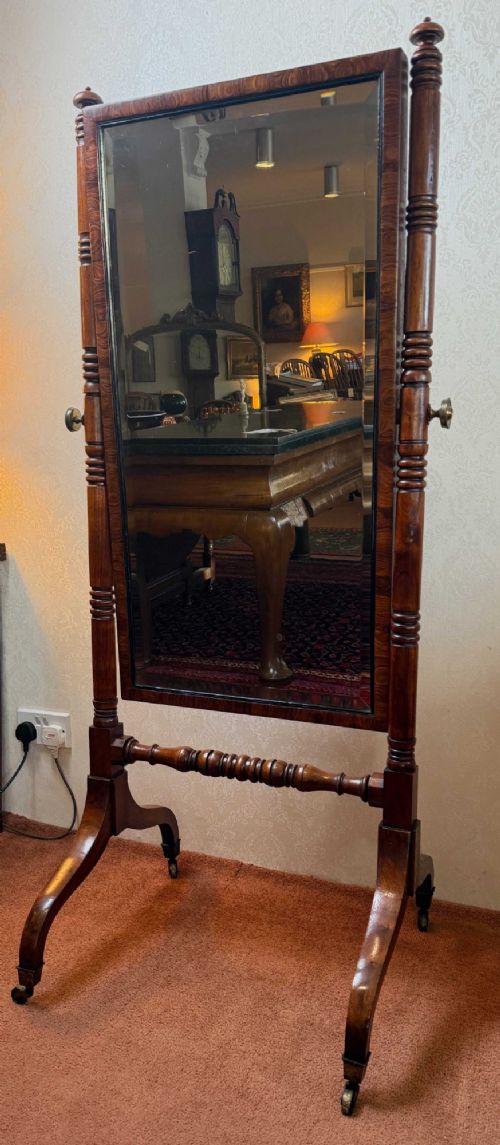
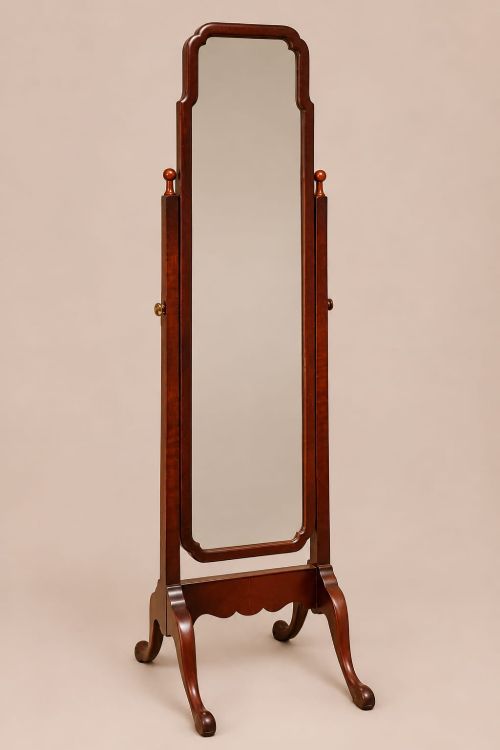
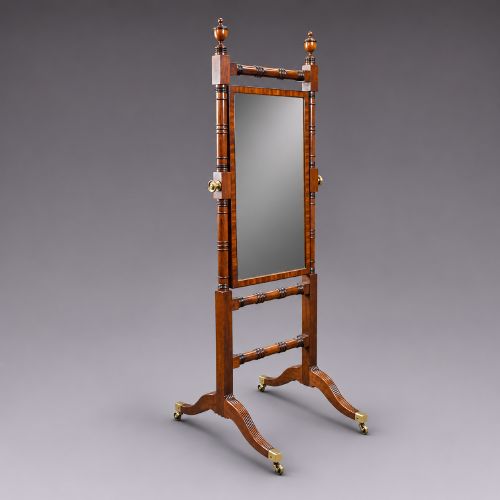
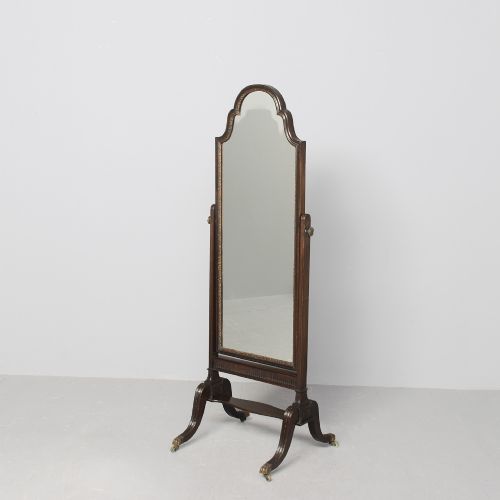
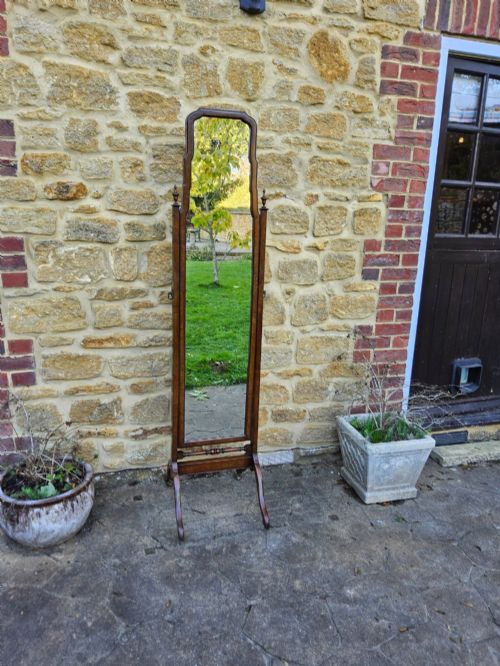
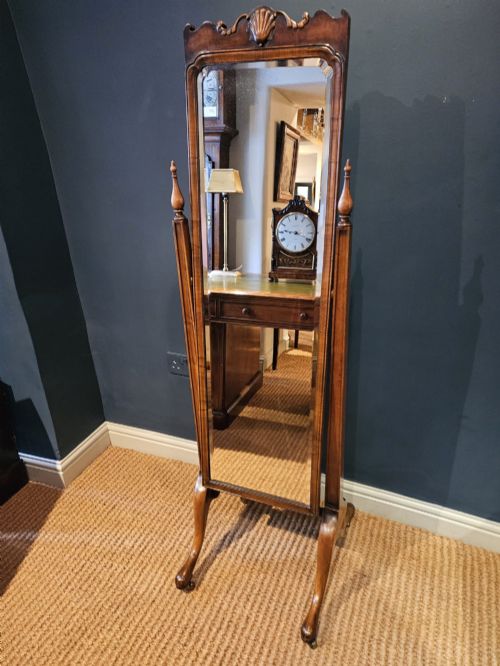
A georgian cheval glass mirror stands free on a frame, offering a full-length reflection that defined dressing rooms from the eighteenth century onwards.
Georgian Cheval Glass Mirror
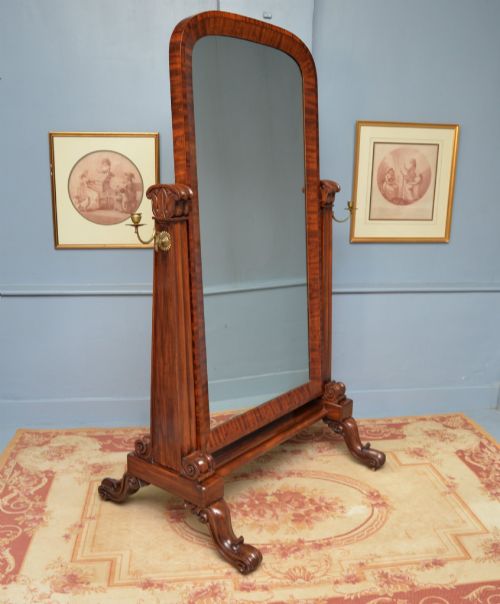
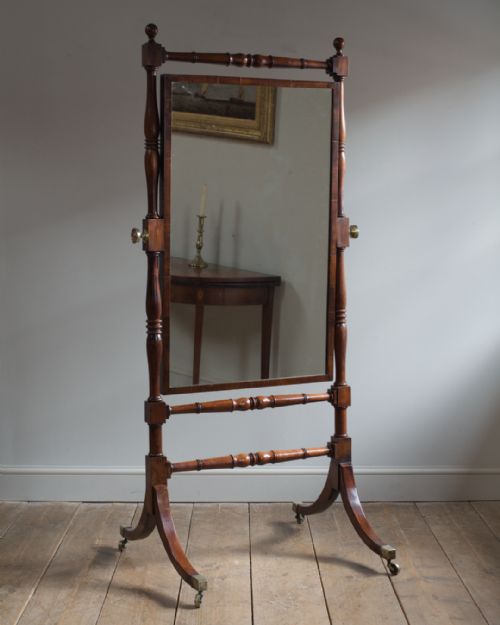
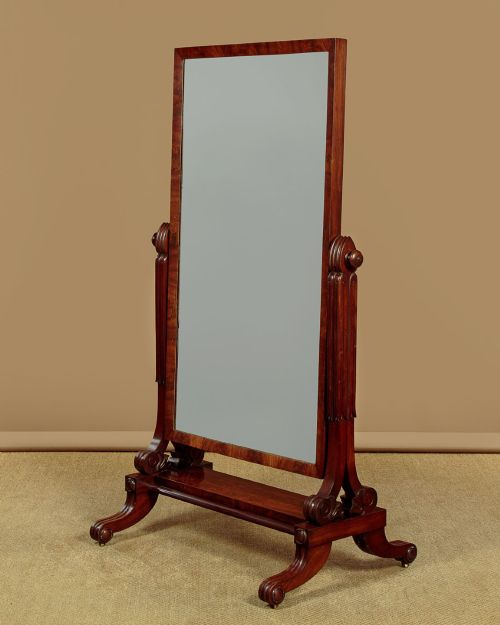
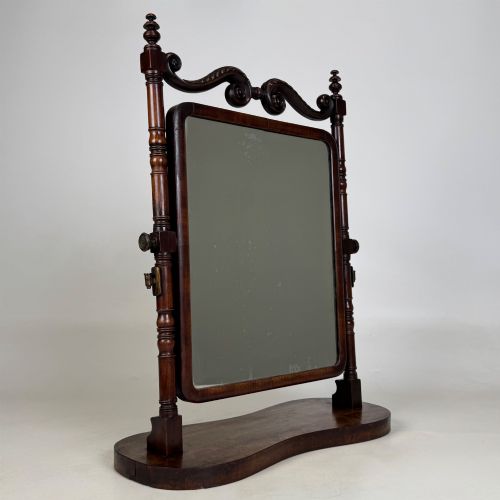
A georgian cheval glass mirror provides an adjustable full-length reflection mounted within a sturdy vertical frame, designed to stand independently on the floor rather than hang upon a wall. The pieces appearing most frequently across these selections combine practical height with architectural elegance, often taking the form of a freestanding swing glass supported by scrolling uprights.
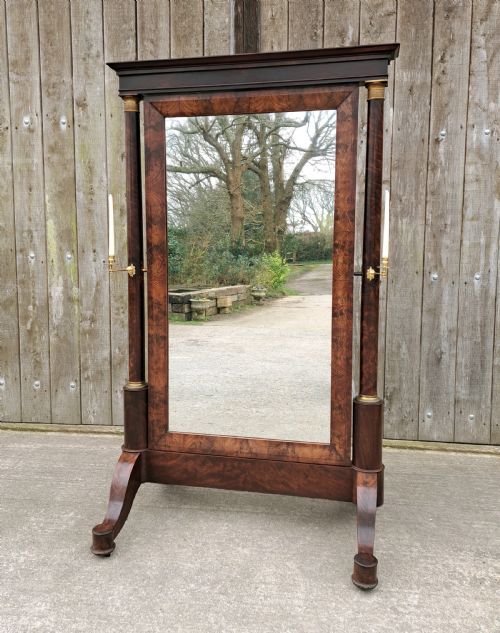
The materials and styles span multiple eras, notably incorporating George III and Regency designs alongside later revivals from the nineteenth and twentieth centuries. While many examples utilise rich mahogany, variations include paduk wood, walnut with boxwood inlay, and gilded frames reflecting French Empire influences.
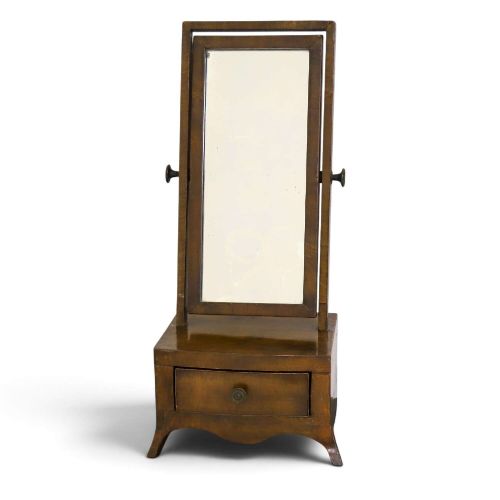
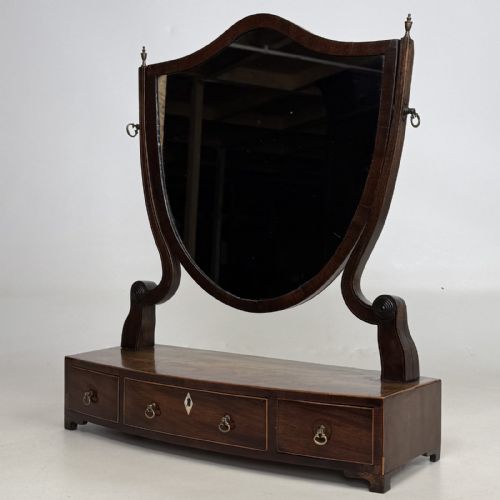
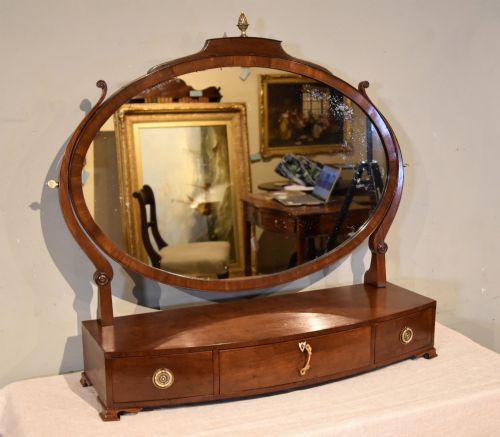
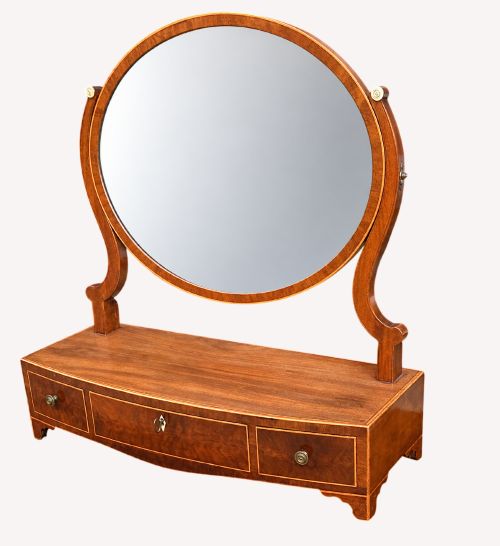
Beyond the grand full-length cheval versions, the selections also encompass smaller dressing table mirrors and toilet mirrors intended for chests of drawers. These scaled-down pieces share the characteristic tilting glass mechanism and box bases fitted with small drawers, maintaining the proportion of their larger counterparts.
Materials and construction
Cabinetmakers predominantly constructed these standing mirrors using dense, durable timbers such as mahogany and walnut, which provided the necessary weight to support a heavy pivoting glass. Selected pieces introduce decorative contrast through delicate boxwood inlay, bone accents, or ornate giltwood and brass fittings.
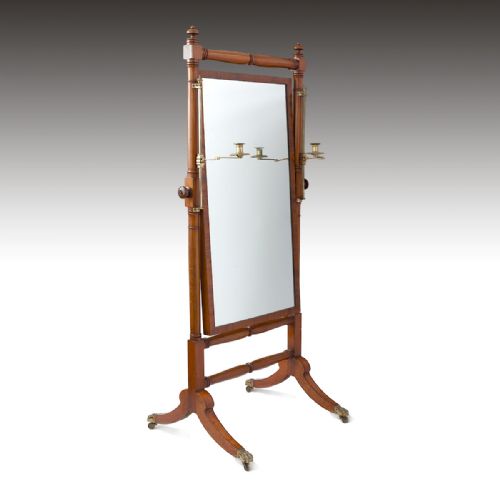
The mirror glass itself sits securely within a movable wooden frame connected by lateral pivot screws or pins, allowing the user to tilt the angle of reflection at will. Uprights rise from sturdy splayed legs or pedestal bases, frequently stabilized by horizontal stretchers to prevent swaying.
Georgian Cheval Glass Mirror Retail Price Guide 2026
Typical asking prices for georgian cheval glass mirror among the pieces listed under this phrase on Sellingantiques today, from the lower quarter to the upper quarter. They describe what is for sale here now, not the wider market.
Early dressing mirrors occasionally hid tiny secret compartments behind the swing glass for storing morning letters.
Distinctions in craftsmanship
The tier of quality rests heavily on the crispness of the timber carving and the architectural balance of the supporting frame. Superior examples demonstrate meticulous joinery in the uprights and bases, whilst lesser pieces rely on simpler turnings and heavier, unrefined proportions.
Finer mirrors incorporate higher-grade mirror glass, substantial brass hardware, and secondary woods that match the primary timber throughout the interior components. The subtlety of carved details, such as reeded columns or fine brass candle sconces, separates standard utilitarian pieces from exceptional country house commissions.
Gillows
The Georgian Cheval Glass Mirror Glossary
- Cheval glass
- A large, freestanding mirror suspended on a vertical frame that allows it to swing back and forth. This design enables a full-length view of the person dressing.
- Toilet mirror
- A smaller table-standing glass designed to sit upon a dressing table or chest of drawers. These typically feature a set of small drawers integrated into the base.
- Tilt mechanism
- The pivoting hardware connecting the mirror frame to the upright supports. It permits the glass angle to be adjusted.
- Boxfront
- A curved or bow-shaped front profile often seen on the drawer base of dressing mirrors. This shape adds visual depth to the piece.
- Marquetry
- Decorative veneer work arranged in intricate patterns using various woods. It appears on select refined surfaces of the dressing mirrors.
Georgian Cheval Glass Mirror: Frequently Asked Questions
What is a cheval mirror?
A cheval mirror is a freestanding, full-length looking glass suspended within a wooden frame so that it can tilt to any angle. The word derives from the French for horse, alluding to the four-legged frame.
These pieces were essential furniture in bedrooms and dressing rooms from the Georgian period onward, allowing users to inspect their entire outfit at once.
How do I place one in a room?
Position a freestanding mirror near a natural light source, such as a window, to bounce daylight across the space. Because the frame stands independently, it requires sufficient floor clearance to allow the glass to tilt safely.
Keep the piece away from direct, harsh sunlight to protect the polished wood surfaces and the antique silvering behind the glass over time.
Are these mirrors original antique glass?
Many surviving pieces retain their original mirror glass, which often exhibits minor age spots or foxing. Replacement glass does occur frequently due to the fragile nature of large historical mirrors.
Inspect the edges of the glass and the backing boards to understand the age and history of the reflective plate within its frame.
What distinguishes Regency from Georgian styles?
Georgian furniture generally encompasses the classical symmetry and solid mahogany construction of the eighteenth century under the Georges. Regency pieces reflect a more adventurous classical revival inspired by ancient Rome and Greece.
Regency examples frequently showcase bolder brass mounts, reeded columns, and rich woods like paduk, reflecting the opulent tastes of the early nineteenth century.