



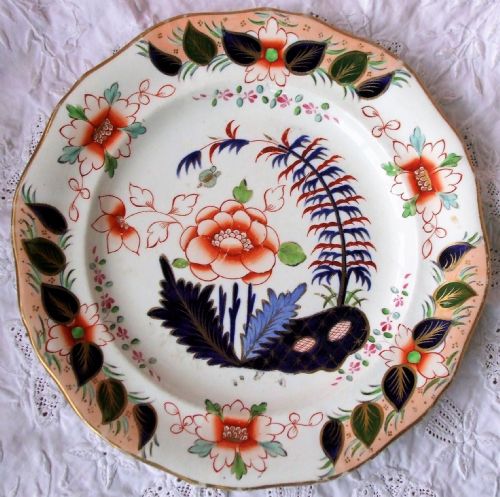
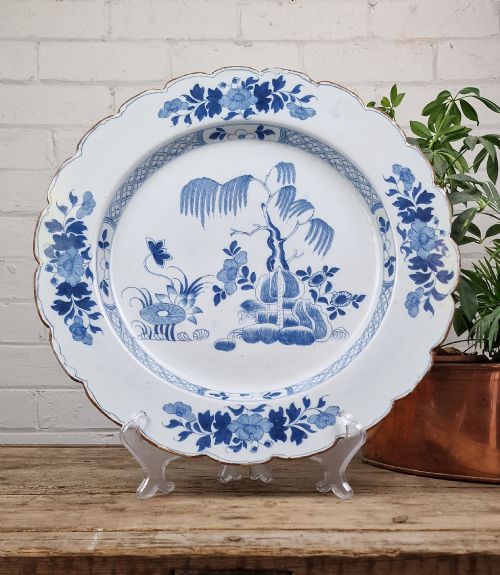


Georgian Ceramic Charger
These robust georgian ceramic charger examples bring tangible eighteenth and nineteenth-century craft into modern rooms.
Georgian Ceramic Charger
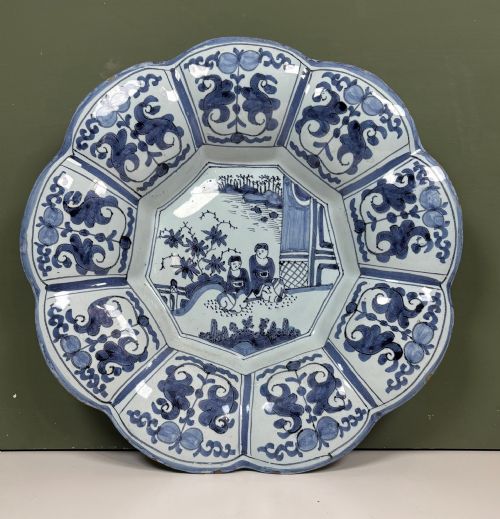
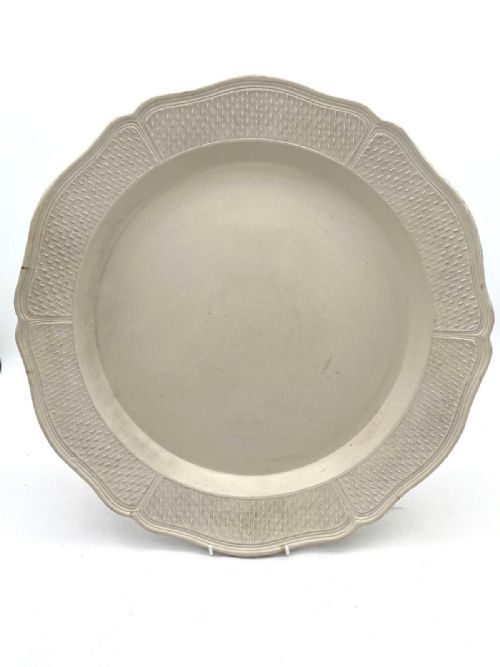
A georgian ceramic charger is a wide decorative dish or serving platter designed to make a visual statement on dining tables or walls. When you search for this phrase, you encounter large earthenware plates created across the eighteenth and early nineteenth centuries.
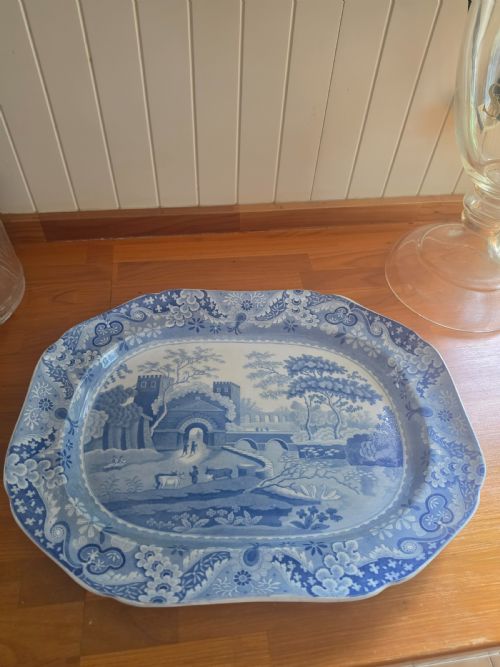
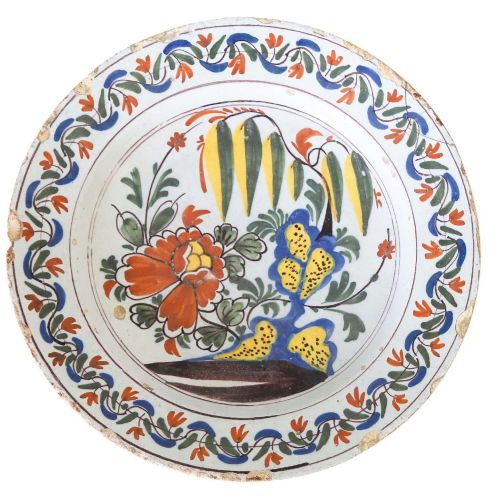
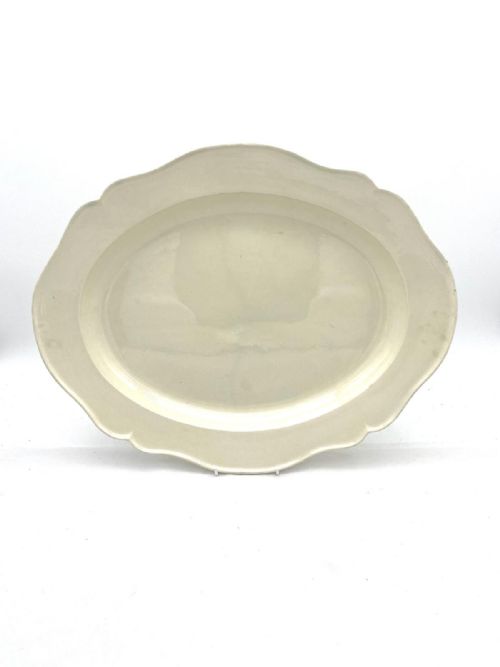
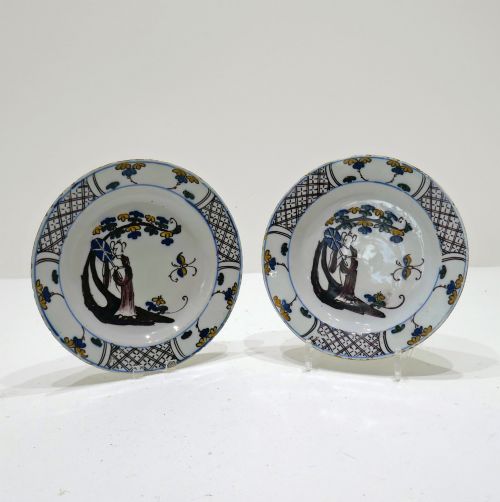
The most common items on this page are English Delftware chargers featuring hand-painted tin glazes in blue and white or polychrome palettes. Alongside tin-glazed earthenware, the selection includes pearlware, creamware, and transfer-printed ironstone from notable periods.
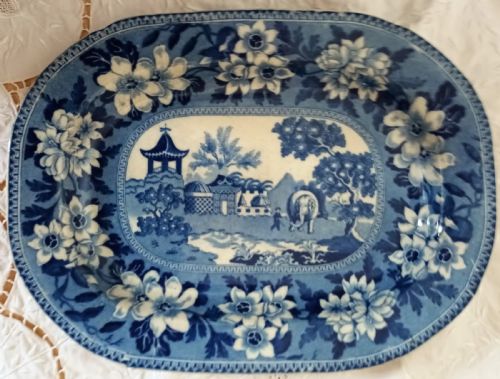
Makers utilised these broad surfaces for sweeping botanical scenes, historical narratives, armorial bearings, and Chinoiserie motifs. Each piece records the domestic tastes and ceramic capabilities of Georgian Britain.
How they were made
Potters shaped these large earthenware bodies on manual wheels or pressed them into moulds to achieve their characteristic wide rims and shallow wells. Tin-glazed pieces received an opaque white enamel containing tin oxide, which provided a smooth canvas for hand-painted mineral pigments.
Later Georgian platters relied on copper plate transfer printing to apply intricate blue and white patterns onto refined pearlware or ironstone bodies. Firing took place in traditional kilns where fluctuating temperatures produced subtle variations in the final glaze.
Marriage plates recorded matrimonial unions in tin glaze, permanently preserving historic vows on kitchen walls.
What varies in quality
The sophistication of the painted brushwork or the clarity of the transfer print dictates the visual success of a piece. Confident, fluid strokes in polychrome Delftware separate master potteries from routine regional output.
Weight, stability, and the evenness of the glaze application across such large surface areas reveal the technical competence of the kiln master. Early pieces maintain a balance between structural thickness and refined throwing.
John Rogers and Son·John Davenport of Longport·William Adam·Spode·Minton·Herculaneum
The Georgian Ceramic Charger Glossary
- Delftware
- Earthenware coated in an opaque tin glaze, typically decorated with cobalt blue or multi-coloured mineral pigments.
- Charger
- A large decorative plate or platter intended for formal display or serving during communal meals.
- Pearlware
- A refined earthenware developed in the late eighteenth century with a bluish-tinted glaze that imitated Chinese porcelain.
- Transfer printing
- A mechanical decoration technique that transfers an engraved copperplate design onto ceramic surfaces using tissue paper.
- Chinoiserie
- European decorative motifs inspired by Chinese art, featuring imaginary landscapes, pavilions, and figures.
Georgian Ceramic Charger: Frequently Asked Questions
What is a georgian ceramic charger?
A georgian ceramic charger is a large earthenware plate produced during the eighteenth or early nineteenth century for display or service.
These wide dishes showcase tin glazing, hand-painted pigments, or early transfer printing techniques typical of English potteries.
How were these chargers used?
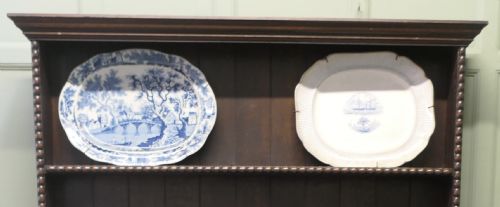
Households displayed large chargers on dining sideboards, walls, or dressers to signal social standing and taste.
Some served meats or communal dishes at formal tables, while others functioned purely as decorative art objects.
How do I live with a ceramic charger?
Support heavy earthenware chargers with stable wall hangers designed for large diameters or secure them on deep plate stands.
Keep these historic pieces away from direct sunlight and moisture to protect the fragile tin glaze and hand-painted surfaces.