




Georgian Cellarette on Legs
A georgian cellarette on legs provides secure bottle storage and bottle cooling, serving wine at the dining table with timber craftsmanship.
Georgian Cellarette on Legs
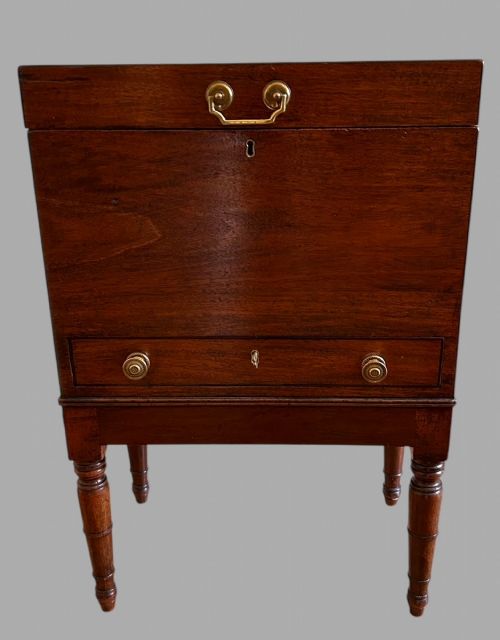
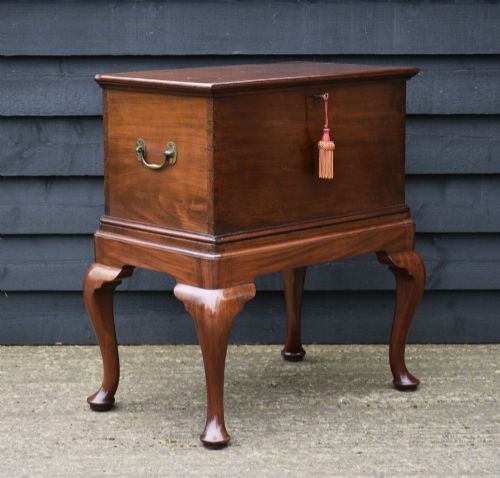
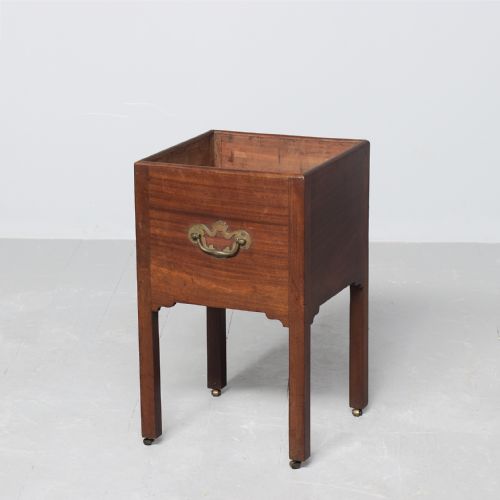
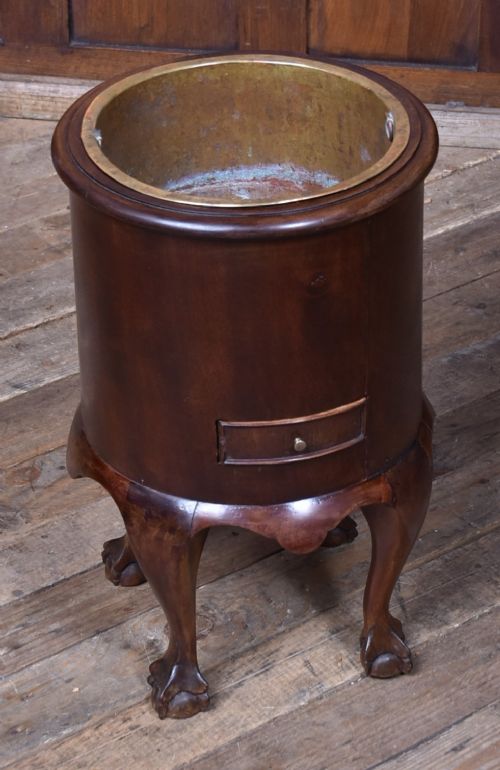
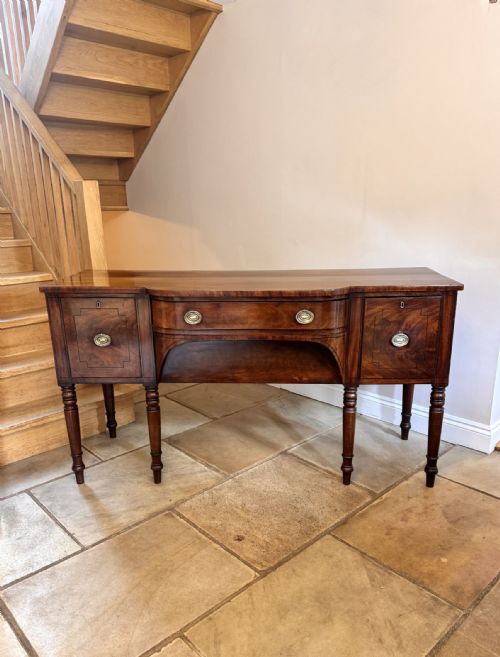
A georgian cellarette on legs takes the form of a freestanding timber box or vessel raised on a stand, designed to hold wine bottles in dining rooms. The pieces appearing here span the Georgian, Regency, and Victorian periods, alongside related sideboard forms and jardinières.
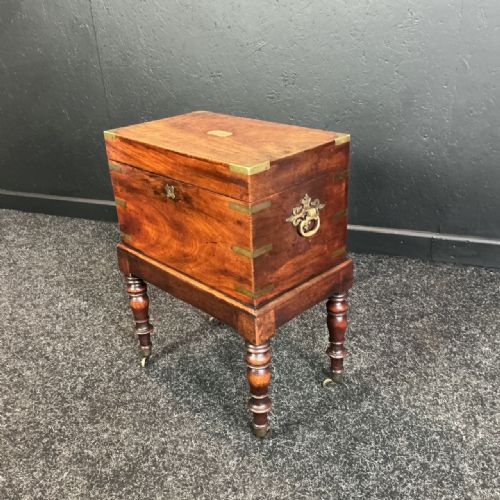
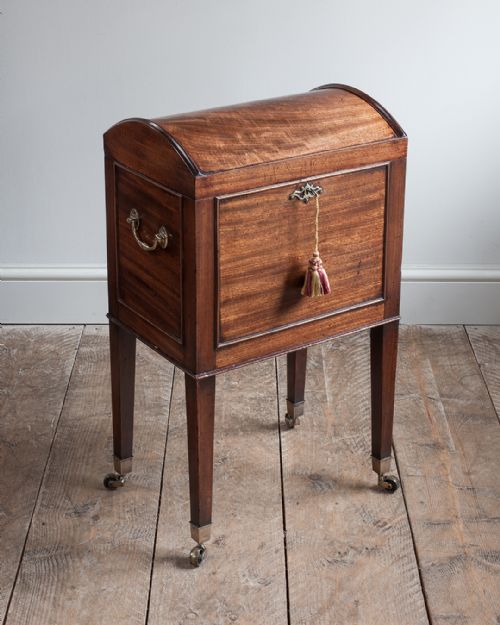
Most examples present as mahogany boxes, occasionally featuring oval, serpentine, or sarcophagus outlines. Makers constructed these containers to sit on distinct legs or stands, though some items integrate the storage directly into sideboard furniture.
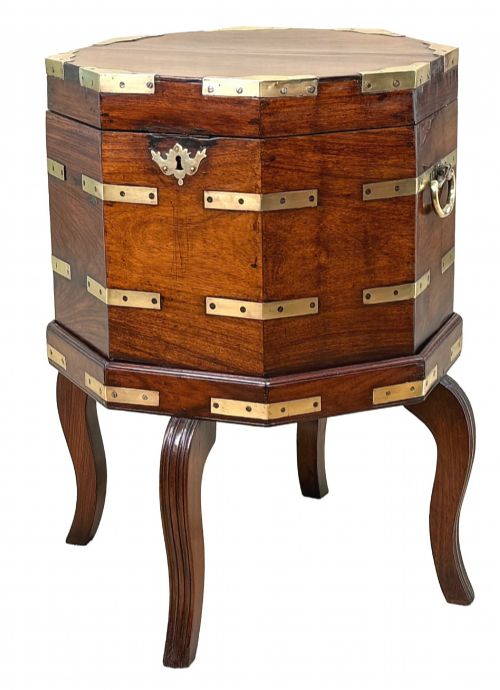
Originating primarily from English workshops, these items served the practical purpose of holding ice and bottles near the dining table. Buyers frequently encounter variants incorporating brass banding, boxwood inlay, and lead or zinc linings.
How they were made
Cabinet makers utilised solid and figured timbers like flame mahogany, padouk, and rosewood, often enhanced with satinwood banding and boxwood inlay. These woods were selected for their rich grain patterns and durability in domestic settings.
Metal components such as brass straps, handles, and ormolu mounts reinforced the timber structures and secured the joints. Metal liners, including zinc, protected the wood from melting ice and moisture when used as wine coolers.
The materials recorded across these listings include mahogany, satinwood, brass, zinc, padouk, and boxwood inlay.
What varies in quality
The sophistication of the timber selection distinguishes finer examples, particularly those employing symmetrical flame mahogany or intricate marquetry patterns. Finer construction also shows in the precision of boxwood inlay and the integration of brass mounts.
Proportion and architectural detail separate standard boxes from exceptional commissions. Refined pieces demonstrate careful attention to the joinery of the legs and the shaping of serpentine or oval bodies.
Gillows
The Georgian Cellarette on Legs Glossary
- Cellarette
- A lockable container used for storing wine bottles near the dining table. These vessels often incorporate interior partitions for individual bottles.
- Wine cooler
- A container designed to hold ice and bottles for chilling wine during meals. They frequently feature metal linings to contain water.
- Flame mahogany
- A veneer cut from timber where the grain creates a distinctive flickering flame pattern. Cabinet makers used this on prominent exterior surfaces.
- Boxwood inlay
- Narrow strips or motifs of contrasting pale wood embedded into the primary timber surface. This technique created geometric or floral borders.
- Sarcophagus shaped
- A container design featuring a sloping lid and flared body reminiscent of antique stone coffins. Regency makers favoured this profile for large cellarettes.
Georgian Cellarette on Legs: Frequently Asked Questions
What is a georgian cellarette on legs?
A georgian cellarette on legs is a timber container raised on a stand, designed to hold and cool wine bottles during dining.
These pieces combine functional storage compartments with decorative cabinet work suited to period dining rooms.
How were these used originally?
Servants filled the interior compartments with ice and bottles to keep wine chilled before serving it at the table.
The lockable lids secured expensive imported vintages from household staff.
How do I identify a Regency piece?
Regency items frequently display bolder classical motifs, brass paw feet, and sarcophagus shapes.
Makers of this era relied heavily on figured flame mahogany and heavy brass handles.
Are liners original?
Many surviving pieces retain metal linings made of zinc or lead to hold ice and water.
These linings show signs of wear consistent with holding bottles over long periods.
Where should I place one?
These pieces function well as freestanding tables, side cabinet surfaces, or decorative planters in living spaces.
The interior compartments offer practical storage for household items.