
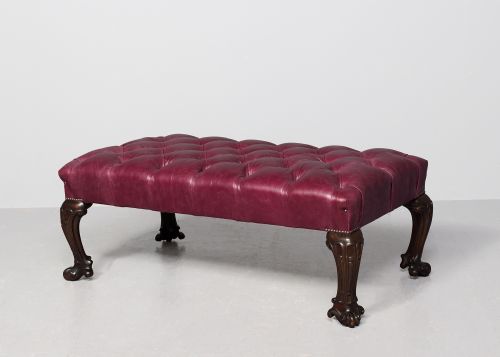
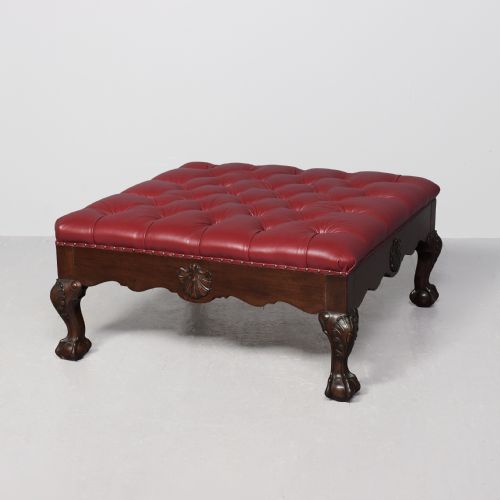
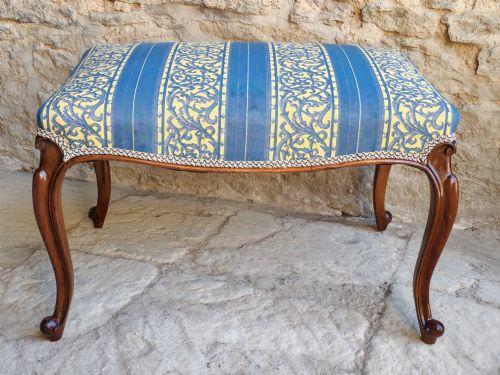
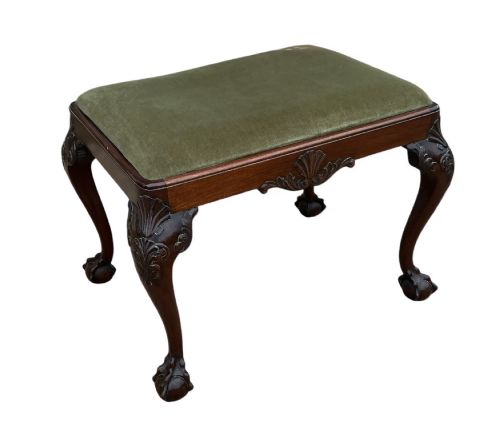
Georgian Carved Stool
A georgian carved stool brings the substantial presence of eighteenth and nineteenth century seating into a room with understated authority.
Georgian Carved Stool
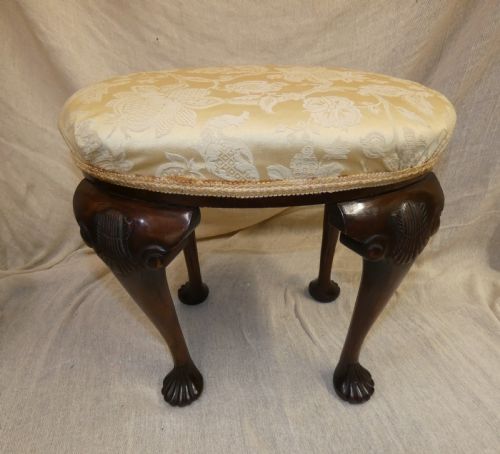
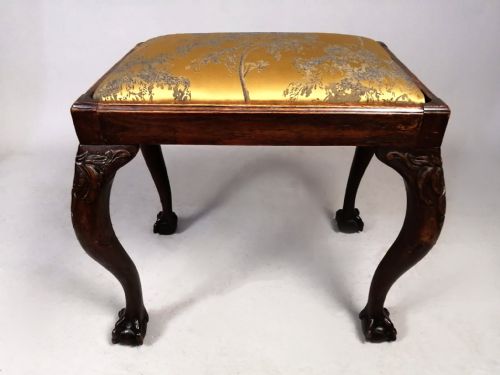
The versions most commonly met on this page span genuine eighteenth century origins as well as later nineteenth and early twentieth century interpretations in the Chippendale and Georgian styles. Materials range from traditional hardwoods like mahogany, walnut, and oak to painted pine and exotic timbers.
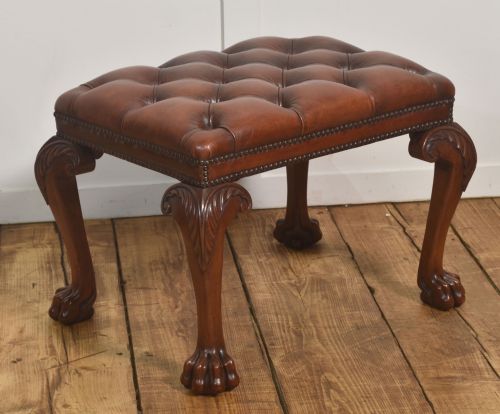
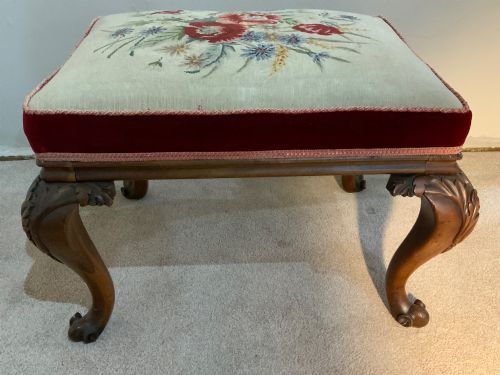
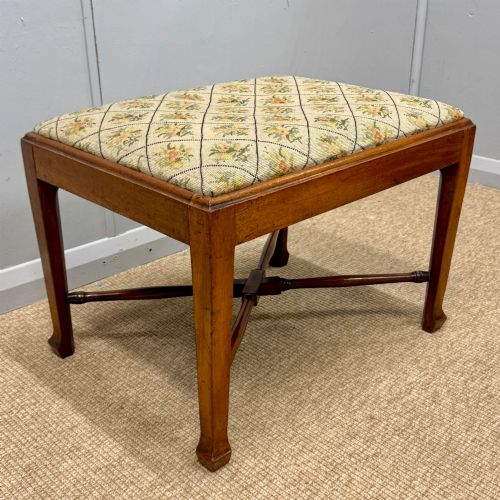
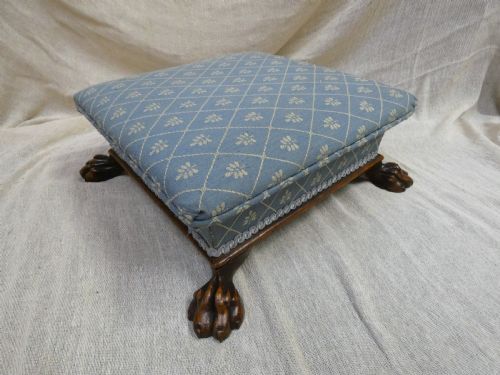
Buyers encounter forms varying from simple vernacular designs with sculpted wooden seats to grand upholstered frames covered in leather, velvet, or needlework textiles. Each piece reflects the domestic habits of its period, whether used at a dressing table, beside a bed, or in a reception room.
Materials and construction methods
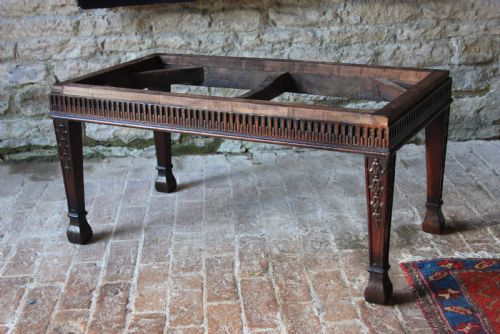
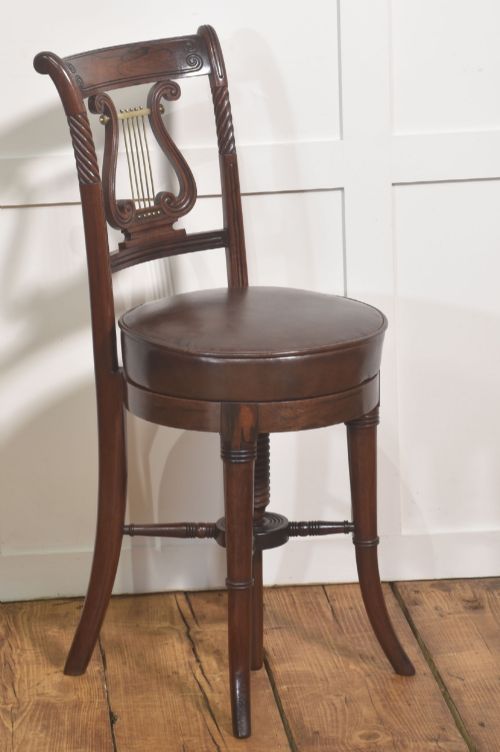
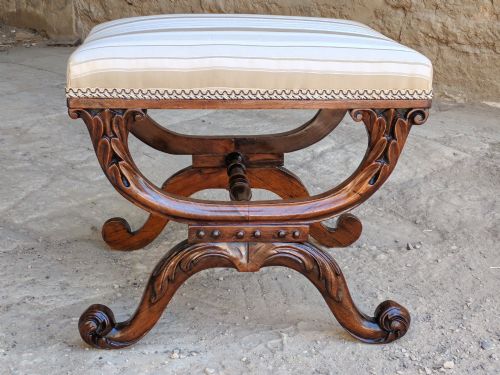
Makers utilised dense timbers such as mahogany, walnut, oak, elm, and rosewood to construct the structural frames of these stools, ensuring stability and longevity. Joinery methods included traditional joint construction and cross stretchers to reinforce the legs against lateral movement.
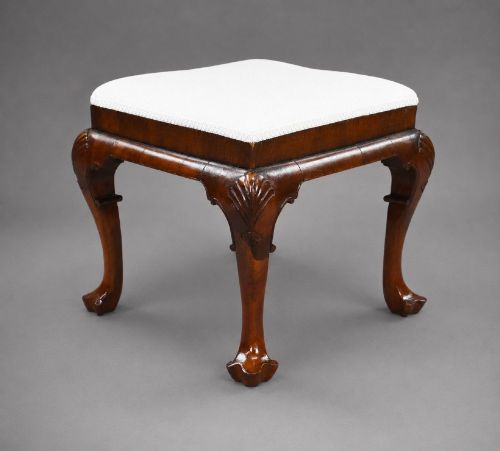
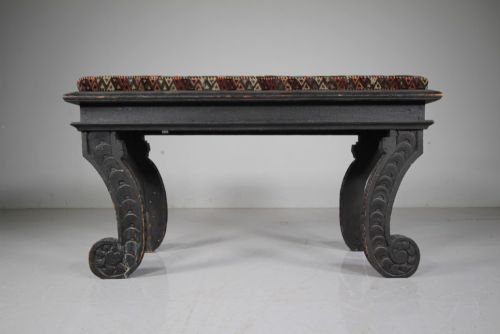
Carving was executed directly into the solid wood of the frame, detailing elements like cabriole legs, scrolled feet, and shaped rails. Upholstered variants were finished with textile, leather, hide, or needlework covers fixed over padding.
Listings feature stools spanning the eighteenth, nineteenth, and early twentieth centuries, constructed from mahogany, walnut, oak, and rosewood.
Assessing quality in carved seating
The distinction between standard examples and superior pieces rests on the crispness of the hand carving and the selection of timber figure. Dense grain in mahogany or walnut and deeply undercut wooden ornament indicate superior workshop execution.
Proportion and structural integrity also divide the range, with well-balanced frames retaining their original stretchers and joints offering greater integrity. Original surface patination and authentic period upholstery materials elevate the standing of a piece.
Miles & Edwards
The Georgian Carved Stool Glossary
- Cabriole leg
- A furniture leg that curves outward at the knee and tapers inward toward the foot, often finishing in a pad or claw.
- Cross stretcher
- Wooden rails connecting the legs near the base in an X-shape to provide structural reinforcement.
- Close stool
- A portable indoor commode disguised as a small chest, box, or stool with a seat lid.
- Curule
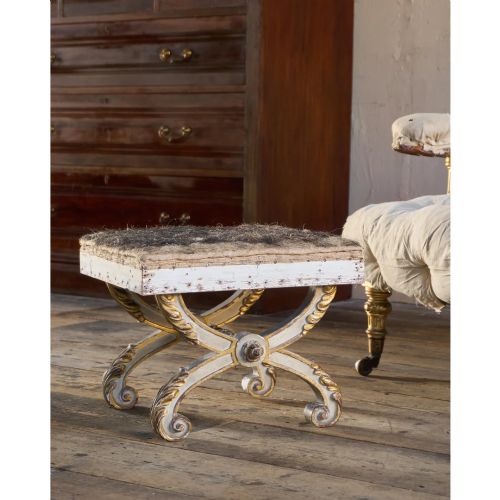
- An X-shaped frame design derived from ancient Roman magistrate seats, featuring intersecting curved legs.
- Joint stool
- An early form of wooden stool constructed with mortise and tenon joints held together by wooden pegs.
Georgian Carved Stool: Frequently Asked Questions
What is a close stool used for?
A close stool served as an indoor chamber seat during the eighteenth and nineteenth centuries, often taking the form of a small bedside chest or box with a lid. It combined practical sanitation needs with the refined appearance of standard domestic furniture.
Over time, many of these enclosed wooden frames lost their interior receptacles and survived simply as low stools or decorative stands within period interiors.
How do I tell an original eighteenth century stool from a later revival piece?
Distinguishing an eighteenth century piece from a later nineteenth or early twentieth century revival version relies on examining the timber patination, tool marks, and construction wear. Genuine period pieces exhibit natural ageing and hand-carved details appropriate to walnut or mahogany of that era.
Revival pieces often display different joinery methods, machine assistance in the carving, or secondary woods consistent with later manufacturing dates found across nineteenth century workshops.
Where should I place a window seat at home?
Window seats and long stools suit low sills, hallway spaces, or the foot of a bed where their long proportions complement architectural lines without obstructing views. Their upholstered tops provide convenient seating or resting surfaces in reception rooms.
Placing them away from direct sunlight protects sensitive antique fabrics, leather covers, and polished timber surfaces from fading.
What woods were used for these stools?
Cabinetmakers constructed these stools primarily from durable hardwoods including mahogany, walnut, oak, elm, and rosewood. More unusual examples featured burr maple, yew wood, or painted pine depending on the regional origin and fashion of the period.
These timbers provided the structural strength required for carved cabriole legs, X-frames, and weight-bearing seats.