
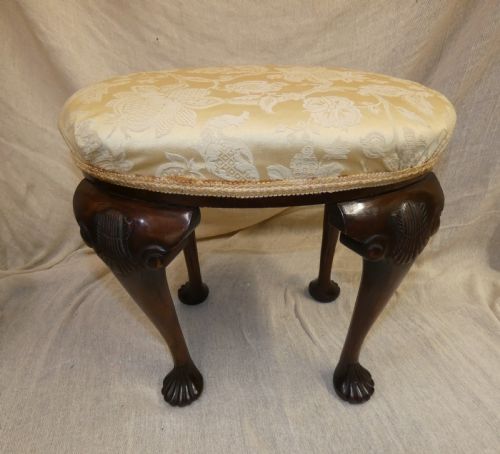


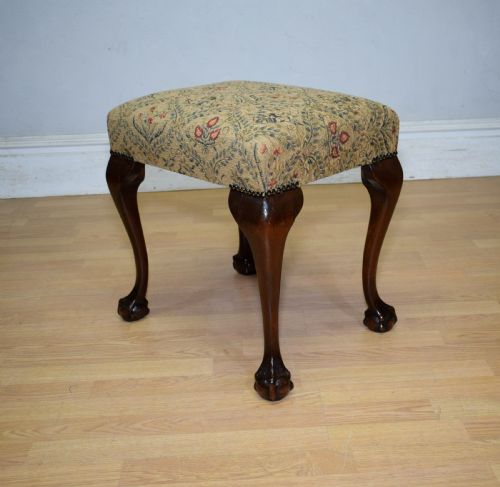


Chippendale Style Vanity Stool
These chippendale style vanity stool pieces combine solid timber frames with traditional upholstery, offering functional seating with classic decorative detail.
Chippendale Style Vanity Stool
A chippendale style vanity stool sits in dressing rooms or bedrooms, providing a low seat for daily grooming routines. These pieces serve as functional bedroom furniture while bringing traditional carved timber details into private spaces.
Buyers browsing this selection will frequently encounter mahogany and walnut frames produced across several distinct eras. The inventory spans late nineteenth-century interpretations up to pieces from the early twentieth century, alongside earlier examples.
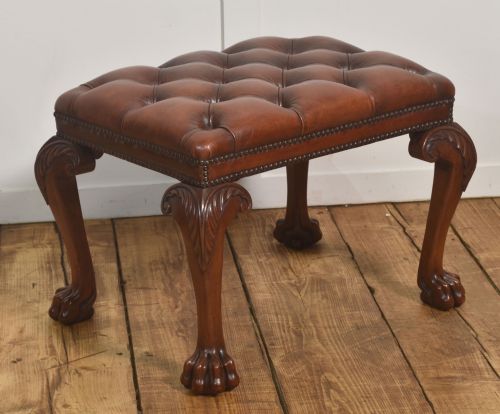
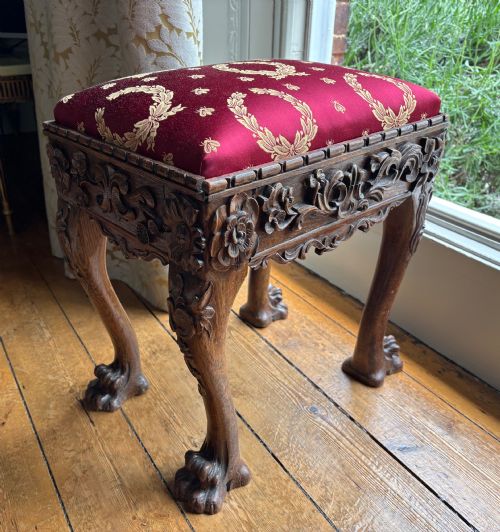
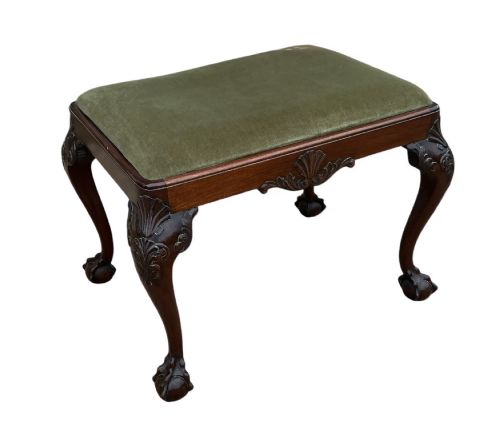
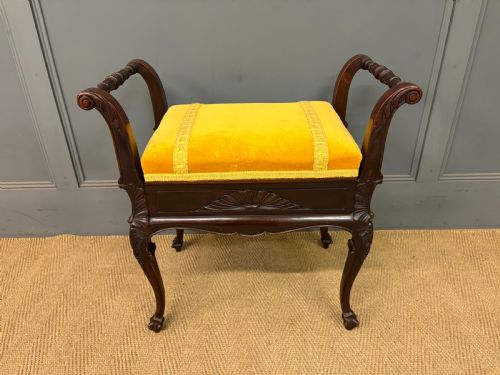
Makers working in the Chippendale style produced dressing stools, footstools, and piano stools with upholstered tops. These forms vary from plain timber frames to heavily carved structures covered in fabric, leather, velvet, or damask.
Materials and construction
Frames rely on dense hardwoods, principally mahogany and walnut, selected for their strength and suitability for intricate carving. Craftsmen shaped these timbers into sturdy legs and rails designed to support frequent daily use.
Upholstery materials range from simple woven textiles to patterned damask, velvet, and leather. These coverings are fixed over padded seats using traditional methods to ensure a firm and comfortable surface.
Many of these sturdy little seats outlived the dressing tables they once matched, spending centuries quietly sliding under desks.
Assessing quality
The depth and crispness of the timber carving separate standard examples from finer items. Skilled carvers produced detailed flourishes along the legs and rails that catch the light and display high precision.
The choice of upholstery material and the firmness of the seat padding indicate the original tier of production. Superior pieces often feature durable leather or heavy damask secured tightly over well-sprung or padded foundations.
The Chippendale Style Vanity Stool Glossary
- Damask
- A reversible figured fabric traditionally used for upholstery. This textile adds texture and pattern to the top of the stool.
- Dressing Stool
- A low seat designed for use at a dressing table or vanity. These pieces match the height required for comfortable grooming.
- Mahogany
- A durable tropical hardwood with a reddish-brown colour. This material forms the primary structure for many traditional seating pieces.
- Revival
- A design movement that reinterprets earlier historical styles. Items from these periods imitate eighteenth-century aesthetics using later nineteenth and twentieth-century production methods.
Chippendale Style Vanity Stool: Frequently Asked Questions
What is a chippendale style vanity stool used for?
These pieces provide low seating positioned in front of a dressing table or vanity mirror. They function primarily as practical furniture for personal grooming.
Beyond bedrooms, smaller versions also serve as footstools or piano seating in traditional living spaces.
How do you date a mahogany stool?
Dating relies on examining the timber grain, tool marks left by woodworkers, and the style of the joinery. Nineteenth-century pieces often display different wear patterns compared to early twentieth-century reproductions.
The specific type of upholstery fabric and underlying padding materials also provide clues regarding the manufacturing era.
Are these stools comfortable for daily use?
The upholstered top provides a padded surface designed for sitting during grooming tasks. Leather, velvet, and damask coverings offer varying textures while maintaining a firm foundation.
Most pieces are built with sturdy hardwood frames that support regular seating without shifting.
What timber was used for these frames?
Makers predominantly utilised mahogany and walnut for their strength and fine grain structure. These hardwoods allowed craftsmen to execute detailed carvings along the legs and rails.
The natural timber colour was often polished to a warm finish that highlighted the grain.