


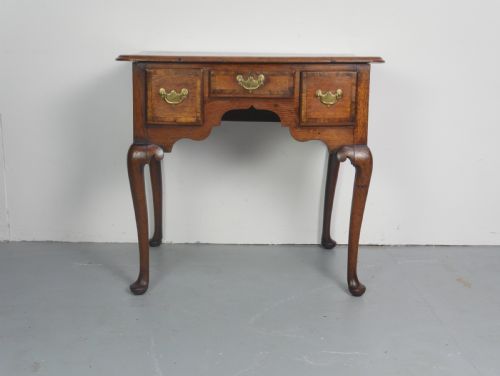

Georgian Carved Oak Lowboy
A georgian carved oak lowboy is a sturdy small table with drawers, built for daily service and prized for honest timber grain.

Georgian Carved Oak Lowboy
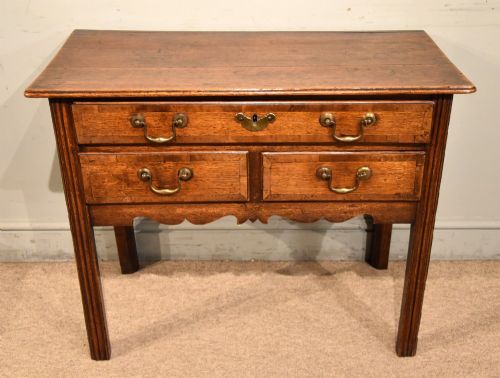
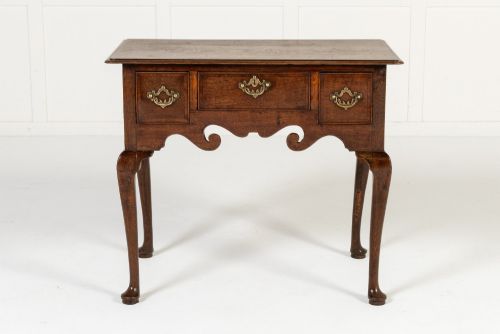
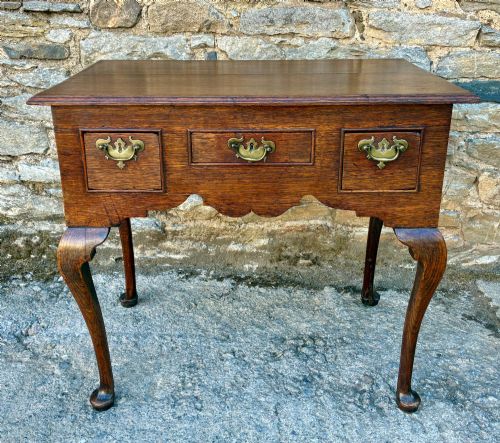
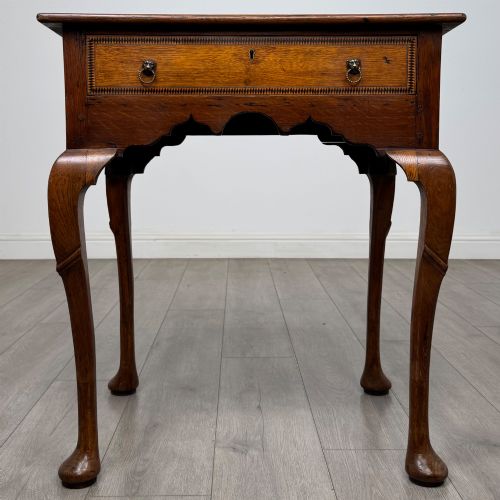
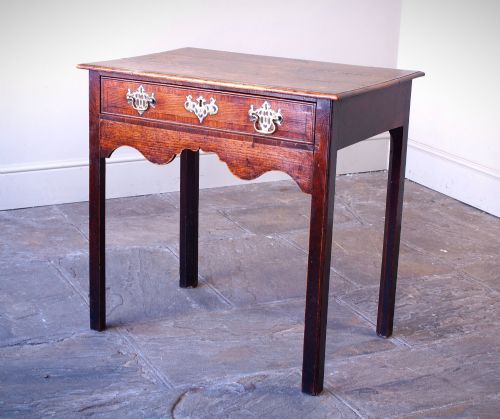
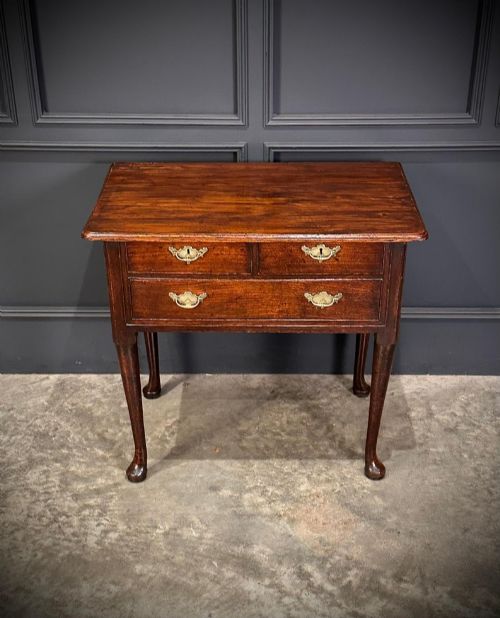
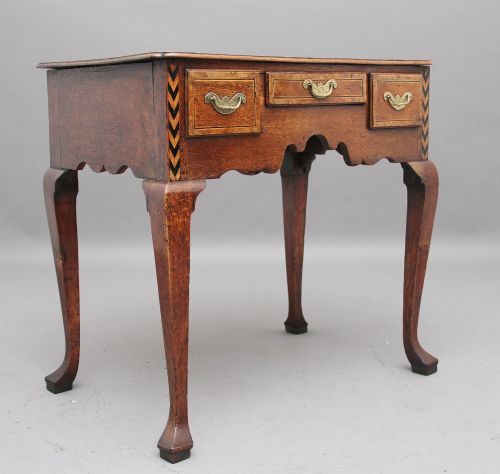
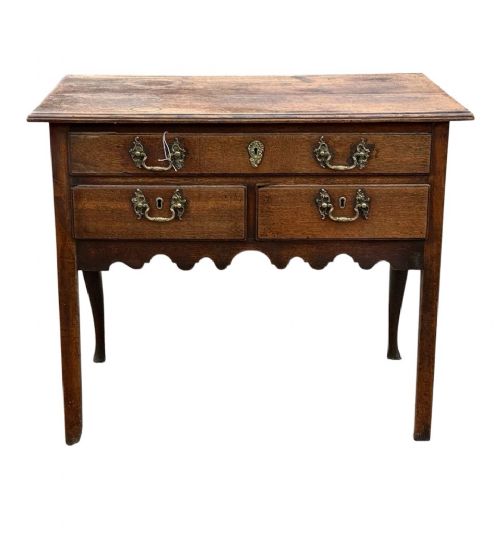
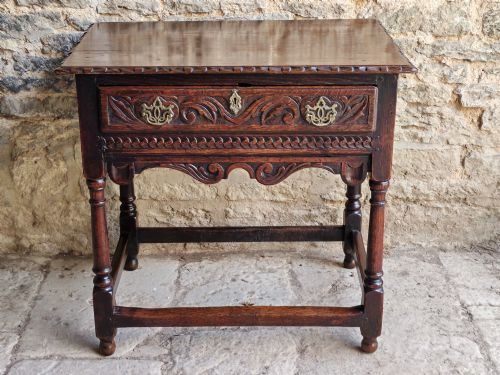
A georgian carved oak lowboy takes the form of a low side table or dressing table fitted with drawers beneath the top surface. You will frequently encounter examples spanning the eighteenth century, often associated with country houses or regional workshops.
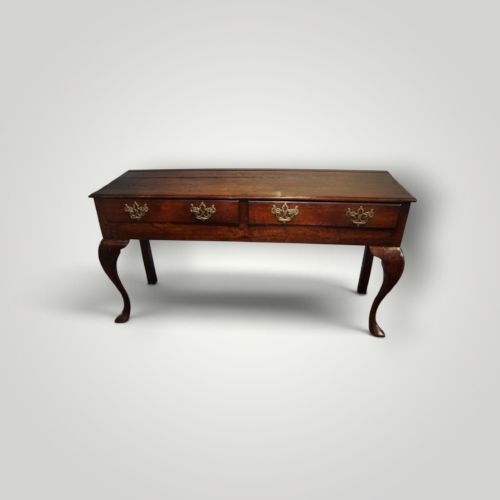
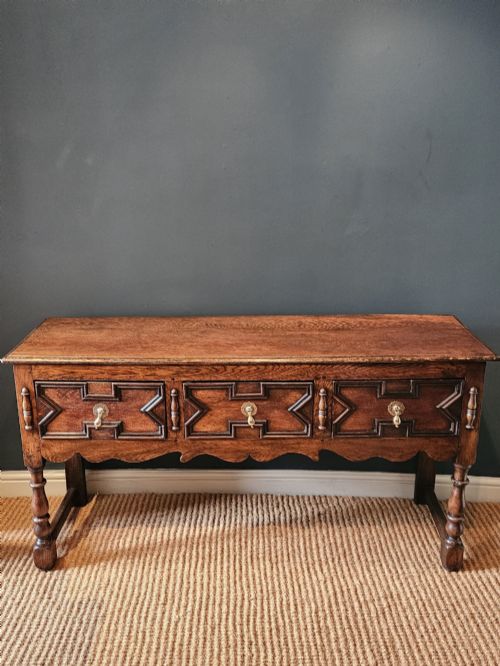
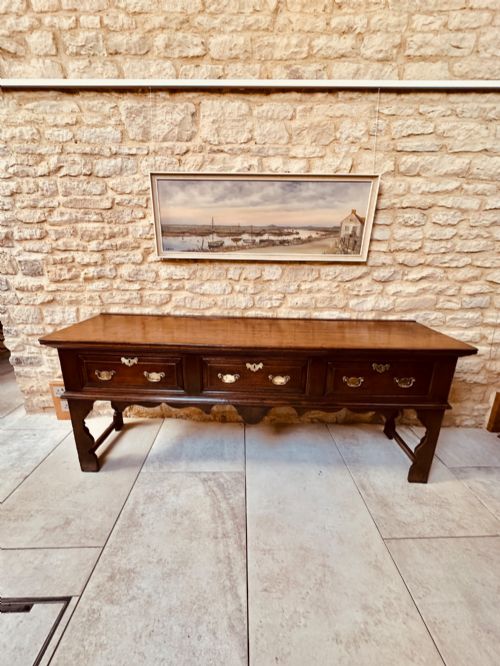
The inventory on this page ranges across classic lowboys, dresser bases, and side tables built from solid timbers. Makers shaped these pieces to serve practical storage functions in bedrooms and parlours alike.
Regional variations appear across the selection, including Welsh and Lancashire forms alongside Isle of Man pieces. These regional pieces share a heavy reliance on native hardwoods and straightforward structural joinery.
How they were made
Carpenters constructed these tables primarily from solid oak, frequently incorporating fruitwood or walnut for contrast and detail. Brass drop handles and escutcheons secured the drawer fronts, while iron fixings occasionally reinforced internal joints.
Surface ornamentation relied on geometric moulding, relief carving, and timber inlay rather than heavy applied decoration. Legs take various structural forms, including cabriole shapes and blind silhouette designs.
What varies in quality
The integrity of the timber and the crispness of the carved details set superior examples apart from standard utility pieces. Finer tables display carefully selected grain patterns across the drawer fronts and top boards.
Proportion and stance dictate the visual success of the table, with balanced cabriole legs or neat geometric mouldings elevating the piece. Original brass hardware and untouched drawer linings add significant weight to the standing of any given lowboy.
Gillows
The Georgian Carved Oak Lowboy Glossary
- Lowboy
- A small kneehole dressing table or side table featuring one or more rows of drawers beneath the top board. These tables typically stood against walls in bedrooms or formal dressing rooms.
- Cabriole leg
- A furniture leg that curves outward at the knee and tapers inward toward an ankle or foot. This form draws inspiration from animal limbs and frequently appears on eighteenth-century examples.
- Dresser base
- A lower sideboard structure equipped with multiple drawers and open space beneath, sharing construction traits with lowboys. These pieces served domestic storage needs in country kitchens and dining rooms.
- Geometric moulding
- Raised decorative profiles applied to drawer fronts or frames in rectilinear patterns. This technique creates depth and shadow play across the timber surface.
- Fruitwood
- Dense native timber harvested from orchard trees such as pear or apple, utilised for secondary woods or contrast details. It offers a smooth texture distinct from coarse-grained oak.
Georgian Carved Oak Lowboy: Frequently Asked Questions
What is a lowboy used for?
A lowboy served as a compact dressing table or small side table in domestic rooms. People used the shallow drawers to store personal items, linens, or writing materials.
Over time, these versatile tables moved between bedrooms, hallways, and living spaces as utility needs shifted within the household.
How do I date an oak lowboy?
Dating relies on observing construction methods, timber choice, and leg styles such as cabriole or straight supports. Eighteenth-century pieces often show hand-cut dovetails and pegged frame construction.
Later revival pieces from the twentieth century utilise different sawing marks and machine-standardised joins that help distinguish them from period originals.
Where were lowboys made?
Makers constructed these tables across English provincial workshops, country houses, and regional centres like Wales and Lancashire. Local cabinet makers utilised native woods available in their immediate surroundings.
Regional traits often reveal themselves in the specific drawer configurations and leg profiles chosen by the maker.
How do I care for antique oak?
Maintain antique oak furniture by keeping it away from direct heat sources and sudden humidity changes. Natural beeswax applied sparingly helps preserve the dry timber surface without sealing it.
Avoid commercial polishes that contain silicone, as they build up residue on the historic wood grain over time.