



Warm Brown Oak Lowboy
A warm brown oak lowboy is a compact side table with drawers, prized for practical surface space and rich timber grain.

Warm Brown Oak Lowboy
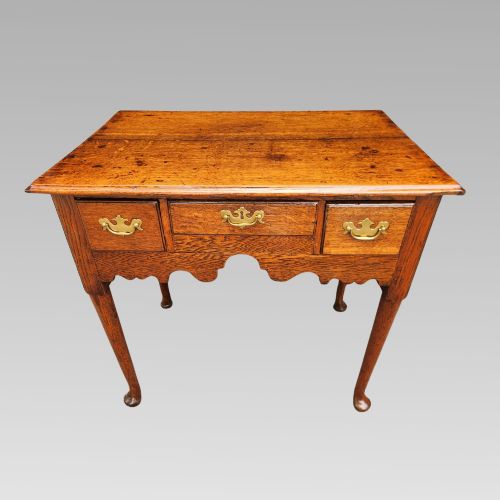
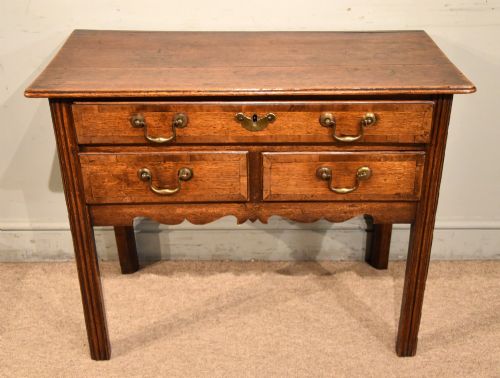
When you search for a warm brown oak lowboy, you find low-standing wooden tables equipped with multiple drawers, often utilised as side tables or dressing surfaces. These pieces emerge predominantly from the 18th century and Georgian periods, showcasing traditional craftsmanship in domestic furniture.
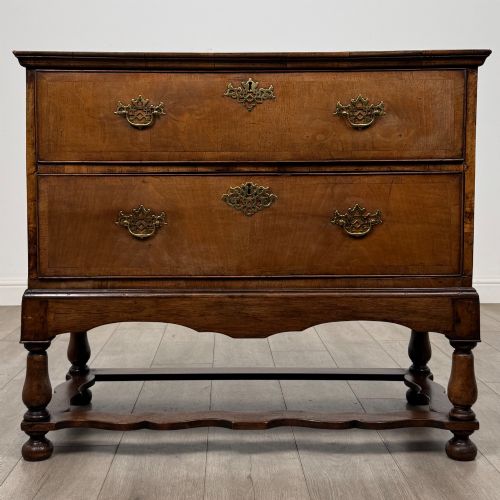
The versions most frequently met on this page combine sturdy oak construction with straightforward proportions. Alongside standard lowboys, the selection includes related forms such as Welsh country side tables, dresser bases, and chests of drawers sharing similar low profiles.
Origins span regional English workshops, Welsh country houses, and continental interpretations like French Provincial designs. Such diversity offers buyers a range of distinct regional characteristics while maintaining the core functional form of a low drawer-equipped table.
Distinctions in quality and finish
Quality rests upon the depth of the timber's grain, the crispness of any carved elements like cabriole legs, and the integrity of the drawer construction. Finer examples display meticulous attention to timber matching and restrained decorative banding.
Proportion and surface patination further distinguish higher-grade pieces. Tables bearing integrated regional traits, such as specific Welsh country or George II styling, often exhibit greater character in their timber surfaces and structural execution.
Warm Brown Oak Lowboy Retail Price Guide 2026
Typical asking prices for warm brown oak lowboy among the pieces listed under this phrase on Sellingantiques today, from the lower quarter to the upper quarter. They describe what is for sale here now, not the wider market.
Listings incorporate regional English pieces alongside Welsh country furniture, utilising materials from native oak to walnut and fruitwood.
The Warm Brown Oak Lowboy Glossary
- Lowboy
- A small table with drawers, standing on legs, typically used as a side table or dressing table in past centuries.
- Cabriole leg
- A furniture leg that curves outward and then tapers inward, frequently ending in a pad or hoof foot.
- Dresser base
- The lower section of a kitchen or dining room storage unit, featuring cupboards or multiple drawers.
- Feather banding
- A decorative inlay technique using narrow strips of wood veneer arranged in a herringbone pattern around drawer edges.
- Patina
- The surface sheen and colour developed on wood over decades of handling, polishing, and natural ageing.
Warm Brown Oak Lowboy: Frequently Asked Questions
Where were lowboys placed in historical homes?
Historically, lowboys served multiple domestic functions in bedrooms as dressing tables or in living spaces as convenient side tables for small items.
Their compact proportions allowed them to fit easily against walls without dominating the room.
How do I care for a historic oak table?
Protect the wood by keeping the table away from direct heat sources and sudden humidity changes that cause timber to warp.
Apply natural beeswax occasionally to maintain the surface sheen without building up heavy chemical layers.
What defines a George II style lowboy?
George II pieces often incorporate shaped aprons and cabriole legs, reflecting mid-18th-century design preferences for curved lines.
These tables balance robust timber construction with refined decorative elements characteristic of the period.
Can I use a lowboy as a modern desk?
The modest height and drawer space make these tables suitable for occasional writing or placement beneath a mirror.
Check the knee clearance beneath the drawers to ensure comfortable seating if used for work purposes.