


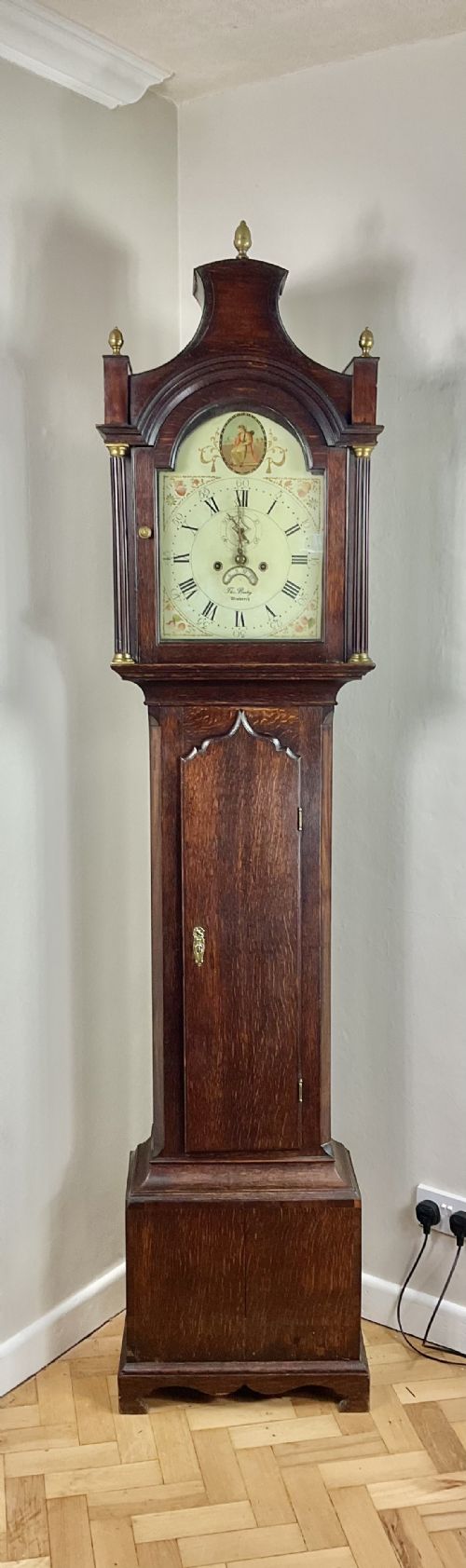


Georgian Carved Oak Clock
A georgian carved oak clock brings the steady tick of the eighteenth century into a room, grounding the space with rich timber and brass dials.
Georgian Carved Oak Clock
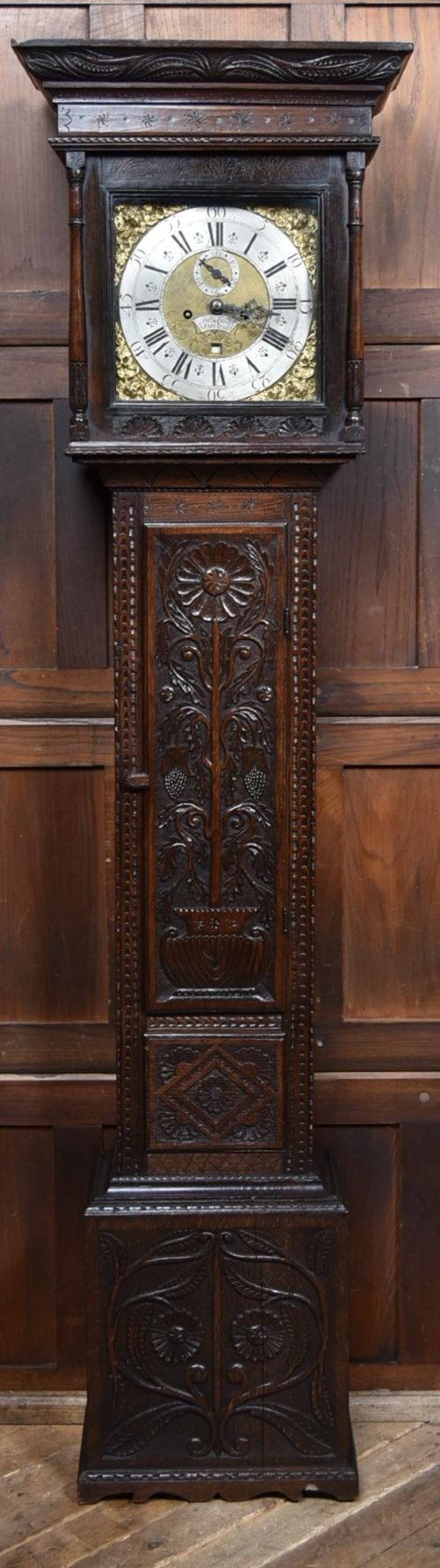
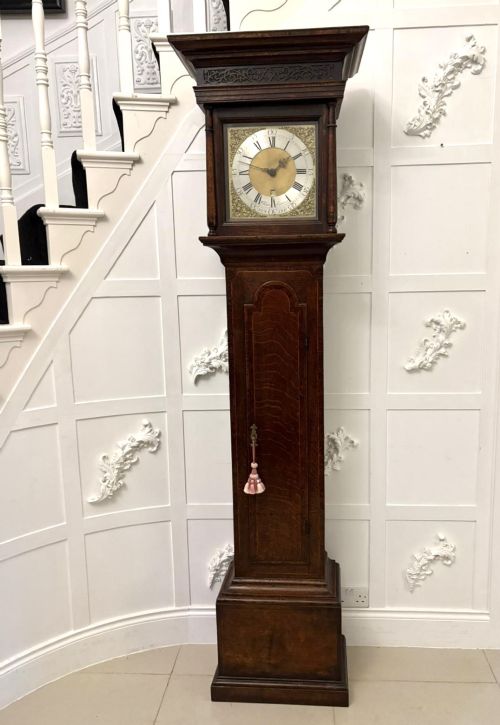
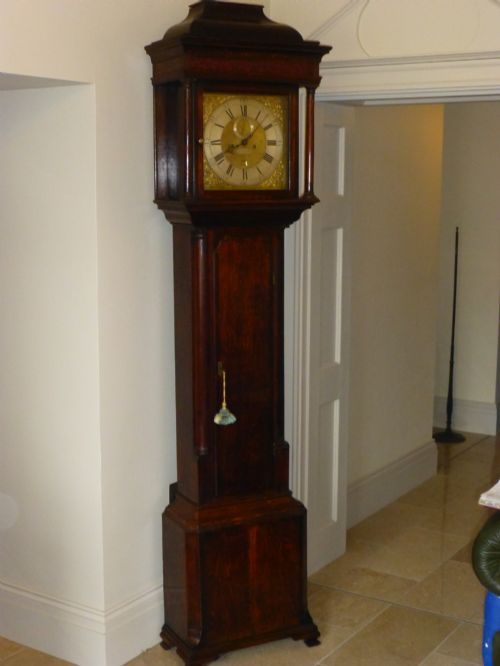
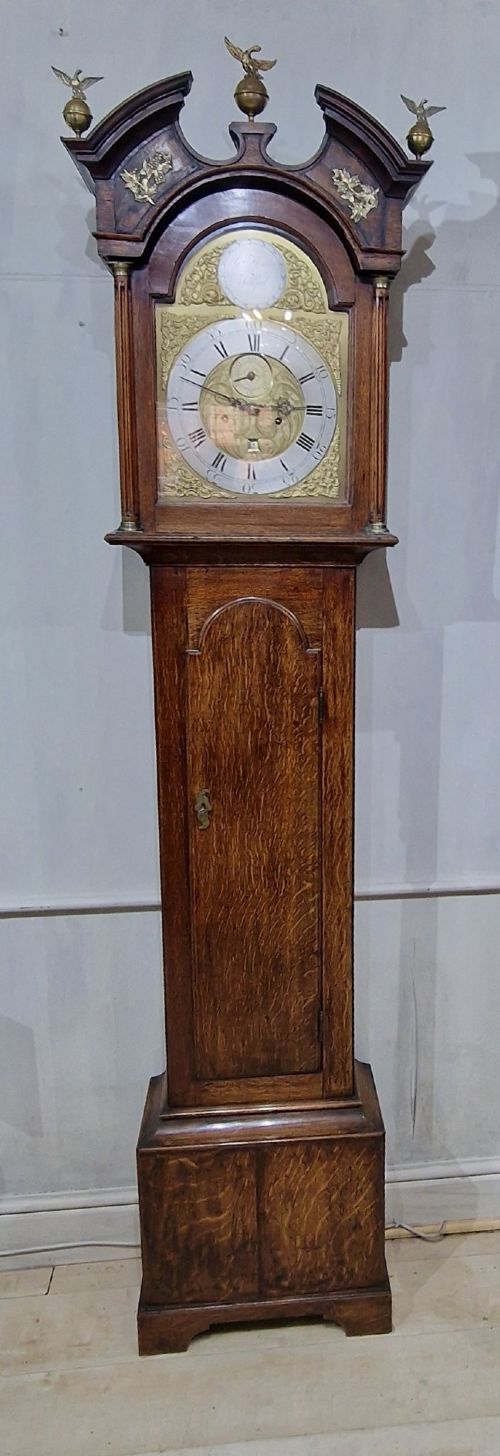
A georgian carved oak clock stands as a traditional floor-standing timekeeper, most frequently encountered as a longcase or grandfather clock from the eighteenth century. These floor clocks combine functional timekeeping with cabinetry, featuring brass or painted dials set within sturdy timber housings.
The pieces seen on this page span the 1750 to 1800 period, though later echoes from the early twentieth century also appear. Buyers will find variations ranging from plain country oak cases to examples enriched with burr oak, walnut, and chequered inlay.
How they were made
Cabinetmakers constructed these clock cases primarily from solid oak, sometimes combining walnut, mahogany, or burr oak for contrast and decorative inlay. Timbers were joined using traditional carpentry methods to house the heavy mechanical movements safely within the trunk.
Dials combined engraved brass plates or painted surfaces protected behind glass doors. Movements utilised weights and pendulums, occasionally operating on an eight-day cycle or single-handed mechanism.
Listings feature oak alongside walnut, mahogany, and burr oak, spanning the eighteenth century to the twentieth century.
What varies in quality
Quality rests upon the crispness of the carving, the proportion of the case, and the sophistication of the dial work. Finer examples display detailed arched brass faces, moon phase complications, or secondary woods like burr oak and walnut.
Simpler regional pieces rely on honest country construction with plain oak panels and single-handed movements. The integration of the hood design and the clarity of the maker's signature on the dial further distinguish the standard of craftsmanship.
Jn° Smith Macclesfd·Richard Corless of Stockport·James Hendrie Falkirk·Samuel Young Nantwich·Robert Darling Melrose
The Georgian Carved Oak Clock Glossary
- Longcase clock
- A tall, weight-driven pendulum clock enclosed in a wooden case, commonly known as a grandfather clock.
- Brass face
- The metal dial plate, often engraved with the maker's name and location, serving as the visual centre of the clock.
- Moon phase
- A dial mechanism tracking the lunar cycle, visible through an arched aperture at the top of the clock face.
- Fusee
- A conical pulley used in clock mechanisms to maintain even tension on the drive chain as the mainspring unwinds.
- Inlay
- A decorative technique inserting contrasting woods, such as mahogany or walnut, into the primary oak surface.
Georgian Carved Oak Clock: Frequently Asked Questions
How do I wind an eight-day clock?
Use the winding key to raise the weights inside the trunk slowly and steadily until they reach the top. Avoid over-winding to protect the internal mechanical cord.
Ensure the pendulum hangs freely and evenly before setting the minute hand to the correct time.
Where should I place a longcase clock?
Position the clock against an interior wall away from direct sunlight, dampness, and rapid temperature fluctuations. Placing it on a solid, level floor ensures the pendulum swings evenly.
Avoid exterior walls, as temperature shifts can affect the wood case and the accuracy of the movement.
What is the difference between single and double handed clocks?
Early movements often relied on a single hand to indicate the hour and approximate minutes. Later developments introduced the minute hand for precise timekeeping.
Both styles reflect the period of production and the complexity of the internal gear train.
How can I tell a genuine eighteenth-century case from a later copy?
Examine the timber grain, construction joints, and backboards for signs of age and tool marks consistent with period cabinetmaking. Original brass dials and movement plates also show authentic wear and engraving techniques.
Later adaptations often mix styles or display mismatched components within the trunk and hood.