
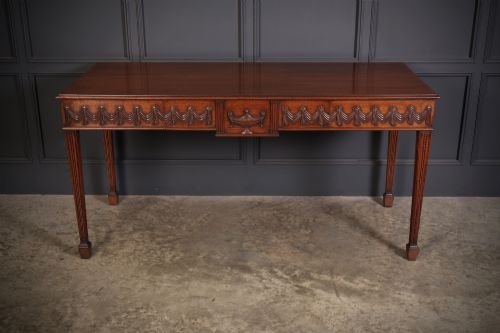
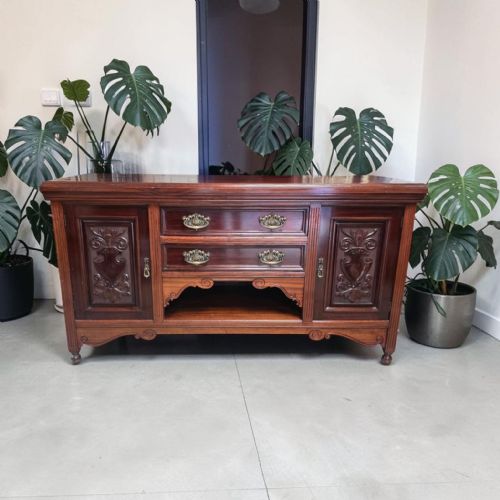
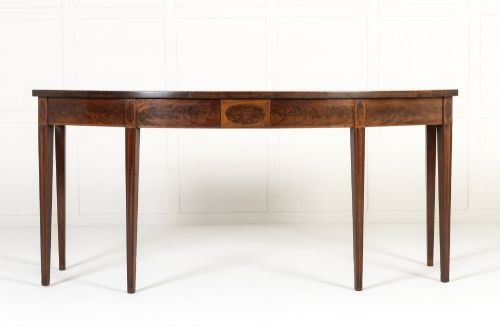
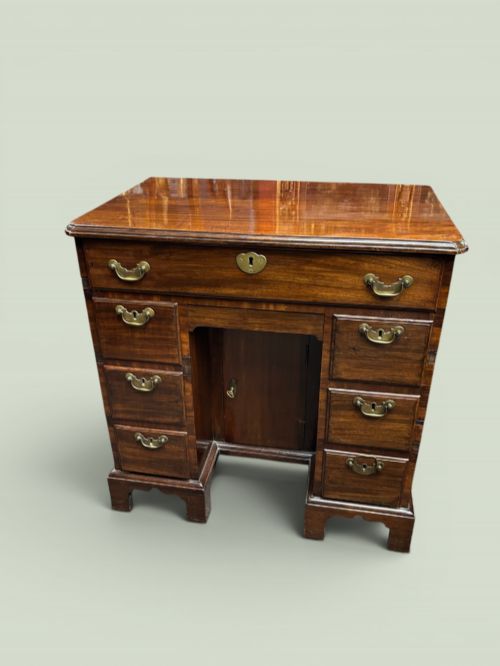
Georgian Carved Mahogany Sideboard
A georgian carved mahogany sideboard is a substantial dining room furnishing built from rich timbers, offering practical storage and timeless proportion.
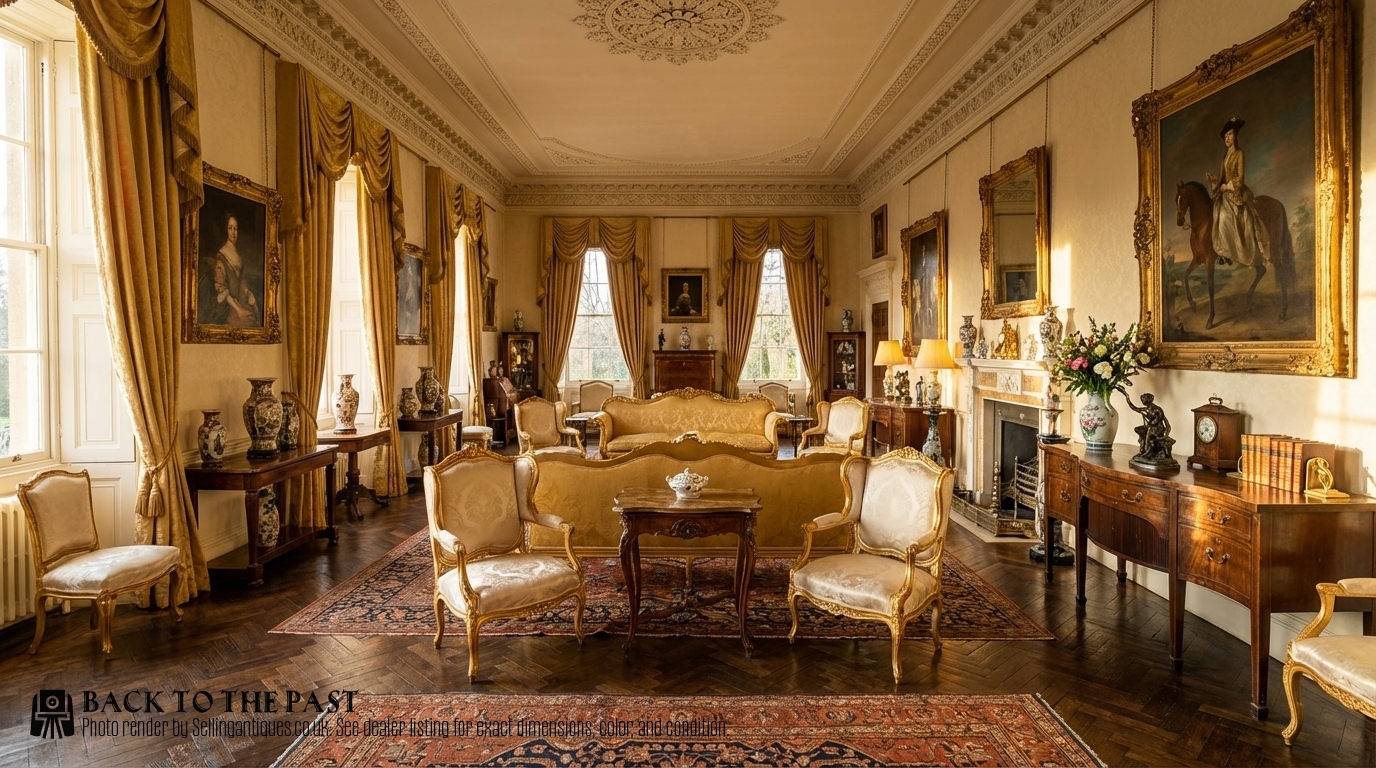
Georgian Carved Mahogany Sideboard
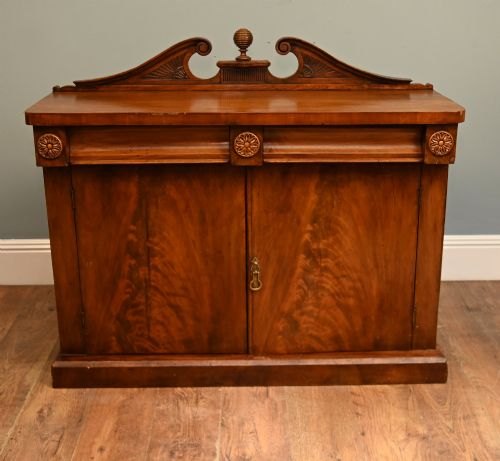
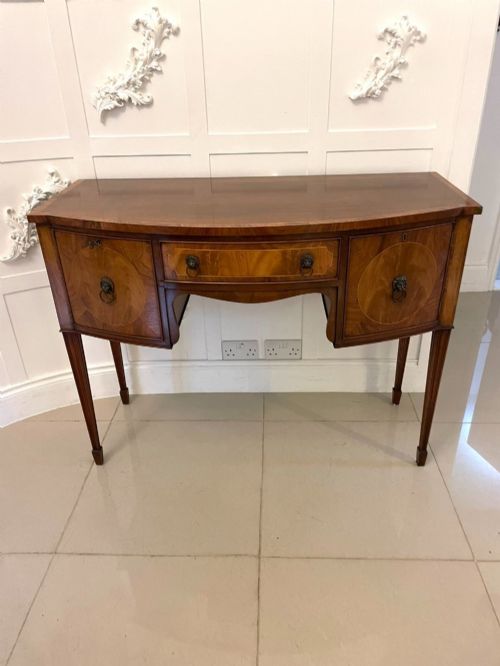
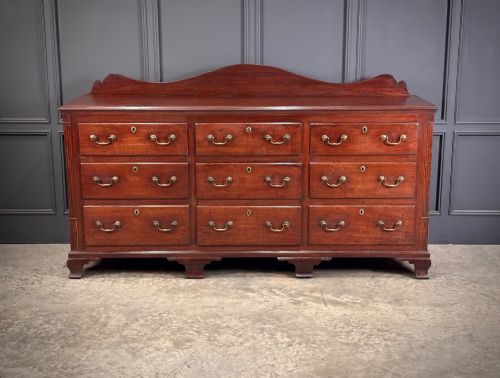
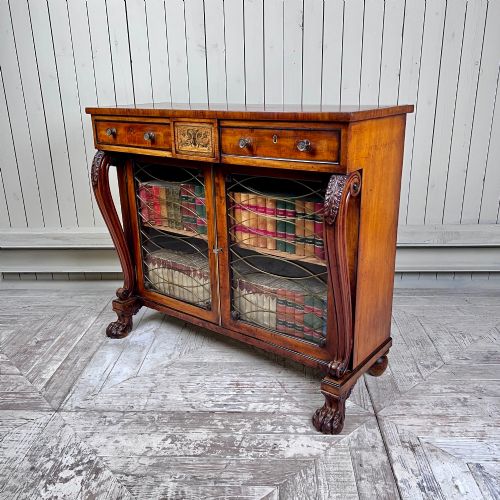
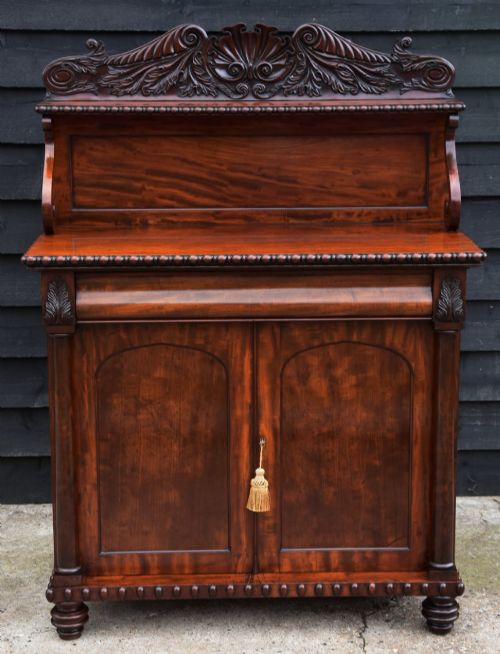
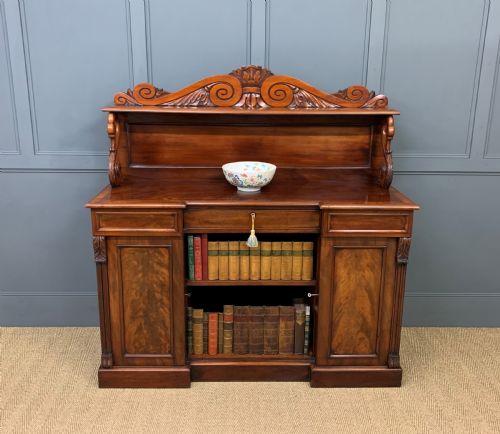
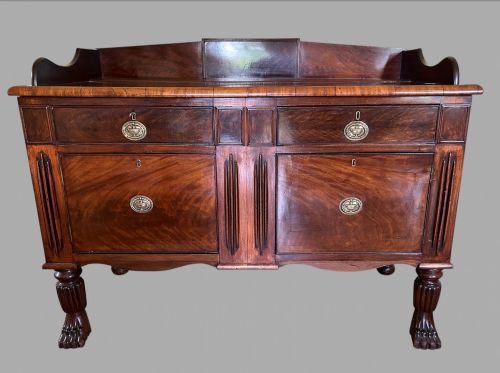
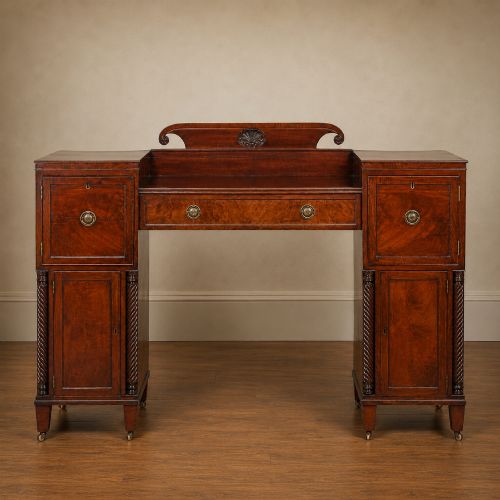
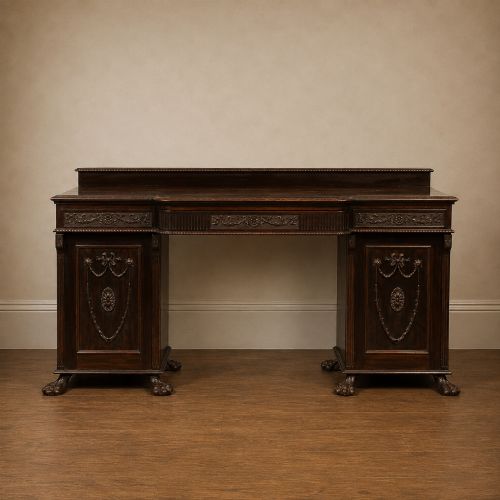
A georgian carved mahogany sideboard is a formal dining room piece designed for serving food and storing tableware. Buyers seeking this phrase encounter serving tables, pedestal sideboards, and cabinets dating across the Georgian, Regency, and later revival periods.
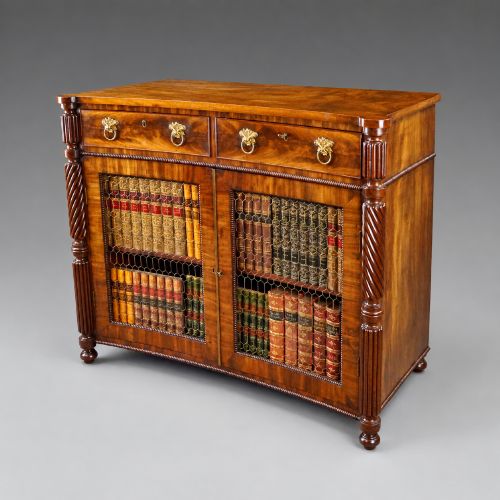
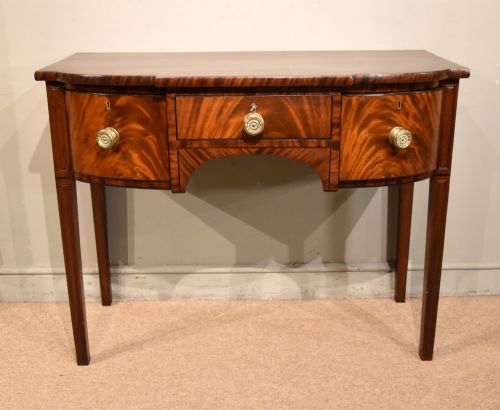
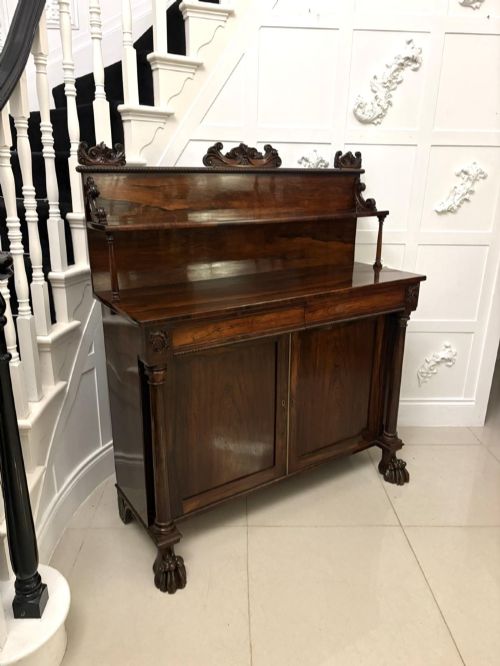
The pieces on this page span several centuries and styles, including Chippendale, Sheraton, Adam, and William IV designs. Alongside traditional sideboards, the listings include console tables, serving tables, and chiffonier bookcases constructed from solid timber and veneers.
Most examples originate from the eighteenth and nineteenth centuries, supplemented by later revival pieces from the Edwardian era and the early twentieth century. These later interpretations continue the classic proportions and decorative motifs established in earlier decades.
What varies in quality
The selection of timber grain largely determines the visual impact of a piece, with highly figured flame mahogany veneers representing a more ambitious standard of cabinetmaking than plain boards. The precision of the joinery and the depth of hand-carved ornamentation further distinguish standard production from exceptional examples.
The integrity of original brass fittings, inlay work, and structural elements preserves the historical character of the furniture. Pieces retaining their polished surfaces and balanced proportions demonstrate the skill of the original workshop.
A tiny miniature sideboard designed as a tea caddy proves that cabinetmakers occasionally practiced their craft on a miniature scale.
M. D. Miller and Sons·Elkington and Co
The Georgian Carved Mahogany Sideboard Glossary
- Flame mahogany
- A veneer cut from the fork of a mahogany tree where the grain pattern creates a flamelike figure. This decorative wood was prized for drawer fronts and cabinet doors.
- Pedestal sideboard
- A large dining room furnishing comprising two distinct pedestals joined by a central serving table or board. This form became prominent during the Regency period.
- Breakfront
- A cabinet or sideboard whose central section projects forward from the flanking outer sections. This architectural arrangement creates varied depth and visual rhythm.
- Chiffonier
- A low cabinet featuring shelves or a bookcase superstructure, commonly fitted with enclosed storage below. These compact pieces served as sideboards or serving surfaces in smaller rooms.
- Stringing
- A narrow inlay of contrasting wood, such as ebony or satinwood, set flush into the surface to outline drawers and panels. This technique adds linear definition to the design.
Georgian Carved Mahogany Sideboard: Frequently Asked Questions
What is a georgian carved mahogany sideboard used for?
These furnishings were designed for the dining room to hold serving dishes, cutlery, and glassware during formal meals. They provided a flat surface for presenting food alongside concealed storage within cabinets and drawers.
Over time, their decorative presence made them popular in hallways and reception rooms as servers and console tables. Today, they continue to function as storage credenzas and display surfaces in domestic interiors.
How do I tell an 18th century piece from a revival piece?
Examination of the secondary timbers, construction methods, and tool marks reveals the age of a piece. Eighteenth-century furniture exhibits hand-cut joints and timber characteristics specific to early workshop practices.
Revival pieces, such as those from the Edwardian period or nineteen-hundreds, often incorporate machine-cut elements and standardised hardware while copying earlier Chippendale or Sheraton styles.
What is the difference between a sideboard and a serving table?
A serving table is an open-frame console without built-in cupboards or enclosed drawers, designed strictly for placing dishes during a meal. Sideboards incorporate integrated storage compartments, pedestals, or banks of drawers beneath the main surface.
Serving tables rely on legs and stretchers for support, whereas pedestal sideboards feature substantial end cabinets connected by a recessed board or shelf.
How do I care for mahogany furniture?
Mahogany requires stable indoor humidity and protection from direct sunlight to prevent the timber and veneer from drying out or fading. Regular dusting with a soft, dry cloth maintains the surface sheen without damaging the polished finish.
Applications of appropriate wax polish nourish the wood periodically. Avoid placing hot or wet items directly on the antique surface to protect the polish and grain.