


Georgian Canterbury
A georgian canterbury is a low, compartmentalised stand built to hold folios, newspapers and sheet music near the hearth.
Georgian Canterbury
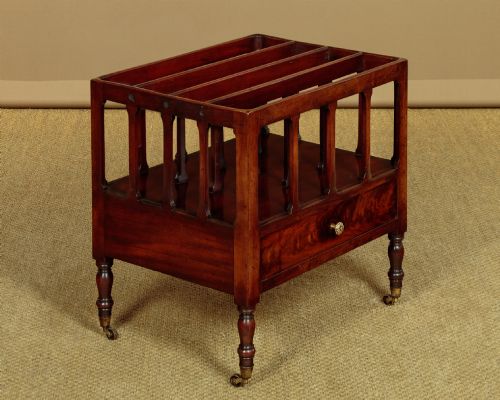
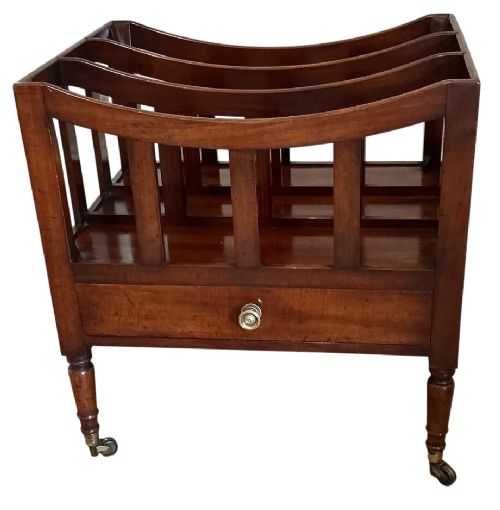
A georgian canterbury is a piece of furniture designed to keep music books, newspapers and periodicals tidy in a domestic room. Most examples found on this page date from the Georgian and Regency periods, spanning the late 18th and early 19th centuries.
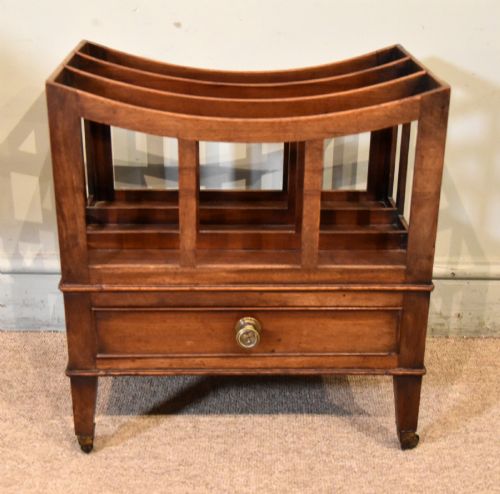
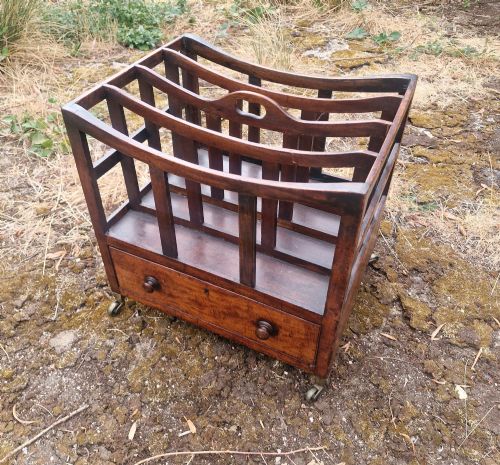
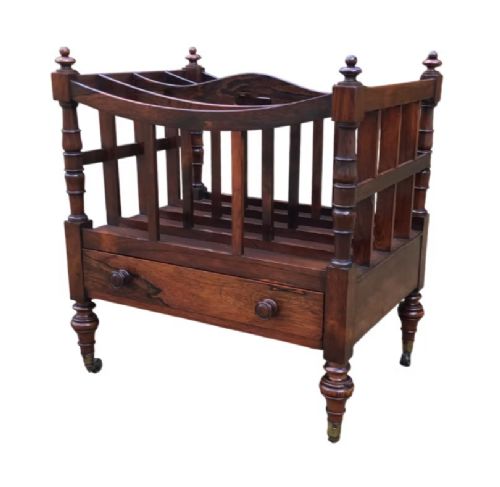
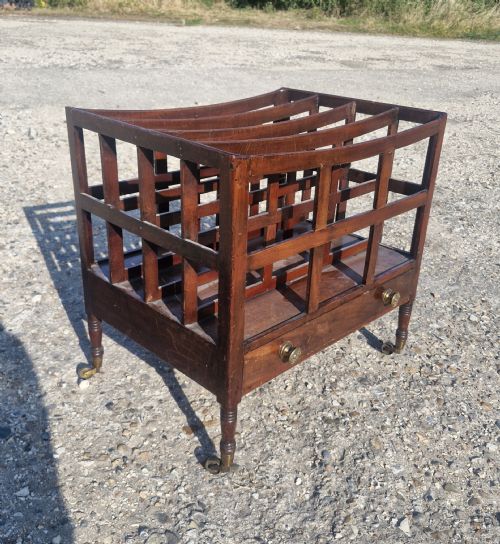
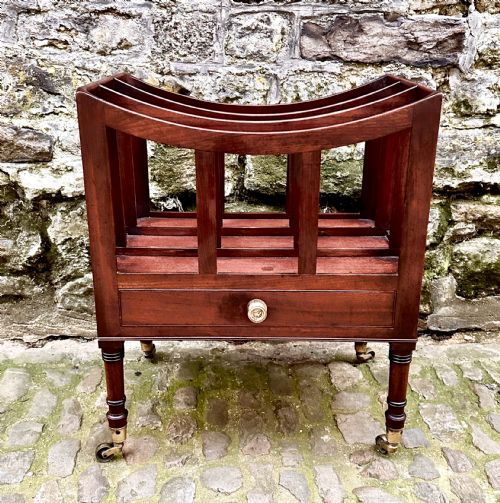
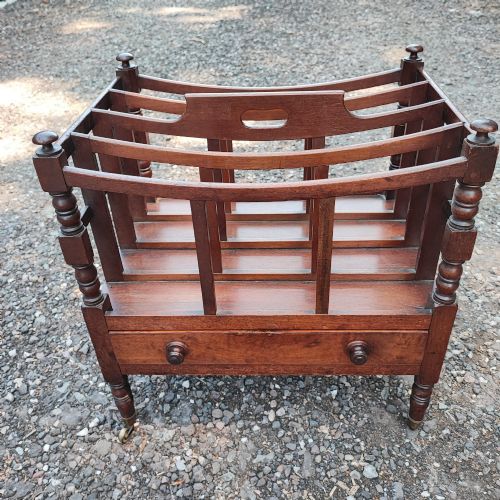
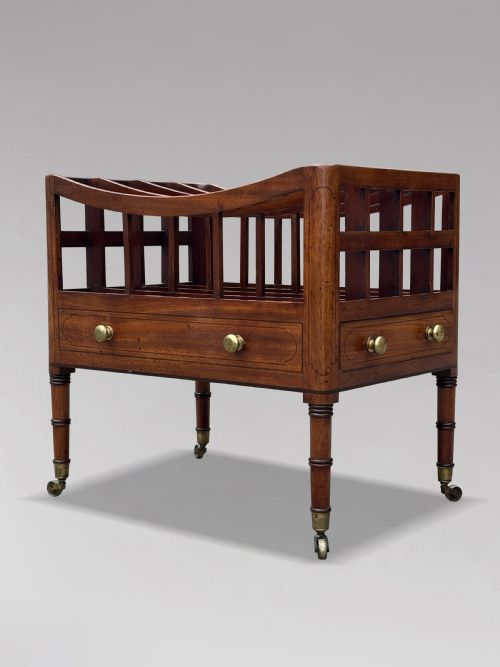
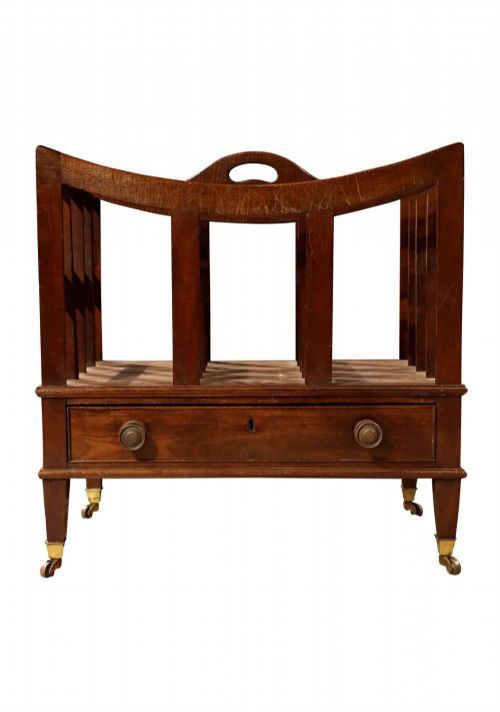
The standard form comprises a slatted or divided upper rack resting on a low frame, frequently set above a single drawer at the base. Makers constructed these stands to sit freely on the floor, often supported by turned legs fitted with brass castors for easy movement across carpets.
Woods and Construction
Cabinet makers built these pieces predominantly in mahogany, utilising both standard stock and dense Cuban mahogany, alongside rich rosewood for more decorative examples. Selected pieces incorporate flame mahogany veneer, contrasting ebony banding and fine inlay work to accentuate the upright divisions and drawer fronts.
Structural elements frequently feature shaped or boat-shaped rails forming the partitions, sometimes complemented by brass carrying handles or carved details such as Prince of Wales feathers. The lower drawers utilise traditional dovetail joints, running smoothly within solid timber frames.
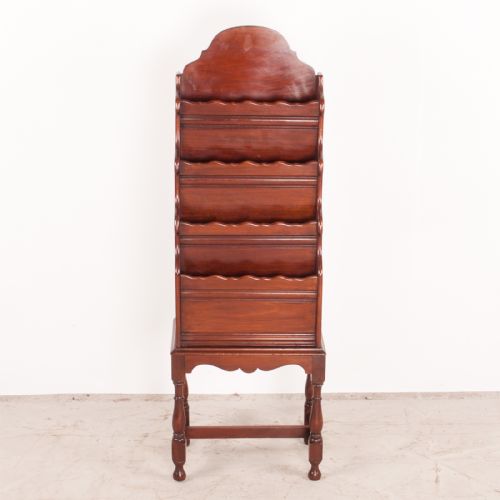
The archive includes both simple open-rack forms and sophisticated designs featuring integrated base drawers and brass castors.
Design and Material Selection
Quality in a georgian canterbury rests on the choice of timber and the ambition of its outline. Dense grain figures in rosewood or Cuban mahogany combined with refined boat-shaped framing separate standard utility pieces from high-style workshop productions.
The delicacy of the turned legs, the precision of any inlay or ebony banding, and the inclusion of original brass castors dictate the standing of the piece. Integrated drawers with clean dovetailing and well-proportioned dividers show a higher level of cabinet-making skill.
The Georgian Canterbury Glossary
- Canterbury
- A low freestanding stand with divided partitions used originally for sheet music, books and newspapers. The name is believed to derive from the Archbishop of Canterbury, who commissioned an early variant.
- Boat-shaped
- A descriptor for a Canterbury whose upper rails curve upward at the ends in the profile of a small hull. This silhouette became particularly popular during the Regency period.
- Cuban mahogany
- A dense, heavy timber imported from the West Indies featuring deep colour and rich grain patterns. It was favoured for high-status furniture during the Georgian era.
- Castor
- A small wheel fitted to the base of furniture legs to allow easy rolling across floors. Original brass castors contribute to the period integrity of a stand.
- Bandings
- Thin strips of contrasting wood inlaid around the edges of panels or drawers. Ebony was frequently utilised for this purpose on mahogany pieces.
Georgian Canterbury: Frequently Asked Questions
What was a canterbury used for originally?
These stands served to keep unbound sheets of music, newspapers and reading materials organised beside a chair or music stand in the drawing room.
Their open partitions allowed owners to select and return scores or journals without disturbing stacks on tables.
How do I date a georgian canterbury?
Dating relies on observing timber choices, leg profiles and overall decorative vocabulary. Pieces from the late 18th century tend toward straight, square legs, while Regency examples introduce turned supports, brass castors and boat-shaped rails.
Secondary woods, construction methods within the drawer boxes, and the presence of rosewood veneer further help narrow the decade of production.
Are all canterburys made of mahogany?
While mahogany and Cuban mahogany form the majority of surviving examples, cabinet makers also utilised rosewood, particularly during the Regency period. Oak appears occasionally in regional or country house pieces.
Inlay and ebony banding are frequently found enhancing the primary timber surfaces on finer models.
Can I use a canterbury for modern magazines?
The vertical divisions and lower shelf dimensions suit contemporary periodicals, art folios and daily papers rather well. Their sturdy timber construction handles modern daily use comfortably.
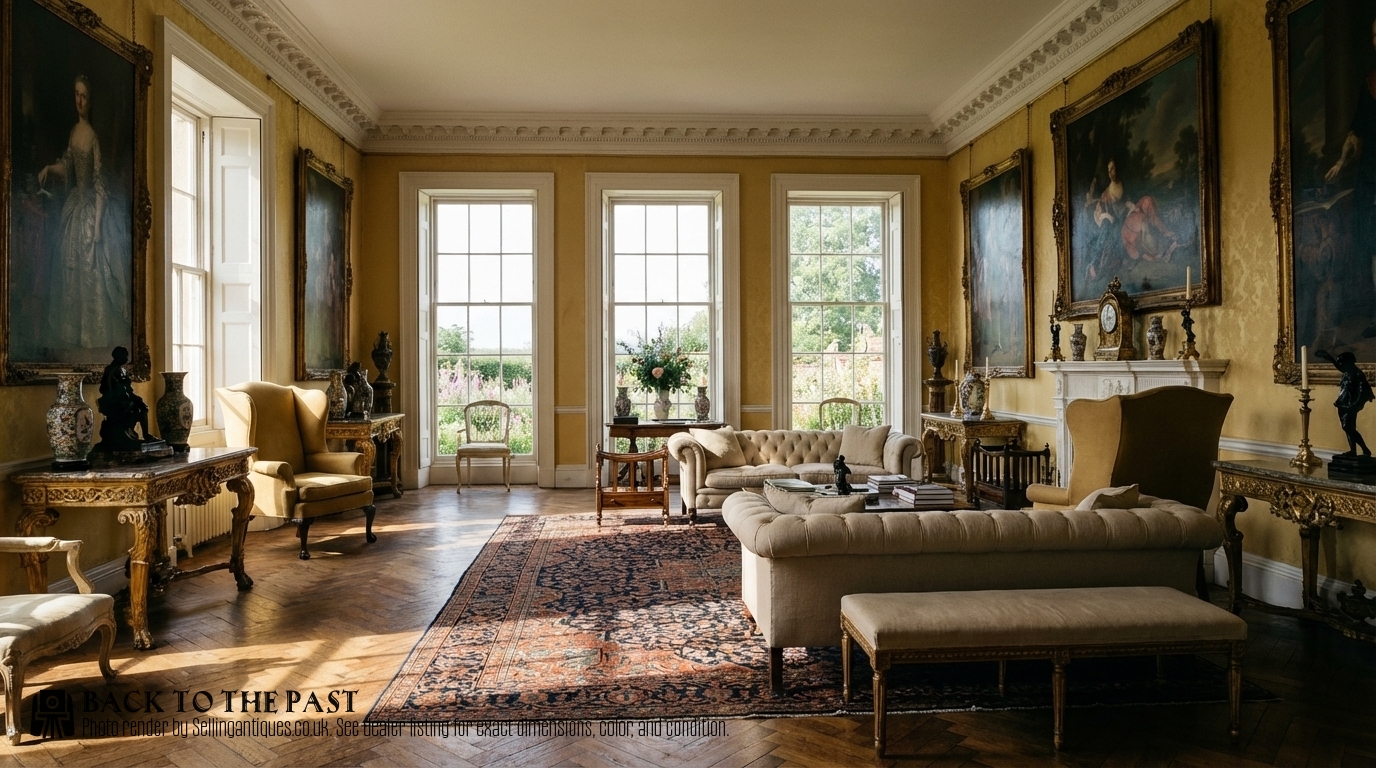
Placing them beside a sofa or desk keeps reading material accessible while maintaining a traditional interior layout.