


Georgian Canterbury Magazine Rack
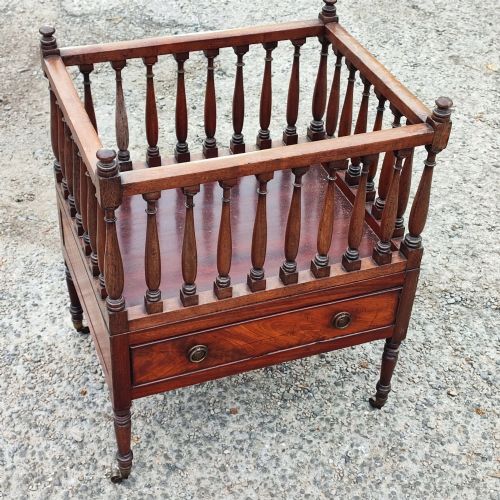
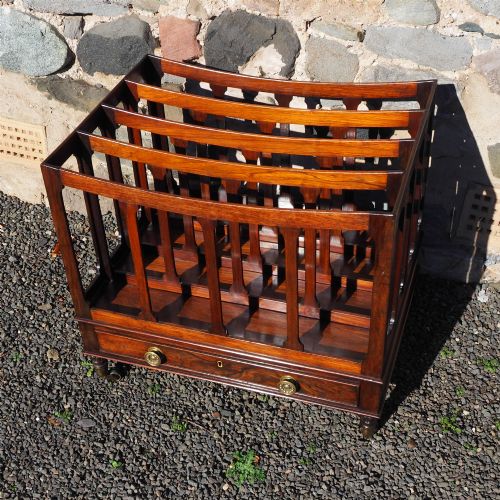
A Georgian canterbury magazine rack brings domestic organisation into a room with partitioned uprights designed for papers, sheet music and folios.
Georgian Canterbury Magazine Rack
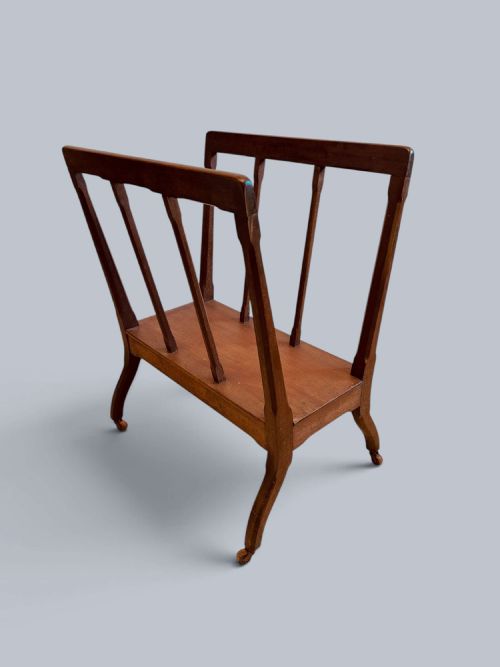
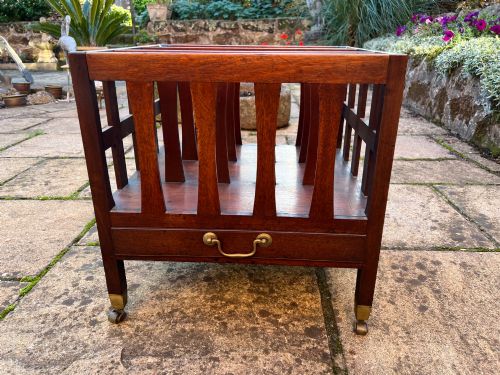
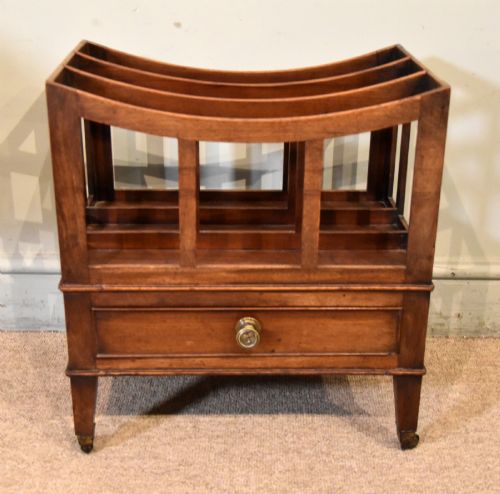
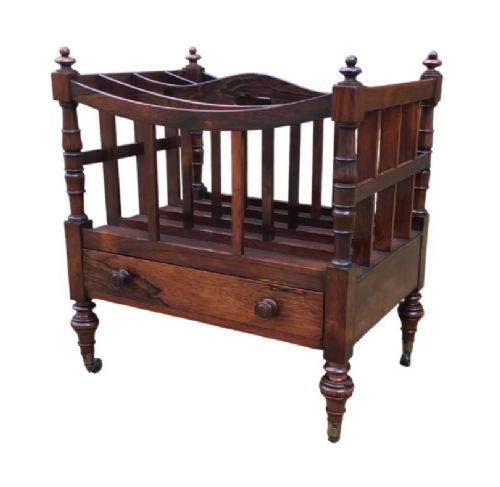
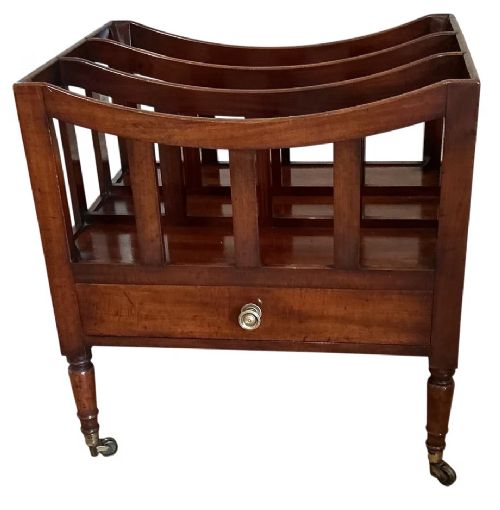
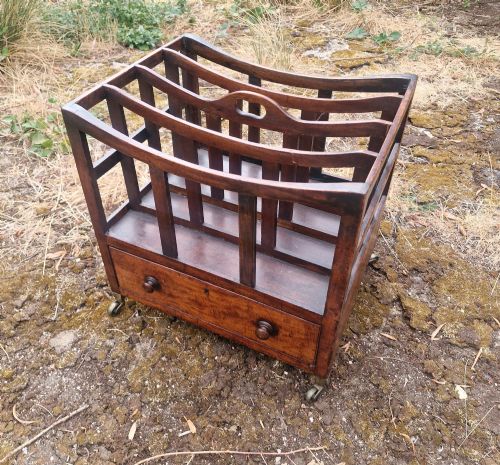
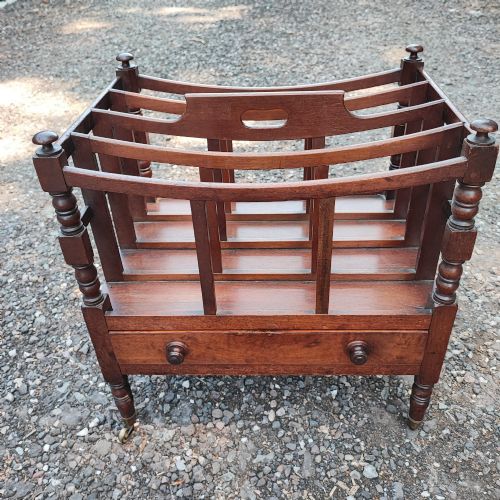
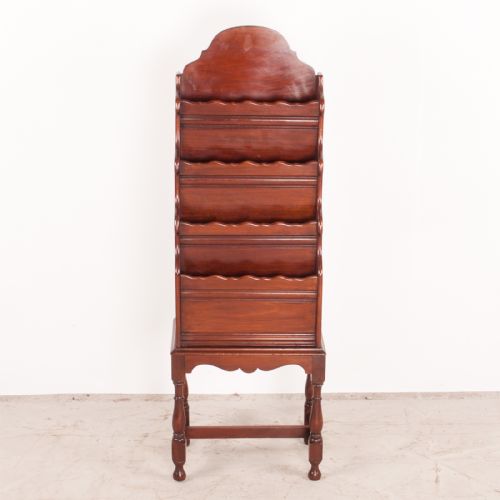
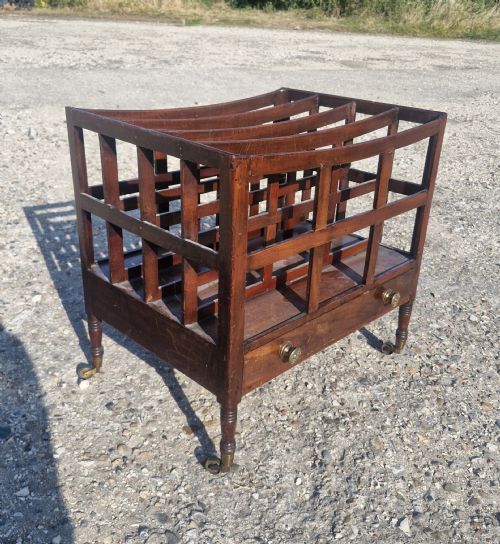
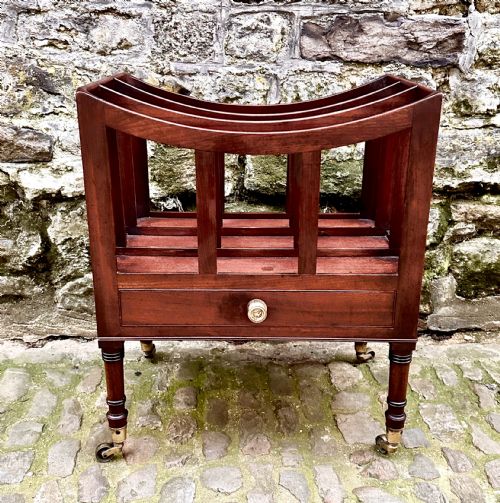
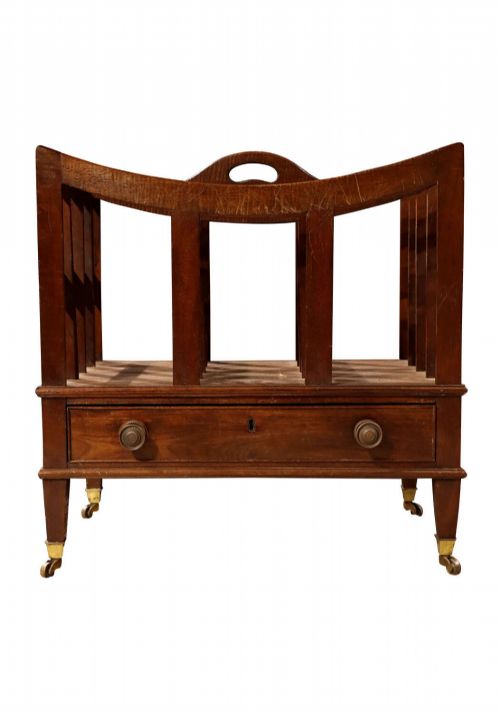
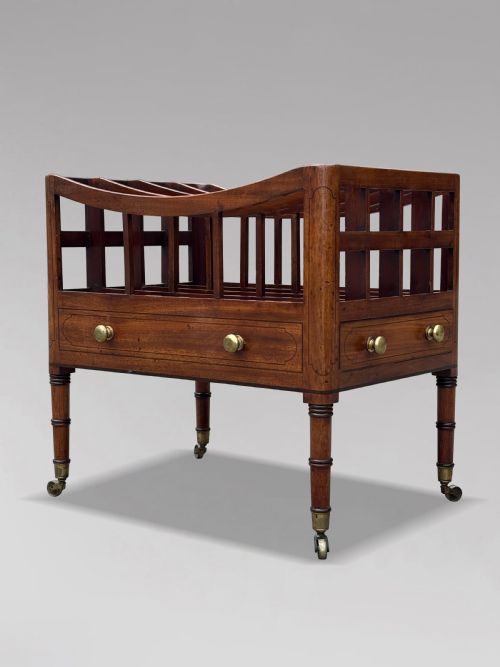
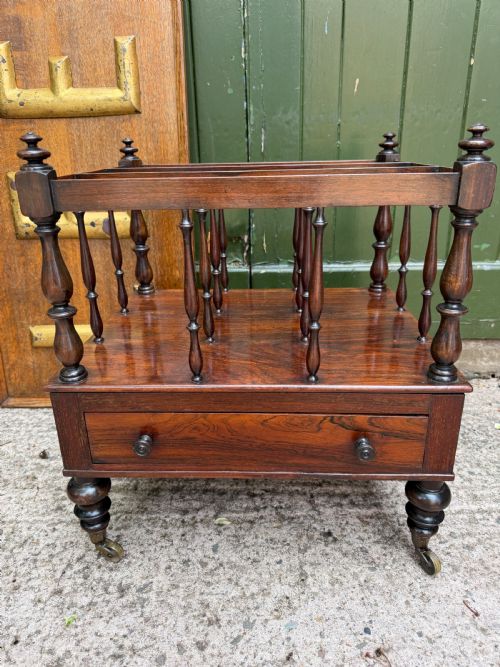
A georgian canterbury magazine rack is a low, freestanding piece of furniture designed to hold periodicals, newspapers and sheet music within divided vertical compartments. The pieces appearing here span the Georgian, Regency and Victorian periods, with many examples originating from the early nineteenth century and later revival decades.
How They Were Made
Makers relied primarily on mahogany, Cuban mahogany and rosewood to construct these stands, frequently applying flame mahogany veneer or ebony banding to enhance the grain. Detail work often involved carved elements such as Prince of Wales feathers, delicate inlay, and brass fittings on castors that allowed the rack to move smoothly across carpets.
Joinery focused on creating sturdy slatted divisions capable of supporting heavy folios and newspapers without warping the base or the lower drawer structure. Turned wooden legs or supports were standard, uniting utility with the formal cabinet-making standards of the period.
Georgian Canterbury Magazine Rack Retail Price Guide 2026
Typical asking prices for georgian canterbury magazine rack among the pieces listed under this phrase on Sellingantiques today, from the lower quarter to the upper quarter. They describe what is for sale here now, not the wider market.
Listings feature pieces spanning the Georgian, Regency, Victorian, Edwardian, and 1920 to 1930 periods, constructed in mahogany, rosewood, and brass.
What Varies In Quality
Quality rests in the choice of timber and the precision of the division framing, where figured rosewood or Cuban mahogany distinguishes superior examples from plain utility pieces. The execution of turned legs, fine inlay work, and the integration of a smoothly operating base drawer separate standard workshop production from finer cabinet-making.
Proportion and the crispness of carved details, such as crests or edge banding, indicate the level of care invested in the piece's original commission. Superior examples maintain structural integrity across the slatted partitions while displaying rich timber figuring through polished surfaces.
The Georgian Canterbury Magazine Rack Glossary
- Canterbury
- A low stand with partitioned uprights used for holding loose papers, music sheets and magazines. It typically includes a small drawer and rests on castors.
- Flame Mahogany Veneer
- A thin slice of mahogany timber cut from the fork of the tree to create a distinctive flickering flame pattern. Cabinet-makers applied this to prominent exterior surfaces.
- Ebony Banding
- A narrow strip of dark ebony wood inlaid along the borders of a panel or top. This technique creates a sharp linear contrast against lighter woods like mahogany.
- Castor
- A small wheel attached to the base of each leg to allow easy movement of the furniture. Brass fittings were common on nineteenth-century pieces.
Georgian Canterbury Magazine Rack: Frequently Asked Questions
What were canterburys originally used for?
These stands were built to hold sheet music, unbound books, newspapers and magazines close to a piano or seating area. They kept domestic papers tidy and accessible in the principal rooms of a house.
Over time, their utility expanded to accommodate general periodicals and writing materials as reading habits changed throughout the nineteenth century.
How do I identify a Regency period piece?
Regency items often feature boat-shaped frames, rosewood timber, brass inlay, and elegant turned legs fitted with castors. They reflect the classical influences popular during the early nineteenth century.
Proportions tend to be refined, with attention given to the grain of the wood and the delicacy of the vertical divisions.
Where should I place a magazine rack in a room?
Because these pieces are finished on all sides for freestanding use, they sit well beside a sofa, arm chair or desk. Their low profile ensures they do not block sightlines in a room.
They function practically while adding historical character to empty floor space near seating.
What is the difference between George III and Victorian examples?
George III pieces generally date from the late eighteenth or early nineteenth century, featuring straight-grained mahogany and restrained classical lines. Victorian versions often embrace revival styles or heavier rosewood constructions.
Details such as carved motifs and the treatment of the drawer fronts help indicate the decade of manufacture.