

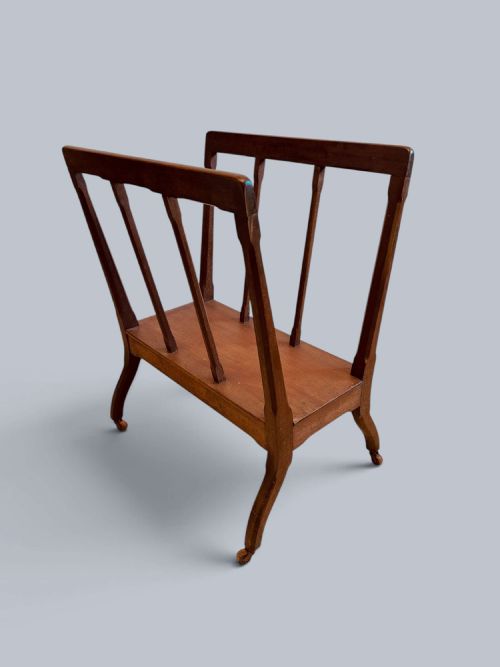
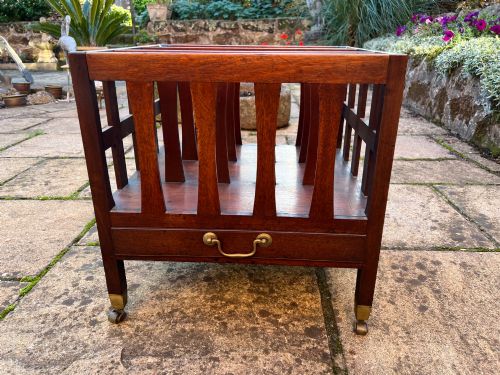
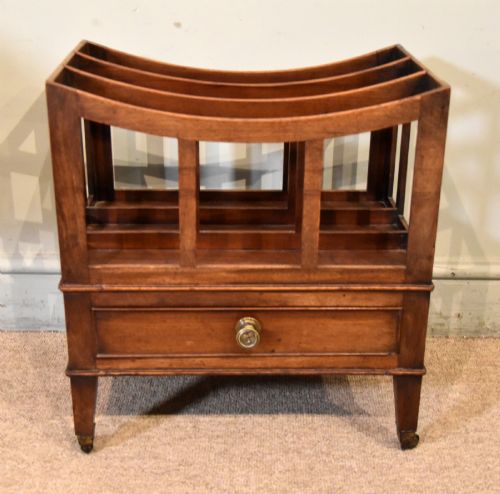
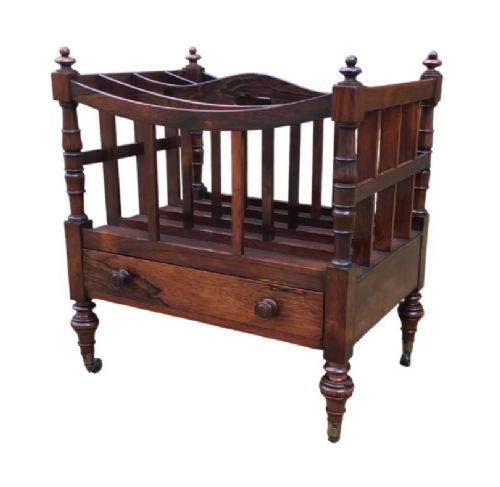
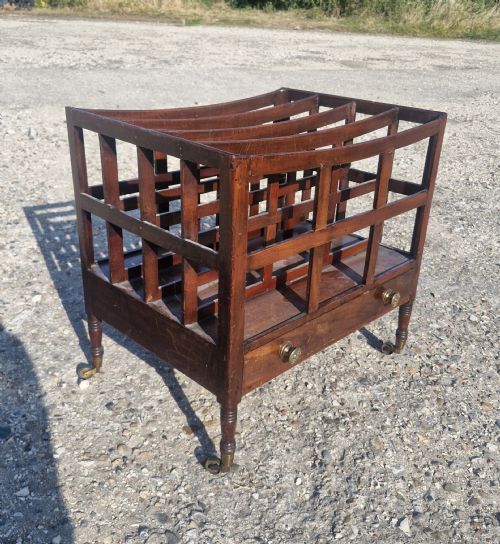
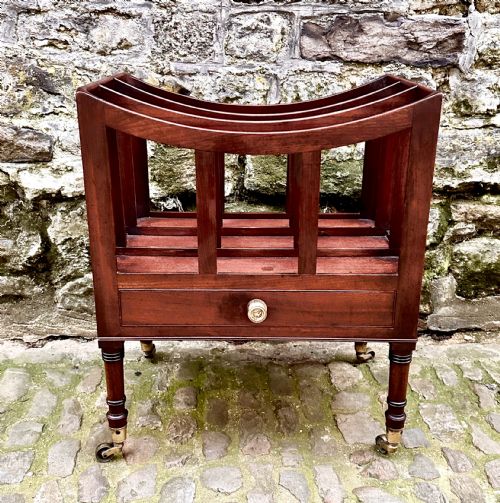
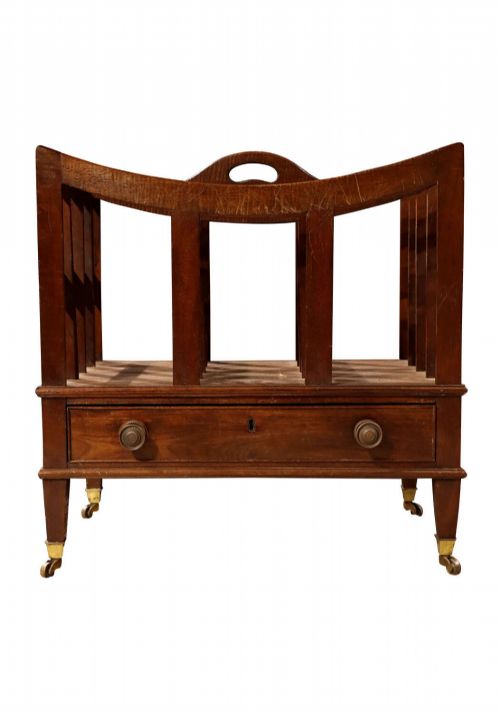
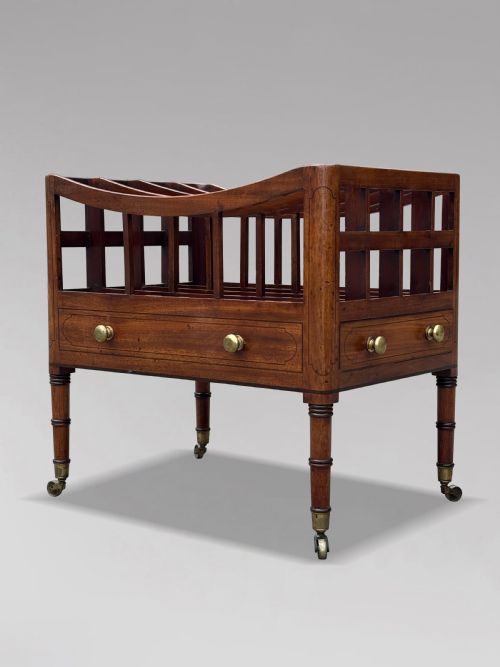
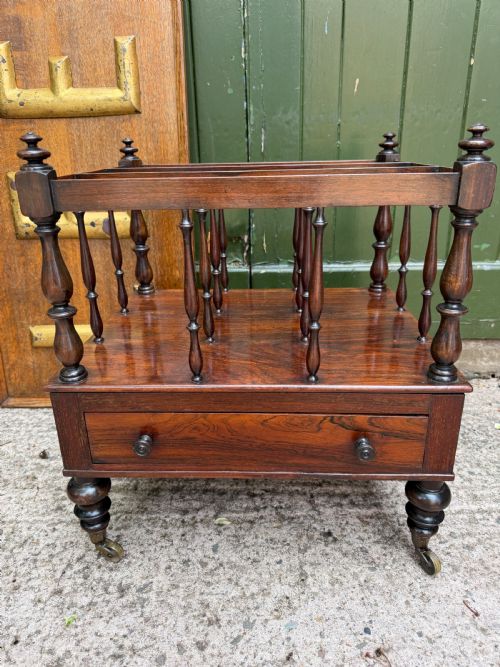


Georgian Mahogany Magazine Holder
These georgian mahogany magazine holder pieces are sturdy timber stands designed for papers and folios, offering practical elegance for any room.
Georgian Mahogany Magazine Holder
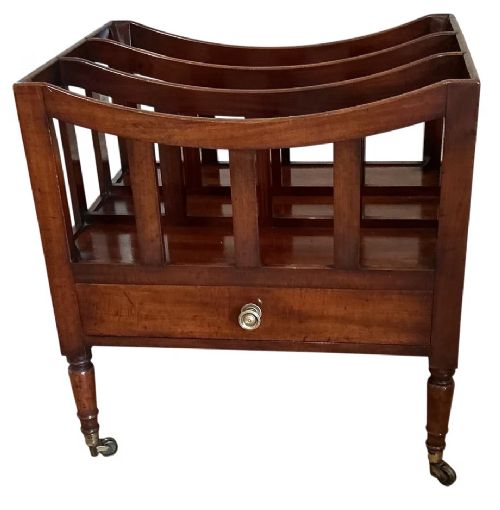
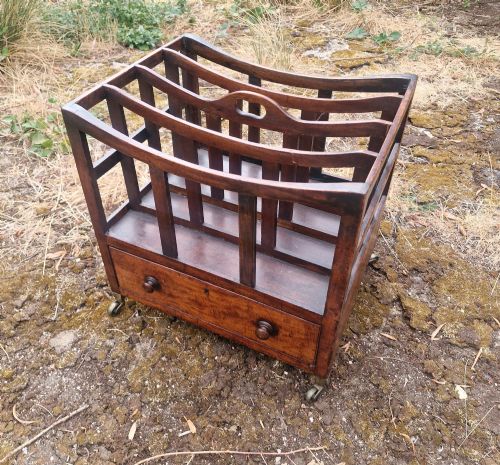
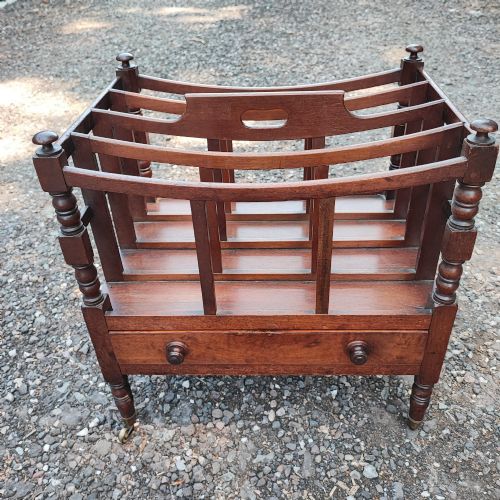
A georgian mahogany magazine holder most commonly takes the form of a canterbury, a multi-division stand designed to hold periodicals, newspapers and sheet music. These pieces date across the Georgian, Regency, William IV, Victorian, Edwardian and later periods, though the classic forms originate in the late eighteenth and early nineteenth centuries.
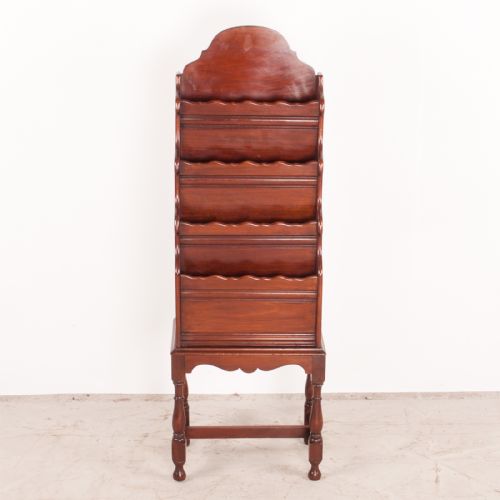
The inventory on this page consists primarily of canuterburys and magazine racks, with occasional folio stands and music stands appearing amongst the selection. These items function as freestanding furniture, frequently raised on turned legs with castors to allow easy movement across the floor.
Makers and craftsmen constructed these stands with differing numbers of divisions, ranging from three pierced scroll sections to four distinct partitions, sometimes incorporating a base drawer for smaller items. The wood selection spans standard mahogany, Cuban mahogany and flame mahogany veneer, often enhanced with contrasting details.
How They Were Made
Makers utilised solid mahogany and Cuban mahogany for the primary structure of these stands, frequently applying flame mahogany veneer to visible surfaces to create a figured grain pattern. Workshops also incorporated secondary timbers and decorative elements such as boxwood and ebony banding or delicate inlay.
Brass fittings appear routinely, particularly in the form of castors affixed to the legs and occasional handles or structural pins. Joinery techniques relied on traditional cabinet-making methods to shape the characteristic boat-shaped bodies, pierced vertical divisions and fitted base drawers.
Georgian Mahogany Magazine Holder Retail Price Guide 2026
Typical asking prices for georgian mahogany magazine holder among the pieces listed under this phrase on Sellingantiques today, from the lower quarter to the upper quarter. They describe what is for sale here now, not the wider market.
Several stands include a secret lower drawer designed specifically for stowing stray sheet music notes out of sight.
What Varies in Quality
The grade of timber dictates much of the visual impact, with deeply figured Cuban mahogany and rich flame veneer sitting at the upper end of the scale compared to plain nineteenth-century stock. The finesse of the fretwork and the sharpness of any turned legs or inlaid banding further separate standard workshop output from exceptional examples.
Structural integrity depends on the original joinery of the vertical divisions and the base drawer, as these stands faced daily handling for newspapers and folios. The presence of matching original brass castors and uncompromised timber surfaces distinguishes the finest specimens.
The Georgian Mahogany Magazine Holder Glossary
- Folio Stand
- A larger adjustable or fixed rack designed for holding large books, prints and maps. These pieces provide stable upright storage for oversized paper items.
- Cuban Mahogany
- A dense, dark timber imported from the West Indies, prized by cabinet-makers for its rich colour and fine grain. It represents a superior material choice in period furniture.
- Flame Mahogany
- A veneer harvested from the fork of the mahogany tree where the branch meets the trunk. This cut creates a distinctive flickering flame pattern across the wood surface.
- Inlay
- A decorative technique where contrasting woods such as boxwood or ebony are fitted into recessed channels within the mahogany ground to form geometric borders.
Georgian Mahogany Magazine Holder: Frequently Asked Questions
What is the difference between a canterbury and a magazine rack?
A canterbury is a traditional partitioned stand on legs, frequently featuring a base drawer and dating from the Georgian or Regency periods.
Magazine racks can encompass these earlier forms as well as later twentieth-century interpretations designed specifically for periodicals.
How do I date a mahogany canterbury?
Dating relies on examining the timber selection, leg turnings, joinery style and hardware like brass castors. Earlier pieces from the George III period display hand-cut joinery and dense Cuban mahogany.
Later Victorian and Edwardian examples often feature machine-produced elements and different veneer treatments.
Were these stands always used for magazines?
These pieces were originally commissioned for holding sheet music, unbound books, newspapers and daily correspondence folios. The modern term magazine rack applies to their continued utility for contemporary periodicals.
What wood types should I expect to find?
The primary timber across these listings is mahogany, appearing as solid boards or as flame mahogany veneer. Makers frequently embellished these surfaces with contrasting ebony and boxwood inlay.