



Georgian Caned Accent Chair
These georgian caned accent chair examples bring texture and classic proportion to a room, offering tactile seating built with period craftsmanship.
Georgian Caned Accent Chair
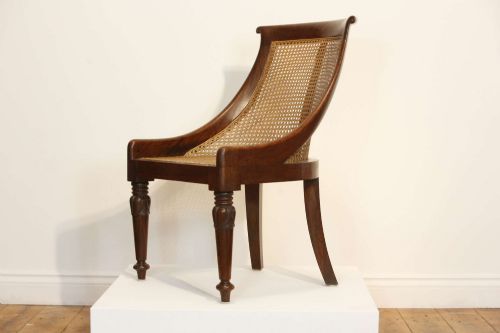
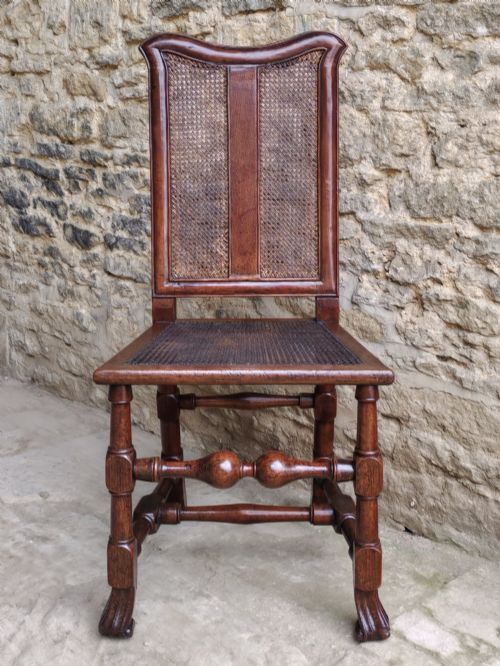
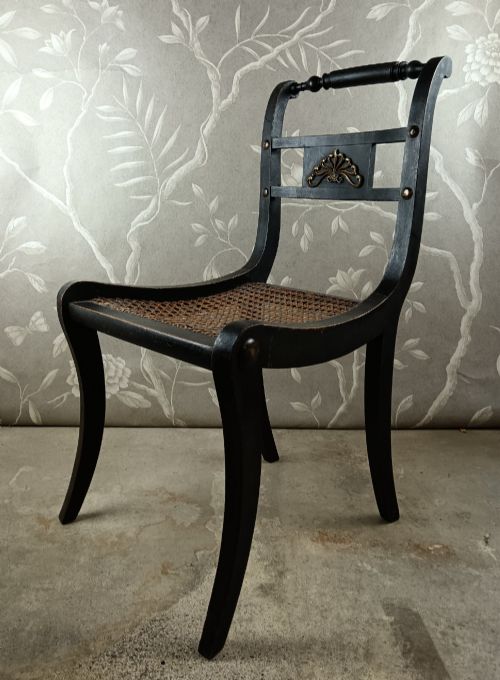
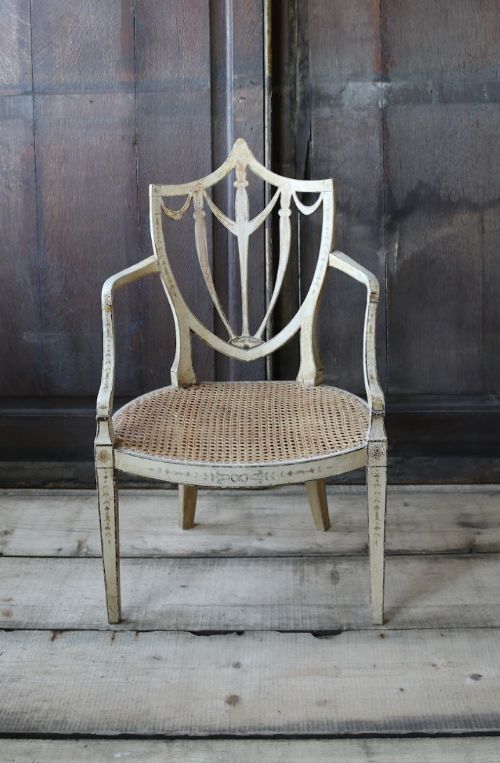
A georgian caned accent chair brings historical seating into contemporary rooms, appearing here across 18th century, Regency, and 19th century periods. Buyers searching for a georgian caned accent chair will encounter side chairs and armchairs spanning styles such as Regency, Grand Regency, William and Mary, and George III Neoclassical.
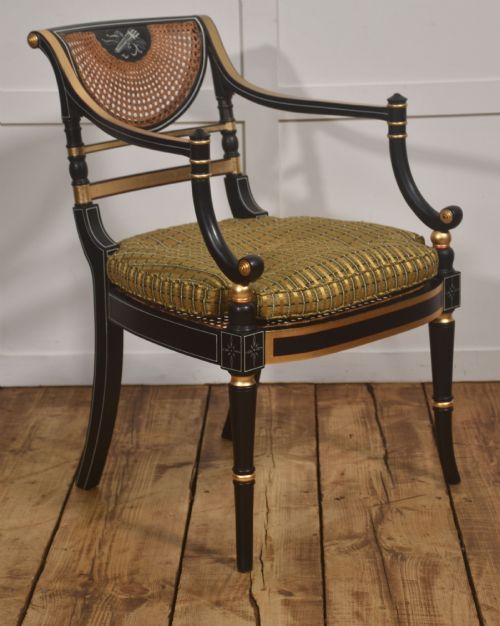
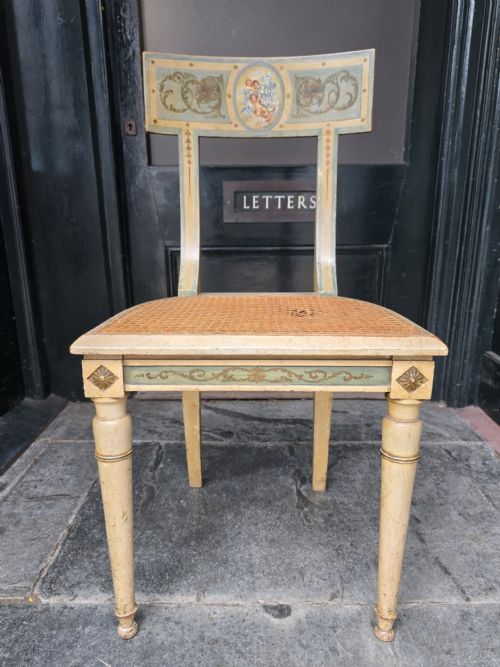
The inventory on this page ranges from early walnut side chairs to later painted and ebonised armchairs. Forms include barrel back library chairs, Trafalgar sabre leg chairs, shield-back armchairs, and faux bamboo designs.
How they were made
These chairs are constructed from materials including mahogany, walnut, ebonised wood, and solid ebony, often finished with paint, gold leaf, or brass details. Artisans shaped these woods into carved frames designed to support woven cane and bergere seats.
Techniques range from precise cabinetmaking on sabre legs to intricate carving seen in Anglo-Indian pieces from Ceylon. Painted and decorated surfaces display traditional finishes applied directly to the wooden structures.
Georgian Caned Accent Chair Retail Price Guide 2026
Typical asking prices for georgian caned accent chair among the pieces listed under this phrase on Sellingantiques today, from the lower quarter to the upper quarter. They describe what is for sale here now, not the wider market.
Several chairs on this page feature convincing faux bamboo woodwork, proving that Regency craftsmen loved a tropical illusion.
What varies in quality
The distinction between standard examples and finer pieces lies in the crispness of the carving and the integrity of the original surfaces. Chairs retaining their original painted decoration or untouched cane seating demonstrate higher degrees of preservation.
Proportion and stylistic ambition also separate the range, with grander Regency and neoclassical forms showing more elaborate joinery and decorative ambition than simpler bedroom chairs.
The Georgian Caned Accent Chair Glossary
- Bergere
- An enclosed upholstered armchair with sides filled in with cane or upholstery. This French-inspired form provides a solid yet visually light seat.
- Sabre leg
- A curved, outwardly tapering chair leg resembling a cavalry sabre. This form is characteristic of the Regency period and adds dynamic line to the furniture.
- Ebonised
- Wood stained or painted black to imitate ebony. This finish was widely utilised in the Regency era for dramatic contrast.
- Shield-back
- A chair back shaped like a heraldic shield. Popular in the late 18th century, it often incorporates openwork splats.
- Klismos
- An ancient Greek chair form with curved legs and a concave backrest. Revival styles adopted this graceful silhouette in the 19th century.
Georgian Caned Accent Chair: Frequently Asked Questions
Where should I place an accent chair?
These chairs suit hallways, bedrooms, and libraries where their sculptural frames and textured cane seats can be appreciated from multiple angles.
Because they generally feature open backs or compact footprints, they add character without overwhelming the floor space of a room.
How do I care for cane seats?
Cane requires moderate humidity to prevent the natural fibres from becoming brittle and snapping under pressure. Regular dusting with a soft brush keeps the weave clean without damaging the material.
Avoid placing these chairs directly next to intense heat sources or in harsh direct sunlight.
What is a bergere seat?
A bergere seat incorporates tightly woven cane within a wooden frame, offering a resilient and supportive platform. Unlike solid wood panels, this woven construction provides slight give while maintaining structural form.
Many period examples pair this seating with matching cane backrests or upholstered cushions.
How do I identify Regency style?
Regency pieces often draw inspiration from classical antiquity, displaying clean architectural lines, sabre legs, and decorative elements like faux bamboo or ebonising. The proportions are typically designed to create an elegant, uncluttered silhouette.
Details such as parcel-gilding and brass mounts frequently accompany these designs.