

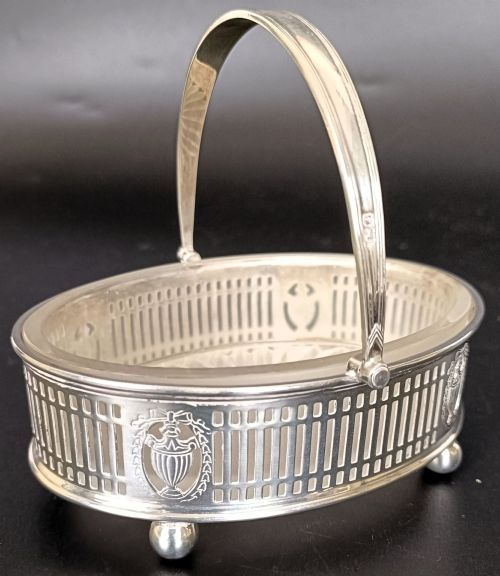


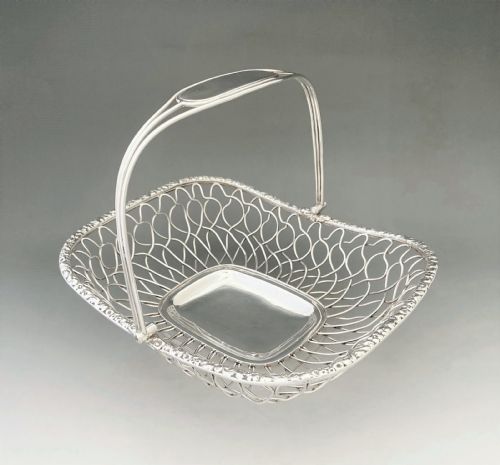


Georgian Cake Basket
A georgian cake basket sits on the dining table as a centrepiece of silver or plated metal, prized for its swing handle and openwork wire.
Georgian Cake Basket
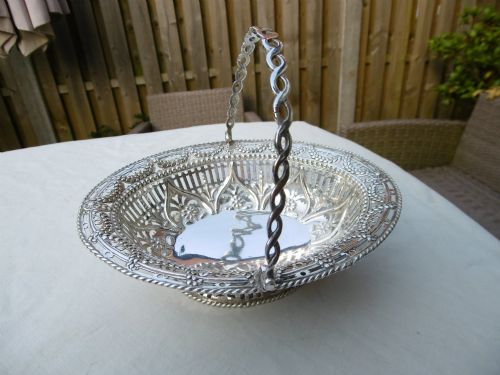
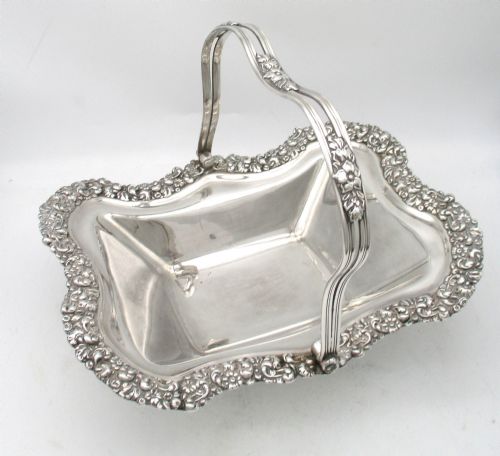
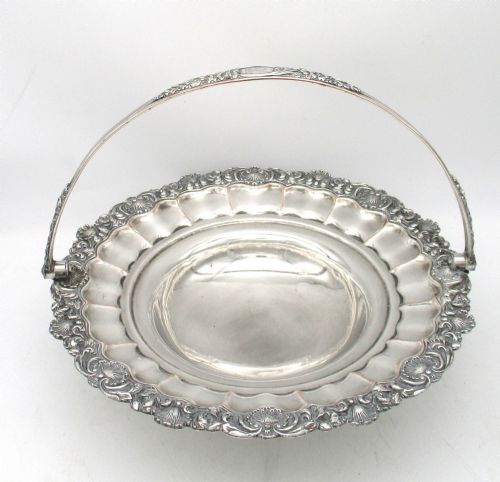
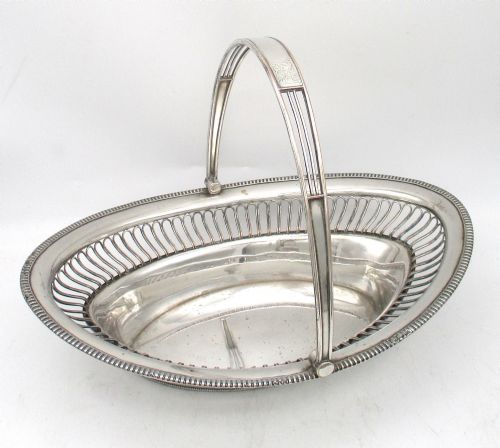
A georgian cake basket typically takes the form of an oval or round vessel designed for serving baked goods, often featuring a swing handle. The examples found here span the eighteenth and nineteenth centuries, with later pieces extending into the twentieth century alongside revivals.
The objects listed range from solid sterling silver to Old Sheffield plate and silver wirework. Forms encompass bread baskets, tableware, and decorative bowls alongside traditional cake baskets.
Maker marks and assay dates link specific items to London and Newcastle workshops from the mid-eighteenth century onward. Surviving pieces demonstrate the evolution of styles from early periods through the Regency and William IV eras.
Materials and construction methods
Construction relies upon sterling silver and Old Sheffield plate, alongside silver wire. Metalworkers shaped these materials into pierced, solid, or wirework vessels featuring swing handles.
Makers applied techniques such as chasing and piercing to create decorative patterns upon the body and rim of the basket. Crests and engravings were often added to personalise the silver or plated surface.
Georgian Cake Basket Retail Price Guide 2026
Typical asking prices for georgian cake basket among the pieces listed under this phrase on Sellingantiques today, from the lower quarter to the upper quarter. They describe what is for sale here now, not the wider market.
Listings incorporate sterling silver, copper, Old Sheffield plate, and silver wire across periods spanning the eighteenth, nineteenth, and twentieth centuries.
Assessing quality in silver and plated baskets
Quality rests upon the weight of the metal and the crispness of any pierced or chased ornamentation. Solid sterling silver examples from identifiable makers demonstrate superior craftsmanship compared to simpler plated alternatives.
The integrity of the swing handle and the fineness of wirework construction distinguish finer examples. Wear to Old Sheffield plate reveals the underlying copper base, which alters the visual balance of the piece.
John Hunt·Samuel Herbert·John Walton
The Georgian Cake Basket Glossary
- Old Sheffield plate
- A composite material made by fusing a thin sheet of silver to a thicker copper base. This technique preceded modern electroplating and leaves a distinctive edge where copper shows.
- Swing handle
- A movable arched handle attached to the rim of the basket via pivots. It allows the vessel to be carried or stored flat against the table.
- Wirework
- A method of construction using soldered metal wires arranged in open geometric patterns. It creates lightweight baskets popular around eighteen hundred.
- Sterling silver
- An alloy containing a high proportion of silver combined with other metals to increase durability. Items made from this material often bear hallmarks indicating the maker and year of assay.
Georgian Cake Basket: Frequently Asked Questions
What is a georgian cake basket used for?
These vessels were originally manufactured to present cakes, bread, or fruit upon the dining table during formal meals. The raised form and swing handle allowed servants to pass the container among guests.
Over time, many pieces transitioned into decorative centrepieces or display items within domestic interiors. Their openwork design and polished surfaces made them suitable for showcasing silver on sideboards.
How do I identify Old Sheffield plate?
Old Sheffield plate is distinguished by the physical fusing of silver over copper rather than the electrochemical deposition used in later silver plating. Closer inspection often reveals small lines where the base metal emerges at seams or edges.
Pieces utilising this technique frequently date around eighteen hundred and the early nineteenth century. The weight tends to feel substantial due to the copper core beneath the silver layer.
What is wirework construction?
Wirework involves shaping individual strands of silver or plated wire into open lattices or geometric motifs. This technique reduces the weight of the basket while maintaining structural rigidity for the swing handle.
Items featuring this construction method frequently date from the turn of the nineteenth century. The open structure allowed light to pass through the vessel on the table.
How do I care for antique silver?
Silver and plated baskets require occasional cleaning with appropriate polishes to maintain their reflective surface and remove tarnish. Storing items in dry environments prevents accelerated oxidation of the metal.
Avoiding abrasive cloths protects engraved crests and maker marks stamped into the base or rim. Gentle handling of the swing handle preserves the pivot joints over time.