


Georgian Caddy Spoon
A georgian caddy spoon is a small, specialised scoop made to measure loose tea from a caddy into a pot, prized for ingenious silversmithing.
Georgian Caddy Spoon
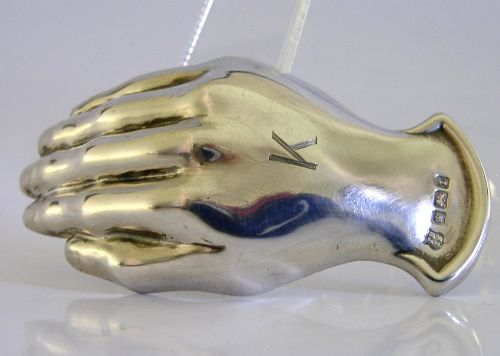
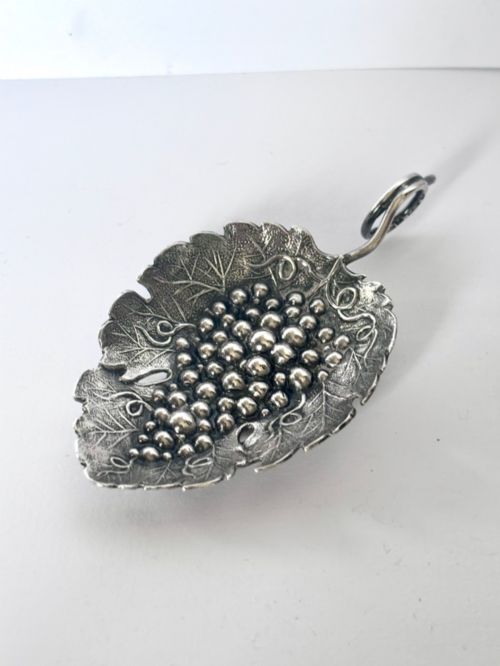
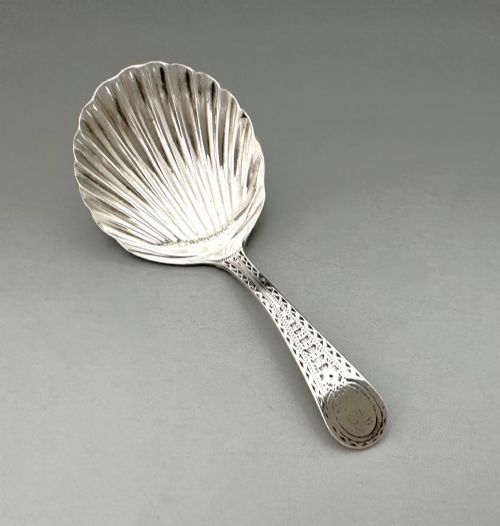
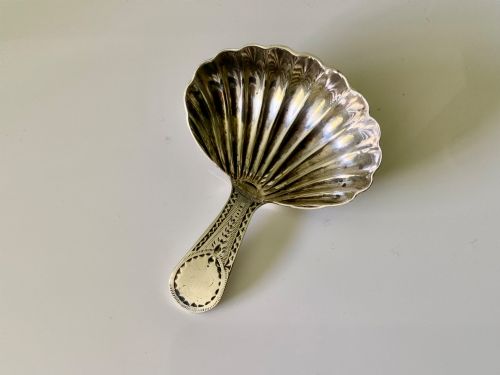
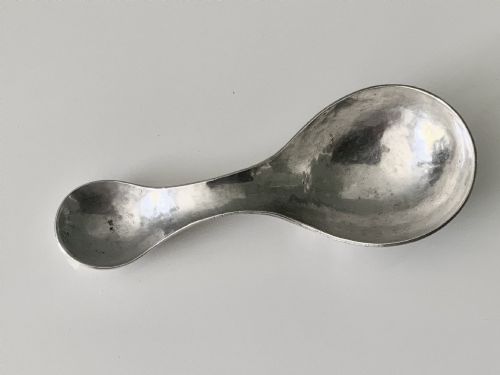
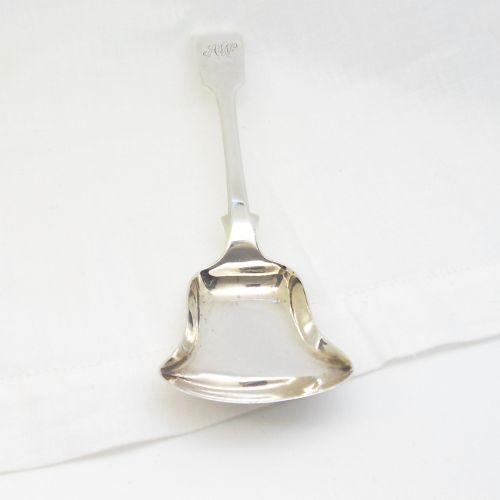
A georgian caddy spoon is a miniature implement created specifically for measuring dry tea leaves from a storage caddy during the height of the tea ceremony. The forms vary from simple shovel shapes to naturalistic leaves, hands, jockey caps, and shells designed to charm the tea table.
Most examples found here date from the late eighteenth and early nineteenth centuries, produced in sterling silver across English, Scottish, and Irish provincial assay offices. Makers utilised specialised regional techniques and whimsical motifs that turned a utilitarian kitchen tool into a collector's cabinet piece.
How they were made
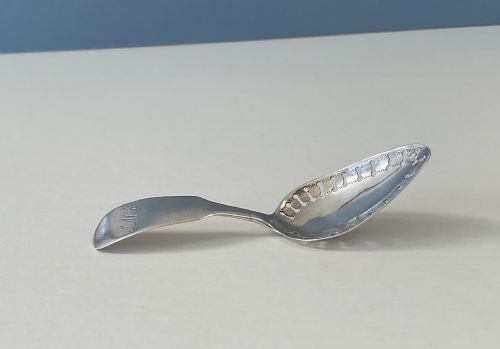
Silversmiths fashioned these spoons primarily from sterling silver, frequently employing parcel-gilt or silver-gilt finishes to protect the metal from tea staining while adding rich colour contrast to the bowl interiors. Handles and bowls were often constructed separately before being joined, allowing intricate piercing, bright-cutting, and embossing.
Specialist makers stamped thin sheets of silver into dies or hammered them by hand to create organic shapes like vine leaves, acorns, and hands with articulated fingers. Engraved detailing on the handles and stems provided delicate texture to balance the sculptural bowls.
Tea drinkers once relied on tiny silver jockey caps and human hands to dole out their leaves with proper aristocratic whimsy.
What varies in quality
Quality rests upon the ambition of the design and the crispness of the original smithing, distinguishing standard shovel forms from sculptural novelties like jockey caps or human hands. Better pieces maintain sharp definition in engraved bright-cut patterns and naturalistic leaf veins without smoothing from excessive wear.
The clarity of the hallmarks stamped into the metal dictates historical reliability and maker attribution, separating unmarked wares from documented pieces by known specialists. Proportion between the miniature bowl and the decorative handle also governs the aesthetic balance of the spoon.
Joseph Willmore·John Walton·George Wintle·Joseph Taylor·Elizabeth Morley·Robert Rutland
The Georgian Caddy Spoon Glossary
- Bright-cut
- An engraving technique utilising faceted cuts with a sharp graving tool to create glittering geometric patterns. It reflects light brightly across the silver handle.
- Silver-gilt
- A solid silver base coated with a thin layer of gold, sometimes referred to as vermeil. This finish protects the silver bowl from the corrosive oils of tea leaves.
- Provincial
- Items manufactured outside of London, such as in Scottish or regional English assay towns like Birmingham and Newcastle. These pieces often display distinct local design characteristics.
- Double struck
- A manufacturing method where the die stamp is applied twice to ensure deep, crisp ornamentation on both sides of the handle. This technique provides a heavier, more tactile feel in the hand.
- Assay office
- An official body responsible for testing the purity of precious metals and stamping them with hallmarks. These marks verify the silver standard and year of production.
Georgian Caddy Spoon: Frequently Asked Questions
What is a georgian caddy spoon used for?
These miniature spoons were designed to scoop loose tea leaves from a storage container directly into a teapot. Their short handles allowed them to sit neatly inside or beside the tea caddy.
Today they serve primarily as cabinet collectibles and decorative tabletop items rather than functional kitchenware. Collectors prize their variety of miniature shapes and fine silversmithing.
How do I date a georgian caddy spoon?
Dating relies upon the hallmarking stamped directly onto the silver, which typically includes a maker mark, a standard mark, and a date letter indicating the exact year of assay. Provincial pieces from Scotland and Ireland feature distinct regional marks that help narrow the production era.
Stylistic shifts also provide clues, as naturalistic leaf and novelty forms became particularly fashionable around the turn of the nineteenth century. Bright-cut engraving is also characteristic of late eighteenth-century manufacturing.
Are these spoons made of solid silver?
The pieces recorded here are constructed from sterling silver or solid silver, adhering to traditional precious metal standards of the period. Some examples feature silver-gilt finishes where a layer of gold was applied over the silver surface.
Makers utilised durable silver alloys to ensure the miniature bowls resisted bending during daily use with dry tea leaves. Hallmarks stamped into the metal verify the silver content for each item.
How should I display a caddy spoon collection?
Because of their small scale, these spoons are well-suited for shallow wall cabinets, tabletop glass display cases, or specialised collector trays. Proper lighting helps highlight the engraved bright-cut details and parcel-gilt bowl interiors.
Keeping them in a controlled environment minimises tarnishing and protects the delicate raised elements like vine leaves or jockey caps from physical wear.