

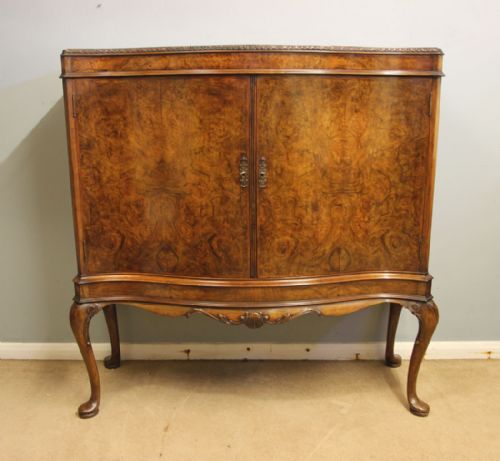


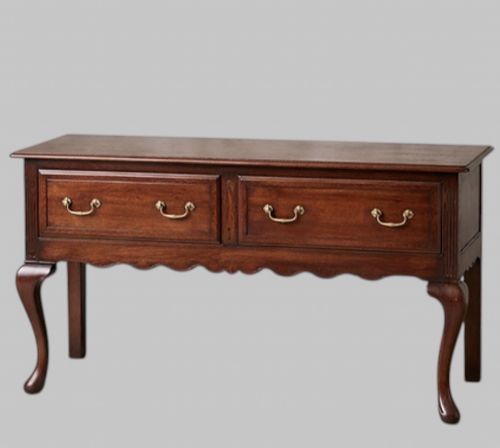
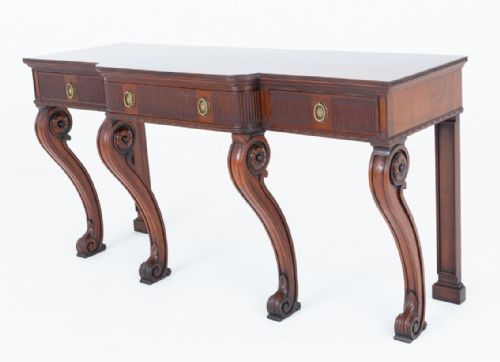


Georgian Cabriole Leg Sideboard
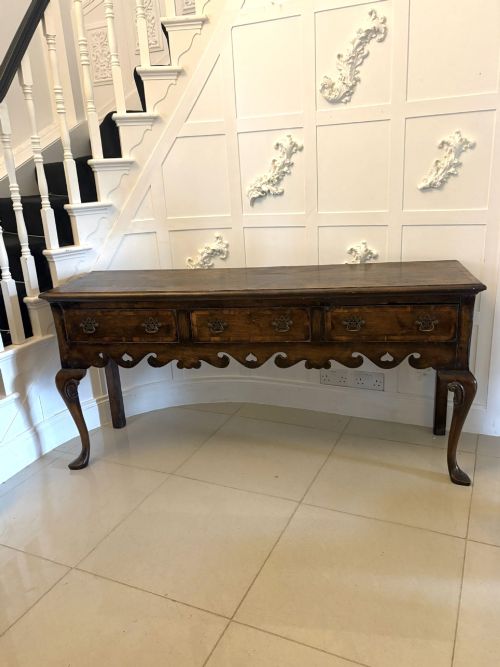
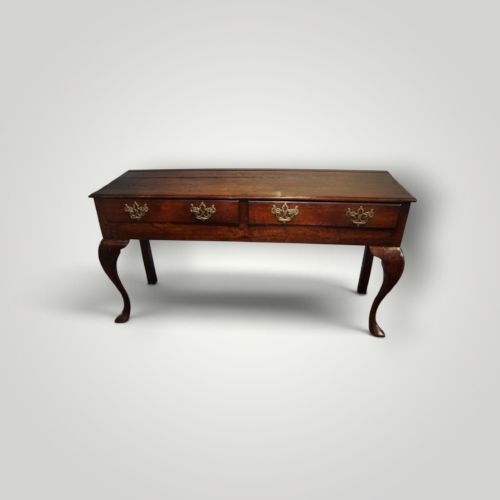
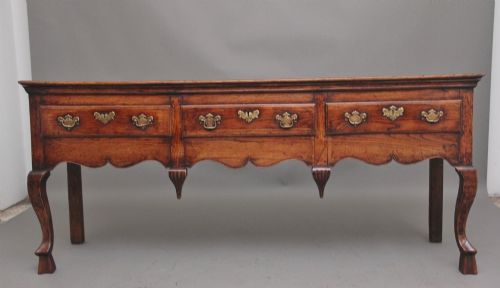
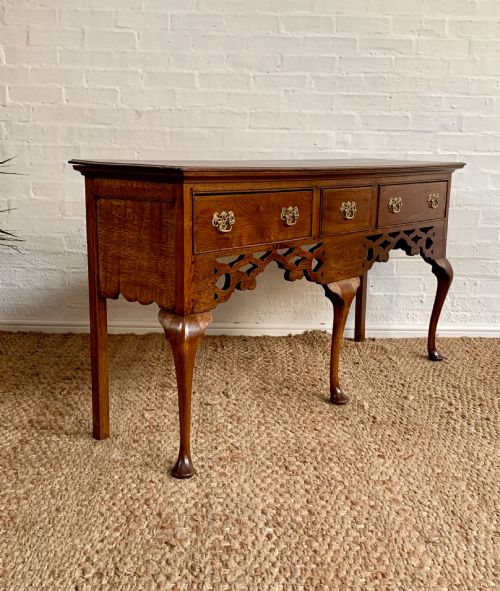
A georgian cabriole leg sideboard brings curving lines and substantial timber storage to a dining room or hallway.
Georgian Cabriole Leg Sideboard
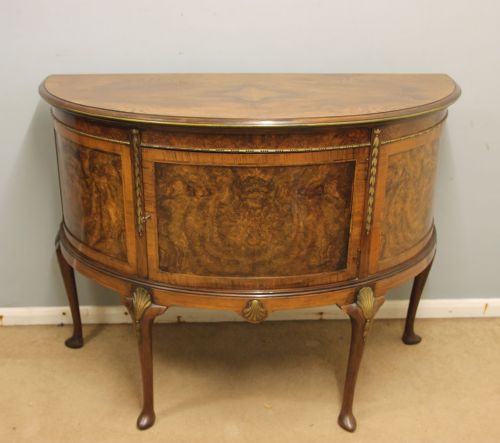
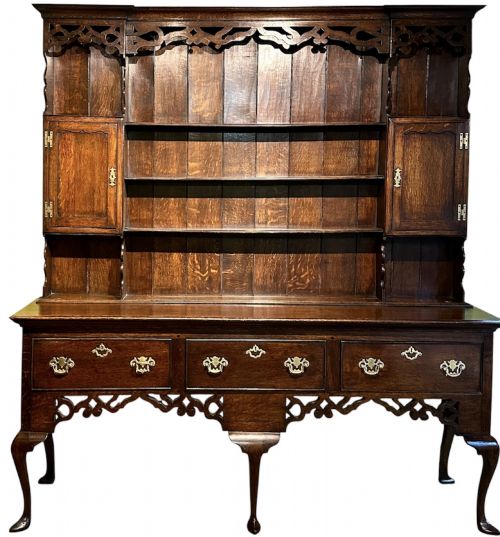
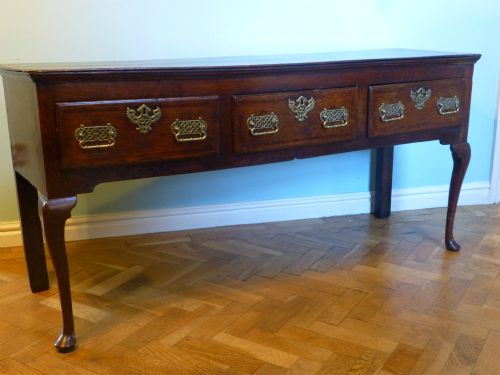
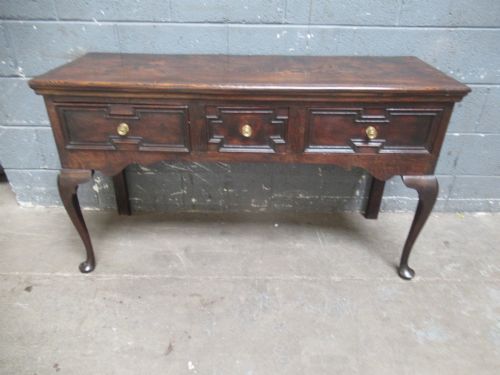
When you search for a georgian cabriole leg sideboard, you encounter substantial dining furniture designed for serving food and storing household items. These pieces typically take the form of dresser bases, side cabinets, and serving tables that anchor a room with functional surface space and drawers.
The selections span genuine 18th century originals through to later revivals from the Edwardian era and around 1900. Oak and mahogany dominate the offerings, occasionally accompanied by walnut, burr walnut, and painted wood finishes.
You meet both country vernacular interpretations with straightforward timber construction and formal revival pieces that echo earlier cabinet-making traditions. Dresser bases with three drawers and console tables feature prominently among the available forms.
How they were made
Cabinet-makers relied heavily on solid oak and mahogany, shaping the distinctive curving supports directly from the timber. Brass hardware frequently appears on drawers and cupboards, adding functional contrast to the wooden surfaces.
Surfaces receive careful attention through polishing, crossbanding, or painting, depending on the stylistic period and regional origin. Carved details emerge on select pieces, displaying the hand of the maker through restrained ornamentation rather than excessive embellishment.
Listings feature oak, mahogany, walnut, and burr walnut timbers across 18th century originals and Edwardian revivals.
What varies in quality
The calibre of timber selection and the fluidity of the leg curves separate standard examples from finer works. Timber figure, particularly in walnut and mahogany veneers, dictates visual depth across the front panels and top surfaces.
Joinery execution in the drawer construction and the integrity of the structural frame determine the longevity of the piece. Subtle hand-carving and well-proportioned proportions distinguish master cabinet-work from simpler provincial production.
Elkington and Co·Whytock and Reid
The Georgian Cabriole Leg Sideboard Glossary
- Cabriole leg
- A furniture support that curves outward at the knee and tapers inward toward the ankle, ending in a pad or foot. This form derives from animal limbs and gained popularity during the early 18th century.
- Dresser base
- A low wooden sideboard fitted with drawers and sometimes cupboards beneath a flat top. These units served as practical work surfaces and storage in domestic kitchens and dining rooms.
- Crossbanding
- A decorative border technique where thin strips of veneer are laid with the grain running perpendicular to the main surface. It frames drawer fronts and table tops to create visual contrast.
- Demi lune
- A half-moon shape used for the footprint of console tables and side cabinets. This curved outline allows furniture to sit flush against a wall while offering a rounded front profile.
- Dresser rack
- The shelving superstructure designed to sit atop a dresser base for displaying ceramics and pewter. It transforms a simple low sideboard into a towering display unit.
Georgian Cabriole Leg Sideboard: Frequently Asked Questions
What is a cabriole leg sideboard?
A cabriole leg sideboard is a low storage unit featuring double-curved supports that flare outward and taper down to a foot. These pieces function as serving tables or dresser bases in dining spaces.
They combine surface utility with enclosed storage behind doors and within drawers, originating primarily in 18th century workshops and later revival periods.
How do I date an oak sideboard?
Dating relies on examining construction methods, timber choice, and hardware fixtures. Earlier pieces display hand-cut joinery and native oak timber characteristics.
Revival pieces from around 1900 often replicate these earlier styles but reveal distinct machine-cut elements and different internal secondary woods upon closer inspection.
Where should I place a console table?
Console tables and sideboards sit flat against dining room or hallway walls where surface area is required without blocking traffic flow. Their shallow depth makes them suitable for narrow circulation spaces.
They provide a stable platform for lamps, decorative objects, or serving dishes during meals.
What is the difference between a dresser base and a sideboard?
A dresser base typically originates from country house or kitchen contexts, featuring sturdy timber construction and practical drawer arrangements. Sideboards often display more formal veneer work and stylistic refinement.
Both serve the primary purpose of dining room storage and surface presentation.