
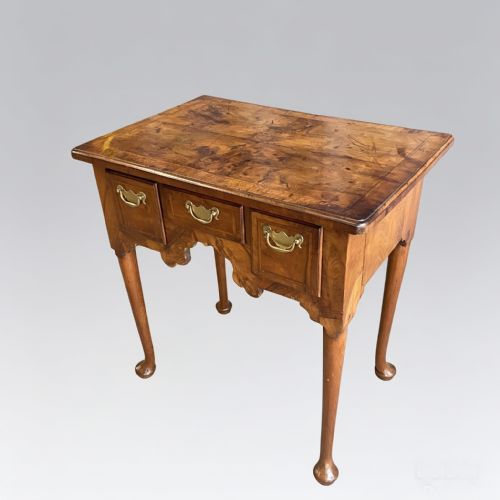


Georgian Burr Oak Table
A georgian burr oak table brings unmistakable warmth and intricate timber figure to a room, offering both practical surface space and rich historical character.
Georgian Burr Oak Table
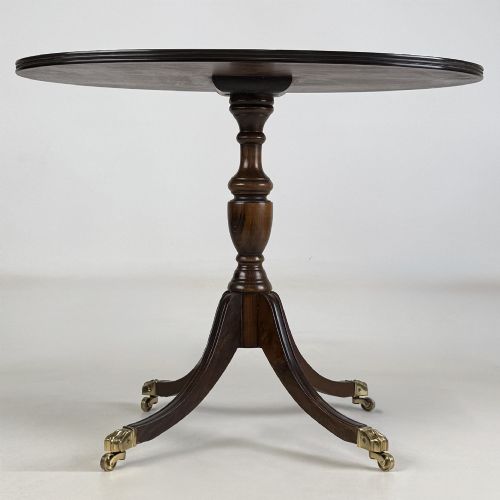
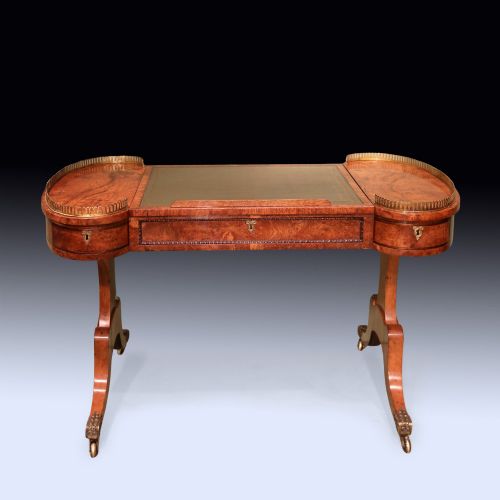
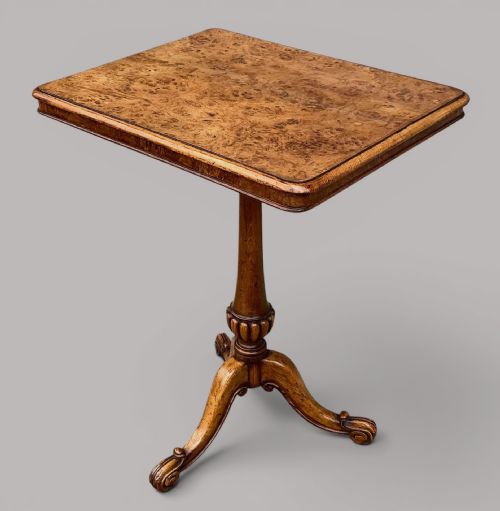
When searching for a georgian burr oak table, collectors encounter a focused selection of occasional, side, and writing forms dating primarily from the eighteenth century into the Regency period. These pieces showcase the dramatic grain patterns characteristic of burr timber, often utilised on table tops while secondary timbers provide structural support.
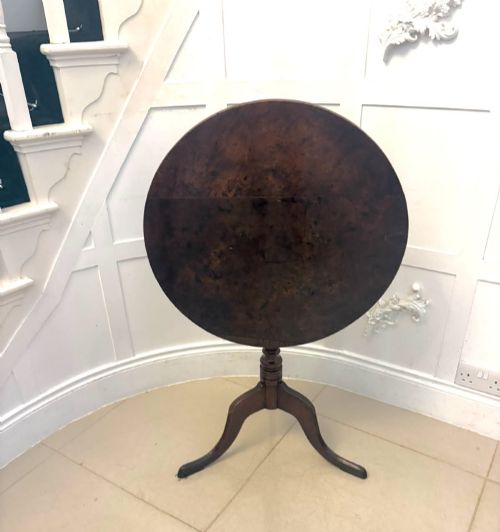
The assortment on this page spans compact tripod lamp tables, tilt-top wine tables, and larger card or writing tables. Alongside genuine Georgian pieces, the listings include related examples from the Edwardian era and Regency Revival styles that echo earlier forms.
Makers and cabinetmakers of the period selected burr oak specifically for its knotty, swirling growth formations, which create natural patterns across the surface. These tables function effectively in both traditional interiors and modern spaces as accent furniture or bedside surfaces.
Construction and materials
Makers constructed these tables by applying fine veneers of burr oak over stable primary and secondary woods such as solid oak, pine, or walnut. This technique allowed craftsmen to display the decorative grain across wide surfaces while maintaining structural integrity.
Joinery methods relied on traditional pegging, dovetailing for drawer construction where applicable, and secure turning for tripod stems and pillar supports. Brass hardware, including hinges and castors, appeared on specific forms like card tables and desks.
Several tilt-top tables on this page were originally designed to lean out of the way against parlour walls like polite wooden shields.
Factors determining quality
The quality of a burr oak table depends heavily on the intensity and placement of the timber figure across the top. Pieces with rich colour, deep patination, and well-matched veneer sections stand apart from plainer examples.
Proportion and stability also dictate value, particularly in tripod tables where the balance of the central column against the three legs must remain true. Original surface treatments and minimal timber replacement preserve the integrity of the piece.
William Trotter
The Georgian Burr Oak Table Glossary
- Burr oak
- A timber growth deformity that produces intricate, swirling patterns in the grain, highly prized for decorative furniture veneers. Cabinetmakers sliced these burls thinly to cover flat surfaces.
- Lowboy
- A small kneehole desk or dressing table featuring one or more rows of drawers beneath a flat top, typically standing on slender legs. These forms date frequently to the early eighteenth century.
- Tripod table
- A small freestanding table supported by a central pillar resting on three spreading legs, often built with a tilt-top mechanism. This design gained immense popularity during the Georgian period.
- Tilt-top
- A tabletop hinged to the upper shaft of a pillar support, allowing the surface to fold vertically when not in use. This mechanism saved floor space in smaller period rooms.
- Patination
- The deep, lustrous surface appearance developed by wood and polish over decades of handling and exposure to light. Good patination reveals the underlying warmth of the oak.
Georgian Burr Oak Table: Frequently Asked Questions
How do I date a burr oak table?
Dating relies on examining construction methods, timber choice, and the overall stylistic proportions of the legs and top. Eighteenth-century examples often display hand-cut joinery and specific turning styles that evolved through the Georgian and Regency eras.
Secondary woods used in the frame, such as pine or solid oak, provide further clues to the origin and period of manufacture when compared against known examples.
Where should I place a wine table?
Wine tables and candle stands work best beside armchairs, sofas, or in corners where their compact tripod bases occupy minimal floor space. Their small surface areas suit holding a single glass, a small lamp, or decorative items.
Because of their lighter construction, positioning them away from heavy foot traffic ensures they remain stable and protected from accidental knocks.
How do I care for burr oak surfaces?
Maintaining burr oak involves keeping the timber away from direct heat sources and strong sunlight, which can dry out the veneer and fade the polish. Regular dusting with a soft, dry cloth preserves the finish without building up residue.
Applying occasional specialist wax feeds the wood and maintains the natural lustre of the patination built up over centuries.