

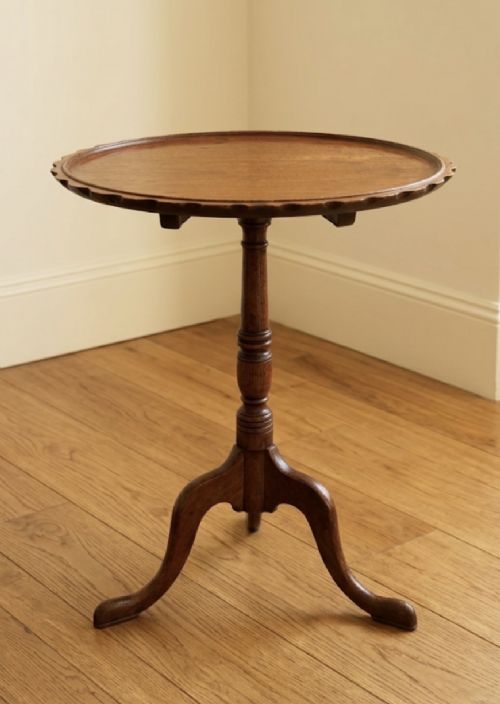


Circular Oak Occasional Table
A circular oak occasional table brings compact warmth and centuries of sturdy English craft into a room.
Circular Oak Occasional Table
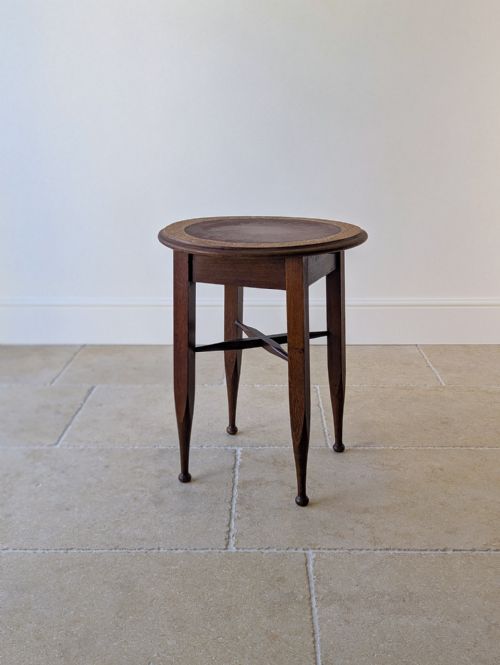
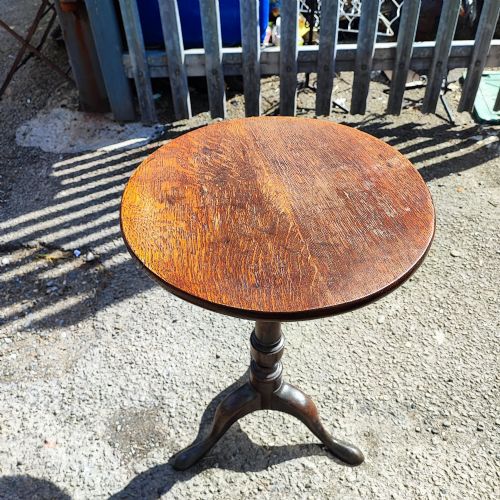
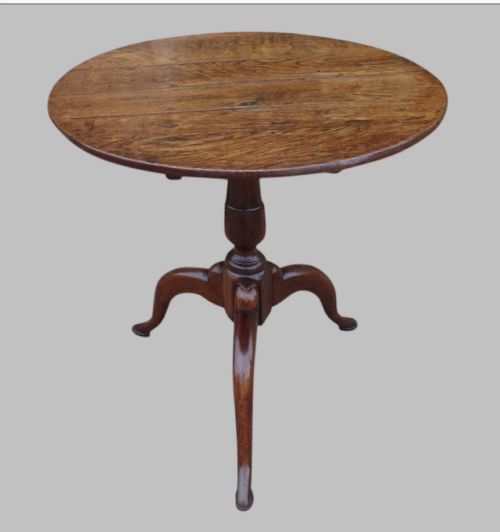
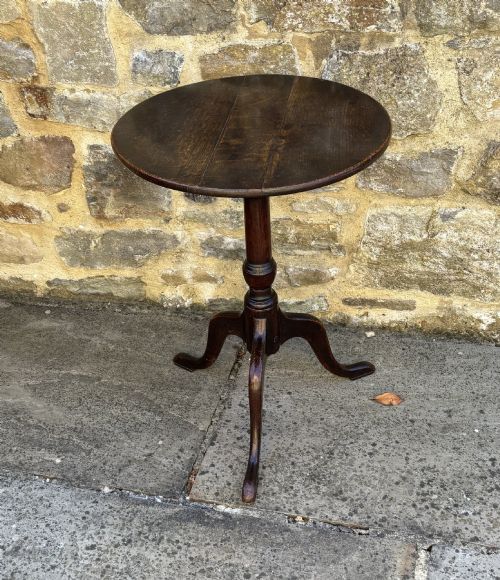
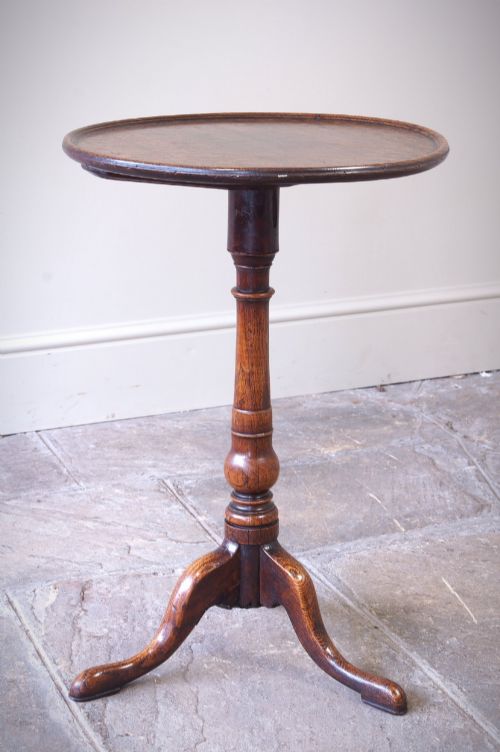
A circular oak occasional table spans centuries of domestic life, appearing most frequently in Georgian country designs and 18th century tripod formats. Buyers seeking this phrase encounter versatile small furnishings built for serving wine, holding lamps, or sitting beside a chair. The selection ranges from vernacular farmhouse pieces to Arts and Crafts interpretations.
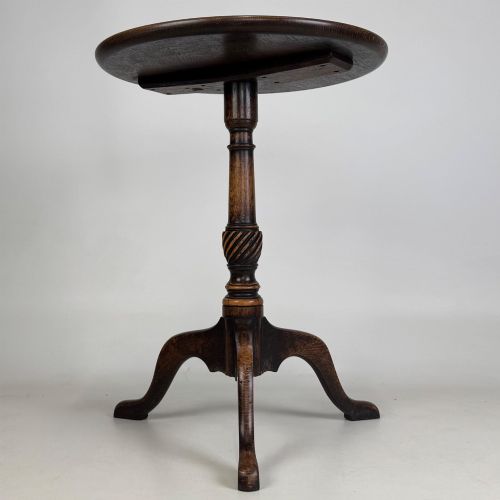
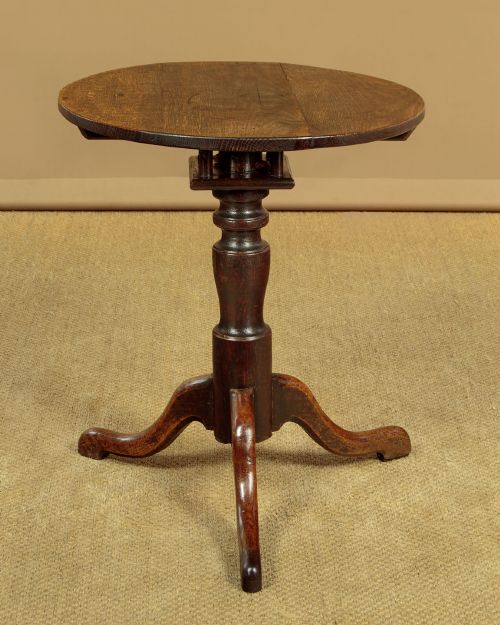
Tripod bases and tilt-top mechanisms dominate the form, allowing tables to be tucked against walls when not in use. Early examples often feature pegged joints and solid timber tops, whilst later Victorian and Edwardian variations introduce copper trays or simpler turned columns. The persistence of the round oak format demonstrates its enduring utility in domestic spaces.
Materials and construction
Makers relied primarily on solid English oak, occasionally selecting burr oak, fruitwood, or elm for figuring and contrast. Tops were turned or sawn from single boards where timber allowed, or joined neatly with dowels and hidden cleats.
Tripod frames demanded precise joinery, utilising pegged tenons and shaped legs to support heavy hardwood tops without wobble. Secondary elements such as brass catches or iron brackets appear on folding and tilt-top variants.
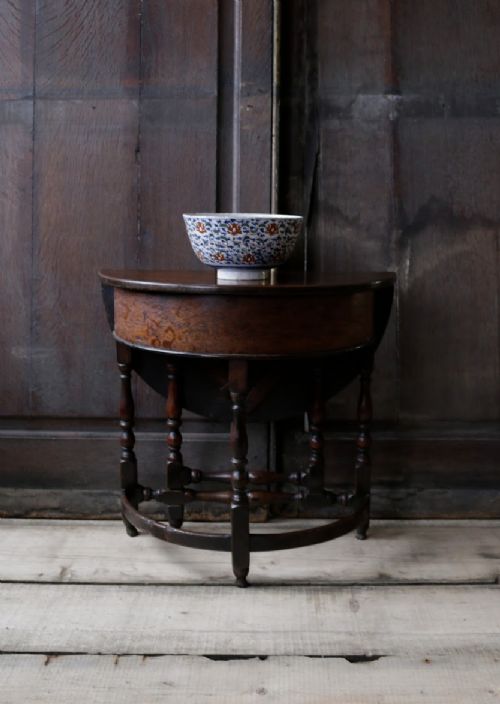
Listings span four centuries, uniting 17th century box tables with Edwardian Arts and Crafts designs in solid oak and fruitwood.
Gradations of quality
Quality rests in the balance of proportions and the selection of timber, where tightly figured grain or burr oak distinguishes finer specimens from standard utility furniture. The turning of the central column and the shaping of the tripod legs show the hand of a more accomplished carpenter.
Patination and surface depth separate superior pieces, developed through decades of wax polishing rather than modern intervention. Original tilt mechanisms and untouched brass fittings preserve the integrity of the piece.
The Circular Oak Occasional Table Glossary
- Tripod table
- A small occasional table supported by a central pillar above three legs. This design became standard for tea and wine tables during the 18th century.
- Tilt-top
- A hinged tabletop that pivots to a vertical position when not in use. This clever mechanism allowed tables to be stored flat against a wall.
- Cricket table
- A small, light round table standing on three splayed legs, often braced by a lower tier. The format dates back to the 17th and 18th centuries in rural English homes.
- Vernacular
- Everyday furniture made by local regional craftsmen rather than metropolitan workshops. These pieces prioritise practical utility over grand stylistic conventions.
- Patina
- The surface sheen and colour developed by wood over long periods of handling and polishing. Collectors prize timber that shows deep, natural warmth.
Circular Oak Occasional Table: Frequently Asked Questions
What is a tilt-top table used for?
A tilt-top table served primarily as a flexible surface for evening tea, reading, or holding a lamp. The hinged mechanism allowed the top to fold flat against the wall, clearing floor space when the room was empty.
In modern homes, these tables function well beside armchairs or as display surfaces. Their historic adaptability makes them practical for smaller rooms today.
How do I date an oak table?
Dating relies on observing construction methods, tool marks, and timber choice. 17th and 18th century pieces often show hand-sawn boards and pegged joints rather than modern screws.
Style also offers strong clues, transitioning from rustic vernacular frames to refined Georgian tripod bases. Examining the wear patterns around the edges helps confirm the age of the timber.
Where were these tables made?
The pieces originate largely from English provincial workshops, spanning rural farmhouses and regional cabinet makers. Woods like oak and fruitwood were sourced locally for domestic utility.
Later examples include London-based Arts and Crafts studios and commercial makers influenced by earlier vernacular traditions.