


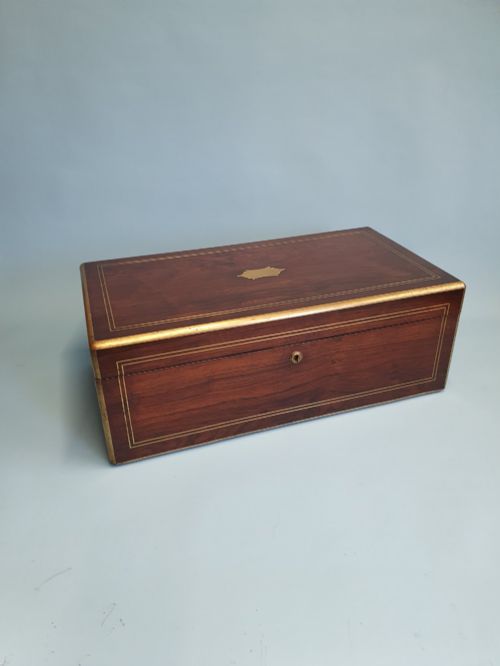


Georgian Brass Inlaid Desk
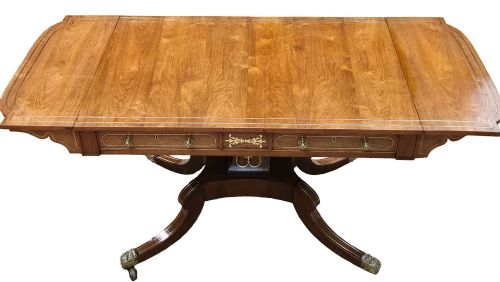
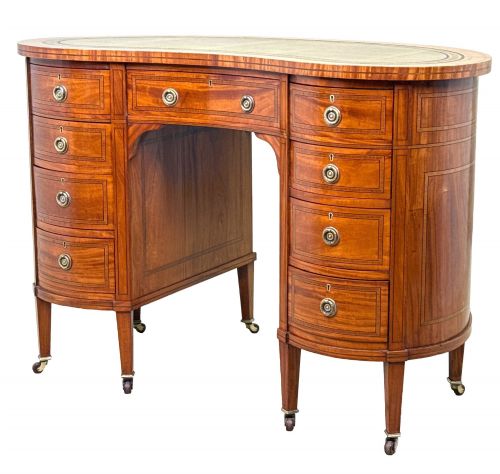
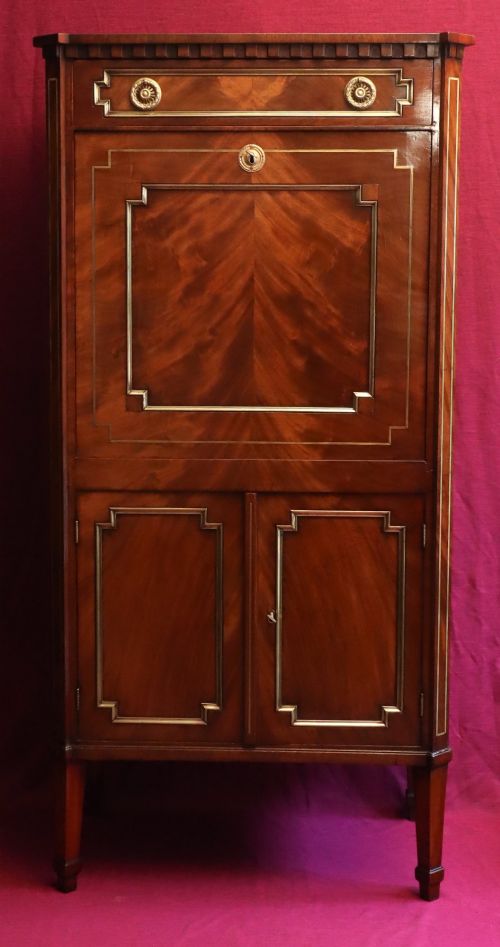
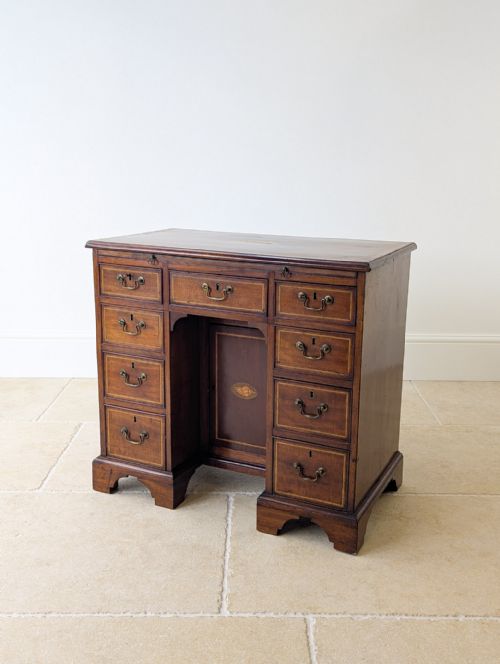
A georgian brass inlaid desk brings together rich timber and bright metalwork to anchor a study with enduring proportion and character.
Georgian Brass Inlaid Desk
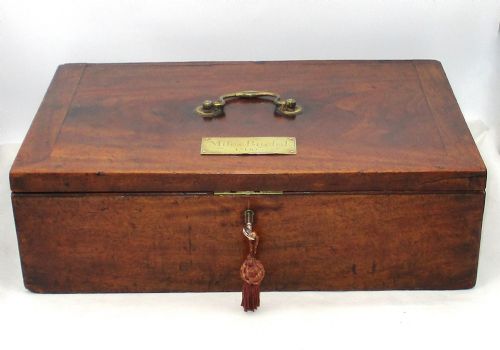
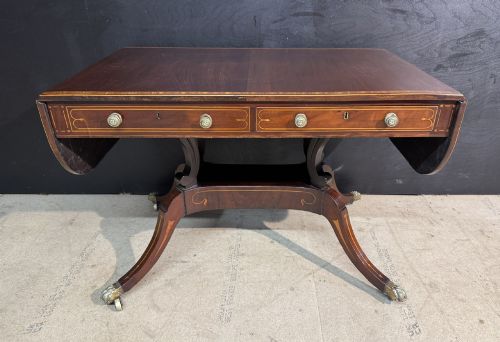
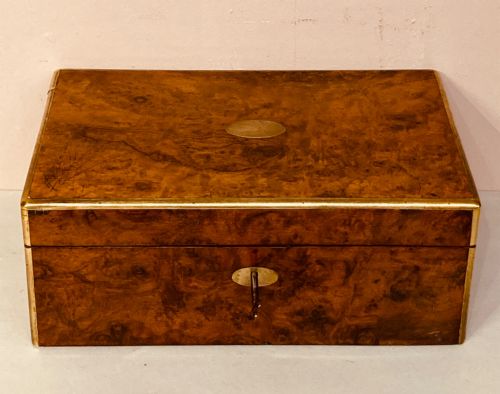
A georgian brass inlaid desk spans the refined cabinetwork of the Georgian, Regency, and late Georgian periods, alongside later revivals. Buyers encounter pieces ranging from compact writing slopes and document boxes to larger pedestal and cylinder desks.
The materials recorded in these examples centre on mahogany, rosewood, and satinwood, enriched with brass inlay, ebony, and leather writing surfaces. Forms vary from slope-front boxes to library tables and sophisticated Carlton House desks.
Originating primarily from English workshops, these pieces demonstrate the transition from the restraint of the eighteenth century to the bolder ornamentation of the Regency era.
Assessing Quality
Quality rests upon the precision of the brass inlay and the selection of the timber veneer. Finer pieces display tight, continuous brass channels with minimal filler and well-matched grain across the drawer fronts and top surfaces.
The secondary woods used in drawer linings and internal compartments, alongside the original condition of mounts and handles, distinguish workshop execution. Well-preserved original patination on the timber surface elevates a piece considerably.
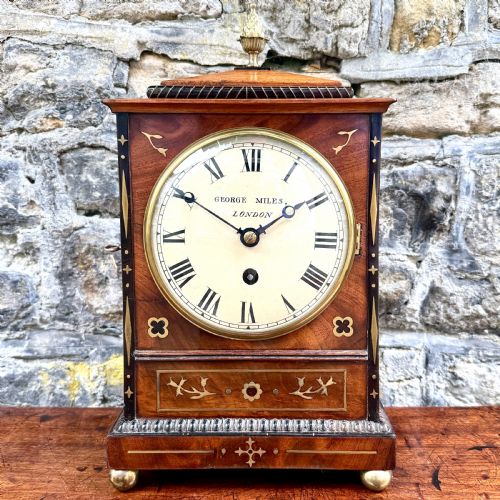
Listings feature rosewood, mahogany, satinwood, and coromandel timbers combined with brass inlay across desks, clocks, and document boxes.
Bush of London·Wilkinson Leicester·Gillows of Lancaster
The Georgian Brass Inlaid Desk Glossary
- Writing slope
- A portable box with a hinged, slanted lid that opens to reveal a velvet or leather-lined writing surface and compartments for ink and pens.
- Stringing
- A narrow inlaid line of contrasting timber or brass used to outline panels, drawers, and borders on cabinet furniture.
- Escritoire
- A tall writing cabinet featuring a fall-front desk flap concealing pigeonholes and small drawers.
- Cylinder desk
- A desk with a curved, rolling wooden cylinder that covers the writing slide and internal pigeonholes when closed.
- Bracket clock
- A portable tabletop clock designed to sit on a bracket or shelf, often housed in a mahogany or rosewood case with brass mounts.
Georgian Brass Inlaid Desk: Frequently Asked Questions
How do I care for brass inlay?
Dust the timber regularly with a soft, dry cloth and avoid modern silicone polishes that can seep beneath the brass channels.
Condition the wood occasionally with traditional beeswax to nourish the grain without disturbing the metalwork.
Are these desks suitable for daily use?
Many of these pieces function well for modern writing tasks, provided you protect antique leather or wood surfaces from moisture and heavy impacts.
Smaller slopes and tables fit comfortably into contemporary rooms as laptop stations or writing desks.
How do I distinguish Regency from Georgian pieces?
Georgian furniture typically emphasises architectural proportion and subtle mahogany grain, reflecting classical restraint.
Regency pieces introduce bolder rosewood veneers, more extensive brass inlay, and classical revival motifs inspired by Roman and Greek design.