
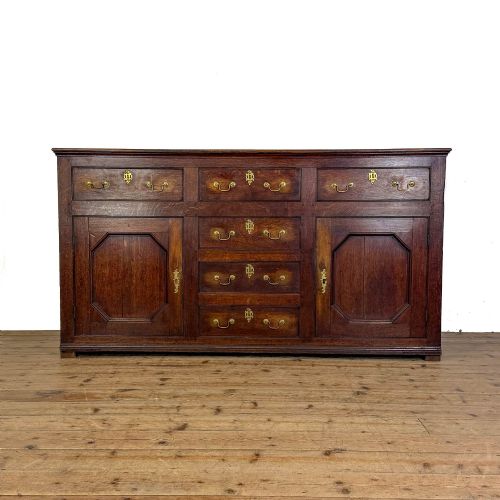
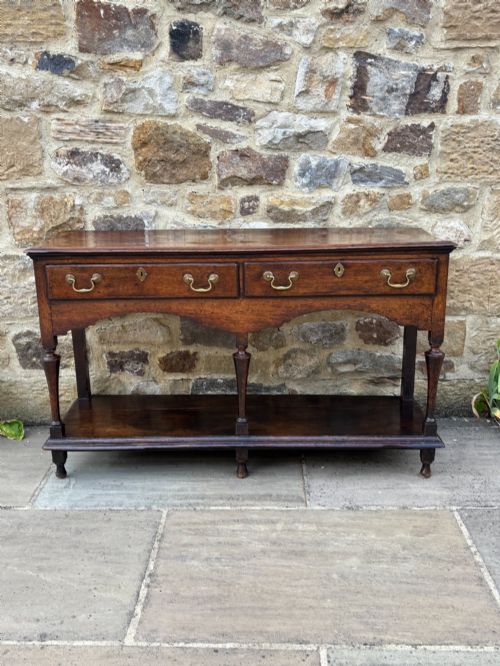
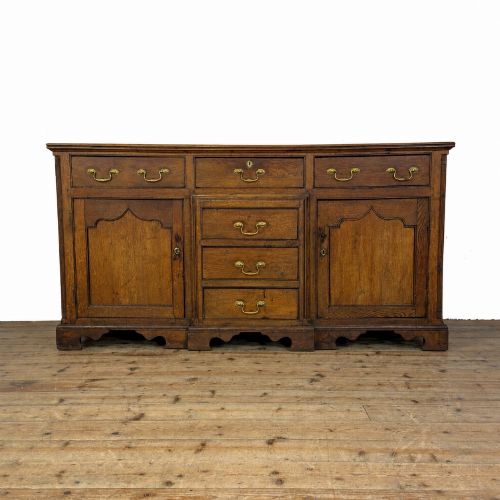
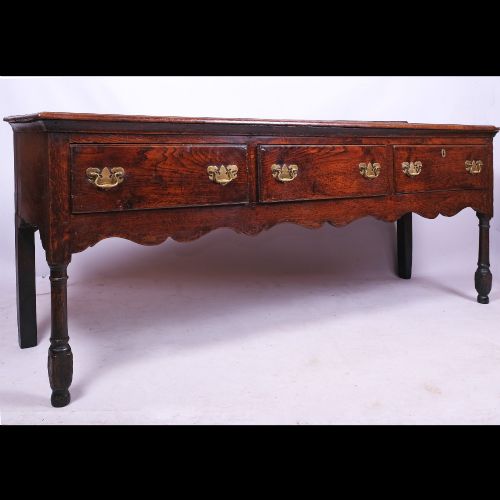

Georgian Brass Handle Sideboard
A georgian brass handle sideboard brings together sturdy timber and bright metalwork, offering practical storage with timeless proportions.
Georgian Brass Handle Sideboard
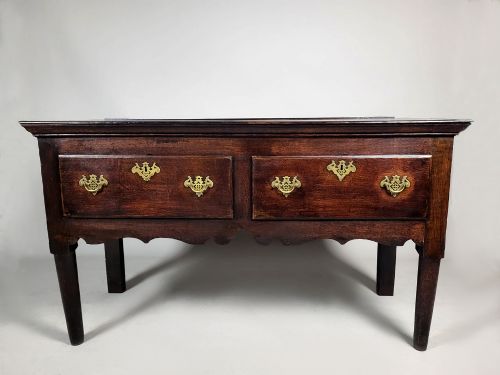
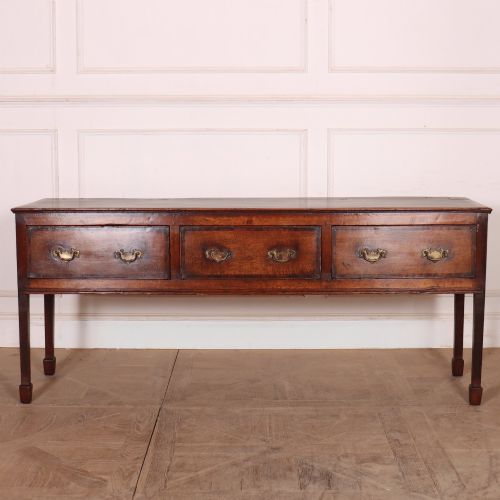
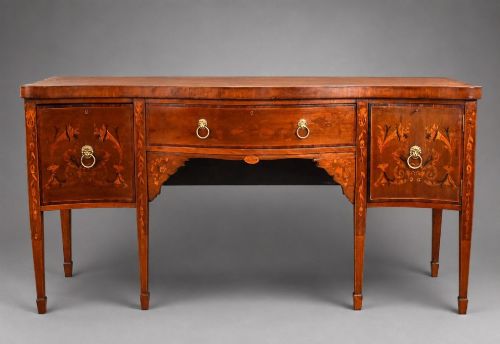
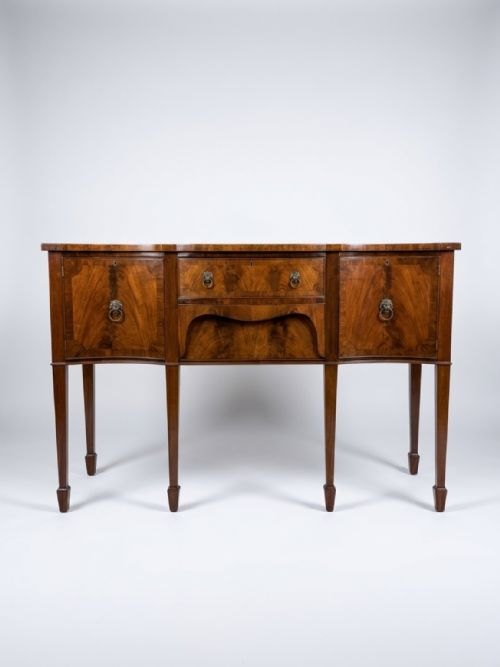
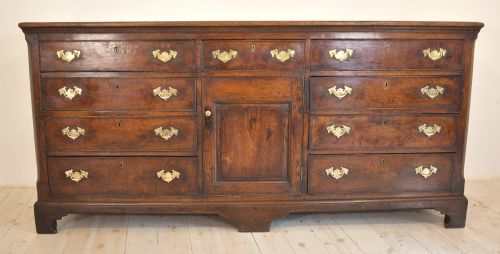
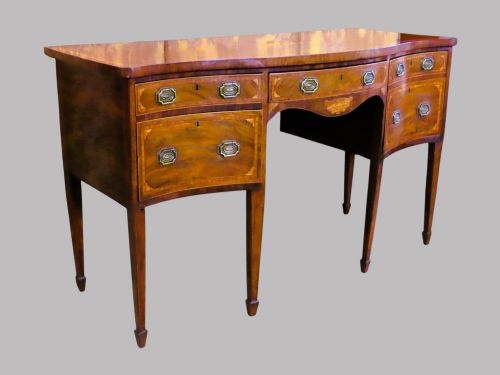
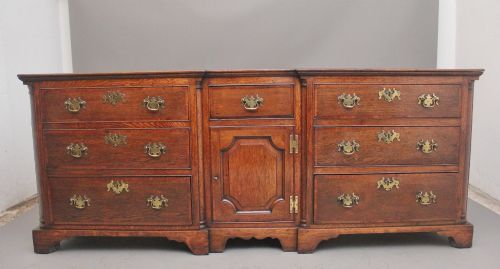
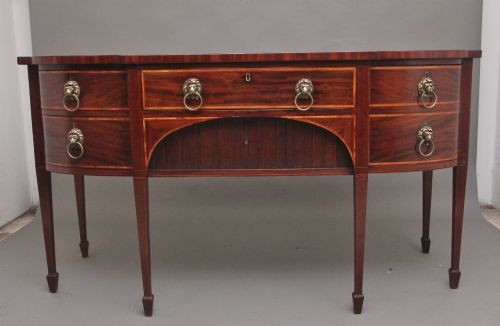
When you search for a georgian brass handle sideboard, you encounter formal dining room furniture built primarily during the eighteenth and early nineteenth centuries. These pieces appear in forms ranging from straightforward oak dresser bases to elegant mahogany serpentine and bow-fronted sideboards.
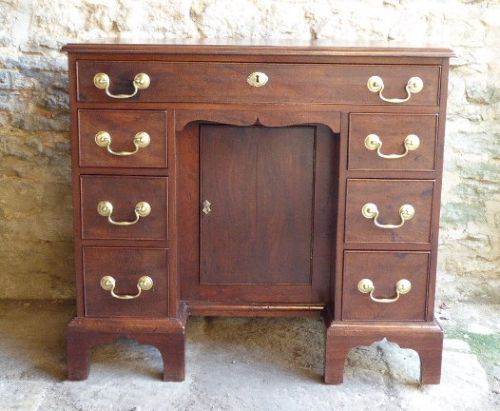
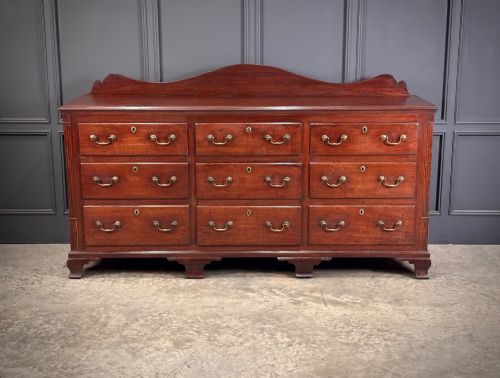
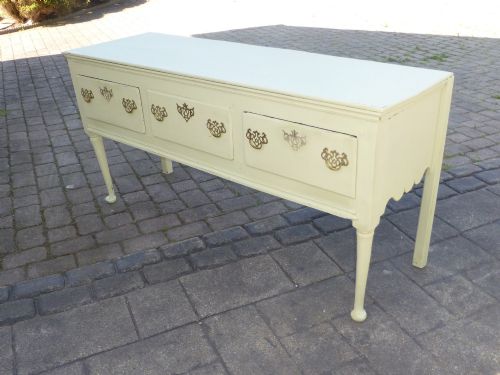
The items listed on this page encompass various regional and stylistic interpretations from the Georgian, George III, and Regency periods. Alongside traditional sideboards, you will find related serving tables, desks, and potboard dressers sharing similar brass hardware.
Mahogany and oak dominate the construction, often enhanced by inlay work or original brass handles. These foundational forms reflect the domestic storage needs and dining customs of their original periods.
Distinctions in quality and execution
The caliber of a piece depends on the choice of timber and the precision of its joinery, particularly where curves and inlays meet. Finely figured mahogany grain and crisp boxwood stringing elevate the visual impact.
Hardware integrity also plays a role, with original brass handles and mounts representing a higher standard of preservation compared to later replacements. The balance of proportions and the neatness of interior construction complete the distinction between standard and superior examples.
Listings feature oak and mahogany pieces spanning the eighteenth century through the Edwardian revival period, incorporating brass hardware and inlay.
The Georgian Brass Handle Sideboard Glossary
- Serpentine front
- A front contour characterised by a convex centre flanked by concave curves. This shape requires advanced woodworking skill to execute cleanly.
- Bow front
- A convex, outwardly curved front profile popular in late eighteenth and early nineteenth-century case furniture. It softens the geometric lines of a room.
- Dresser base
- A low wooden storage unit featuring drawers and sometimes an open potboard beneath. These utilitarian pieces formed the backbone of country house kitchens and dining rooms.
- Inlay
- A technique where contrasting woods like boxwood or satinwood are inserted into recesses within the primary timber. It creates geometric or floral patterns across the surface.
Georgian Brass Handle Sideboard: Frequently Asked Questions
What is a georgian brass handle sideboard?
A georgian brass handle sideboard is a formal dining room storage unit featuring drawers and cupboards, equipped with period brass hardware. These pieces date primarily from the eighteenth and early nineteenth centuries.
They combine robust timber construction with decorative elements like mahogany veneers and boxwood inlay. Their primary function was storing dining silver, linen, and serving dishes.
How do I identify a George III sideboard?
George III sideboards typically display refined mahogany construction, often shaped with bow fronts or serpentine curves. Look for period characteristics such as tapered legs and original brass handles.
Makers of this era focused on balanced proportions and subtle decorative stringing. The integration of satinwood or boxwood inlay further points to this specific period.
Where were these sideboards used?
These pieces were placed in formal dining rooms and parlours of substantial homes to assist with meal service. They served as staging surfaces for dishes and storage for dining accessories.
Today, they transition easily into modern living spaces as hallway consoles or dining room focal points. Their drawers and cupboards provide practical storage for contemporary items.
What wood was used?
Makers most frequently utilised mahogany and oak for the primary structure of these sideboards. Mahogany was favoured for formal, polished dining room furniture, while oak appeared often in country pieces and dresser bases.
Additional woods like walnut, rosewood, and satinwood appear in specific regional or later revival pieces. Inlay work commonly incorporated lighter woods such as boxwood to create contrast.