


Georgian Box Toilet Glass
A georgian box toilet glass provides a tabletop mirror mounted on a small cabinet or drawer base for personal grooming.
Georgian Box Toilet Glass
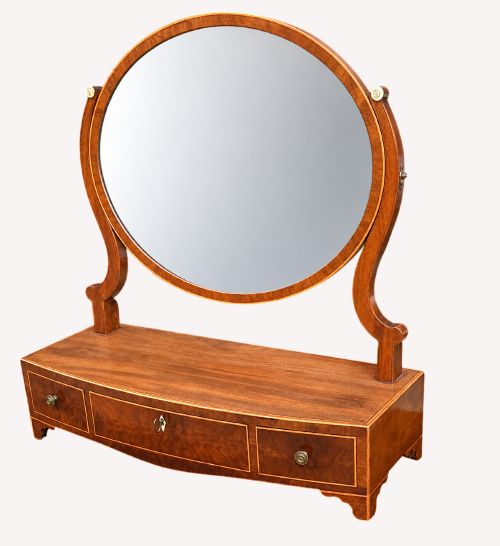
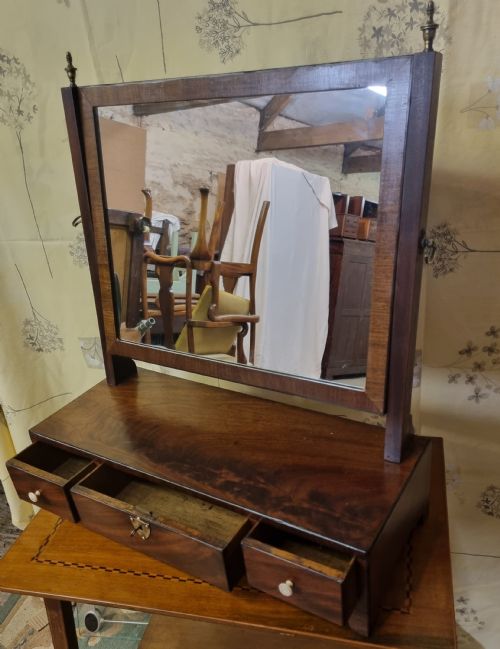
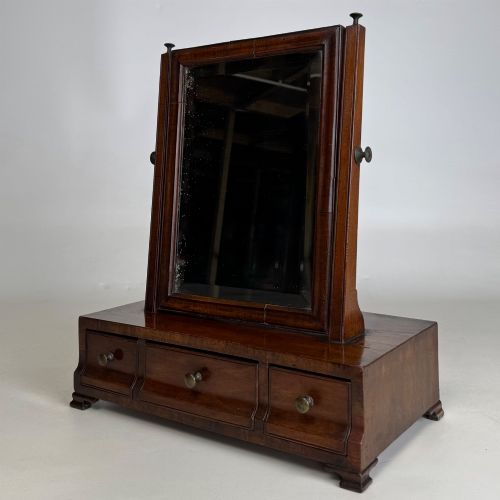
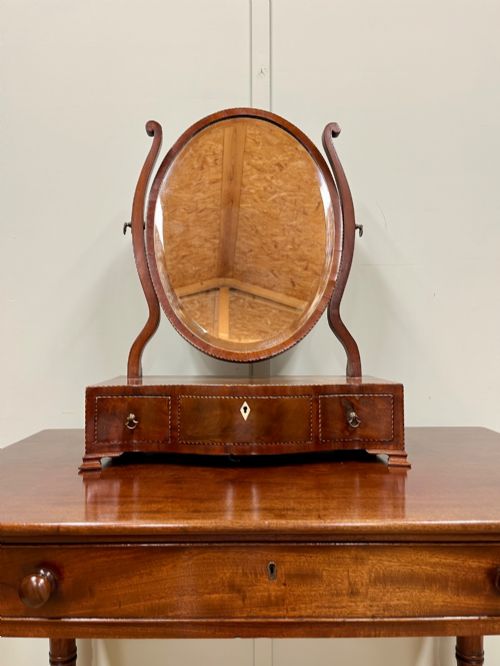
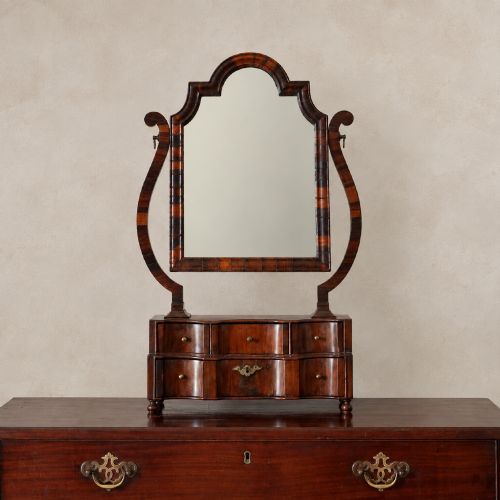
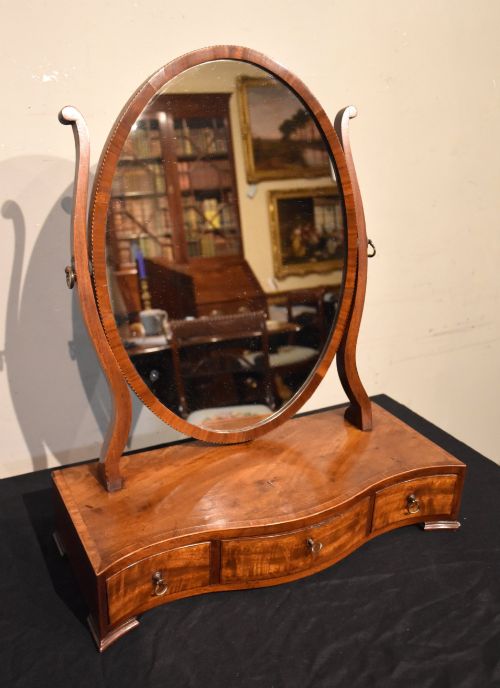
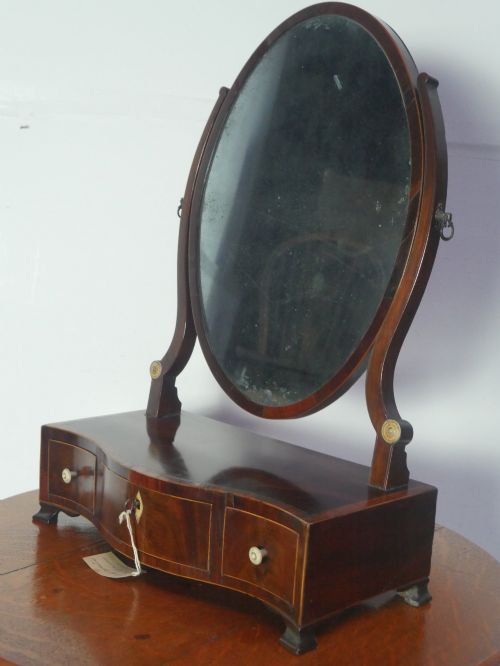
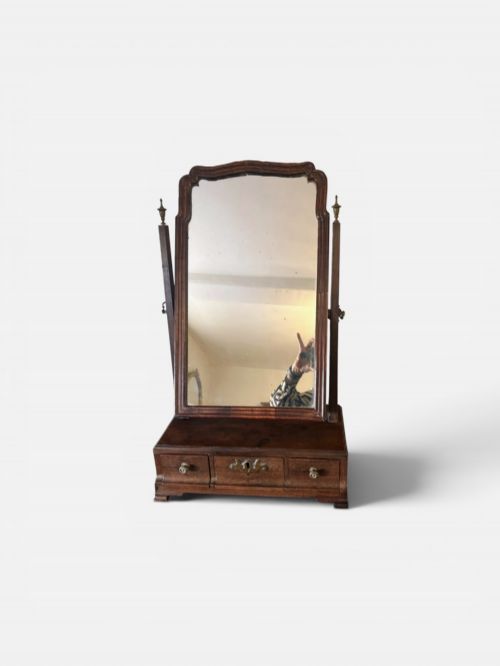
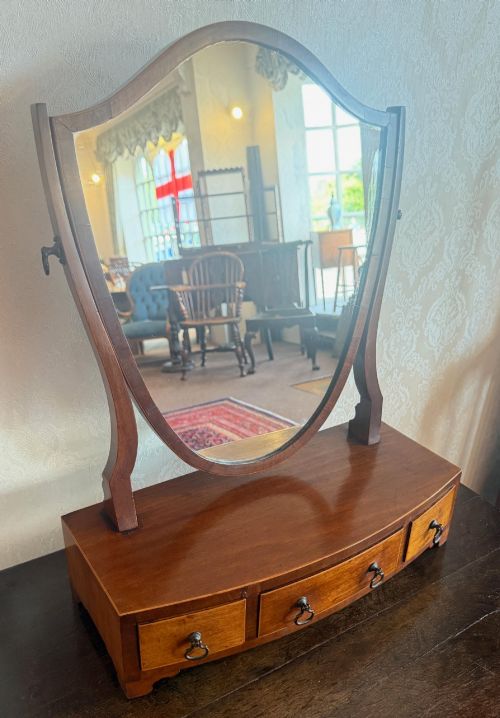
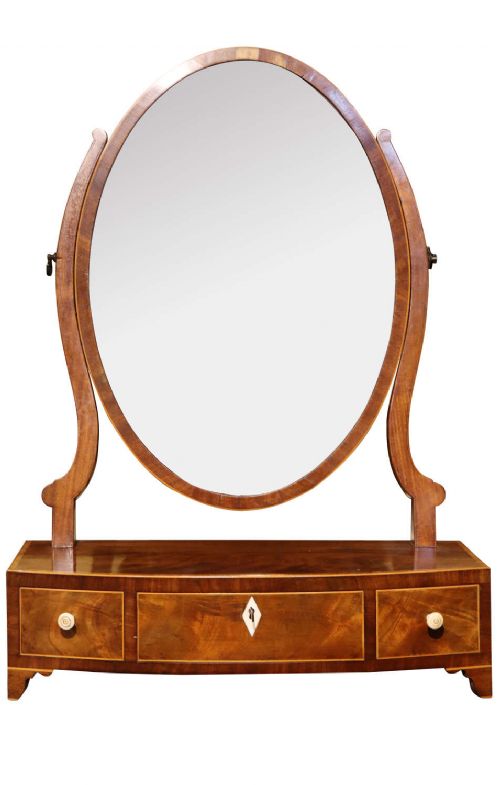
When you search for a georgian box toilet glass, you encounter dressing mirrors, table mirrors, and vanity boxes primarily from the eighteenth and nineteenth centuries. These pieces sit upon chests or tables, combining a tilting mirror plate with a small wooden base or box containing drawers.
The most common examples on this page are mahogany dressing table mirrors featuring rectangular or oval glass frames mounted between upright arms. Many incorporate serpentine or bow-front drawers at the base, alongside walnut, rosewood, and occasional lacquered variants.
Materials and construction
Cabinetmakers constructed these dressing mirrors predominantly in solid mahogany and walnut, frequently applying veneers, crossbanding, and boxwood or bone inlay. Timber selection dictated the structural integrity of the base box which housed small storage compartments for personal items.
The glass plate sits within a pivoting frame adjusted by brass screw knobs or side pins. Mirror plates themselves were silvered on glass, held securely by wooden backboards within the frame.
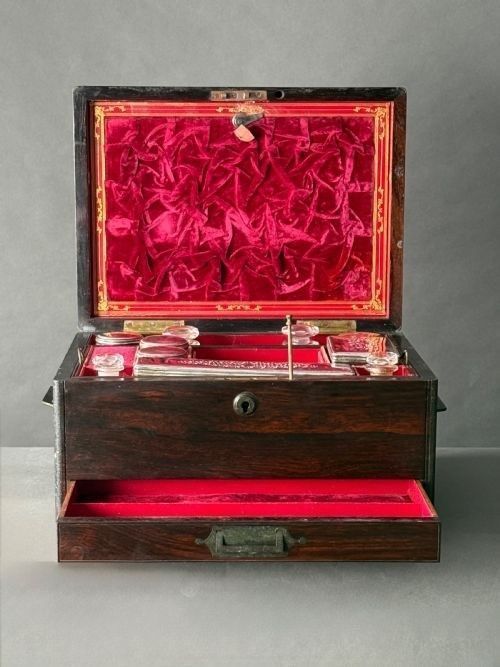
One exceptional set includes a stag crest and five matching pieces, proving that Georgian travellers packed in serious style.
Judging the standard
Quality rests upon the crispness of the timber figuring, the subtlety of crossbanding, and the proportion between the mirror frame and the drawer base. Superior examples display refined serpentine shaping and well-executed dovetail joints on the drawers.
The integration of original brass hardware, stable pivot mechanisms, and clear mirror glass elevates the piece. Lesser examples show mismatched woods, replaced mirror plates, or clumsy proportions in the upright supports.
Jonathan Douglas
The Georgian Box Toilet Glass Glossary
- Toilet mirror
- A small table mirror designed for use on a dressing table or chest of drawers. These items typically feature a box base fitted with drawers.
- Serpentine front
- A curved furniture front curving outward in the centre and inward at the sides. This shape appears frequently on higher-end dressing mirror bases.
- Crossbanding
- A strip of veneer applied perpendicularly to the grain of the surrounding wood along the edge of a surface. This decorative technique frames drawer fronts and mirror surrounds.
- Swing mirror
- A mirror plate mounted on pivots allowing it to tilt back and forth. The frame is supported by two upright arms attached to the base box.
- Boxwood
- A dense, pale yellow wood utilised for stringing and delicate inlay work on mahogany and walnut furniture.
Georgian Box Toilet Glass: Frequently Asked Questions
What is a toilet glass?
A toilet glass is a historical term for a dressing table mirror used during the grooming routine. These pieces combine a tilting mirror with a small wooden box base.
The base often contains one or more small drawers for storing jewellery and cosmetics. They sat on top of larger chests or dressing tables rather than standing on the floor.
How do I date these mirrors?
Dating relies on examining the timber species, construction methods, and hardware styles. Eighteenth-century examples often feature walnut or early mahogany with hand-cut dovetails and subtle crossbanding.
Nineteenth-century pieces frequently show heavier mahogany veneers or differing brass fixture designs. Comparing the primary wood and drawer construction helps determine the period.
Where should I place it?
These mirrors suit placement on top of modern chests of drawers, sideboards, or dressing tables. Their compact box bases require minimal surface depth.
Ensure the supporting furniture matches the scale of the mirror base. Position them where natural light assists with grooming.
Are the mirror plates original?
Many surviving dressing mirrors have replacement glass plates due to age and fragility. Original mirror glass often exhibits slight foxing, minor warping, or wavy reflections.
Replacement glass appears clearer and lacks historical surface wear. Both original and replaced plates remain common across surviving examples.