


Georgian Bowfront Mirror
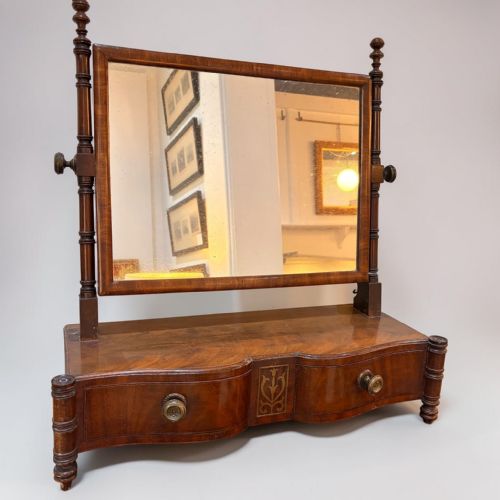
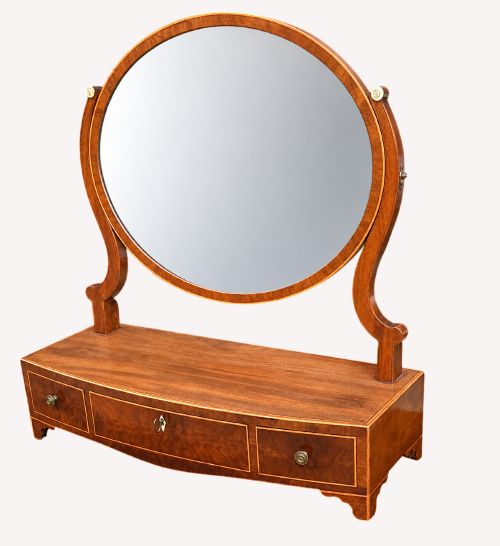
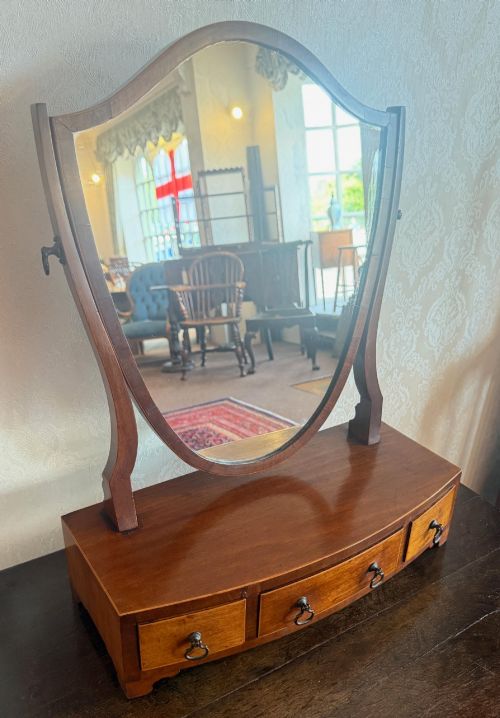
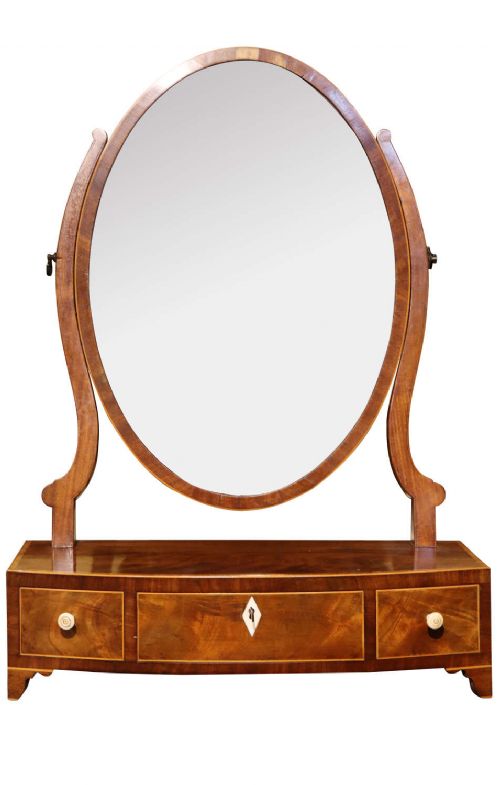
These Georgian bowfront mirror pieces offer rich mahogany frames and practical dressing utility for any classical interior.
Georgian Bowfront Mirror
A georgian bowfront mirror brings together domestic utility and cabinet-maker artistry from the late eighteenth and early nineteenth centuries. These pieces serve primarily as dressing table mirrors or toilet mirrors, designed to sit atop a chest or vanity for daily grooming.
Most examples found here date across the eighteenth and nineteenth centuries, spanning the Georgian, George III, and Regency periods. The forms range from simple rectangular plates to oval glasses set within sweeping curved drawer bases.
Makers of the era employed styles such as Sheraton alongside regional interpretations to create functional items that doubled as refined room furnishings. Buyers will encounter both authentic period pieces and later revival versions finished in mahogany or flame mahogany.
How they were made
Makers constructed these frames predominantly from solid mahogany, frequently utilising flame mahogany veneers to create striking figure patterns on the curved drawer fronts. Boxwood inlay and bone details added linear contrast to the deeper timber tones.
Glass plates were silvered by hand and held within adjustable pivoting frames supported by upright arms. Brass fittings, including pivoting screws and small drawer knobs, provided both mechanical function and decorative accent.
Listings span the 18th and 19th centuries, featuring mahogany, brass, bone, and boxwood inlay across various dressing mirror forms.
What varies in quality
Quality reveals itself in the selection of timber, particularly the depth of grain in flame mahogany and the crispness of any boxwood inlay. Superior examples display thoughtful proportion between the mirror plate and the bowfront base beneath.
The joinery of the curved drawer boxes and the weight of the original brass hardware separate ordinary workshop output from finer cabinet-making. Subtle details such as secondary wood selection and the precision of the pivoting mechanism indicate the maker's care.
The Georgian Bowfront Mirror Glossary
- Bowfront
- A curved front contour that swells outward in the centre. This shape softens the profile of a dressing mirror and adds complexity to the base drawers.
- Crossbanded
- A border technique where thin strips of veneer are laid perpendicular to the grain of the main surface. It frames the primary timber and demonstrates extra labour by the cabinet-maker.
- Toilet mirror
- A small portable mirror designed for a dressing table or chest of drawers. These pieces often incorporate small storage drawers in the base.
- Flame mahogany
- A highly figured cut of mahogany grain resembling flickering flames. Cabinet-makers reserved this decorative veneer for prominent surfaces like drawer fronts.
- Pivoting frame
- The hanging mechanism that allows the mirror glass to tilt backward and forward. It relies on lateral screws or pins fitted into upright support arms.
Georgian Bowfront Mirror: Frequently Asked Questions
Where should I place a dressing mirror?
These mirrors suit dressing tables, chest tops, or sideboards where their compact proportions add height and reflect light into a room.
Ensure the surface is stable and deep enough to support the curved base without overhang.
How do I identify a Georgian mirror?
Look for period timber varieties such as solid mahogany, hand-cut veneers, and traditional joinery methods on the drawer boxes.
Hardware should match the period style, and the overall construction ought to show manual assembly rather than modern manufacturing.
Can the mirror glass be replaced?
Many surviving examples retain their original glass, which often exhibits gentle foxing or age spots from centuries of oxidation.
While glass can be replaced if broken, retaining the original plate preserves the authentic character and history of the piece.
What is the difference between Georgian and Regency styles?
Georgian pieces often feature warmer mahogany tones and understated decorative inlays like boxwood or bone stringing.
Regency examples frequently lean toward bolder architectural lines and distinct proportions influenced by classical antiquity.