


Bowfront Swing Mirror
A bowfront swing mirror is a tabletop dressing glass designed for the Georgian or Regency interior, offering a curved base and adjustable plate.
Bowfront Swing Mirror
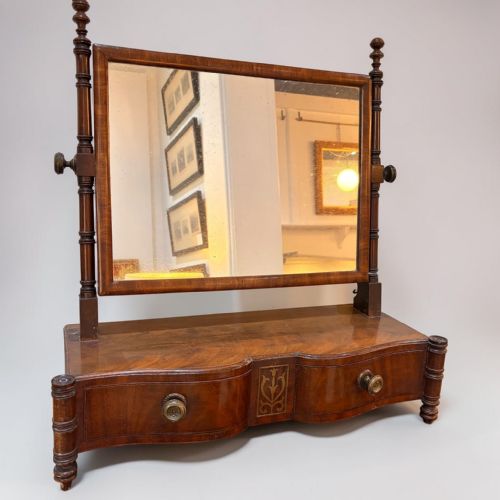
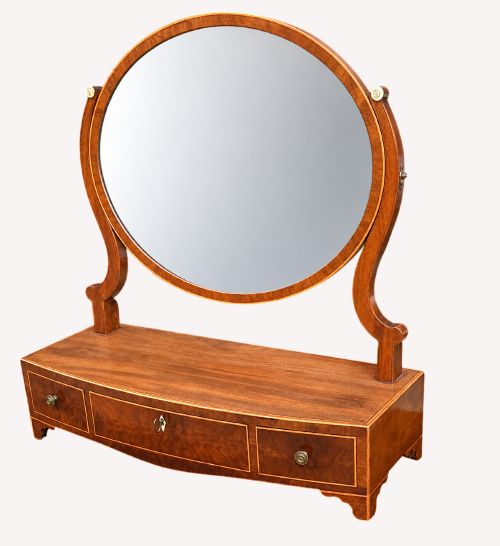
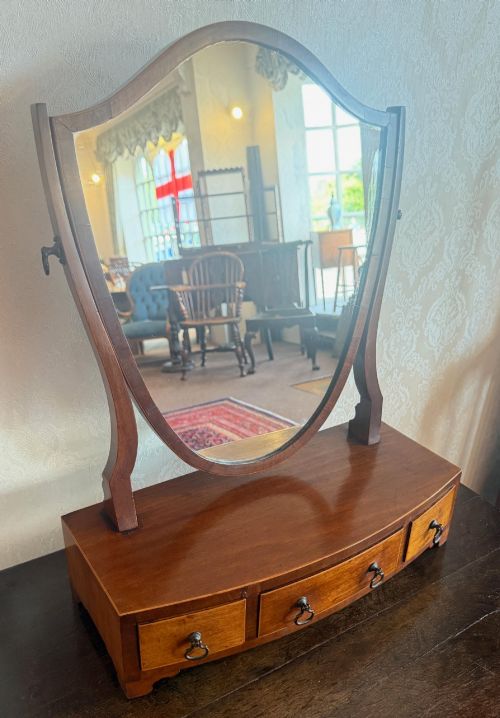
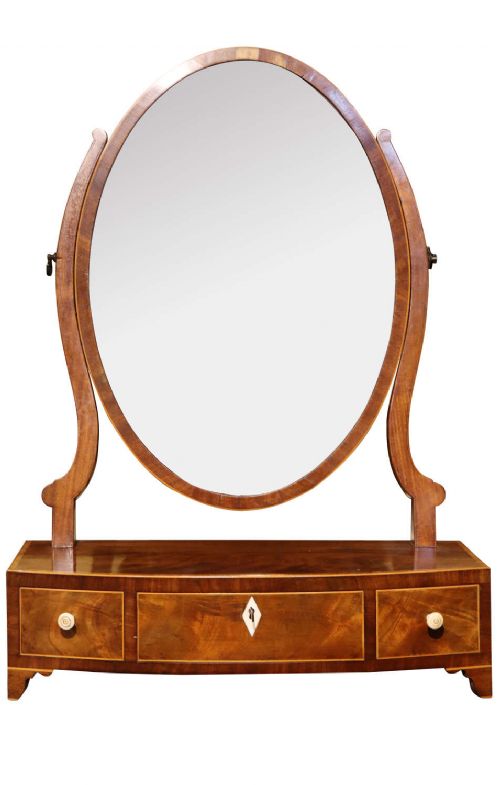
A bowfront swing mirror is a tabletop glass mounted on upright arms above a curved base, used on dressing tables and chests of drawers. Most examples on this page date from the Georgian and Regency periods, spanning the eighteenth and early nineteenth centuries.
The form appears in various guises such as dressing table mirrors, toilet mirrors, and dressing mirrors. Mahogany is the dominant wood, occasionally accompanied by burr maple.
The curved serpentine or bowfront shape defines the drawer section beneath the glass. These pieces combine practicality with the cabinet-making styles of George III, Sheraton, and the Regency era.
How they were made
Cabinet makers constructed these mirrors using solid and veneered timbers, notably flame mahogany and standard mahogany, supported by secondary woods. Boxwood inlay and crossbanding frequently accent the drawer fronts and frame edges.
Mirrors utilise silvered glass plates set within adjustable wooden frames, pivoting on brass screw pins or side fittings. Bone escutcheons and small turned wooden knobs often complete the drawer sections.
Some drawers are small enough to lose a cufflink yet stout enough to outlast several owners.
What varies in quality
Quality rests upon the choice of timber figure, such as the depth of flame mahogany or the striking grain of burr maple. Finer pieces display crisp boxwood inlay and precise crossbanding that follow the curved outline of the bowfront base.
The proportion between the upright supports, the mirror frame, and the lower drawer box dictates the visual balance of the piece. Original mirror plates and intact brass pivoting hardware also contribute to a higher grade of craftsmanship.
The Bowfront Swing Mirror Glossary
- Bowfront
- A convex curved front, most commonly seen on the drawer section beneath the mirror plate. This shape softens the rectangular lines of traditional dressing glasses.
- Crossbanding
- A narrow strip of veneer laid across the grain of the primary wood around the border of a panel or drawer. It creates a neat framing effect on Georgian furniture.
- Flame mahogany
- A highly figured cut of mahogany displaying leaping, flame-like patterns in the grain. Makers reserved this decorative veneer for prominent surfaces like drawer fronts.
- Toilet mirror
- A period term for a small dressing table mirror designed to sit on a chest or dressing stand. These pieces were essential for personal grooming in bedrooms.
Bowfront Swing Mirror: Frequently Asked Questions
What is a bowfront swing mirror?
A bowfront swing mirror is a portable dressing glass featuring a curved drawer base and a pivoting frame. They sit comfortably on top of chests of drawers or dressing tables.
Most surviving examples date from the Georgian and Regency periods, constructed in mahogany with brass fittings.
How do I date a bowfront swing mirror?
Dating relies on timber choice, construction methods, and stylistic cues like inlay work. Pieces from the eighteenth century often show finer proportions and simpler bracket feet.
Nineteenth-century examples from the Regency era may incorporate bolder veneers like flame mahogany or burr maple alongside heavier brass mounts.
Where were these mirrors placed?
These mirrors rested on dressing tables, low chests of drawers, or washstands within bedrooms and dressing rooms. Their portable nature allowed owners to move them for the best light.
The small drawers in the base held cosmetics, pins, and jewellery.
Are the mirror plates usually original?
Many mirrors retain their original glass plates, which can exhibit light foxing, minor silver loss, or age spots. Replaced plates do appear on pieces from this era.
Original glass adds historical continuity to a Georgian dressing mirror.