
Georgian Bowfront Furniture
Georgian bowfront furniture brings curved fronts and rich timber to rooms, offering chests, sideboards, and cupboards that collectors seek for storage and form.
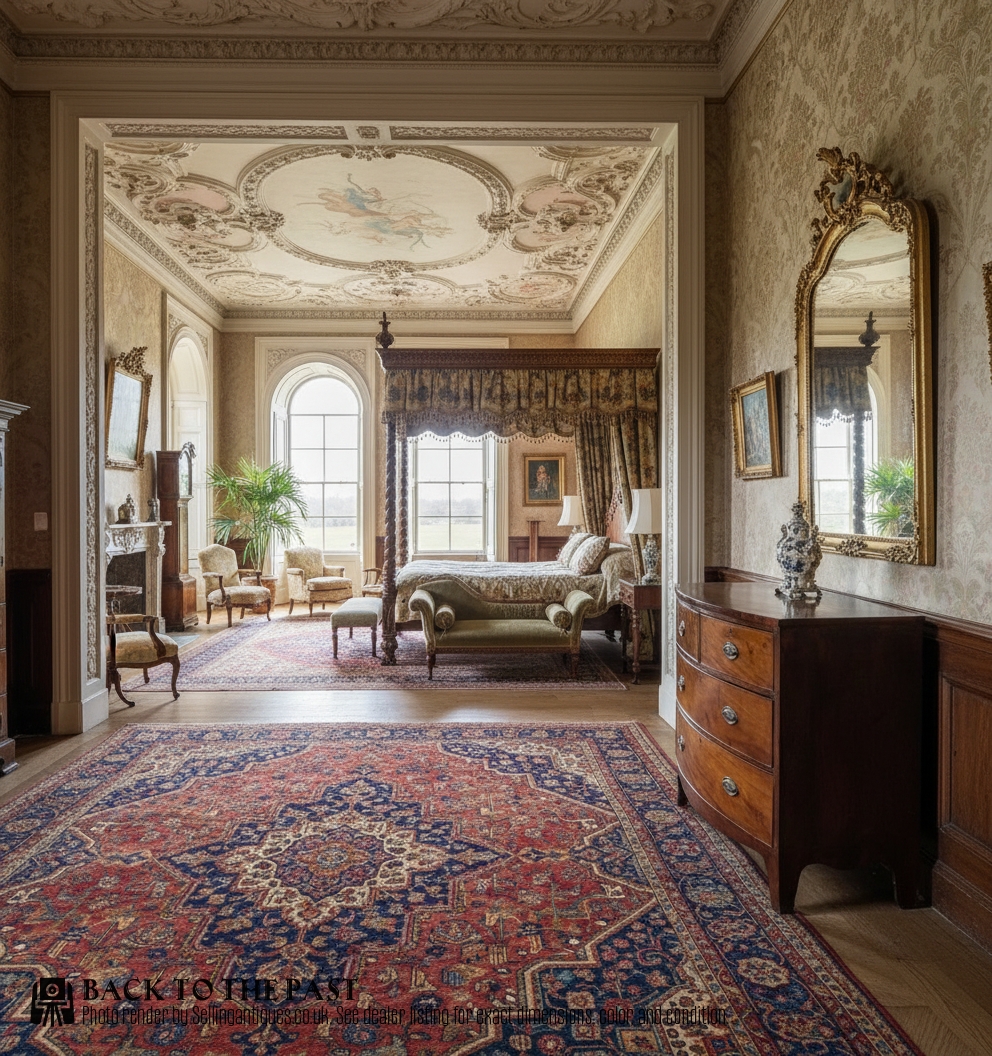
Georgian Bowfront Furniture
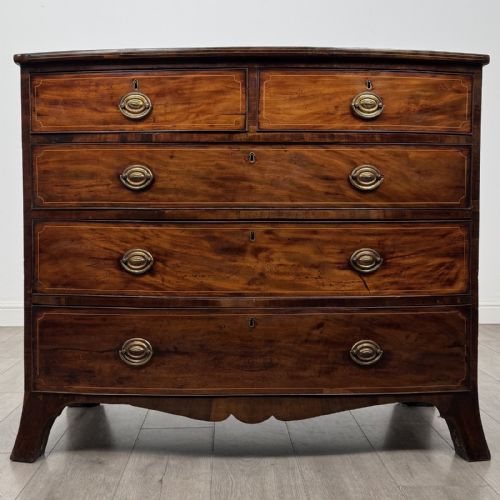
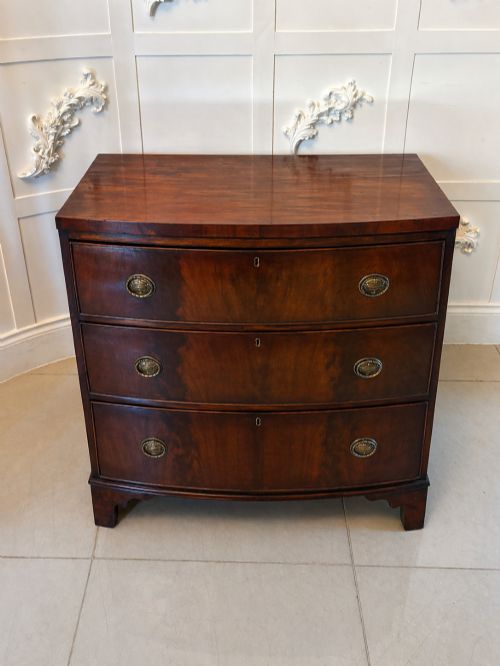
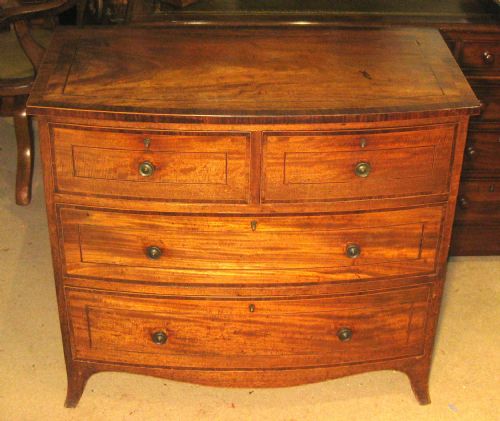
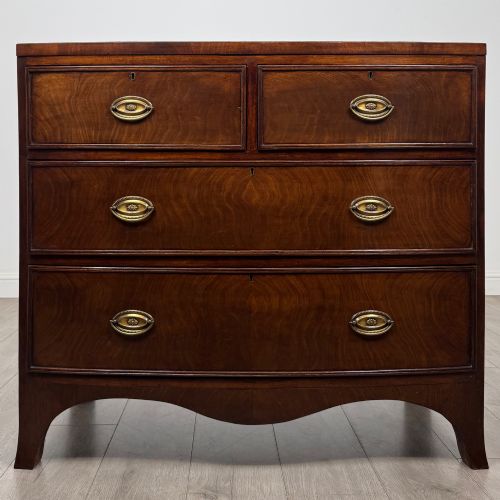
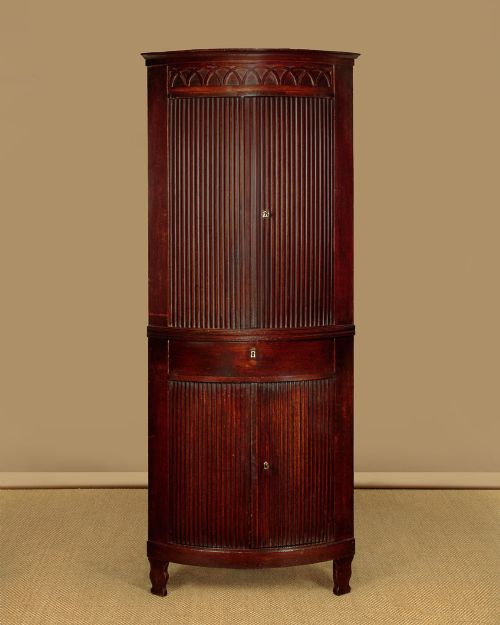
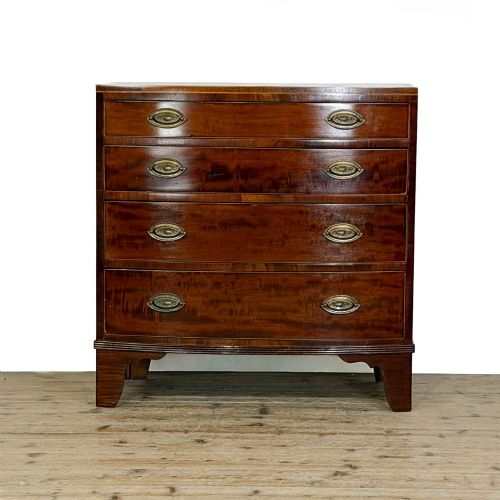
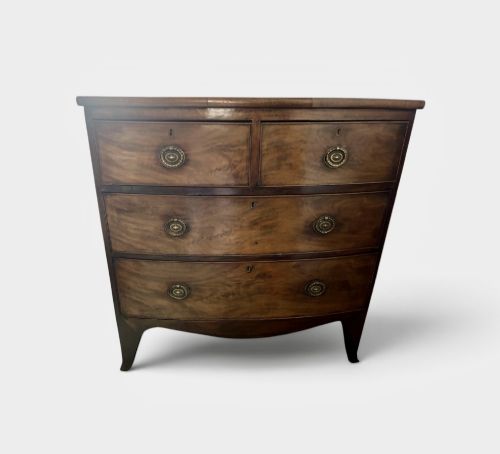
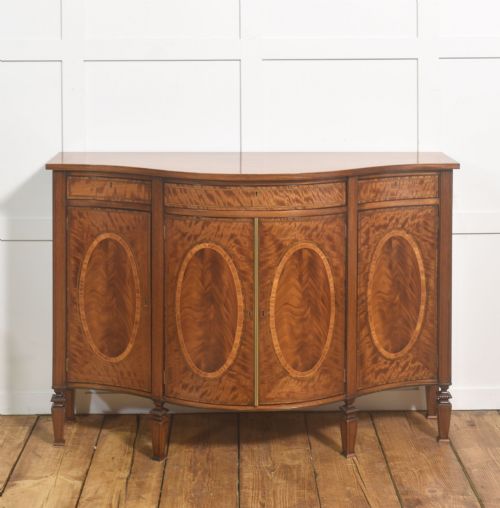
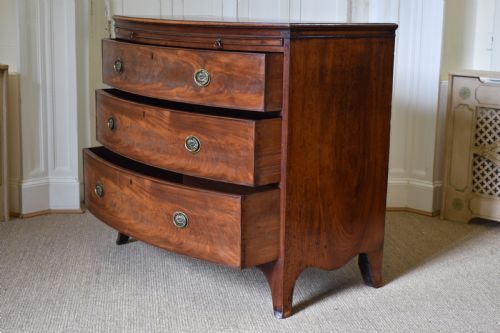
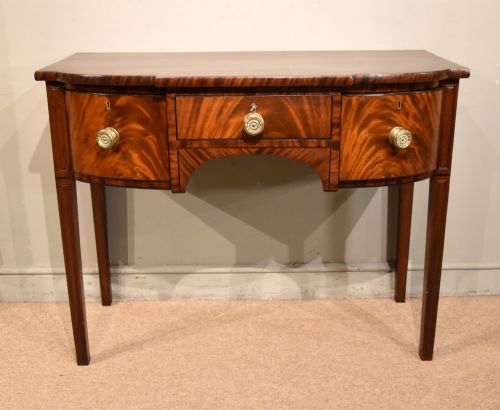
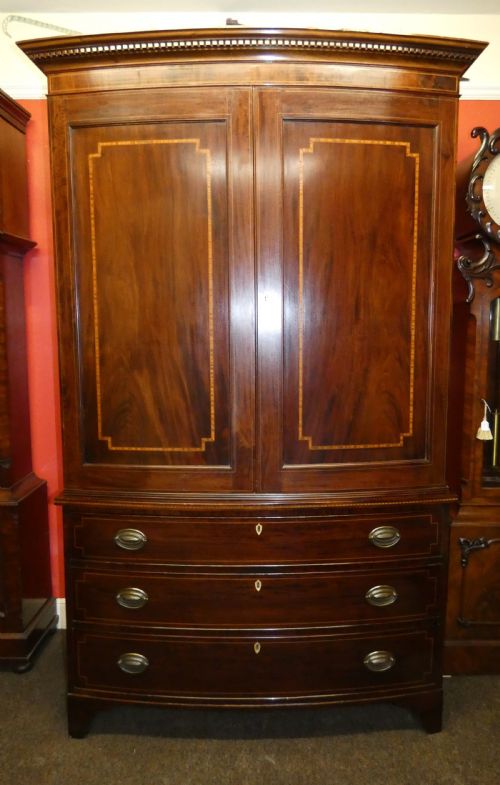
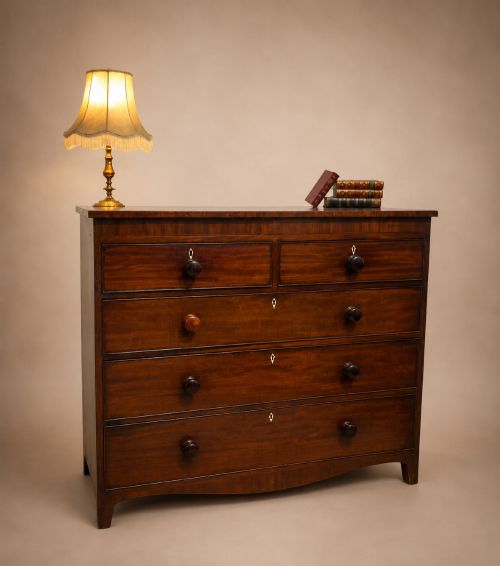
Georgian bowfront furniture comprises practical household pieces constructed with convex curved facades, designed to soften room corners and maximise interior capacity. When exploring georgian bowfront furniture, buyers most frequently encounter chests of drawers, alongside corner cupboards, sideboards, and side cabinets.
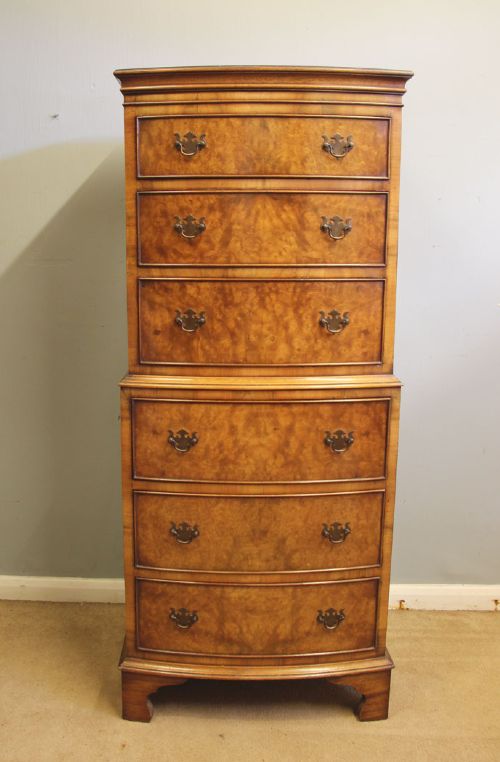
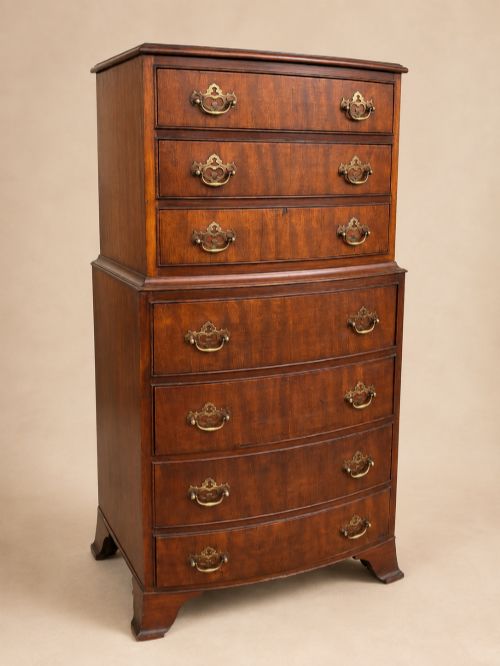
The surviving selection spans origins from the eighteenth century through the Regency era, with later nineteenth-century interpretations and twentieth-century revivals also appearing. Pieces range from tall chests on chest forms and linen presses down to small dressing chests and narrow bedside examples.
Makers and cabinetmakers worked within strict geometric proportions, allowing the curved front to dictate the rhythm of the drawers or cupboard doors. Oak, mahogany, and satinwood form the backbone of these domestic items, serving bedrooms, dining rooms, and parlours alike.
How They Were Made
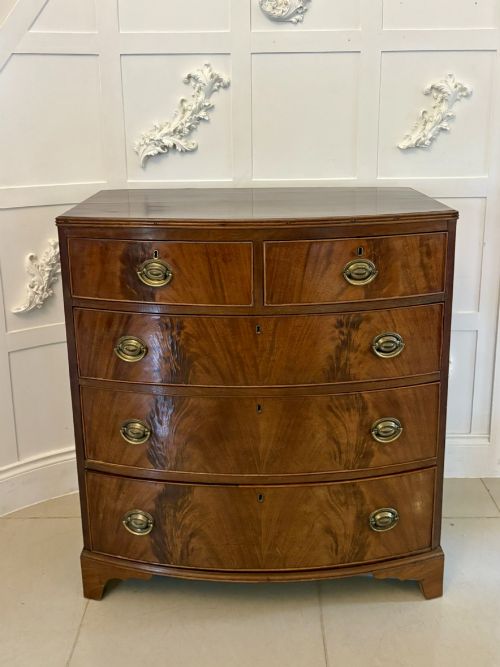
Cabinetmakers constructed these curved frames primarily using solid mahogany, oak, and walnut, often applying matched veneer sheets such as flame mahogany or burr walnut across the drawer fronts. This timber selection provided the characteristic grain patterns that caught the light along the convex sweep.
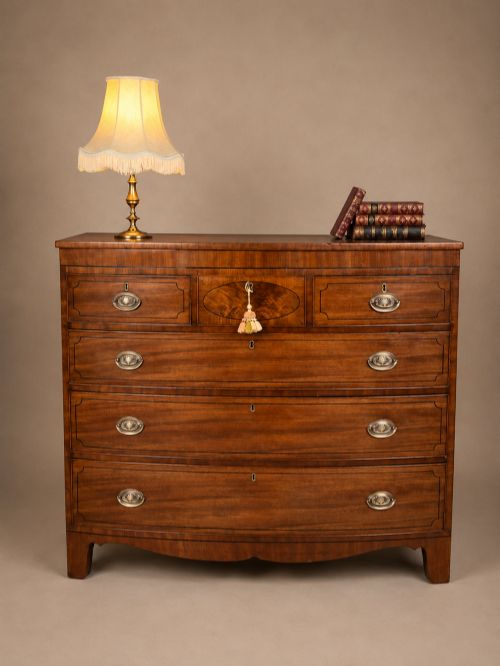
Brass handles, escutcheons, and occasional inlay work provided functional contrast to the dark wood surfaces. Internal carcases relied on sturdy oak or deal linings, with dovetailed drawer construction ensuring durability through decades of daily use.
Secret drawers hidden behind top moulding strips allowed owners to conceal valuables from domestic staff.
What Varies in Quality
The standard of a piece depends heavily on the selection of timber figures on the drawer fronts and the precision of the curved joints. Superior examples display continuous, book-matched veneer grains that flow smoothly across multiple drawers without interruption.
Refined pieces also demonstrate subtle proportions, such as neat bracket feet or apron details, alongside original brass hardware. Lesser items may show mismatched timber patches or crude carcass alterations executed during later repairs.
The Georgian Bowfront Furniture Glossary
- Bow front
- A convex curved front facade characteristic of chests of drawers, sideboards, and cabinets. This curved profile projects outward from the centre to soften the rectilinear appearance of standard furniture.
- Flame mahogany
- A veneer cut from the fork of a mahogany tree where the branches join the trunk. It produces a distinctive flickering flame pattern across the wood surface.
- Chest on chest
- A tall storage piece formed by stacking a smaller chest of drawers directly on top of a wider base chest. Also known as a tallboy, it maximises vertical storage capacity.
- Corner cupboard
- A triangular cabinet built to fit neatly into the corner of a room. These pieces often feature double-height doors or glazed upper sections.
- Graduated drawers
- A series of drawers arranged vertically from largest at the bottom to smallest at the top. This scaling creates visual balance on case pieces.
Georgian Bowfront Furniture: Frequently Asked Questions
What rooms suit bowfront chests?
These chests fit well in bedrooms and hallways where their rounded corners prevent sharp impacts in tighter spaces. Their generous internal volume accommodates folded textiles while maintaining a modest floor footprint.
They also serve effectively in living areas as focal points beneath mirrors or artwork, combining display surfaces with concealed storage.
How do I spot a reproduction?
Examinations of internal drawer timbers, secondary woods like deal or pine, and the uniformity of screw types reveal the period of construction. Older pieces display hand-cut dovetails and timber shrinkage consistent with age.
Revival pieces from later centuries often utilise sharper machine-cut joints and modern adhesives within the hidden structural corners.
Were corner cupboards used for food?
Corner cupboards originally served to store and display precious household ceramics, glassware, and tableware rather than provisions. Their enclosed shelving protected delicate porcelain from dust and accidental breakage in busy dining spaces.
Many examples feature shaped shelves specifically designed to display tea services or decorative jugs.
Why choose flame mahogany veneer?
Cabinetmakers prized flame veneer for its dramatic, undulating grain that added visual movement to flat or curved surfaces. The distinctive figuring elevated standard furniture into high-status decorative objects for affluent households.
Selecting timber from specific tree forks ensured each finished piece possessed a unique pattern.